Why there are Amazon links here: Brave Review is paid a commission for qualifying Amazon purchases made through the links below. Your price does not change, and using our links is entirely optional. How this works
Amazon Echo Show 15 Review: The Kitchen Hub That Runs the Whole Household
The Amazon Echo Show 15 is a wall-mountable smart display built around a 15.6-inch Full HD screen, and it is aimed squarely at households that want one shared command center for calendars, lists, recipes and streaming rather than a personal bedside gadget. This review covers what the hardware offers, how the built-in Fire TV changes daily use, and which buyers should look elsewhere before spending flagship smart-display money. The short version: it is a household appliance more than a personal one, and that distinction decides the purchase.
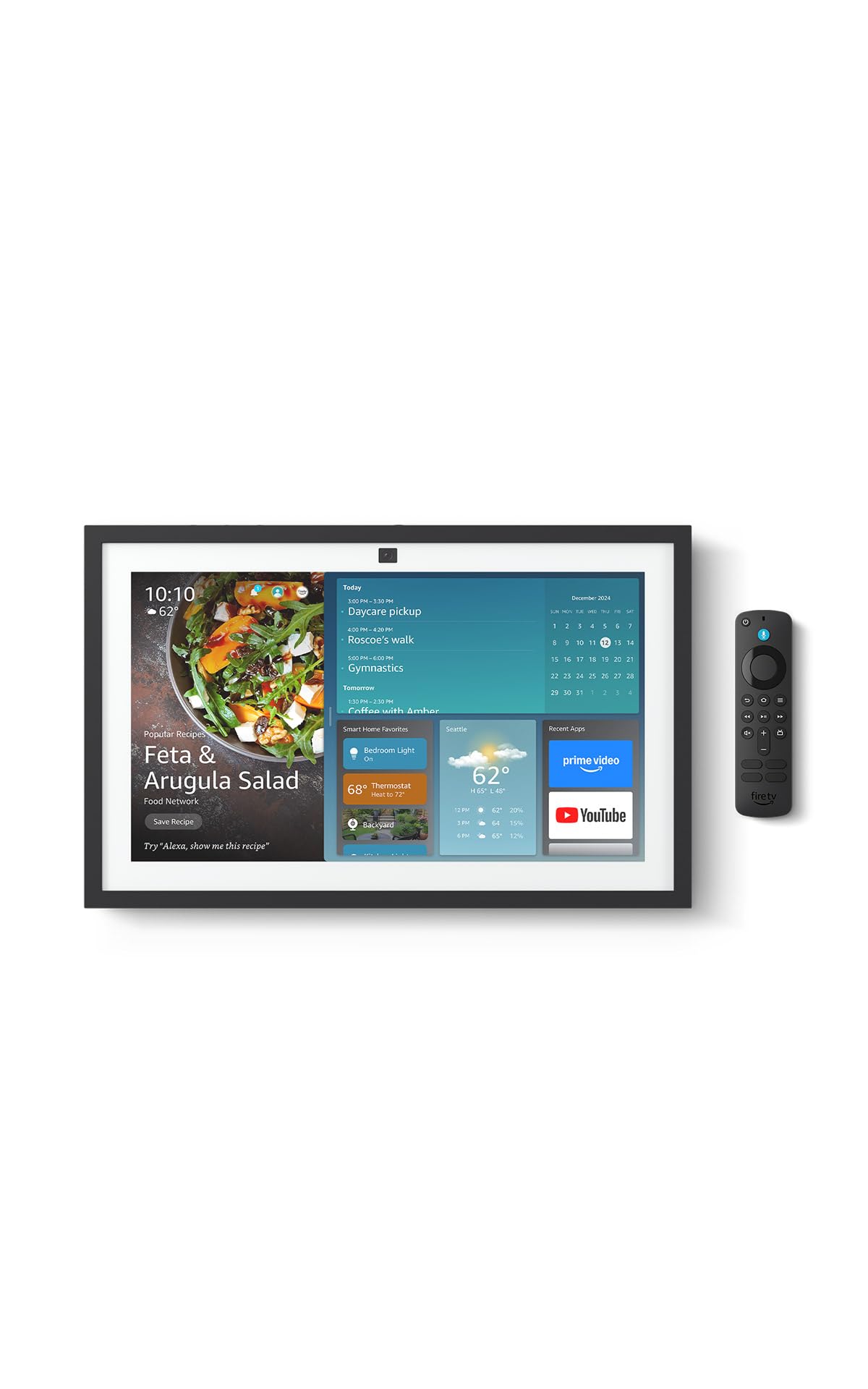
Features and Specifications
Product: Amazon Echo Show 15 (newest model)
Display: 15.6" Full HD
Intended Use: Kitchen hub and home organization
Streaming: Built-in Fire TV
Voice Platform: Designed for Alexa+
Mounting: Wall or countertop placement (stand sold separately in most configurations)
Connectivity: Wi-Fi and Bluetooth, standard for Echo Show devices
The name tells most of the story here. A 15.6-inch Full HD panel is the largest display Amazon puts on a mainstream Echo Show, and it is sized for reading at arm’s length from a counter or across a kitchen — recipe steps, shared calendars, shopping lists and photo displays all stay legible from a few feet away.
The built-in Fire TV is the spec that changes the product category. This is not just a smart speaker with a screen; it is a small television that also happens to answer questions and manage a household. Buyers who already use Fire TV streaming get a consistent interface across the house, and the display can serve as a secondary screen in a kitchen, home office or bedroom without a separate streaming stick.
Amazon positions the newest model as "Designed for Alexa+," meaning the hardware is built around the newer generation of the Alexa assistant rather than the older voice stack. That matters for buyers who intend to keep the device for years: the assistant is the product’s brain, and Amazon has been explicit that the newer Alexa experience is where its development effort goes.
The 15.6-Inch Screen and What It Changes
A 15.6-inch Full HD panel is the defining feature and the defining limitation at once. In landscape orientation it is roughly the size of a small laptop screen, which is enough to show a family calendar, a recipe with big type, and a video feed simultaneously — the kind of always-on information board that a kitchen wall has always wanted.
Full HD resolution on a screen this size is adequate rather than impressive. Text is crisp at normal viewing distance, but buyers accustomed to high-density phone and tablet displays will notice the difference when standing close. For the intended use — glancing at a calendar from across a room, following a recipe at a counter — it is entirely sufficient.
The screen is also a photo frame, a video-call surface, and a streaming display, and it has to be good enough at all three rather than excellent at one. That is the trade-off of a multi-purpose hub: the panel is tuned for all-day visibility rather than cinematic contrast, so a dedicated TV or tablet will still look better for movie night.
Built-In Fire TV and Streaming
The built-in Fire TV is the feature that most clearly separates the Echo Show 15 from smaller Echo Show models. It turns the device into a functional television for a kitchen, guest room or home gym, with the same app library and remote-free voice navigation that Fire TV users already know.
The practical benefit is consolidation. A household that already streams through Fire TV gets one interface, one watchlist and one set of logins on a wall-mounted screen, rather than a separate smart display plus a streaming stick plus a remote that lives in a drawer. Voice search through Alexa is the primary control, and the device responds to the standard "Alexa" wake word.
The limitation is that this is a smart display running a TV interface, not a television. Buyers who want a large-screen viewing experience for a living room should not expect the Echo Show 15 to replace a proper TV — the panel size and the ambient-display design make it a secondary screen, not a primary one.
Alexa+ and the Smart Home Hub Role
The newest Echo Show 15 is built for Alexa+, Amazon’s newer assistant generation, and that is the reason to buy the current model rather than an older one. The assistant is the interface for calendars, lists, timers, shopping, smart-home routines and streaming search, and the newer platform is where the more capable conversational features live.
As a smart-home hub, the device fits the role a kitchen wall has always played: a central place to see cameras, adjust lights, run routines and check the front door. The screen makes those controls visible rather than purely voice-driven, which is the main advantage a display has over a speaker.
Buyers should go in understanding that the assistant experience is a subscription-adjacent, cloud-dependent product. The device is only as capable as the Alexa service behind it, and Amazon has been clear that the newer assistant features are the direction of travel — which is good for longevity but means the hub is not a self-contained appliance.
Wall Mounting, Placement and Installation
The Echo Show 15 is designed to be wall-mounted or placed on a counter, and that flexibility is central to its appeal. A wall mount keeps the screen at eye level and out of the way of cooking, while a countertop stand suits renters or buyers who want to move the device between rooms.
Installation is a project rather than a plug-in. Wall mounting requires drilling and anchoring into a stud or using appropriate hardware for the wall type, and the device needs a nearby power outlet because it is a corded appliance. Buyers in rentals or in kitchens without a convenient outlet should plan for the countertop route instead.
Placement also affects the experience. A screen at eye level in a high-traffic spot gets used daily; a screen tucked into a corner gets used for a week and then ignored. The Echo Show 15 rewards households that have an obvious wall or counter spot where the whole family passes by.
Household Organization and Shared Use
The core use case is household organization, and the device is built around it. Shared calendars, shopping lists, reminders and to-do lists are visible on the screen and editable by voice, which is the feature that makes a kitchen hub genuinely useful rather than a novelty.
The shared nature of the device is both its strength and its friction point. A screen that the whole household can see and edit is a coordination tool; it is also a device with no personal privacy in a shared space, so video calls, messages and personalized recommendations are visible to anyone in the room. Buyers who want a personal assistant should look at smaller Echo Show models.
For families with kids, the display works as a visible routine board and a homework timer, and the Fire TV side doubles as a controlled streaming screen. The device is at its best in exactly that setting: a busy household that wants one shared screen rather than several personal ones.
Trade-Off
Trade-off: This is a large, corded, wall-oriented device priced at the premium end of the smart-display category, so buyers with a small kitchen, a rental they cannot drill into, or a preference for a personal rather than shared assistant will pay for screen size and features they will not fully use.
FAQ
-
Is the Amazon Echo Show 15 worth it over a smaller Echo Show?
It is worth it if the household wants a shared, always-visible screen for calendars, lists and streaming. Buyers who mainly want voice assistance and occasional video calls get the same core features from a smaller, cheaper Echo Show. -
Does the Echo Show 15 need to be mounted on a wall?
No. It can sit on a counter with a stand, which suits renters and buyers without a convenient outlet or wall space. Wall mounting is the more polished look but requires drilling and a nearby power source. -
Can the Echo Show 15 replace a TV?
Not really. The built-in Fire TV makes it a capable secondary screen for a kitchen, guest room or gym, but the panel and ambient-display design are not a substitute for a proper living-room television. -
What does "Designed for Alexa+" mean for buyers?
It means the hardware is built around Amazon’s newer assistant generation rather than the older voice stack. Buyers who plan to keep the device for years benefit from being on the current platform. -
Does the Echo Show 15 work with smart home devices?
Yes. It acts as a visible smart-home hub for cameras, lights, routines and doorbells, with the screen showing controls that a speaker-only device can only describe by voice. -
Is the 15.6-inch screen good for watching video?
It is good for casual viewing at counter distance. Full HD is adequate at this size, but the panel is tuned for all-day visibility rather than cinematic contrast, so a dedicated TV still wins for movie night. -
Can more than one person use the Echo Show 15?
Yes, and that is the point. Calendars, lists and reminders are shared across the household, which makes it a coordination tool — but also means personal calls and messages are visible in a shared space. -
Does the Echo Show 15 require a subscription?
The core features work without one, but the streaming and assistant experience is cloud-dependent and some capabilities sit behind Amazon’s services. Buyers should check current Alexa and Fire TV terms before buying. -
Where should the Echo Show 15 be placed in a home?
In a high-traffic spot at eye level — typically a kitchen wall or counter where the household passes daily. A screen in a low-traffic corner tends not to get used. -
Who should not buy the Echo Show 15?
Buyers in small kitchens, renters who cannot mount a device, and anyone who wants a private personal assistant rather than a shared household screen. A smaller Echo Show fits those buyers better.
Bottom Line
The Amazon Echo Show 15 is the right buy for a busy household that wants one large, shared, wall-mounted screen for calendars, lists, smart-home controls and casual Fire TV streaming — and the wrong buy for anyone who wants a personal assistant or a living-room television. At the premium end of the smart-display category, it earns its price through screen size and the built-in Fire TV, not through portability or privacy.