Why there are Amazon links here: Brave Review is paid a commission for qualifying Amazon purchases made through the links below. Your price does not change, and using our links is entirely optional. How this works
Best Backup Power for a Medical Device: 5 Reliable Picks for Home Use
A power outage is inconvenient for most households, but for someone relying on a CPAP machine, oxygen concentrator, or home monitor, it can be a serious health risk. This guide covers five backup power options that range from a compact standby UPS to a lithium power station built for overnight device use. It suits three main buyer types: CPAP users who need silent overnight runtime, caregivers managing home medical equipment, and households that want a small always-on safeguard for routers and charging. The overview below shows each pick’s key spec and best use side by side, so the right model is easy to spot.
Overview of the Picks
| Product | Key Spec | Best Use | Price Tier |
|---|---|---|---|
| CyberPower ST425 Standby UPS | 425VA/260W, 8 outlets | Router, modem, and low-draw device protection | Budget |
| GOLDENMATE 1000VA/800W Lithium UPS | Pure sine wave, 230Wh LiFePO4 | Desktop medical setups and home office gear | Mid-range |
| EnginStar 300W Portable Power Station | 296Wh, 80000mAh | CPAP overnight and travel backup | Mid-range |
| ALLWEI 300W Portable Power Station | 256Wh LiFePO4, PD 60W | Camping and compact home emergency backup | Mid-range |
| APC BE600M1 UPS | 600VA/330W, USB charging | Fast, simple outage protection for computers and routers | Budget |
1. CyberPower ST425 Standby UPS Battery Backup and Surge Protector

Type: Standby UPS with surge protection
Capacity: 425VA/260W
Outlets: 8
Certification: UL Certified
Form Factor: Compact
The CyberPower ST425 is a standby UPS, meaning it passes utility power through and switches to its internal battery when the line drops. The eight outlets include surge-protected spacing for adapters, and the UL certification is a meaningful marker for a device that will sit next to medical equipment. Its 260W ceiling is modest, which fits routers, modems, phone chargers, and small monitoring accessories rather than motor-driven machinery. The compact housing makes it easy to tuck under a desk or beside a nightstand.
This pick earns its place as the budget entry for households that mainly need to keep communications and low-draw electronics alive during a short outage. It is not the right choice for a CPAP machine or anything with a heating element, since those draw far more than a standby unit of this size can sustain. Caregivers should treat it as a bridge for connectivity and alerts, not as a primary medical device supply.
Trade-off: Runtime is short at higher loads, so it protects against brief interruptions rather than extended outages.
2. GOLDENMATE 1000VA/800W Lithium UPS Battery Backup & Surge Protector

Type: Lithium UPS with surge protection
Capacity: 1000VA/800W
Battery Chemistry: 230Wh LiFePO4
Output: Pure sine wave
Outlets: 8
Display: Color LCD
The GOLDENMATE unit is the most capable UPS in this group, pairing a 230Wh LiFePO4 battery with a pure sine wave output. Pure sine wave matters for sensitive electronics, and LiFePO4 chemistry is generally favored for its longer service life and stability compared with older battery types. The color LCD gives a readable status view without digging through menus, and eight outlets cover a full desk or equipment shelf. The 800W ceiling handles larger loads than a typical standby box.
This is the pick for a home setup where a desktop computer, router, and a medical accessory share a circuit and need clean, continuous power. It suits buyers who want UPS behavior — automatic switchover with no manual step — rather than a portable station that must be plugged in by hand. It is overkill for a single small device and adds cost that a light user will not recover.
Trade-off: The higher capacity and lithium battery push this into the pricier tier, and the unit is heavier than a basic standby box.
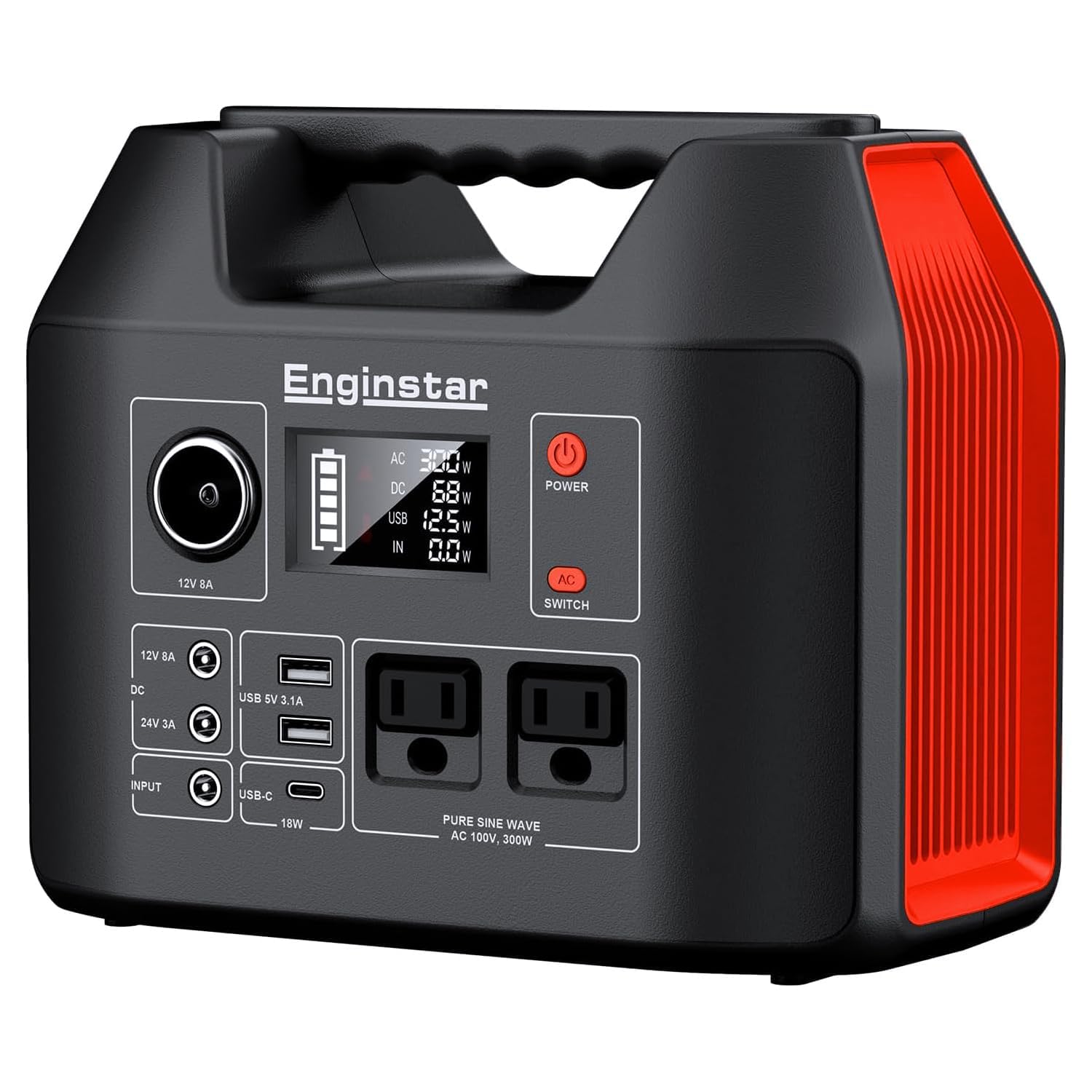
3. EnginStar Portable Power Station 300W 296Wh Solar Generator
Type: Portable power station
Capacity: 296Wh (80000mAh)
Output: 300W, pure sine wave AC outlet
Intended Use: CPAP, camping, travel, blackouts
Recharge: Solar generator compatible
The EnginStar station is built around a 296Wh battery with a pure sine wave AC outlet, and the product name explicitly lists CPAP among its intended uses. That makes it the most directly relevant pick for anyone who needs a machine running through the night without a wall outlet. The 80000mAh figure translates to meaningful runtime for low-draw devices, and solar compatibility adds a recharge path during longer blackouts. The form factor is portable, so it can move between bedroom and travel bag.
This pick suits CPAP users first, and secondarily anyone who wants one battery that covers both home emergencies and outdoor trips. It is not a UPS — it does not switch over automatically — so it requires the user to plug the device in when power fails. Buyers expecting seamless, hands-off protection should look at the UPS picks instead.
Trade-off: Manual switchover and no automatic transfer mean it demands attention at the exact moment power is lost.
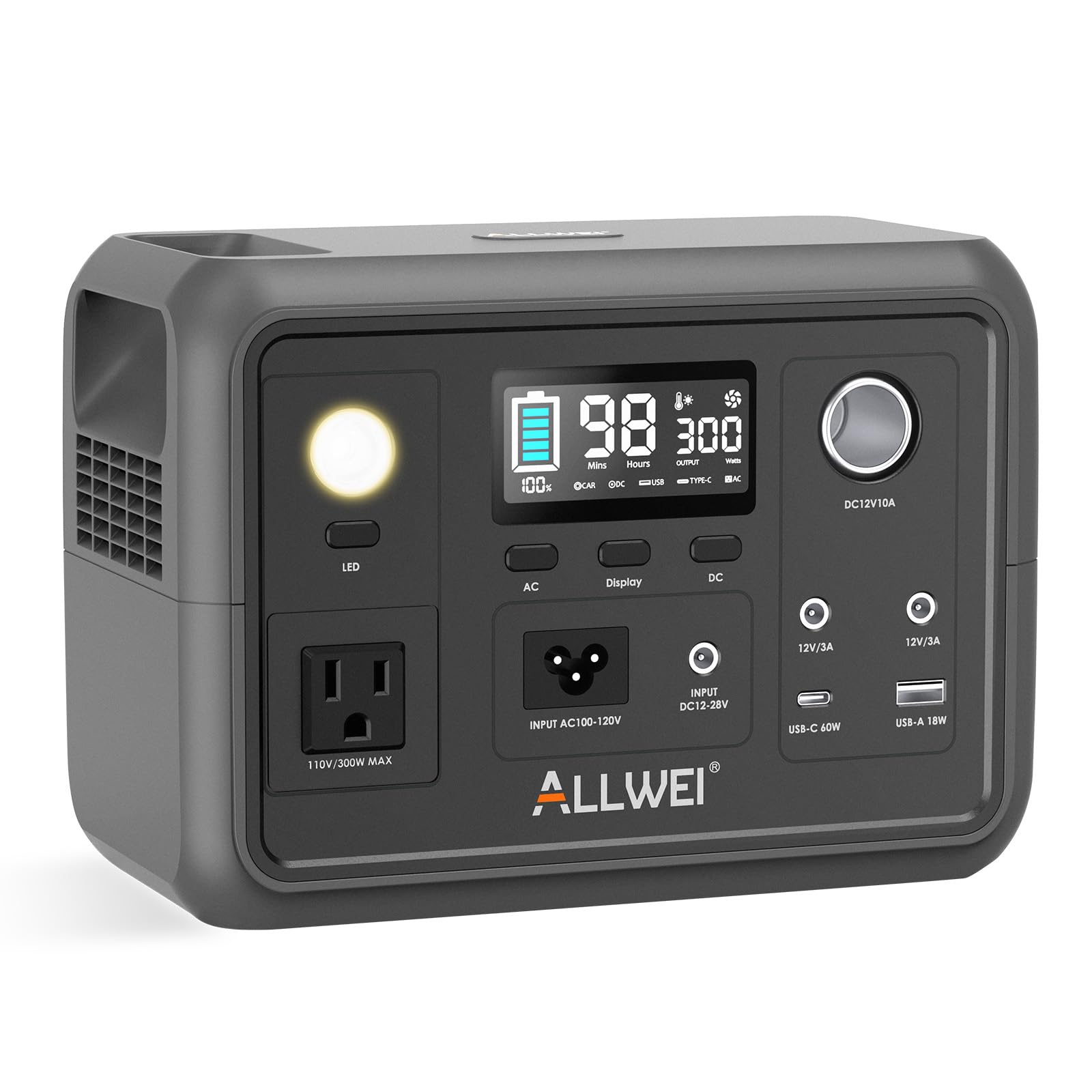
4. ALLWEI Portable Power Station 300W, 256Wh Solar Generator LiFePO4 Battery
Type: Portable power station
Capacity: 256Wh LiFePO4
Output: 300W, pure sine wave AC outlet
Charging: PD 60W fast charging
Protection: MPPT and BMS
Form Factor: Compact
The ALLWEI station uses LiFePO4 chemistry in a 256Wh pack with a pure sine wave AC outlet and 300W output. MPPT and BMS protection are the management features that keep charging efficient and guard the cells against unsafe conditions, which is reassuring for a device stored for emergencies. PD 60W fast charging means the station itself refills quickly from a compatible adapter, so it is less likely to sit depleted when needed. The compact body is easier to store than a full-size generator.
This pick fits buyers who want a smaller, lighter station for camping and home backup, and who value fast self-recharge over maximum capacity. It works for CPAP use where the machine’s draw stays within the outlet’s rating. It is the weaker choice for anyone who needs the largest possible overnight reserve, since the battery is smaller than the EnginStar’s.
Trade-off: The 256Wh pack leaves less margin for long nights or higher-draw devices than larger stations offer.
5. APC BE600M1 UPS Battery Backup & Surge Protector

Type: Standby UPS with surge protection
Capacity: 600VA/330W
Surge Rating: 490 J
Runtime: 23 minutes at 100W
Extras: USB charging
Intended Use: Computer, router, NAS
The APC BE600M1 is a standby UPS rated at 600VA/330W with a stated runtime of 23 minutes at 100W, which is a useful real-world anchor for buyers estimating coverage. The 490 J surge rating and USB charging port round out a unit designed for computers, routers, and network storage. APC is a long-established name in the UPS category, and the form factor is compact enough for a shelf or floor corner. Automatic switchover means no manual step when the line drops.
This pick suits households that want a dependable, no-fuss UPS for networking gear and a home computer, with enough headroom for a small medical accessory on the same strip. It is the strongest budget option for buyers who prioritize automatic transfer and a known runtime figure. It is not intended for CPAP machines or any device with a heating element, and the runtime shrinks quickly as load rises.
Trade-off: The 330W ceiling and short runtime at load rule out most motorized or heated medical equipment.
Before You Buy
- Device draw: Add up the wattage on each device’s label; a backup unit must exceed the total continuous draw, not just the startup figure.
- Transfer type: A UPS switches over automatically, while a portable power station must be plugged in by hand — match this to whether the user can act during an outage.
- Output waveform: Pure sine wave output is the safer match for sensitive electronics and medical equipment with motors or digital controls.
- Battery chemistry: LiFePO4 packs generally hold up better over years of storage and cycling than older sealed lead-acid designs.
- Runtime vs. capacity: Capacity in watt-hours divided by device wattage gives a rough runtime estimate; always leave a margin for efficiency losses.
- Storage and maintenance: Keep backup units charged and in a climate-controlled spot, and check them on a schedule so they are ready when needed.
- Noise and placement: Standby UPS units can hum or beep under load; place them where the sound will not disturb sleep.
Frequently Asked Questions
-
Can a regular UPS run a CPAP machine?
A small standby UPS usually cannot sustain a CPAP for a full night, because its battery is sized for minutes, not hours. A portable power station with a larger watt-hour rating is the better fit. -
How long will a power station run a medical device?
Divide the station’s watt-hour capacity by the device’s wattage to estimate runtime, then reduce that figure for efficiency losses. A larger reserve gives more margin for long outages. -
Is pure sine wave output necessary for medical equipment?
Pure sine wave is the safer choice for devices with motors, digital controls, or sensitive electronics. Modified sine wave output can cause overheating or erratic behavior in some equipment. -
Does a portable power station switch on automatically during an outage?
No — most portable stations require the user to plug the device in manually. Only a UPS provides automatic transfer when utility power drops. -
Can a power station be recharged with solar panels during an outage?
Solar-compatible stations can be recharged from panels, which extends usefulness during multi-day outages. Panel input and charging speed vary by model. -
How should backup power equipment be stored between outages?
Keep units charged, dry, and at moderate temperature, and test them periodically. A depleted battery discovered mid-outage defeats the purpose.
Bottom Line
For most households managing a medical device, the GOLDENMATE 1000VA/800W Lithium UPS is the strongest overall pick: pure sine wave output, LiFePO4 chemistry, and automatic switchover cover sensitive equipment without manual intervention. CPAP users who need overnight runtime and portability should look at the EnginStar station instead, while budget-focused buyers protecting routers and alerts can start with the CyberPower ST425. Check the current price on Amazon before deciding.
