Why there are Amazon links here: Brave Review is paid a commission for qualifying Amazon purchases made through the links below. Your price does not change, and using our links is entirely optional. How this works
SITERWELL Travel Carbon Monoxide Detector: Four Alarms, One Small Case
The SITERWELL travel carbon monoxide detector is a four-pack of portable CO alarms built for people who sleep somewhere different every few nights — hotel rooms, rental cabins, RVs, guest rooms, or a relative’s spare bedroom. This review covers what the unit is, how the LCD display and sound warning work in practice, and who should skip it. Readers who want one alarm per bag for a family trip can check the price and move on; readers who want a permanent wired-in home system should keep looking.
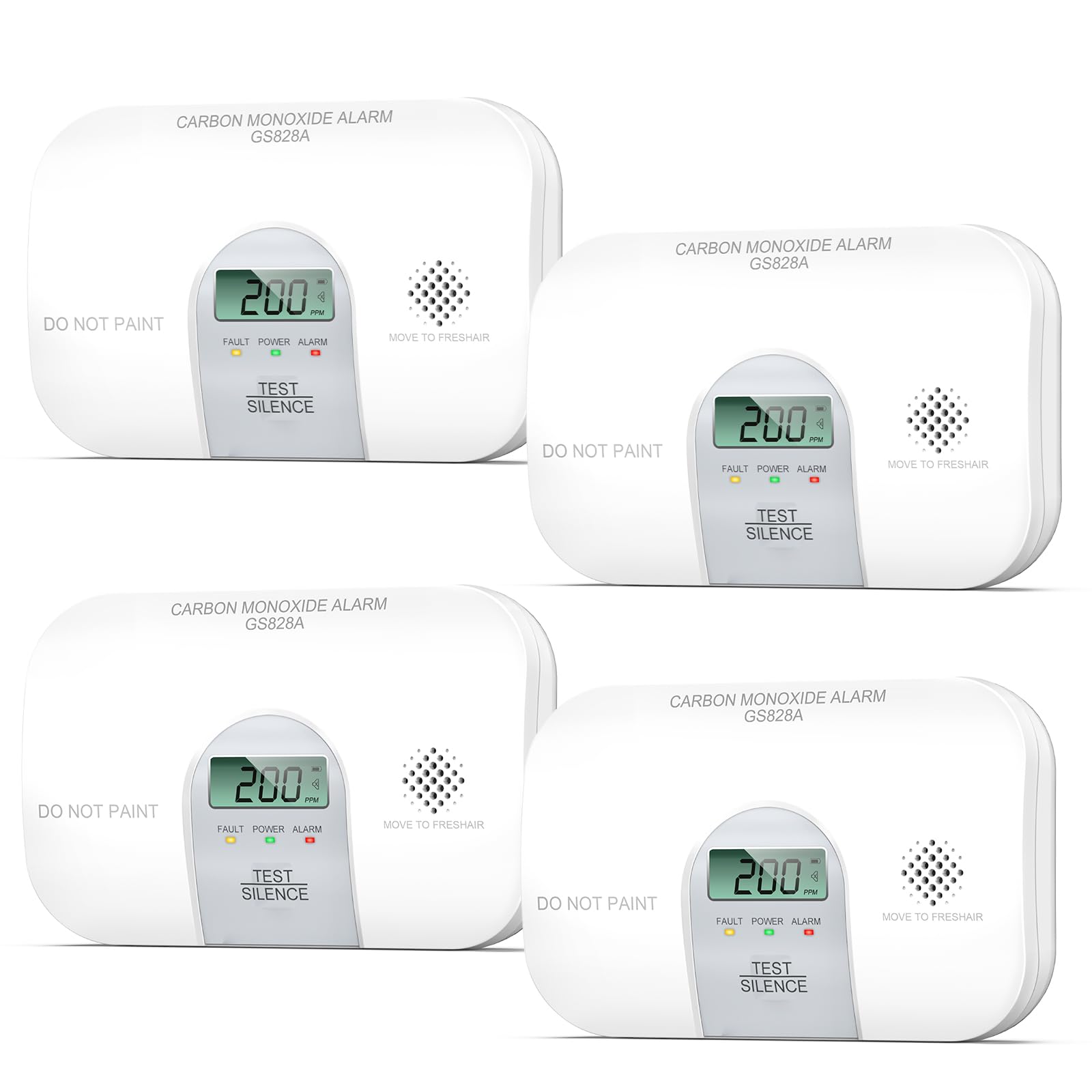
Features and Specifications
Product Name: SITERWELLCO Detectors with LCD Digital Display & Sound Warning
Type: Portable carbon monoxide detector
Quantity: 4-pack
Display: LCD digital display
Alert: Sound warning
Certification: ETL Listed
Rated Product Life: 7 years
Intended Use: Home and travel
The headline spec is the pack size. Four units at a single price means a household can cover a primary home, a rental property, a camper, and a suitcase without buying twice — a real advantage over single-unit alarms that cost nearly as much per device.
The second spec that matters is portability. A travel CO detector is only useful if it goes in the bag, so the design has to be small enough to pack and simple enough to set on a nightstand without tools or wiring. The LCD display supports that: it gives a live readout rather than a silent, sealed unit that only speaks when something is wrong.
The ETL listing is the number to look at before anything else. It means the device has been tested to a recognized safety standard by a third-party lab, which separates it from unlisted import alarms that flood marketplace listings. For a life-safety product, that listing is the baseline, not a bonus.
The 7-year product life sets the replacement clock. Buyers should write the purchase date on the back of each unit, because a CO sensor degrades silently and the device will not always announce that it has aged out.
Build and Design
The housing is the part that decides whether the alarm actually travels. A portable CO detector needs a flat base so it stands upright on a hotel nightstand, a screen that is readable from a few feet away in a dim room, and a footprint small enough to slip into a carry-on pocket next to a phone charger.
The LCD panel is the feature that earns its place on a travel unit. A digital readout lets a guest glance at the number and see that the room is clear, rather than trusting a blank faceplate. It also makes a low-level buildup visible before the alarm crosses its trip threshold — useful information in a rental with a fuel-burning heater or an attached garage.
The four-pack changes how the units get used. One can live permanently in a travel bag, one in a car or RV, one in a basement bedroom, and one spare for a guest. That spread is the practical argument for buying this set instead of a single alarm.
Trade-off: A compact travel housing has less room for a large horn and a long-life battery bay than a full-size wall-mounted alarm, so the sound output and battery arrangement are built to fit the case rather than to fill a hallway.
Power and Alert Behavior
A portable CO alarm has to run on its own power, which means batteries and a battery check become part of the routine. The habit that matters: test each unit before a trip, not after arrival. A detector that sat in a drawer for a year is a detector with an unknown battery.
The sound warning is the primary alert, and it is the reason the unit exists. A CO alarm earns its keep at 2 a.m. in a room with a faulty furnace or a running generator outside the window, and the audible alarm is what wakes people up. The LCD display is the secondary layer — it shows the trend, the horn delivers the warning.
Placement is where most travel alarms fail their owners. CO mixes with room air, so a unit set on a high shelf or buried under a jacket in a suitcase will not read the room. The right spot is a nightstand, a counter, or the floor near the sleeping area, unobstructed.
Buyers who want a set-and-forget alarm with a sealed decade battery and no maintenance will find this category frustrating. The trade is portability for convenience, and that trade should be made deliberately.
Trade-off: Battery-powered portability means the owner carries the maintenance burden — checking cells before each trip and replacing them on schedule — which a hardwired home alarm does not ask of anyone.
Maintenance and Lifespan
The 7-year rating is a product-life figure, not a battery-life figure, and conflating the two is the most common mistake in this category. The sensor has a service life; the batteries inside it do not. Plan on battery swaps well before the seven-year mark.
A simple routine keeps a travel set reliable. Test every unit at the start of each trip using the test button, note the purchase date on each housing, and store the units out of damp basements and off hot dashboards, since both extremes age electronics. Replace the whole set at the end of the rated life rather than stretching it.
The four-pack actually helps here. Rotating units through service spreads the wear, and having a spare on hand means a failed battery or a dropped alarm does not leave a traveler unprotected on the next trip.
Trade-off: The seven-year clock starts at purchase, not at first use, so units that sit unused in a closet still age out on schedule and must be replaced on the original date.
Who It Suits and Who It Does Not
This set suits travelers who sleep in unfamiliar buildings with fuel-burning appliances — rental cabins, older hotels, RVs, boats, and guest rooms over garages. It also suits a household that wants several small detectors for bedrooms and a basement without paying per-unit prices for full-size alarms.
It does not suit a buyer who wants a permanent, hardwired, interconnected home system with a sealed decade battery and no thought required. That buyer needs a different product class entirely. Nor does it suit anyone who will not test the units before a trip; an untested travel alarm is decoration.
Families traveling together get the clearest value. Four units means every adult’s bag carries one, and nobody is negotiating over who packed the detector.
FAQ
-
Is the SITERWELL travel carbon monoxide detector ETL listed?
Yes. The product name states ETL Listed, meaning it has been tested to a recognized safety standard by a third-party laboratory. That listing is the first thing to confirm on any CO alarm. -
How many detectors come in the pack?
Four. The set is sold as a 4-pack, which is the main reason to choose it over a single portable alarm — one per bag, one per room, or a mix of both. -
Does it have a digital display?
Yes. The unit carries an LCD digital display, which shows a readout rather than a blank faceplate. That makes it easier to see the current level in a room before an alarm condition develops. -
How long does the detector last?
The product is rated for a 7-year product life. That figure covers the sensor, not the batteries, and it starts counting from the purchase date. -
Is it good for hotel rooms and rentals?
Yes — that is the core use case. It is portable, battery-powered, and small enough to pack, so it can be set on a nightstand in any room the traveler sleeps in. -
Does it need to be installed or wired?
No wiring is involved. A portable detector stands or sits in place, which is what makes it usable in a hotel room or a rental where drilling and hardwiring are not options. -
Where should a travel CO detector be placed?
Near the sleeping area, on a nightstand, counter, or floor, with nothing covering it. CO mixes with room air, so an obstructed or buried unit will not read the room accurately. -
How often should the batteries be checked?
Before every trip, using the test button, plus a scheduled replacement well inside the 7-year product life. Battery life and sensor life are separate numbers. -
Can it replace a home carbon monoxide alarm?
It can supplement one, but a portable unit is not a substitute for a permanent, hardwired home alarm with a sealed long-life battery. Buyers wanting a fixed system should shop that category instead.
Bottom Line
The SITERWELL travel carbon monoxide detector is the practical pick for travelers and multi-room households that want four ETL-listed, LCD-equipped portable CO alarms from one purchase. The 7-year rated life and the four-unit pack make it a sensible spread across bags, bedrooms, and a camper — provided the owner accepts the battery checks that portability demands. Buyers who want a permanent wired system should look elsewhere; everyone else can check the current price at Amazon.
