Why there are Amazon links here: Brave Review is paid a commission for qualifying Amazon purchases made through the links below. Your price does not change, and using our links is entirely optional. How this works
Jackery HomePower 3000 Portable Power Station: Whole-Home Backup Without the Generator
The Jackery HomePower 3000 is a large-capacity portable power station built for homeowners who want to keep the essentials running during an outage without installing a standby generator or running extension cords to a gas unit. Its 3072Wh LFP battery and 3600W AC output put it in the whole-home backup class, with a 7200W surge rating that lets it start motor-driven appliances. This review covers the specifications that matter, what those numbers mean in practice, and the trade-offs a buyer should weigh before ordering. The short answer: it suits households that want quiet, fume-free backup for a fridge, freezer, lights, router and medical equipment, and it is overkill for camping and tailgating.
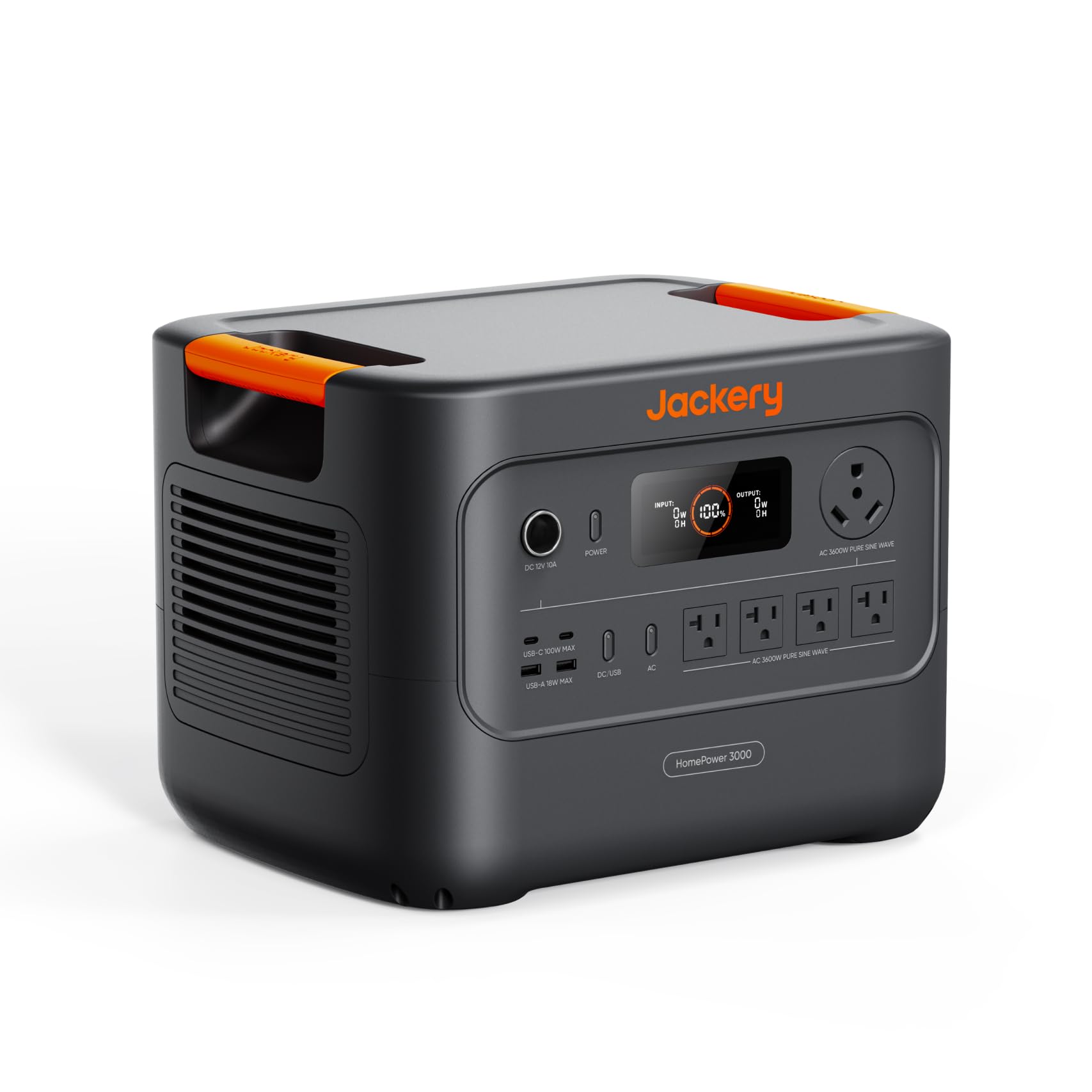
Features and Specifications
- Battery Chemistry: Lithium iron phosphate (LFP)
- Battery Capacity: 3072Wh
- AC Output: 3600W continuous
- Surge Rating: 7200W
- Intended Use: Essential home backup during power outages
- Solar Charging: Solar panel optional, sold separately
- Type: Portable power station / solar generator
The two headline figures are the 3072Wh capacity and the 3600W continuous AC output. Capacity is how long the unit can run a load; output is what it can run at any one moment. Buyers shopping in this class usually fixate on watt-hours and ignore the wattage ceiling, which is the mistake that leads to a tripped unit in the middle of an outage.
The 7200W surge figure is the one that separates this unit from smaller stations. Motors draw a hard spike of current when they start — a refrigerator compressor, a furnace blower, a well pump — and a station that cannot cover that spike will shut down even if its running wattage looks sufficient. A surge rating double the continuous output gives the HomePower 3000 headroom to start those loads rather than stall on them.
The LFP chemistry is the other specification worth understanding. Lithium iron phosphate is the battery type that has displaced older lithium-ion formulations in home backup products because it tolerates being held at a full charge and cycled repeatedly better than the chemistries it replaced. For a device that sits in a closet for months and then gets used hard for three days, that matters more than raw energy density.
Trade-off: At this capacity the unit is a heavy, wheeled appliance rather than something a buyer carries up stairs, so it needs a permanent ground-floor home near the appliances it protects.
Check the current price on Amazon
Build and Portability
The HomePower 3000 is built around a wheeled chassis, which is the only sensible way to move a battery of this size. Buyers should plan a storage spot on the ground floor — a garage, a utility room, a hallway closet — within reach of the refrigerator and the panel. Hauling it between floors during an outage is not a realistic plan.
The construction is the sealed, appliance-grade type common to home backup stations: a rigid shell around the cell pack, carrying handles integrated into the frame, and a front panel of outlets and displays. It is not a ruggedized field unit. There is no weather sealing to speak of, and it should not live outdoors or in an unheated shed where temperatures swing hard.
Storage position deserves more thought than buyers usually give it. The unit needs to stay cool, dry and reachable, and it needs to stay partially charged so it is ready when the grid drops. A shelf in a climate-controlled garage or a closet near the kitchen satisfies all three; a damp basement corner does not.
Trade-off: The wheeled, appliance-style build is stable on a hard floor but awkward on carpet, thresholds and steps, so the storage spot should be chosen for a clear path to where the unit will be used.
Capacity: What 3072Wh Actually Runs
Capacity is best read as a budget rather than a runtime. A 3072Wh battery does not power a whole house; it powers a chosen list of loads for a chosen number of hours, and the arithmetic is simple division once the buyer knows the wattage of each appliance.
A modern refrigerator draws a modest running load and cycles on and off, so it is one of the most efficient things a home backup can protect. A freezer behaves similarly. Lights, a router, a modem, phone chargers and a laptop add up to a small fraction of the total. Those five categories — refrigeration, communications, lighting, medical devices and device charging — are exactly the "essential home backup" the product is named for, and they are what this capacity is sized to carry.
What the capacity will not do is run central air conditioning, an electric range, an electric water heater or a clothes dryer for any useful length of time. Those loads belong to a different class of product: a permanently installed standby generator or a home battery system wired into the panel. Buyers who expect to keep the whole house running as normal should not buy a portable station at all.
The practical planning exercise is to list the appliances that must stay on, add their running wattages, and compare the total against 3600W. If that total fits under the continuous rating and the largest single motor fits under the surge rating, the unit will carry the load. How long it carries it is a function of the watt-hour budget and how often the appliances cycle.
Trade-off: The capacity is generous for essentials but nowhere near whole-house, and buyers who add an electric heater or a space heater to the outage plan will drain the battery far faster than expected.
Power: Output, Surge and Solar
The 3600W continuous output is the figure that determines which appliances can run simultaneously. It is enough for a refrigerator, a freezer, lights, networking gear and a few small devices at once, with margin left over. It is not enough for two large motor loads plus a heating appliance at the same time.
The 7200W surge rating is what makes the unit usable with motor-driven appliances rather than merely compatible with them on paper. Refrigerator and freezer compressors, furnace blowers and well pumps all draw a starting spike well above their running wattage. A station with a surge rating only slightly above its continuous output will trip on those spikes; doubling it is the design decision that makes this unit a genuine backup rather than a large phone charger.
Solar charging is optional and the panel is sold separately, which is the one specification buyers most often misread. The station accepts solar input, and pairing it with panels turns it into a solar generator that can recharge during a long outage when the grid is down and gasoline is unavailable. That capability is the reason the product carries the solar generator label, but it is an add-on purchase, not part of the box.
For most buyers the primary recharge path is the wall outlet before a storm arrives, with solar as the extended-outage insurance policy. Buyers in hurricane or wildfire territory, where outages can run for days, should budget for panels at the same time as the station rather than treating them as a later upgrade.
Trade-off: Solar charging depends on panels bought separately, so the advertised solar generator capability is an additional cost rather than a feature included in the box.
Maintenance and Long-Term Ownership
An LFP battery pack is the low-maintenance choice for a device that spends most of its life idle. The chemistry is tolerant of being stored at a partial charge and does not demand the careful charge-management routine that older lithium packs required. The routine is simple: keep it charged, keep it dry, and exercise it occasionally so the buyer knows how it behaves before an outage forces the issue.
The habit worth building is a periodic test run. Plugging in a lamp or a small appliance every few months confirms the outlets, the display and the battery are all behaving, and it gives the household a chance to rehearse where the unit goes and which cords are needed. An outage is a bad time to discover that the storage spot is blocked or that the refrigerator cord will not reach.
Long-term ownership also means thinking about the loads the unit will be asked to carry years from now. Buyers who plan to add a medical device, a sump pump or a second refrigerator should check those wattages against the 3600W ceiling at the time of purchase, not after the fact.
Trade-off: The unit is an investment that sits unused most of the year, so buyers who face only brief, rare outages may find the capacity and cost hard to justify against a smaller station.
Who It Suits and Who It Does Not
The HomePower 3000 suits homeowners in areas with a real outage risk — storm belts, wildfire zones, regions with an unreliable grid — who want to protect refrigeration, communications, lighting and medical equipment without fuel, fumes or a permanent installation. It also suits households with a family member on a powered medical device, where backup is a safety requirement rather than a convenience.
It does not suit campers, RV owners or tailgaters. Those buyers pay for capacity and surge they will never use and carry an appliance they do not need. A smaller, lighter station serves them better and costs far less.
It also does not suit buyers who want the whole house to run as normal, or who expect the listed solar capability to work out of the box. Both groups will be disappointed, and both are better served by a different product category.
FAQ
-
How long will the Jackery HomePower 3000 run a refrigerator?
Runtime depends on the refrigerator’s wattage and how often its compressor cycles. The 3072Wh capacity is sized to carry a refrigerator, a freezer and small essentials through a multi-day outage, but the exact hours vary by appliance. Buyers should check their fridge’s rated wattage and plan from there. -
Can the HomePower 3000 power a whole house?
No. It is designed for essential circuits — refrigeration, lights, networking and medical devices — not whole-home service. Central air, electric ranges, water heaters and dryers exceed its 3600W continuous output and belong to a permanently installed generator or home battery system. -
Does it come with a solar panel?
No. The solar panel is optional and sold separately. The station accepts solar input, but buyers who want solar recharging during an extended outage need to purchase panels as well. -
What does the 7200W surge rating mean?
Surge is the short burst of power the unit can deliver when a motor starts. Refrigerators, freezers, furnace blowers and well pumps draw well above their running wattage for a moment at startup, and the doubled surge rating lets the station start those appliances instead of shutting down. -
Is an LFP battery better for home backup than a regular lithium battery?
LFP is the preferred chemistry for backup products because it handles being stored at full charge and cycled repeatedly better than older lithium formulations. For a unit that sits idle for months and then runs hard during an outage, that durability is the main advantage. -
Where should the unit be stored?
On the ground floor, in a cool, dry, climate-controlled space with a clear path to the kitchen and the appliances it protects. It is a wheeled appliance, not a carry-anywhere unit, so the storage spot should not involve stairs. -
Can it run a space heater or an electric heater during an outage?
It can power one briefly, but heating appliances draw heavily and will drain the battery quickly. Buyers planning to rely on electric heat during an outage should look at a fuel-based or permanently installed solution instead. -
How often should the unit be tested?
A periodic test every few months — plugging in a lamp or small appliance — confirms the outlets, display and battery are working and lets the household rehearse the setup before an outage makes it urgent. -
Is it safe to use indoors?
Yes. Unlike a gasoline generator, a battery power station produces no exhaust fumes, which is why it can run inside the home during an outage. It should still be kept dry and away from standing water. -
Who should not buy the HomePower 3000?
Campers, RV owners and tailgaters, who would pay for capacity and surge they will never use. Buyers who want whole-home coverage or who expect solar panels in the box should also look elsewhere.
Bottom Line
The Jackery HomePower 3000 is the right answer for a household that wants quiet, fume-free backup for refrigeration, communications, lighting and medical equipment, and it earns its place with a 3072Wh LFP battery and a 7200W surge rating that can actually start motor-driven appliances. Its limits are just as clear: it is a heavy wheeled unit, solar panels cost extra, and it will not run a whole house. Buyers who match those terms to their outage plan will find it a sensible, low-maintenance investment.
