Why there are Amazon links here: Brave Review is paid a commission for qualifying Amazon purchases made through the links below. Your price does not change, and using our links is entirely optional. How this works
Best Generator Transfer Switch Considerations for a Safe, Code-Compliant Home Backup
A transfer switch is the part of a home backup setup that keeps generator power out of the utility lines and keeps the utility feed out of the generator — and the wrong choice means either a dead circuit or a dangerous backfeed. This roundup covers the best generator transfer switch considerations for three kinds of buyers: the homeowner who wants a simple manual panel for a portable generator, the owner ready to automate a standby unit, and the shopper who just needs to understand amperage and enclosure ratings before spending anything. Five units are compared below, from an entry-level manual switch to a full 200-amp automatic service-entrance model. The overview table comes first so the pick can be made quickly.
The Picks at a Glance
| Product | Key Spec | Best Use | Price Tier |
|---|---|---|---|
| The Original EZ GENERATOR SWITCH | Manual, UL/CSA approved, US-made | Simple portable hookup | Budget |
| Generac 200 Amp Next Gen Automatic Transfer Switch | 200 Amp, service entrance rated, NEMA 3R, integrated surge protection | Whole-home standby automation | Premium |
| Westinghouse 120/240 Volt Automatic Portable Transfer Switch | 200 Amp, outdoor enclosure, portable generator | Large portable generator, automatic | Upper mid |
| Connecticut Electric EmerGen Transfer Switch Kit | 30 Amp, 10-circuit, 10-foot cord, 7500 watts | Budget circuit-by-circuit backup | Mid |
| Nature’s Generator 30A Non-Automatic Transfer Switch | 12-circuit, 120/240V, UL approved, pre-wired | Room to grow on a manual setup | Mid |
1. The Original EZ GENERATOR SWITCH — Best Budget Manual Pick
Type: Manual transfer switch
Approval: UL/CSA approved
Origin: Made in the USA
Design: Patented
Price Tier: Budget

Check the current price on Amazon
This is the simplest entry point in the group: a manual switch that a homeowner throws by hand when the grid drops, with UL and CSA approval behind it and US manufacturing as its selling point. The patented design is aimed at straightforward portable-generator hookups rather than whole-home automation, and the manual action means no control board, no sensing circuitry, and nothing to program. It suits a homeowner with a modest portable generator who wants one dedicated circuit or a small set of loads covered without paying for automation.
The pick earns its place on price and simplicity. A manual switch of this type is the least expensive way to move generator power into a home safely, and the UL/CSA listing is the detail that matters most at this tier.
Trade-off: A manual switch requires someone to be home, physically throw it, and manage the generator by hand — it offers no automatic failover and no circuit-level flexibility beyond what the unit is built for.
2. Generac 200 Amp Next Gen Automatic Transfer Switch — Best Premium Whole-Home Pick
Type: Automatic transfer switch
Amperage: 200 Amp
Rating: Service entrance rated
Enclosure: NEMA 3R outdoor
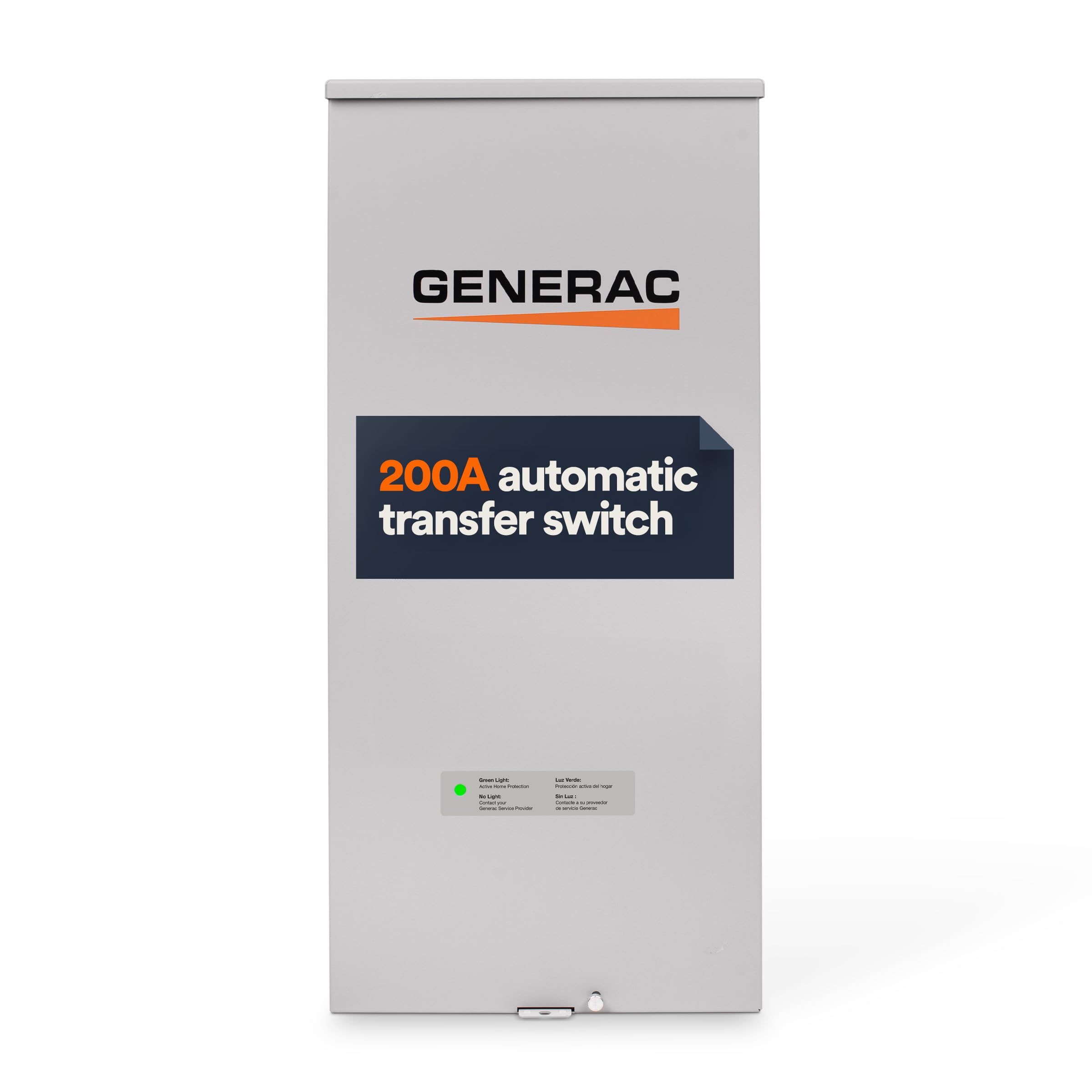
Extras: Integrated surge protection device, standard smart switch A/C module
Price Tier: Premium
Check the current price on Amazon
This is the top of the range: a 200-amp automatic switch rated for service entrance duty, built into a NEMA 3R outdoor enclosure and paired with an integrated surge protection device. The smart switch A/C module points to air-conditioning load management, which is the feature that lets a standby system carry a large central unit without oversizing the generator. Service entrance rating matters because it lets the switch sit at the utility feed rather than downstream of a separate main breaker.
It suits the homeowner installing a permanent standby generator who wants the house to fail over on its own, with no one home and nothing to throw. The integrated surge protection is the detail that separates it from a bare automatic switch at this tier.
Trade-off: This is the most expensive unit here by a wide margin, and the cost only makes sense alongside a standby generator and a licensed install — a portable-generator owner would be paying for automation they cannot use.
3. Westinghouse 120/240 Volt Automatic Portable Generator Transfer Switch — Best Automatic Pick for Portable Generators
Type: Automatic transfer switch
Amperage: 200 Amp
Voltage: 120/240 Volt
Enclosure: Outdoor
Generator Type: Portable
Price Tier: Upper mid
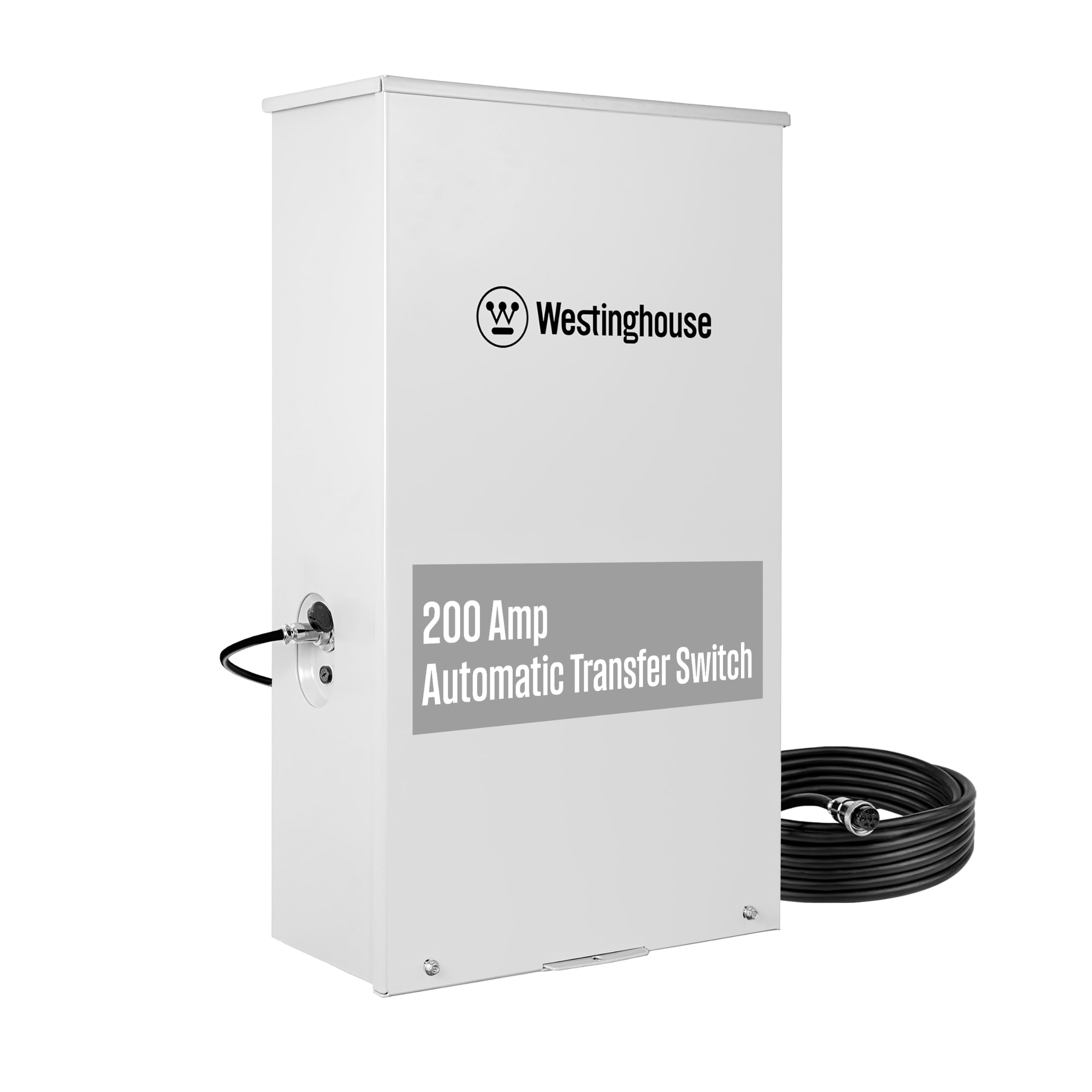
Westinghouse 120/240 Volt, 200 Amp Automatic Portable Generator Transfer Switch, Outdoor Enclosure
Check the current price on Amazon
This unit sits in an unusual spot: automatic operation sized at 200 amps and 120/240 volts, but built for a portable generator rather than a fixed standby unit. The outdoor enclosure means it can live beside the service entrance, and the automatic action removes the need to be home when the grid drops. It suits an owner with a large portable generator who wants failover without committing to a permanently installed standby machine.
The 200-amp rating gives it headroom that most portable-oriented switches lack, which is why it earns a place above the manual panels. It is the middle path between a hand-thrown switch and a full standby install.
Trade-off: Automatic operation depends on the generator being connected and ready, so a portable unit that is stored in a shed or garage still needs to be rolled out and plugged in — the switch automates the transfer, not the setup.
4. Connecticut Electric EmerGen Transfer Switch Kit — Best Budget Circuit-by-Circuit Kit
Type: Manual transfer switch kit
Amperage: 30 Amp
Circuits: 10
Cord: 10-foot included
Capacity: 7500 Watts
Price Tier: Mid

Check the current price on Amazon
This is a complete kit rather than a bare switch: a 30-amp, 10-circuit manual panel with a 10-foot cord included, rated for 7500 watts. The circuit-by-circuit layout is the practical part — the owner chooses which ten circuits matter, so the fridge, furnace, and a few lights can be backed up while the rest of the house stays off. The included cord removes a separate purchase that trips up first-time buyers.
It suits a household with a mid-size portable generator that wants targeted backup on a budget, and the kit format makes it the easiest of the manual options to plan around. The 30-amp limit is the number to check against the generator’s output before buying.
Trade-off: Ten circuits at 30 amps is a modest envelope — a home with electric heat, a well pump, or a large A/C unit will find the capacity tight, and expansion means a different panel entirely.
5. Nature’s Generator 30A Non-Automatic Transfer Switch — Best Manual Panel for Future Growth
Type: Non-automatic (manual) transfer switch
Amperage: 30 Amp
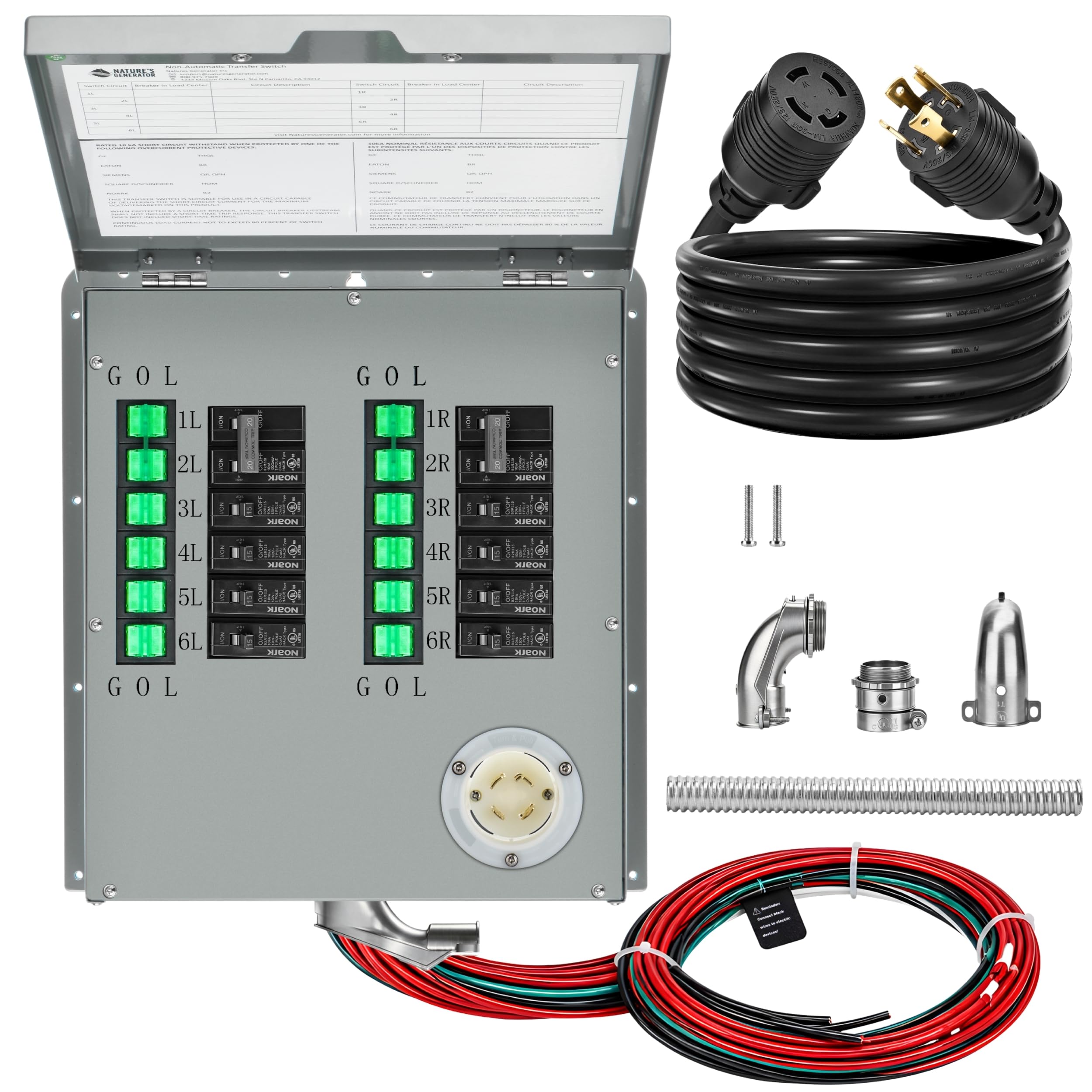
Circuits: 12
Voltage: 120/240 Volt
Approval: UL approved
Install: Pre-wired for generator
Price Tier: Mid
Check the current price on Amazon
This panel offers twelve circuits at 30 amps across 120/240 volts, UL approved and pre-wired for a generator connection. The extra two circuits over the ten-circuit kit are the reason it appears here — a homeowner backing up a furnace, fridge, freezer, networking gear, and a spread of lighting runs out of slots faster than expected. The 240-volt support means a well pump or a small 240-volt load can be included, which a 120-volt-only panel cannot handle.
It suits the planner who wants a manual setup with a little room to spare and does not mind throwing the switch personally. The pre-wired format shortens install time for an electrician.
Trade-off: It is still a manual panel at 30 amps, so it delivers no automatic failover and no capacity beyond its circuit count — an all-electric house will outgrow it.
Before You Buy
- Amperage: Match the switch rating to the generator’s output and the loads intended to run; 30-amp panels cover targeted circuits, 200-amp units cover a whole service.
- Manual vs automatic: A manual switch is cheaper and needs someone home to throw it; an automatic switch costs more and requires a generator that is connected and ready.
- Enclosure rating: An outdoor install needs a weather-rated enclosure such as NEMA 3R; an indoor panel belongs near the main breaker.
- Circuit count and voltage: Count the circuits that must stay live and confirm whether any 240-volt loads, such as a well pump, need support.
- Compatibility: Confirm the switch matches the generator type — portable versus standby — and the home’s service size before ordering.
- Included accessories: A bundled cord or pre-wired harness saves a separate purchase and simplifies the install.
- Installation: Transfer switch work ties into the main panel and utility feed, so a licensed electrician and a permit are part of the real cost.
Frequently Asked Questions
-
What is the main difference between a manual and an automatic transfer switch?
A manual switch is thrown by hand when power is needed, while an automatic switch senses the outage and transfers on its own. Automatic units cost more and depend on a generator that is connected and ready to run. -
Does a transfer switch size need to match the generator?
Yes — the switch amperage and circuit count should fit both the generator’s output and the loads intended to run. A 30-amp panel suits targeted backup, while a 200-amp service-entrance unit suits whole-home coverage. -
Can a portable generator use an automatic transfer switch?
Some units, such as the Westinghouse model here, are built for portable generators with automatic operation. The generator still has to be connected and ready, so the automation only helps if the unit is set up in advance. -
Is a service-entrance-rated switch necessary?
A service-entrance rating lets the switch sit at the utility feed, which suits a permanent standby install. Homes using a downstream manual panel do not need that rating. -
Why does the enclosure rating matter?
An outdoor location needs a weather-rated enclosure like NEMA 3R to protect the switching components. An indoor panel near the main breaker does not carry that requirement. -
Can a homeowner install a transfer switch alone?
The work connects to the main panel and the utility feed, so a licensed electrician and a permit are the practical route. Mistakes here create backfeed hazards rather than simple malfunctions.
Bottom Line
The best generator transfer switch considerations come down to one question: manual or automatic, and at what amperage. For most homeowners with a portable generator and a modest budget, The Original EZ GENERATOR SWITCH is the straightforward, UL/CSA-approved starting point. Buyers installing a permanent standby system should go straight to the Generac 200 Amp Next Gen Automatic Transfer Switch for service-entrance rating, outdoor enclosure, and integrated surge protection.