Why there are Amazon links here: Brave Review is paid a commission for qualifying Amazon purchases made through the links below. Your price does not change, and using our links is entirely optional. How this works
Best CO Alarm Placement Near a Boiler: 5 Detectors That Fit the Job
Placing a carbon monoxide alarm near a boiler is not the same as placing one in a hallway. Boiler rooms, utility closets and basements are often unheated, cramped and short on outlets, which narrows the field to alarms that run on batteries, mount on a wall or sit on a shelf. This roundup covers five detectors that suit that job, from a budget battery unit to a plug-in model with backup power.
The picks fall into three buyer profiles: renters and homeowners who want a cheap set-and-forget alarm, tech-minded buyers who want a digital readout of low CO levels, and anyone who wants a decade of maintenance-free coverage. The overview below ranks all five so a decision is possible in under a minute.
The Picks at a Glance
| Product | Key Spec | Best Use | Price Tier |
|---|---|---|---|
| First Alert CO400 | Battery powered | Budget pick for a boiler closet | $ |
| Kidde AA Battery CO Detector | AA battery, LED indicators | Simple portable coverage | $ |
| Heiman 735ESY | Low-level digital display, UL 2034 | Early warning in a utility room | $$ |
| First Alert CO710 | 10-year sealed battery, digital display | Maintenance-free long-term install | $$$ |
| Kidde Plug-in with Battery Backup | Plug-in with AA backup, 85 dB alarm | Boiler rooms with a free outlet | $$ |
1. CO400 First Alert Battery Carbon Monoxide Alarm

Power Source: Battery
Type: Standalone carbon monoxide alarm
Brand: First Alert
Model: CO400
Best For: Low-cost coverage in a boiler closet
CO400 First Alert Battery Carbon Monoxide Alarm
The CO400 is the classic entry-level carbon monoxide alarm: a compact battery-powered unit that mounts on a wall or sits on a shelf, with no wiring and no outlet required. That makes it a natural fit for a boiler closet or basement corner where power is awkward to reach. The battery operation also means the alarm keeps working during a power cut, which matters in a room that houses a gas appliance.
It suits renters, landlords fitting out a utility space, and anyone who wants a second alarm as a backup rather than a primary system. The trade-off is that a budget alarm of this type typically lacks a digital readout, so there is no visible CO level to check between alarms.
Trade-off: No display means the unit reports only alarm or no alarm, which is fine for basic coverage but less informative than a digital model.
2. Kidde Carbon Monoxide Detector, AA Battery Powered CO Alarm with LEDs

Power Source: AA batteries
Type: Portable carbon monoxide alarm
Brand: Kidde
Indicators: LEDs
Controls: Test-reset button, low battery indicator
Best For: Portable or temporary coverage
This Kidde unit runs on AA batteries and is built to be carried rather than fixed permanently, which makes it useful for a boiler room that doubles as a workshop or storage area. LED status lights show the unit is powered and working, and the test-reset button gives a quick way to confirm operation. The low battery indicator removes the guesswork about when to swap cells.
It suits buyers who want a flexible alarm that can move between a boiler closet, a caravan or a temporary rental. The trade-off is that portability cuts both ways: a unit that is easy to move is also easy to knock over or forget to re-hang, so it needs a deliberate spot.
Trade-off: The portable design invites misplacement, so a fixed bracket and a consistent home for the unit are worth planning.
3. Heiman 735ESY Low-Level Mini Digital Display CO Alarm
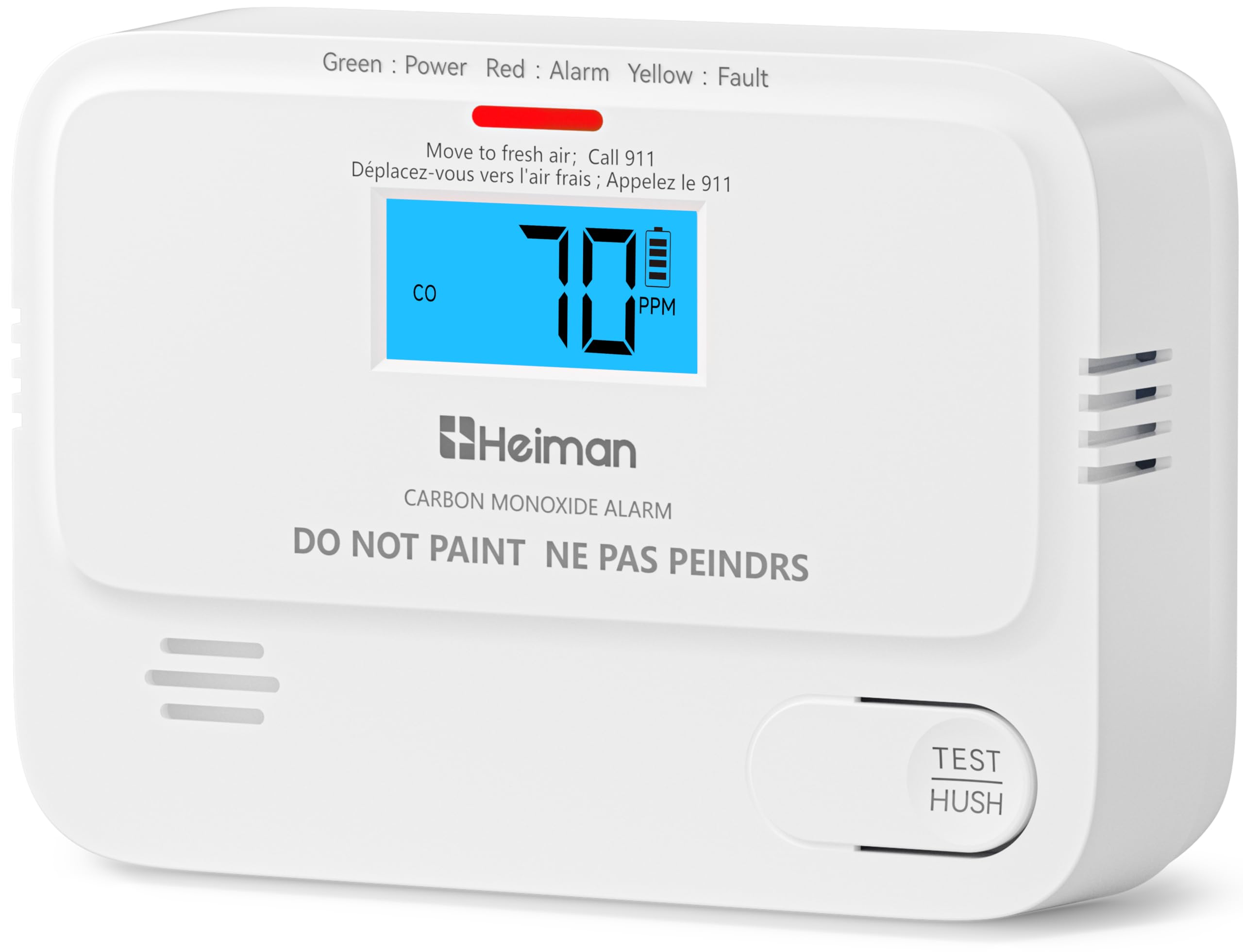
Power Source: AA batteries
Certification: UL 2034
Type: Mini digital-display carbon monoxide alarm
Feature: Low PPM detection, early warning
Model: 735ESY
Best For: Buyers who want to see CO levels, not just alarms
The Heiman 735ESY is the smallest alarm here and the only mini model with a digital display, which is its main selling point. Low-level detection and early warning mean the unit is designed to flag rising CO before it reaches full alarm territory, and the display lets a buyer watch the reading. AA battery operation keeps it independent of the boiler room’s wiring.
It suits detail-oriented buyers who want to see a number rather than wait for a siren, and the compact shell fits tight wall space beside a boiler. The trade-off is that low-level detection can trigger more frequent early alerts, so a buyer should expect the display and warnings to be more active than a basic alarm’s.
Trade-off: Low-level sensitivity means more early warnings, which some buyers will find reassuring and others will find noisy.
4. CO710 First Alert 10-Year Battery Carbon Monoxide Alarm with Digital Display

Power Source: 10-year battery
Type: Sealed-battery carbon monoxide alarm
Brand: First Alert
Model: CO710
Display: Digital
Best For: Set-and-forget coverage in a boiler room
CO710 First Alert 10-Year Battery Carbon Monoxide Alarm with Digital Display
The CO710 is the premium pick: a sealed 10-year battery alarm with a digital display, built so the unit never needs a battery change for its rated life. That removes the most common failure mode of a boiler-room alarm, which is a dead battery nobody noticed. The display shows the CO reading so a buyer can confirm the unit is sampling air.
It suits homeowners who want one install and a decade of coverage, and landlords who want to fit an alarm and forget it. The trade-off is upfront cost: a sealed-battery model costs more than a replaceable-battery alarm, and the whole unit is replaced at end of life rather than just the cells.
Trade-off: The higher upfront price buys convenience, but the entire alarm is retired at the end of its battery life.
5. Kidde Plug-in Carbon Monoxide Detector with AA Battery Backup
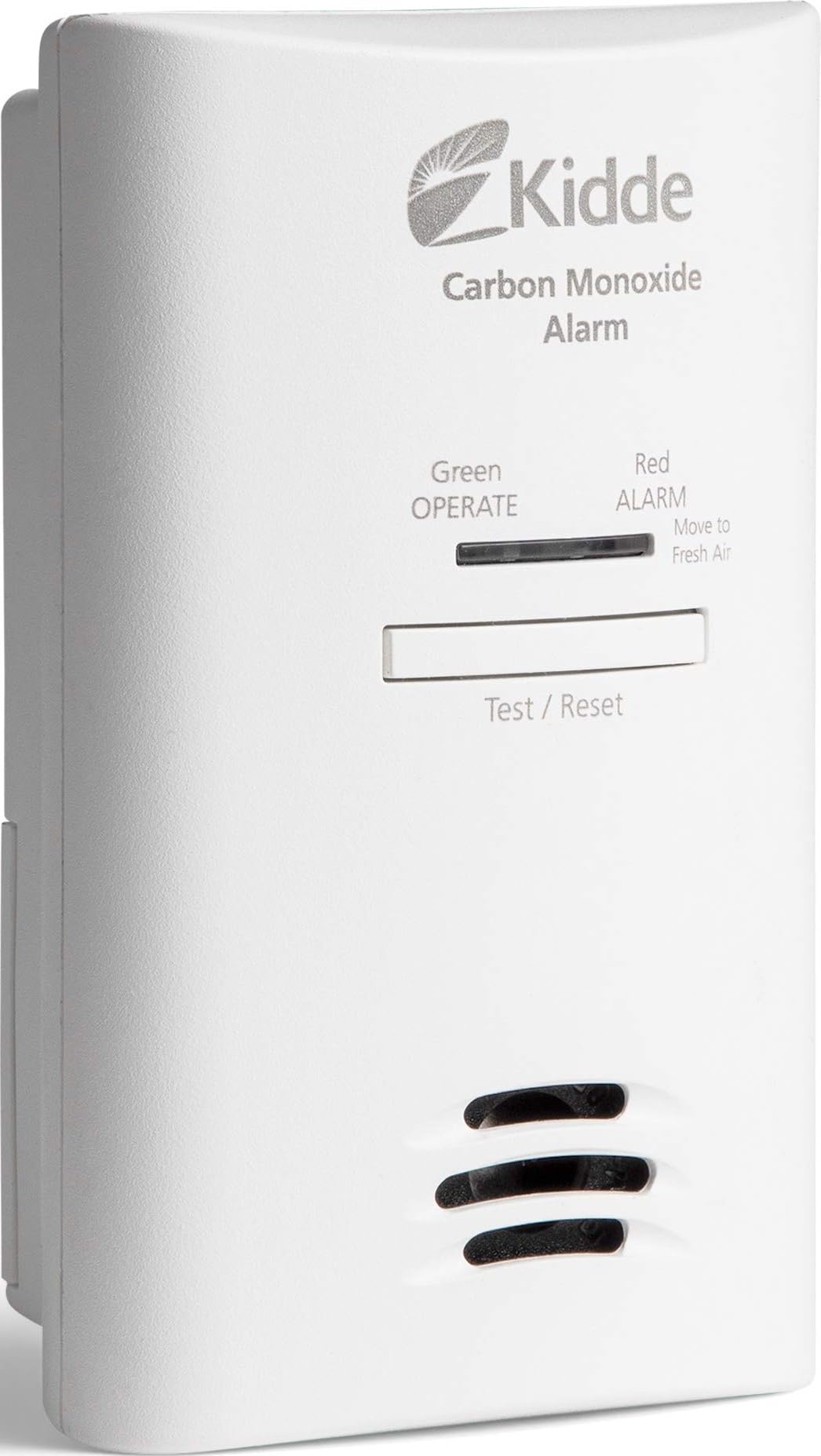
Power Source: Plug-in with AA battery backup
Type: Wall-plug carbon monoxide detector
Brand: Kidde
Alarm: 85 dB
Indicators: LED status lights
Best For: Boiler rooms with a free outlet
This Kidde model plugs directly into a wall outlet and keeps running on AA batteries if the power fails, which is the right combination for a boiler room that has a socket but loses power in a storm. The 85 dB alarm is loud enough to carry through a closed utility door, and LED status lights show power and alarm state at a glance.
It suits buyers whose boiler room has a free outlet and who want mains power without giving up backup. The trade-off is outlet dependency: the unit needs a socket at the right height, and a boiler room with no free outlet will need a battery-only model instead.
Trade-off: The plug-in format limits placement to wherever a socket exists, so outlet position drives the install.
Before You Buy
- Placement height: Boiler rooms vary, so check the alarm’s manual for the recommended mounting height relative to the appliance rather than guessing.
- Power source: Battery-only units suit closets with no outlet; plug-in units with backup suit rooms that have a socket but unreliable power.
- Display: A digital readout shows CO levels between alarms, which helps when monitoring a boiler over time.
- Battery life: Sealed 10-year models remove annual battery changes; replaceable-battery units need a yearly swap.
- Alarm volume: A louder alarm carries better through a closed utility door, which matters if the boiler room is far from living space.
- Certification: Look for a UL 2034 listing on the label as the baseline safety standard.
- Mounting: Confirm the unit can be wall-mounted or shelf-sat in the space available before buying.
Frequently Asked Questions
- Where should a CO alarm go near a boiler? Follow the alarm’s manual for height and distance from the appliance, and keep the unit out of dead-air corners and away from vents that could dilute the reading.
- Is a battery or plug-in alarm better for a boiler room? Battery-only suits rooms without an outlet; plug-in with battery backup suits rooms with a socket that may lose power.
- Does a digital display matter? A display shows CO levels between alarms, which helps when monitoring a boiler over weeks rather than reacting to a single siren.
- How long do these alarms last? Sealed 10-year models run for their rated life; replaceable-battery units need a yearly battery change and eventual replacement of the unit.
- Can one alarm cover a boiler room and the rest of the house? A boiler room is often closed off, so a dedicated alarm there plus coverage in living areas is the safer arrangement.
Bottom Line
For most boiler rooms the CO710 First Alert 10-Year Battery Carbon Monoxide Alarm with Digital Display is the pick that needs the least attention: a sealed battery, a digital readout and a decade of coverage. Buyers on a tight budget or fitting a second alarm should look at the CO400, and anyone with a free outlet who wants mains power with backup should choose the Kidde plug-in model.