Why there are Amazon links here: Brave Review is paid a commission for qualifying Amazon purchases made through the links below. Your price does not change, and using our links is entirely optional. How this works
Kidde RGCUDR-RW Smart Smoke & CO Detector: Ring-Connected Protection Without the Wiring Job
The Kidde RGCUDR-RW is a battery-powered combination smoke and carbon monoxide detector that reports to the Ring app, announces alarms in plain voice, and links wirelessly with other compatible Kidde units. It suits renters, apartment dwellers, and homeowners who want app alerts without hiring an electrician for hardwired units. This review covers the specifications, the build and power trade-offs, maintenance needs, and the questions buyers ask before adding one to a cart.
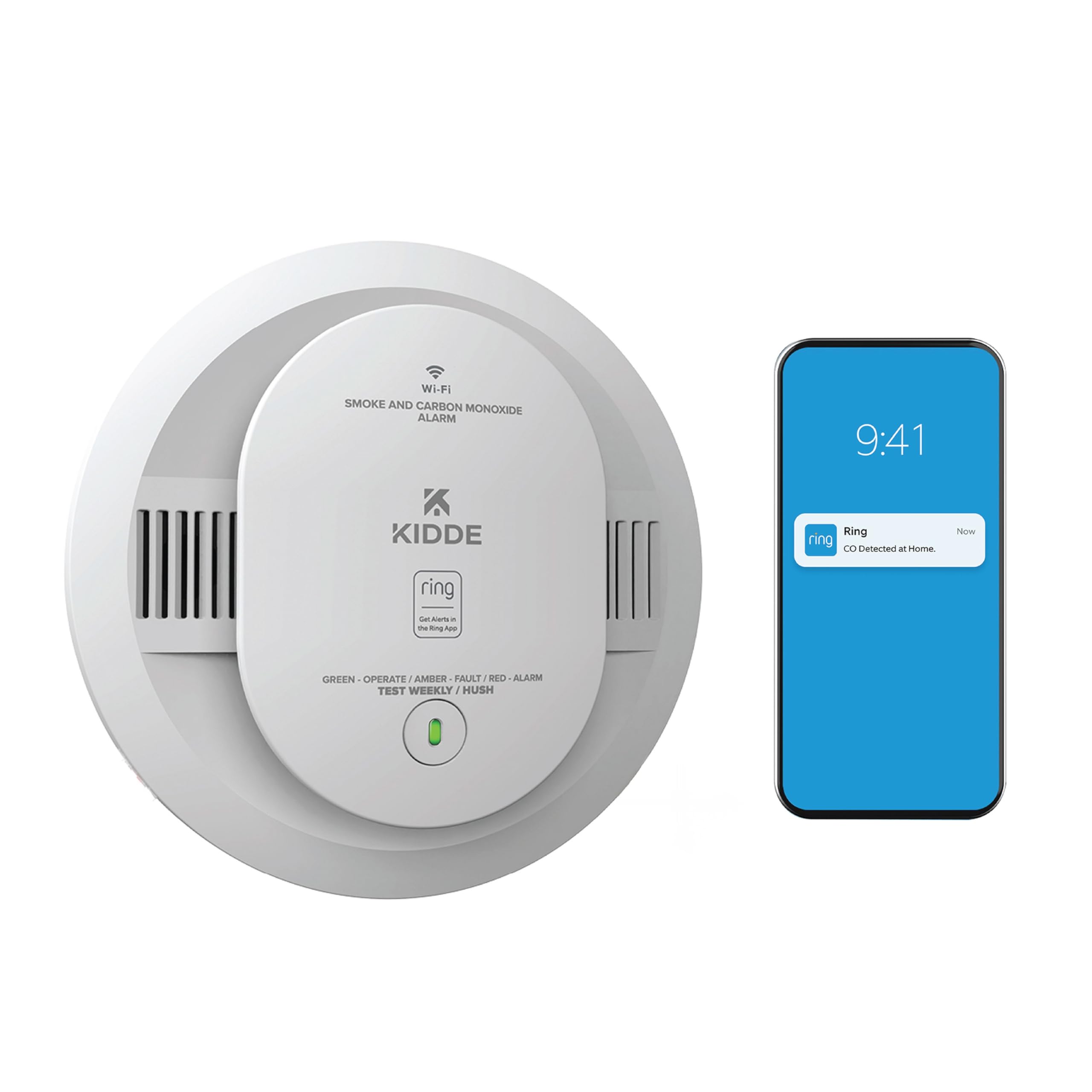
Features and Specifications
Type: Combination smoke and carbon monoxide detector
Connectivity: Ring app enabled, wireless interconnect
Alerts: Voice alerts plus audible alarm
Power source: AA batteries
Intended use: Homes and apartments
Brand line: Kidde with Ring integration
Model: RGCUDR-RW
The core appeal here is the combination of two life-safety sensors in one housing, paired with a smart layer that pushes notifications to a phone. That matters for anyone who travels, works long shifts, or simply wants to know what is happening at home while away.
Wireless interconnect means one unit triggering an alarm can set off compatible Kidde detectors elsewhere in the home, so a basement alarm is heard on the second floor. Voice alerts identify the hazard by name rather than leaving occupants to decode a beep pattern.
Check the current price on Amazon
Build, Sensors, and Smart Connectivity
Dual-Sensor Coverage in One Device
A combination unit replaces two separate devices, which simplifies installation in hallways and small apartments where ceiling space is limited. Smoke detection and carbon monoxide detection use different sensing technologies, and a combined housing means one battery change instead of two.
The practical benefit is fewer devices to track. The trade-off is that a single unit failing or reaching end of life removes both protections at once, so buyers with larger homes should still plan coverage across multiple locations.
Ring App Integration
Ring integration puts detector status and alarm notifications into the same app many households already use for cameras and doorbells. That consolidation is convenient — one place to check on the home rather than a separate manufacturer app.
Buyers should note that this is a Kidde detector built to work with Ring, not a Ring-branded product, and full app features depend on having the Ring ecosystem in place. Someone with no Ring devices gains less from the smart layer than a household already running Ring cameras.
Wireless Interconnect Capability
Interconnect lets compatible Kidde alarms communicate so that an alarm in one room triggers the others. In a multi-story home, that is the difference between hearing an alarm and sleeping through it.
The wireless approach skips the wiring job that hardwired interconnect requires. For renters and older homes without alarm wiring in the walls, that is the whole point — coverage without opening drywall.
Power and Placement
AA Battery Operation
AA batteries mean no hardwiring, no electrician, and no dependence on household current. During a power outage, the detector keeps working, which is exactly when backup protection matters most.
The flip side is battery maintenance. Buyers take on the responsibility of testing and replacing cells on schedule, and a detector with a dead battery protects nobody.
Where It Fits
Homes and apartments are the stated use, and the profile fits both. A renter can install one without landlord involvement; a homeowner can add coverage in a finished basement or bedroom wing without running wire.
Larger properties will likely need more than one unit to meet typical coverage expectations, which pushes total cost up beyond the price of a single detector.
Installation and Maintenance
Installation is a battery-and-bracket job rather than a wiring project, which keeps it within reach of most households. The Ring app setup handles the smart side, pairing the detector with the home network.
Maintenance comes down to routine testing and battery replacement, plus watching for end-of-life signals that all detectors eventually give. Voice alerts help here — a spoken warning is harder to ignore than a chirp.
Trade-off: Battery power and app dependence mean the detector is only as reliable as its cells and the home network, so buyers who want zero maintenance or who lack stable Wi-Fi should weigh a hardwired alternative.
Who It Suits and Who It Does Not
This detector suits renters who cannot modify wiring, apartment dwellers who want app visibility, and Ring households that value one dashboard for home safety. It also fits anyone replacing an aging standalone alarm who wants smarter notifications without a renovation.
It does not suit buyers who refuse app-based setup, households with unreliable internet and no interest in troubleshooting connectivity, or large properties expecting one unit to cover everything. Those buyers need a different plan — hardwired systems or multiple interconnected units.
See the Kidde RGCUDR-RW on Amazon
FAQ
-
What is the Kidde RGCUDR-RW?
It is a battery-powered combination smoke and carbon monoxide detector with Ring app connectivity, voice alerts, and wireless interconnect capability, intended for homes and apartments. -
Does this detector need to be hardwired?
No. It runs on AA batteries, which is the main reason it suits renters and homes without existing alarm wiring. -
Does it work without Ring?
The detector functions as a standalone smoke and CO alarm, but the app alerts and smart features depend on Ring integration, so the value of those features scales with the household’s Ring setup. -
Can it alert other detectors in the house?
Yes. Wireless interconnect capability allows compatible Kidde units to communicate, so an alarm in one location can trigger others. -
What do the voice alerts do?
Voice alerts announce the type of hazard, helping occupants distinguish a smoke event from a carbon monoxide event without interpreting beep patterns. -
Is it good for apartments?
Yes. Battery power and wireless interconnect avoid wiring changes, which matters in rentals where modifications are restricted. -
How many units does a home need?
Coverage depends on layout and size. Most homes need detectors on each level and near sleeping areas, so a single unit is a starting point rather than full coverage. -
What maintenance does it require?
Routine testing and AA battery replacement, plus attention to end-of-life indicators. Skipping battery changes is the most common way any detector fails. -
Who should not buy it?
Buyers who want no app involvement, households with unstable connectivity, and large properties expecting one device to cover everything should look at hardwired or multi-unit options instead.
Bottom Line
The Kidde RGCUDR-RW earns its place for buyers who want smoke and carbon monoxide protection with app alerts and voice warnings but cannot or will not hardwire. Battery power and Ring integration make it flexible, while the maintenance and connectivity caveats are the price of that flexibility. For renters and Ring households, it is a sensible single-unit upgrade.