Why there are Amazon links here: Brave Review is paid a commission for qualifying Amazon purchases made through the links below. Your price does not change, and using our links is entirely optional. How this works
Best Fuel Storage and Safety for a Generator for Safe, Spill-Free Refueling
A generator is only as good as the fuel sitting beside it, and the wrong container turns a power outage into a hazard. This guide covers five containers built for storing and moving gasoline safely, from a basic five-gallon safety can to a wheeled caddy that feeds a generator directly. The picks suit three types of buyers: homeowners keeping a small backup generator topped off, campers and job-site users who transport fuel regularly, and anyone running a larger generator who wants to skip the lifting entirely. The overview below shows the differences at a glance before the detailed reviews.
Overview of the Picks
| Product | Key Spec | Best Use | Price Tier |
|---|---|---|---|
| Eagle UI50FS 5 Gallon Type I Safety Gas Can | 5-gallon Type I, flame arrester, self-closing lid | Simple, code-compliant storage | Mid |
| Justrite Type II 5 Gallon Safety Can | 5-gallon Type II, 1" metal hose, controlled pouring | Precision pouring, no spills | Premium |
| Scepter FSCG552 5 Gal Gas Can | 5-gallon, EPA/CARB compliant, SmartControl spout | Everyday homeowner use | Budget |
| 15 Gallon Wheeled Fuel Caddy | 15-gallon, manual siphon pump, 10 ft hose | Long outages, large generators | Premium |
| Scepter Duramax Flo ‘N Go 14 Gallon Gas Caddy | 14-gallon, transfer pump, 10 ft hose | Fast refills without lifting | Mid |
Eagle UI50FS 5 Gallon Type I Safety Gas Can
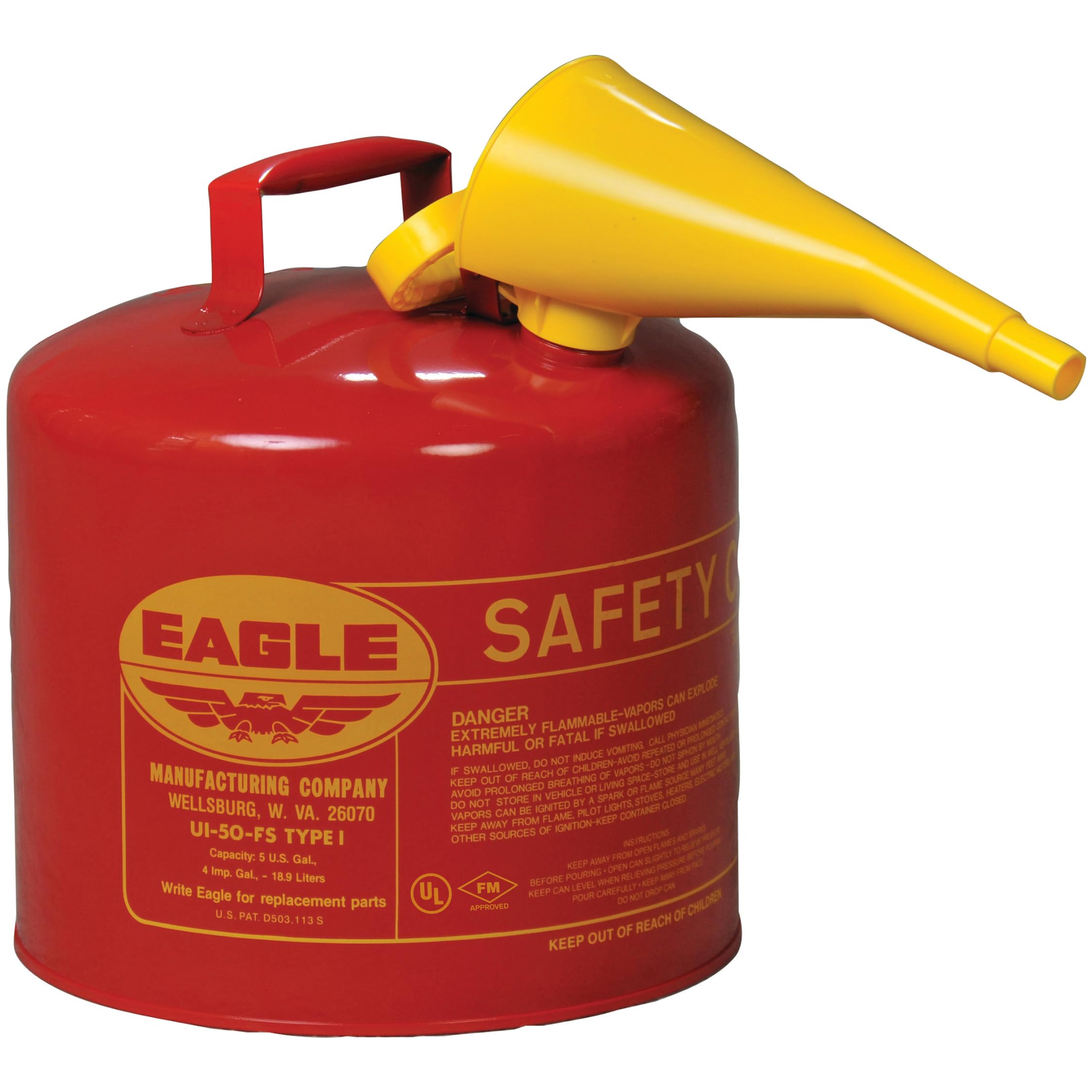
Capacity: 5 gallons
Type: Type I safety can
Material: Galvanized steel
Safety Features: Flame arrester, self-closing lid
Included: F-15 funnel
Origin: Made in the USA
The Eagle can is the straightforward option: a galvanized steel body, a flame arrester in the spout, and a lid that closes itself so fumes stay contained. The F-15 funnel tucks into the design so refueling a generator’s tank is cleaner than pouring from an open spout. Steel construction resists the warping and punctures that plastic cans can suffer over years of garage storage. It is aimed at homeowners who want a single rugged can that lives beside a generator and gets used a few times a season.
This pick earned its place because it keeps the safety hardware simple and durable, without a complex spout mechanism to fail. Buyers who want maximum pour control or a hose should look elsewhere. Trade-off: The Type I design pours from the same opening used to fill, so a steady hand is required and the can is heavier to handle when full than a plastic equivalent.
Justrite Type II 5 Gallon Safety Can

Capacity: 5 gallons
Type: Type II safety can
Material: Galvanized steel
Hose: 1" metal hose
Safety Features: Flame arrester, controlled pouring
Compliance: OSHA, NFPA, FM Approved
The Justrite Type II separates the fill opening from the pour spout, and that difference matters: the 1-inch metal hose lets fuel go exactly where it is aimed, which is useful when a generator’s filler neck sits behind a frame or below a hot surface. The galvanized steel body and flame arrester match the Eagle’s safety approach, while the listed OSHA, NFPA and FM approvals make it the choice for buyers who need documented compliance. It is aimed at frequent users and anyone refueling equipment in a commercial or shared setting.
This can earned its place as the premium pick because the controlled-pour design removes most of the spill risk that comes with a single-opening can. Buyers on a tight budget who refuel twice a year likely do not need the extra hardware. Trade-off: The hose and second opening add cost and a component that needs care, and the can still requires lifting a full five gallons into position.
Scepter FSCG552 5 Gal Gas Can

Capacity: 5 gallons
Material: Plastic
Compliance: EPA/CARB compliant
Spout: Spill-proof SmartControl spout
Included: Spout extender
Dimensions: 15-1/4" H x 10" W x 12" D
Handle: Rear handle
The Scepter is the practical everyday can: a plastic body that stays lighter than steel when full, a rear handle that balances the weight during a pour, and a SmartControl spout designed to stop spills and control flow. The included spout extender reaches into a generator’s tank without tipping the can as far. EPA and CARB compliance means it meets current evaporative-emission rules, which matters in states that enforce them at the pump and in storage. It is aimed at homeowners who want a compliant can at a low price and refuel a generator by hand.
This pick earned its place as the budget option because it covers the basics — spill control, a workable handle and current compliance — without the cost of steel. Buyers storing fuel long-term in a hot garage may prefer metal. Trade-off: Plastic construction is lighter but less durable against heat, abrasion and long-term fuel exposure than a steel can, and the can is gasoline-only.
15 Gallon Wheeled Fuel Caddy
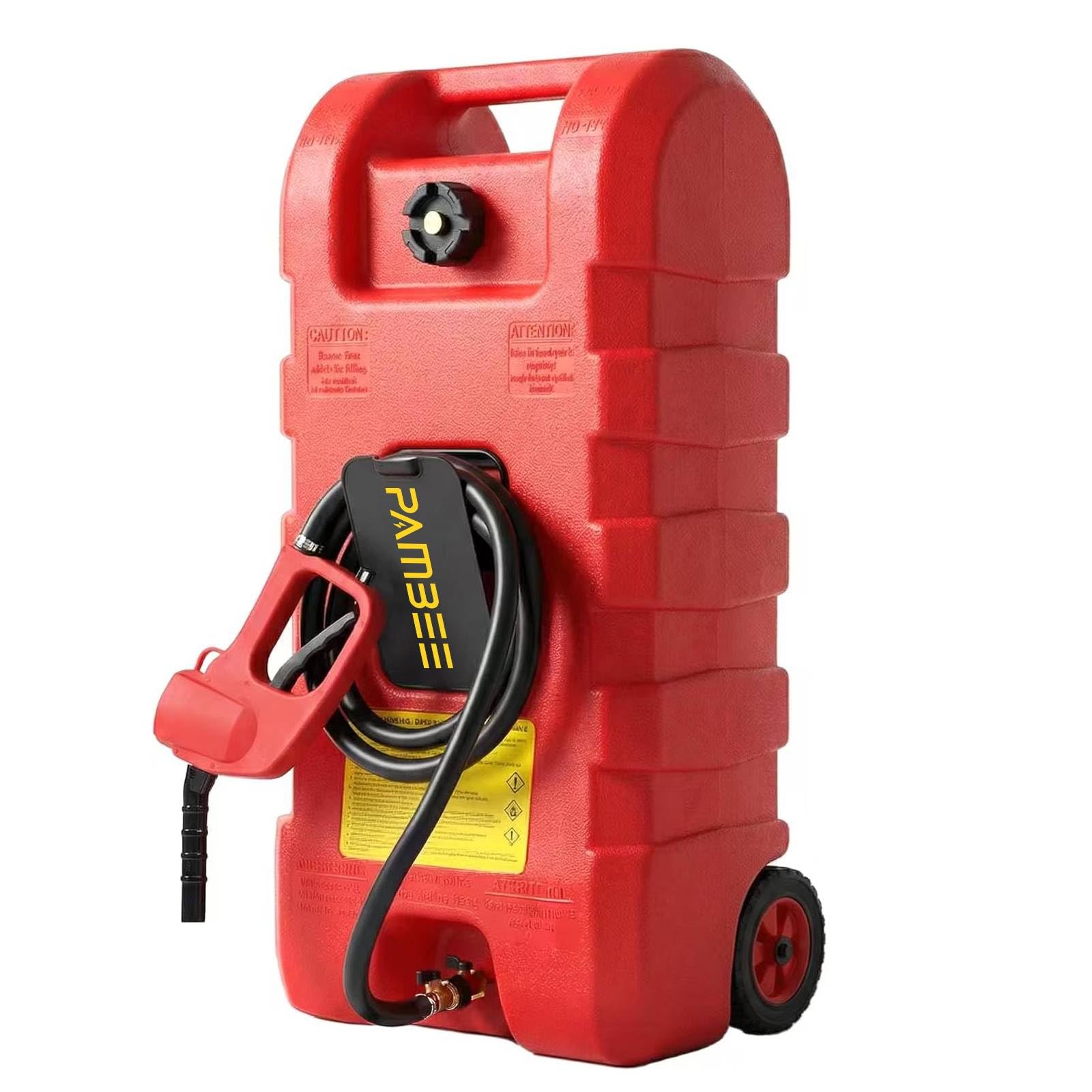
Capacity: 15 gallons
Type: Wheeled fuel caddy
Transfer: Manual siphon pump
Hose: 10 ft
Fuel: Gasoline or diesel
Applications: Car, ATV, boat, lawn mower, generator
This caddy holds 15 gallons, rolls on wheels and moves fuel through a manual siphon pump and a 10-foot hose, which means a generator can be refilled without lifting a heavy can at all. The larger capacity suits multi-day outages where a small generator burns through five gallons quickly. It handles gasoline or diesel, so the same unit works for a generator, an ATV, a boat or a mower. It is aimed at buyers with a larger generator, a long driveway or equipment that is awkward to reach with a can.
This pick earned its place because it solves the weight problem that makes five-gallon cans unpleasant during a prolonged outage. Buyers with a small generator and limited storage space may find it oversized. Trade-off: The caddy costs more and takes up far more floor space than a can, and the manual pump means refueling is still a hands-on job rather than a gravity pour.
Scepter Duramax Flo ‘N Go 14 Gallon Gas Caddy
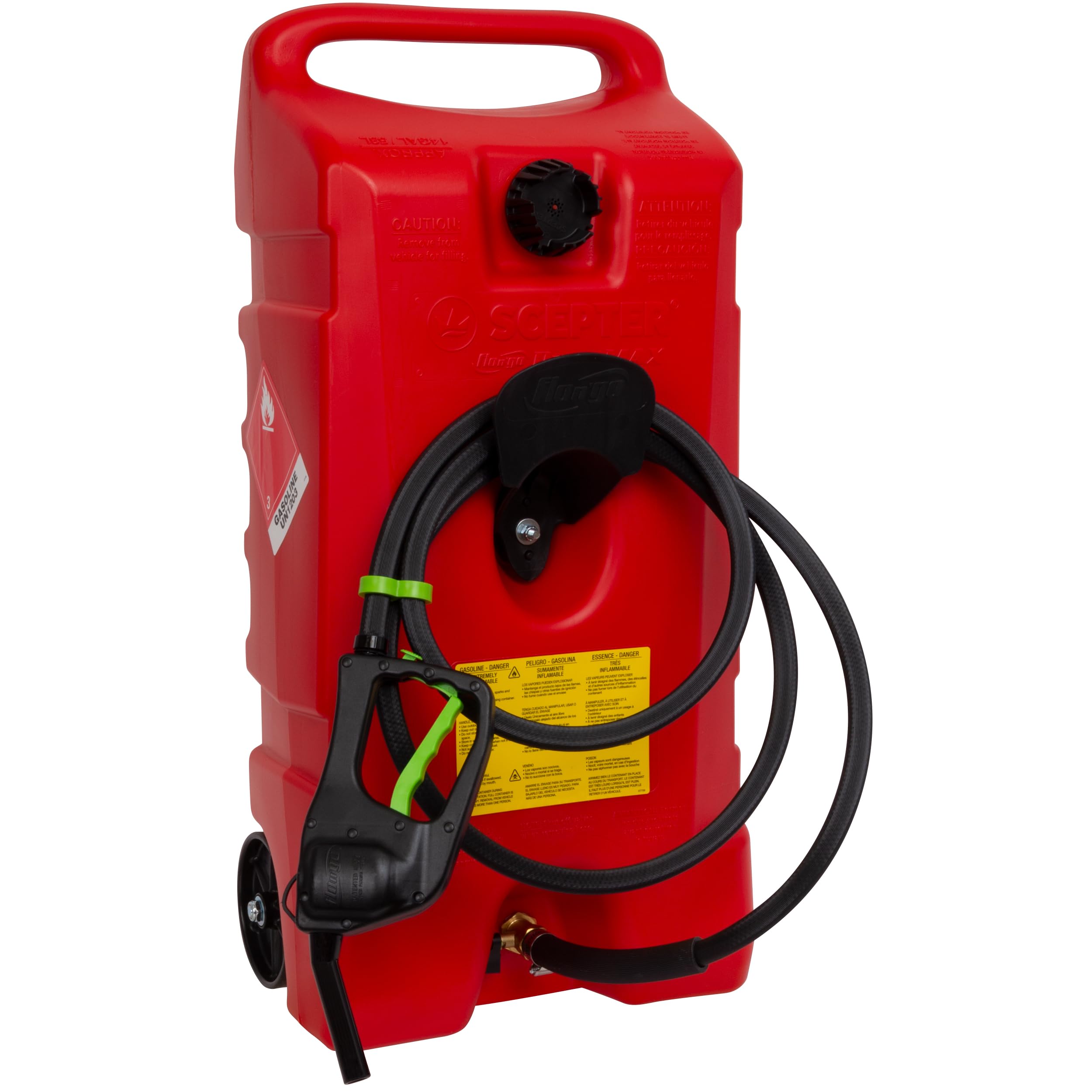
Capacity: 14 gallons (53 liters)
Type: Portable gas caddy
Transfer: Fuel transfer pump
Hose: 10 ft
Applications: Lawn mower, farm, marine, commercial, home
Version: Updated version
The Flo ‘N Go pairs a 14-gallon tank with a built-in transfer pump and a 10-foot hose, so fuel moves from caddy to generator through the pump rather than by tipping. The updated version is built for repeated use across a lawn mower, farm equipment, a boat or a home generator. The 53-liter capacity sits just under the 15-gallon caddy, keeping the unit a little more manageable to store and roll. It is aimed at buyers who refuel often and want a pump-based transfer without paying the highest price in the category.
This pick earned its place as the mid-tier caddy: it delivers the no-lift convenience of a wheeled tank at a lower cost than the largest option. Buyers who only need a few gallons for a small generator will find it more than necessary. Trade-off: The pump and hose add parts that need care and occasional attention, and the caddy still occupies significant storage space compared with a five-gallon can.
Before You Buy
- Material: Steel cans resist heat and punctures and suit long-term garage storage; plastic cans are lighter and cheaper but degrade faster with fuel and sun exposure.
- Capacity: Match the container to the generator’s burn rate — a five-gallon can covers a short outage, while a 14- or 15-gallon caddy suits multi-day runs.
- Transfer method: A single-opening can requires lifting and a steady hand; a Type II hose or a pump-based caddy reduces spills and strain.
- Compliance: Check that the container meets current EPA/CARB or OSHA and NFPA requirements, especially in states that enforce evaporative-emission rules.
- Storage: Fuel belongs in a cool, ventilated space away from ignition sources; a caddy needs floor space, while a can fits on a shelf.
- Included accessories: Funnels, spout extenders and hoses make refueling cleaner, so confirm what comes in the box before buying.
Frequently Asked Questions
-
What is the safest container for generator fuel?
A steel safety can with a flame arrester and self-closing lid, such as the Eagle or Justrite, offers the strongest protection. Compliance listings add assurance for commercial use. -
How much fuel should be stored for a generator?
It depends on the generator’s consumption and expected outage length. A five-gallon can covers short runs; a 14- or 15-gallon caddy suits extended use. -
Is a Type I or Type II can better for refueling a generator?
Type II cans pour through a separate hose, which gives more control and less spill risk. Type I cans are simpler and cheaper but need a steadier hand. -
Can a fuel caddy store diesel as well as gasoline?
The wheeled 15-gallon caddy is listed for both gasoline and diesel. Confirm the specific container’s stated fuel before filling. -
How long can gasoline be stored safely?
Gasoline degrades over time, so fuel should be rotated and not left sitting for extended periods. Storage in a sealed, compliant container slows the process. -
Do fuel containers need to meet EPA or CARB rules?
Many states enforce evaporative-emission standards, so a compliant container like the Scepter avoids problems at the pump and in storage.
Bottom Line
For most homeowners, the Eagle UI50FS 5 Gallon Type I Safety Gas Can is the best fuel storage and safety for a generator: galvanized steel, a flame arrester, a self-closing lid and an included funnel cover the essentials without extra complexity. Buyers who refuel often or need documented compliance should step up to the Justrite Type II, while anyone running a large generator through a multi-day outage will get the most from a wheeled caddy.