Why there are Amazon links here: Brave Review is paid a commission for qualifying Amazon purchases made through the links below. Your price does not change, and using our links is entirely optional. How this works
Best Robot Vacuum Privacy Settings for Locked-Down Smart Cleaning
A robot vacuum only respects privacy when the hardware and app behind it allow it. The five picks below cover the range: a budget model for buyers who want app controls without a big outlay, mid-range self-emptying units for pet owners, and a premium dock system for households that want the most automation. Each entry notes what the machine stores, how the app handles mapping data, and where the privacy trade-offs sit. The overview table below sorts all five by key spec and price tier so a decision can be made in under a minute.
Overview of the Picks
| Product | Key Spec | Best Use | Price Tier |
|---|---|---|---|
| ROPVACNIC Robot Vacuum and Mop Combo | 5200Pa suction, app control | Budget buyers testing app-based cleaning | Budget |
| Airzeen Bagless Robot Vacuum and Mop | LiDAR navigation, 45-day self-empty | Pet hair and carpet on a mid budget | Mid-range |
| Robot Vacuum and Mop for Pet Hair | 11500Pa suction, 90-day self-empty | Long-runtime pet households | Mid-range |
| Shark AV2501S AI Ultra | Matrix Clean, 30-day HEPA base | Allergy-focused buyers wanting a known brand | Mid-range |
| roborock Qrevo S Pro | 18,500Pa suction, self-cleaning dock | Maximum automation and suction | Premium |
ROPVACNIC Robot Vacuum and Mop Combo
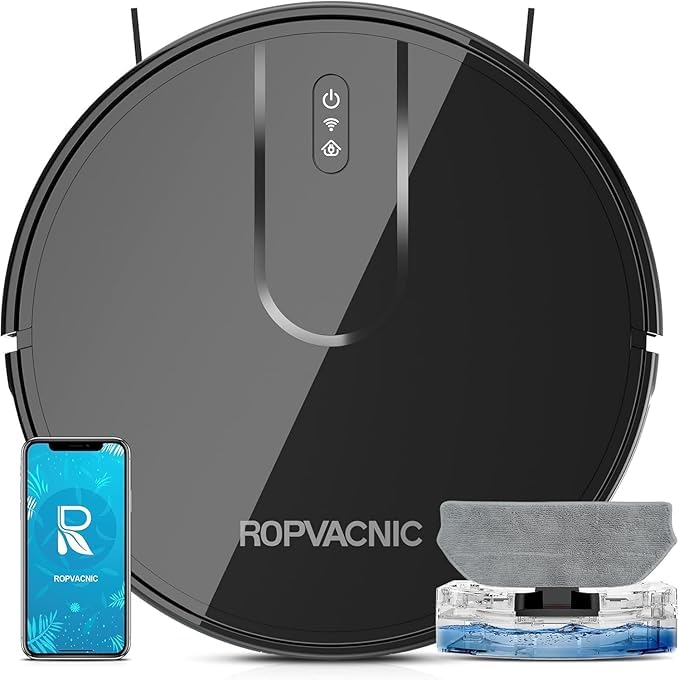
Suction: 5200Pa
Control: App control
Cleaning Adjustments: Personalized settings
Obstacle Handling: Advanced obstacle avoidance
Charging: Self-charging
Intended Use: Home use
ROP VACNIC Robot Vacuum and Mop Combo
This is the entry point into app-managed cleaning. The 5200Pa suction handles everyday dust and light debris on hard floors, and the mop combo adds a pass for sticky spots. Personalized cleaning adjustments in the app let a household tune suction and scheduling per room rather than running one blanket program. Advanced obstacle avoidance keeps it from wedging under low furniture, and self-charging means it returns to base without intervention.
The privacy angle here is straightforward: app control means a phone talks to the vacuum, so the household should review what the app requests at setup and limit permissions to the minimum needed. It suits renters and first-time buyers who want connected cleaning without paying for a self-empty dock.
Trade-off: The budget tier means a smaller onboard dustbin and a mop system that needs manual attention, so frequent emptying and refilling become part of the routine.
Check the current price on Amazon
Airzeen Bagless Robot Vacuum and Mop Self-Emptying
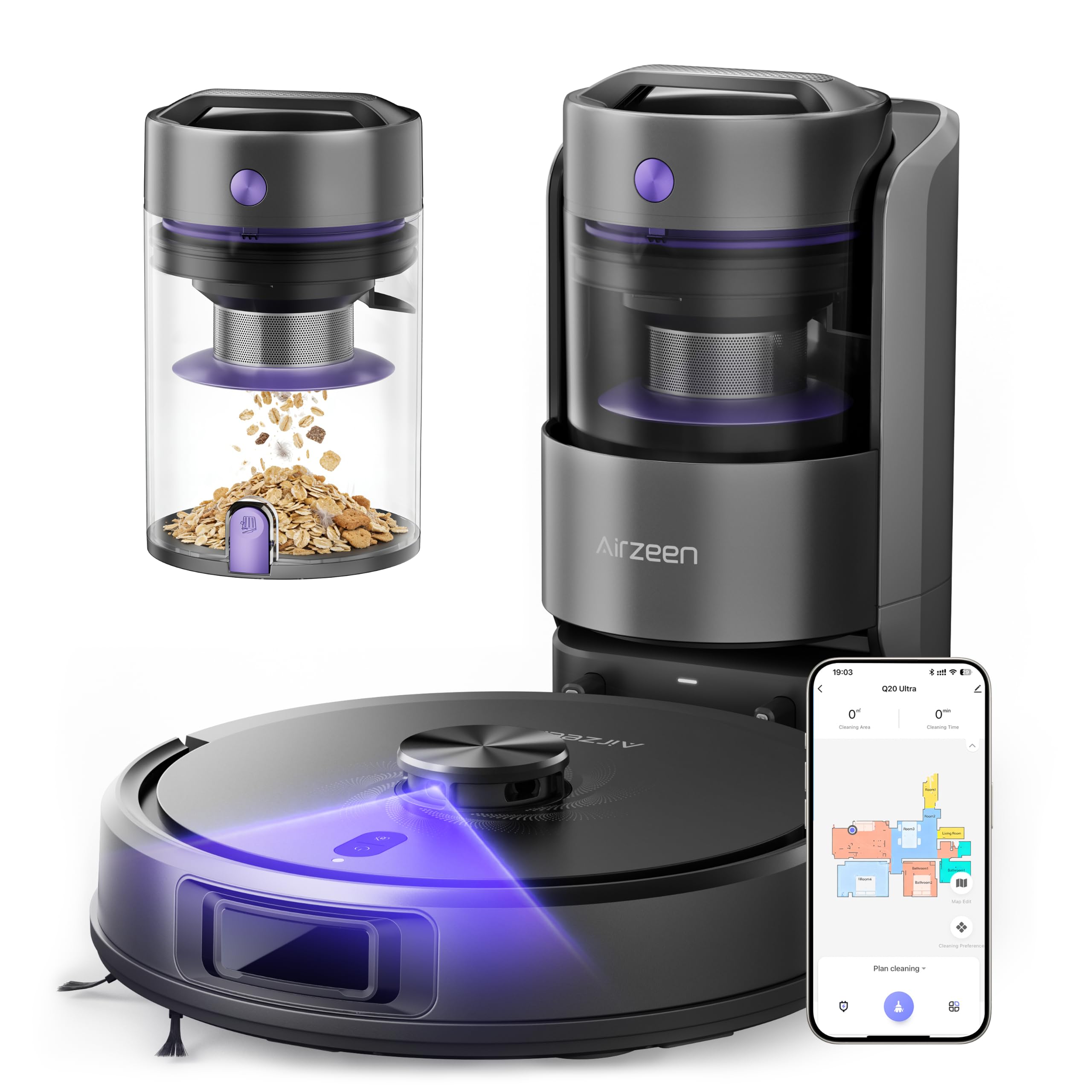
Suction: 6000Pa
Navigation: LiDAR
Self-Emptying: 45-day hands-free capacity
Mapping: Home mapping
Control: App and Alexa
Settings: Customizable cleaning settings
Design: Bagless
Airzeen Bagless Robot Vacuum and Mop Self-Emptying
LiDAR navigation is the privacy-relevant feature here. The vacuum builds a map of the home using a spinning sensor rather than a camera, which keeps visual data out of the equation. Home mapping in the app stores that floor plan, so buyers should check whether the map lives on the device, in the cloud, or both. The 45-day self-empty base cuts down on contact with dust, and the bagless design avoids buying bags.
The 6000Pa suction and customizable settings make it a reasonable fit for carpet and pet hair. Alexa control adds voice convenience but also means a third-party assistant is in the loop, which is worth weighing for privacy-focused households.
Trade-off: The self-empty base adds footprint and noise, and cloud-dependent mapping means the app’s data policy matters more than the hardware itself.
Check the current price on Amazon
Robot Vacuum and Mop for Pet Hair, 11500Pa Suction
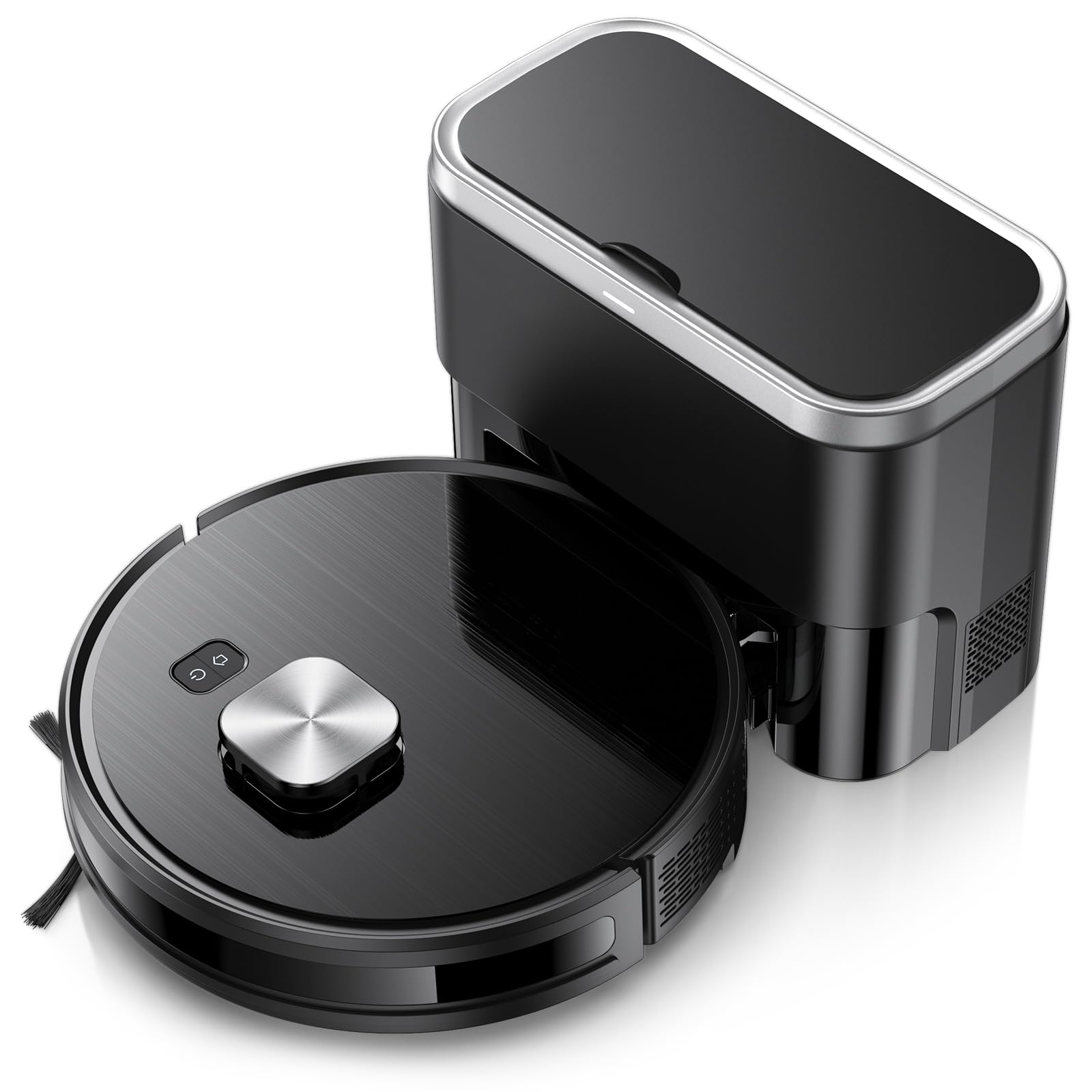
Suction: 11500Pa
Self-Emptying: 90-day hands-free capacity
Navigation: LiDAR
Runtime: 160 minutes
Functions: 3-in-1 vacuum and mop
Control: Alexa and Google Assistant
Intended Use: Pet owners
Robot Vacuum and Mop for Pet Hair, 11500Pa Suction
The 90-day self-empty cycle is the headline: a household can go months without touching the bin. LiDAR navigation keeps mapping sensor-based rather than camera-based, and the 160-minute runtime covers larger floors on a single charge. The 11500Pa suction is strong enough for embedded pet hair, and the 3-in-1 vacuum and mop setup handles both hard floor and carpet transitions.
Alexa and Google Assistant support add voice control, which again means a third-party platform sees commands. Pet owners who shed a lot will appreciate the capacity; privacy-minded buyers should review both the vacuum app and the assistant’s data settings.
Trade-off: The long self-empty interval means a large dock, and the dual-assistant integration widens the data surface compared with an app-only model.
Check the current price on Amazon
Shark AV2501S AI Ultra Robot Vacuum
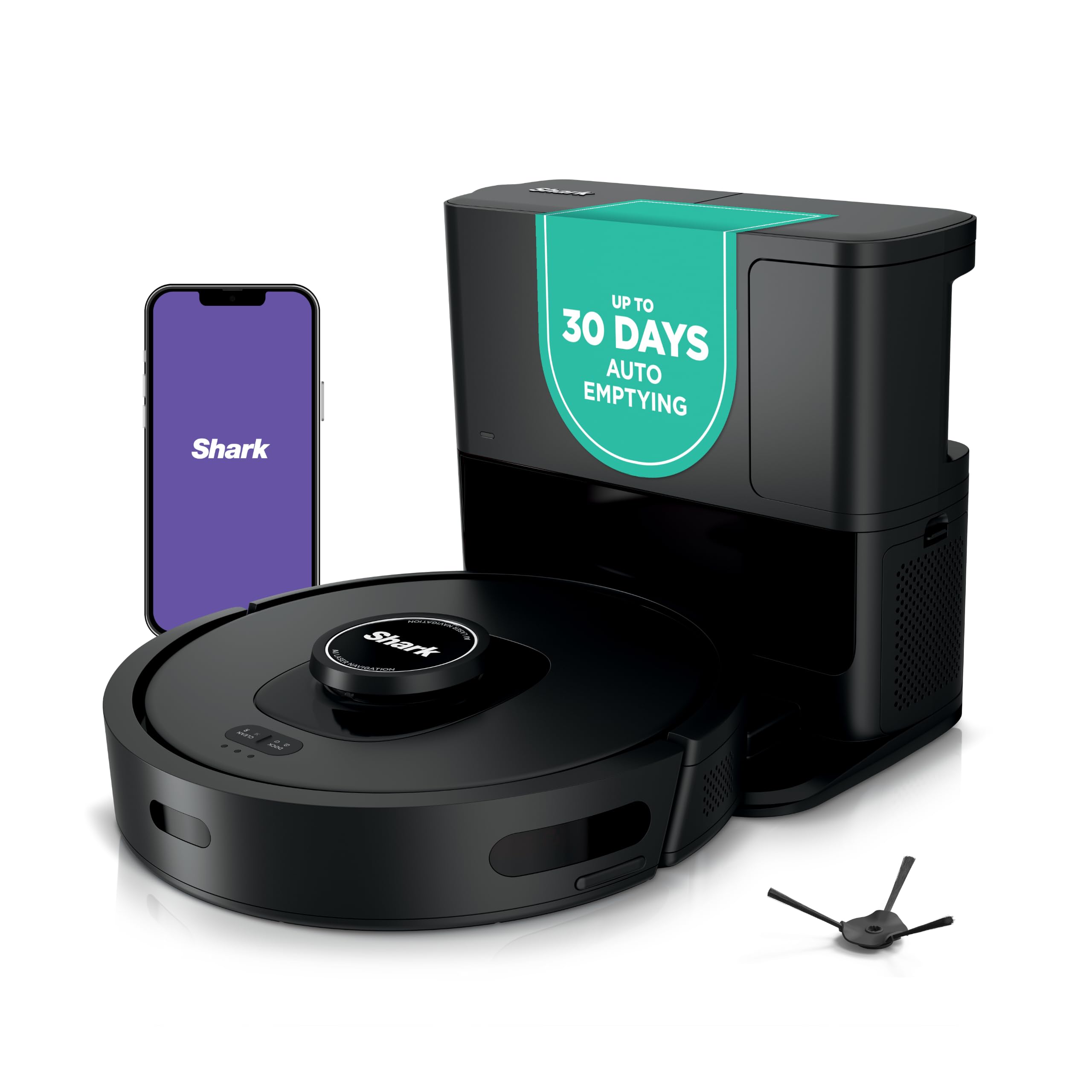
Navigation: Home mapping
Cleaning System: Matrix Clean
Self-Emptying: 30-day capacity
Filtration: HEPA, bagless
Connectivity: Wi-Fi
Intended Use: Pet hair
Color: Dark Grey
Shark AV2501S AI Ultra Robot Vacuum
A known brand with a HEPA bagless base is the draw here. Matrix Clean describes the vacuum’s grid-style cleaning pattern, and home mapping lets the app target specific rooms. The 30-day self-empty capacity is shorter than the pet-focused pick above but still means monthly rather than daily bin duty. HEPA filtration matters for allergy households, and the bagless base avoids recurring bag purchases.
Wi-Fi connectivity and app mapping are the privacy considerations. A household should check the app’s account requirements and whether map data can be deleted locally.
Trade-off: The 30-day base capacity is the shortest self-empty interval in this group, and brand-ecosystem apps often require an account to unlock full mapping.
Check the current price on Amazon
roborock 2026 New Qrevo S Pro Robot Vacuum and Mop
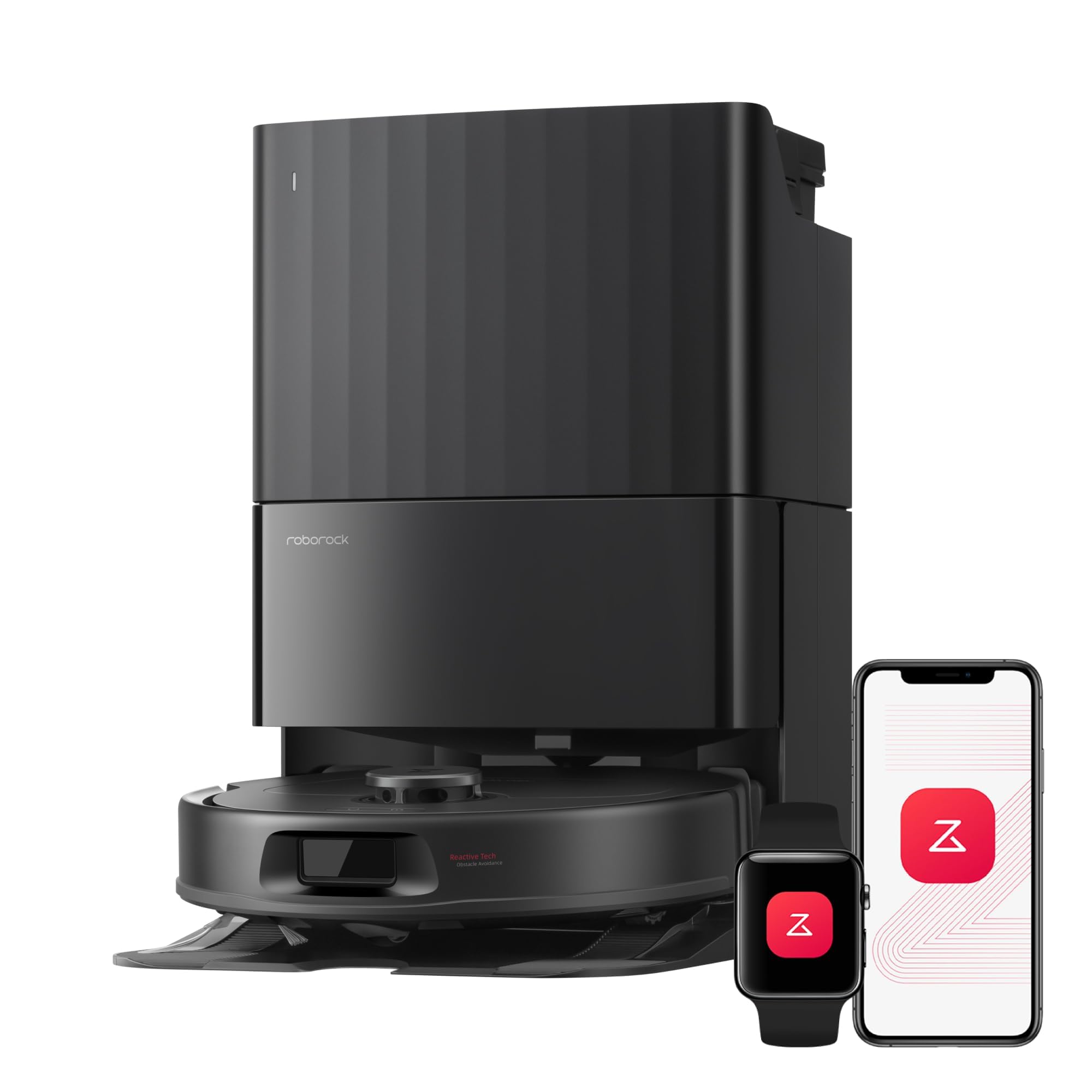
Suction: 18,500Pa
Dock: Multifunctional with 167°F mop self-cleaning
Mop System: Liftable spinning mop
Brush: Anti-tangle
Obstacle Handling: Smart obstacle avoidance
Color: Black
roborock 2026 New Qrevo S Pro Robot Vacuum and Mop
The premium pick pairs the highest suction in this roundup with a dock that washes the mop at 167°F. The liftable spinning mop raises off the floor for carpet passes, and the anti-tangle brush reduces hair wrap. Smart obstacle avoidance keeps it moving around clutter, and the multifunctional dock consolidates self-emptying and mop cleaning into one station.
For privacy, the dock’s automation is the story: more sensors and more app-managed routines mean more data flowing through the companion app. Buyers paying at this tier should expect to spend time in the app’s privacy settings to limit what gets stored and shared.
Trade-off: The premium price and large dock footprint make it a poor fit for small apartments, and the feature depth means a steeper app learning curve.
Check the current price on Amazon
Before You Buy
- Navigation type: LiDAR uses a spinning sensor and avoids camera imagery; camera-based or AI obstacle systems may capture visual data, so match the sensor to the household’s comfort level.
- Mapping storage: Check whether floor plans live on the device, in the cloud, or both, and whether the app allows local-only mode or map deletion.
- Account requirements: Some apps demand a full account to unlock scheduling and mapping; confirm what is mandatory before purchase.
- Voice assistant integration: Alexa and Google Assistant add convenience but loop in a third party, so review the assistant’s data settings as well as the vacuum app’s.
- Self-empty capacity: A 90-day base means less contact with dust but a larger dock; a 30-day base suits smaller spaces.
- Filtration: HEPA bases help allergy households; bagless designs avoid recurring bag costs but need periodic cleaning.
- Mop maintenance: Self-cleaning docks reduce manual work; mop pads on budget models need hand washing.
Frequently Asked Questions
- Do robot vacuums record video? Some models use cameras for obstacle avoidance, while LiDAR models map with a sensor instead. The picks here lean on LiDAR or app mapping, which limits visual data collection.
- Can a robot vacuum work without the cloud? Many app features require an internet connection, but scheduling and basic cleaning usually run on-device. Buyers should check whether local-only operation is supported.
- What are the best robot vacuum privacy settings to change first? Start with map storage and account permissions, then disable any optional data sharing and review voice assistant links.
- Is LiDAR more private than a camera? LiDAR builds a map from distance measurements rather than images, so it collects less visual information. That makes it the safer default for privacy-focused buyers.
- Does a self-empty dock collect more data? The dock itself does not, but the app that manages it may log usage patterns. Reviewing the app’s privacy policy covers both.
- Which pick suits a small apartment? The budget ROPVACNIC model fits tight spaces best, since its base is smaller and it skips the bulky self-empty dock.
Bottom Line
The best robot vacuum privacy settings start with hardware that maps without a camera and an app that lets the household control what gets stored. The Airzeen Bagless Robot Vacuum and Mop Self-Emptying strikes the strongest balance for most buyers, pairing LiDAR navigation with a 45-day self-empty base at a mid-range price. Households that want maximum automation should look at the roborock Qrevo S Pro, while budget buyers can start with the ROPVACNIC and review its app permissions carefully.