Why there are Amazon links here: Brave Review is paid a commission for qualifying Amazon purchases made through the links below. Your price does not change, and using our links is entirely optional. How this works
Anker SOLIX S2000 Portable Power Station: 2,010Wh of Backup Power for the Whole House
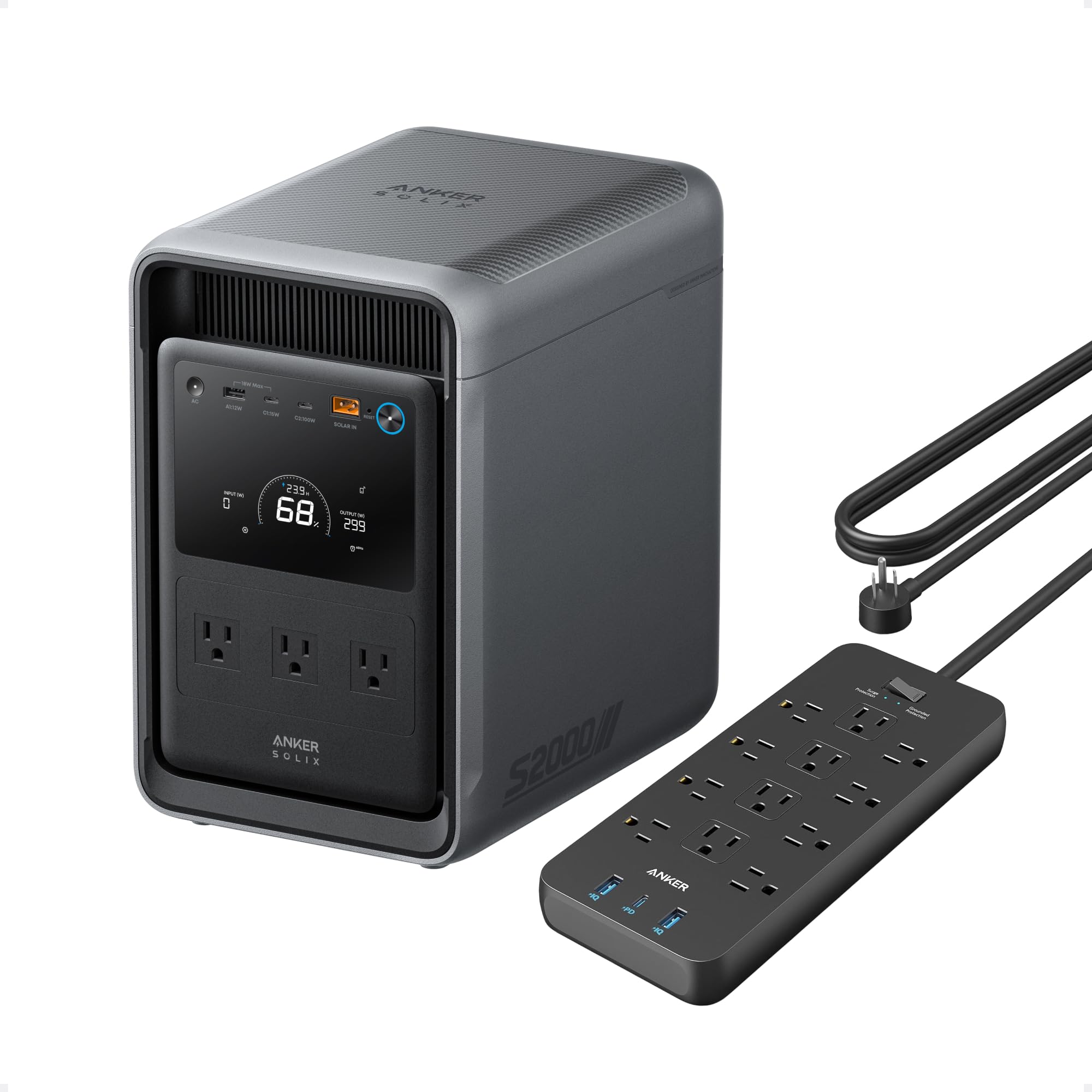
The Anker SOLIX S2000 is a large-capacity portable power station built for home backup, camping, and emergency use. It combines a 2,010Wh LiFePO4 battery with 1,500W of output and an integrated power strip, which puts it in the heavyweight class of solar generators. This review covers what the unit is built for, how its capacity and output shape real-world use, and who should look elsewhere before spending.
Features and Specifications
Battery Chemistry: LiFePO4 (lithium iron phosphate)
Battery Capacity: 2,010Wh
AC Output: 1,500W
Power Distribution: Built-in power strip
Charging Input: Solar compatible
Intended Use: Home backup, outdoor, emergency
The headline figure here is the 2,010Wh battery, and it is the number that decides whether this unit fits a household. Capacity at this level is enough to carry a refrigerator, router, lights, and phone charging through a multi-hour outage without the frantic power-rationing that smaller stations force. The LiFePO4 chemistry matters just as much: it is the battery type that has become the default for serious backup hardware because it holds up better over repeated charge cycles than older lithium formulations and does not demand the same careful treatment.
The 1,500W output defines what can run at once. That ceiling covers the appliances people actually reach for during an outage — fridges, fans, lamps, laptops, a television, a microwave in short bursts — but it is not a whole-home solution. Buyers planning to run a central air conditioner, an electric water heater, or a large welder need to look at a different class of equipment entirely. The built-in power strip is a practical touch: instead of hunting for adapters, several devices can be plugged in directly, which matters when a family is charging phones and running a lamp from the same unit.
Build and Design
A 2,010Wh LiFePO4 battery is physically substantial, and buyers should expect a unit that is moved deliberately rather than carried one-handed up a flight of stairs. That weight is the direct cost of the capacity — there is no way to pack this much energy into a pocket-sized shell. The integrated power strip suggests a design aimed at stationary use on a garage floor, in a utility room, or beside a tent, where several cords can stay plugged in without a tangle of splitters.
The LiFePO4 cells also shape the long-term ownership picture. This is the chemistry that tolerates being topped off and stored without the degradation anxiety that comes with older battery types, which suits a device that may sit idle for months between outages. For a backup unit, that idle reliability is arguably more important than any single performance figure.
Capacity and Runtime
The 2,010Wh figure is the reason to choose this model over a smaller station. In practical terms, capacity at this level is aimed at keeping essential loads alive rather than powering a household as normal. A buyer should think in terms of which devices must keep running — refrigeration, communications, lighting, medical equipment — and treat everything else as optional. That framing is what separates a successful backup plan from an overloaded one.
Runtime depends entirely on the load, so there is no single answer to how long the S2000 lasts. The useful approach is to add up the wattage of the essentials and compare that total against the capacity. A household that plans around a handful of critical devices will find the reserve generous; one that expects to run space heaters and kitchen appliances simultaneously will drain it quickly. The capacity rewards planning, not improvisation.
Power Output and Solar Charging
The 1,500W AC output sets the ceiling for simultaneous draw, and it is a sensible match for the capacity. It comfortably handles the refrigerator-and-lights combination that defines most outage scenarios, and it leaves room for a few smaller devices on top. Buyers with a well pump or a sump pump should check that unit’s startup draw carefully, since motors can spike well above their running wattage.
Solar compatibility is what turns the S2000 from a one-shot reserve into something that can be replenished off-grid. For camping and extended emergencies, the ability to pair the station with solar panels means the unit is not limited to whatever charge it held when the power went out. Buyers should note that solar charging speed depends on the panels used, and that panel hardware is generally a separate purchase — a cost that belongs in the budget from the start.
Maintenance and Ownership
LiFePO4 is the low-maintenance choice in this category. The chemistry is forgiving of partial charges and long storage periods, which means the unit does not demand a rigid charging ritual to stay healthy. For a device that spends most of its life waiting for an emergency, that is the right trade: reliability when it is needed rather than attention when it is not.
The maintenance burden that remains is mostly organizational. Cords, solar panels, and adapters need a home where they can be found in the dark, and the unit itself needs a storage spot that is dry and reachable. Buyers who treat the S2000 as a permanent piece of household equipment rather than an occasional camping accessory get the most from it.
Trade-off: At this capacity the unit is heavy and expensive relative to smaller stations, so buyers who only need to charge phones and a laptop through a short outage are paying for reserve they will never use.
Check the current price on Amazon
Who Should Buy the Anker SOLIX S2000
The clearest fit is a household that wants a single, capable reserve for power outages and does not want to think about it again until the lights go out. The 2,010Wh battery covers the essentials for a meaningful stretch, the 1,500W output handles the appliances that matter most, and the power strip keeps the family’s devices charging without a pile of adapters. Buyers in areas with unreliable grids, or with medical equipment that cannot go dark, get the most direct value.
The second fit is the outdoor user who wants home-grade capacity at a campsite or cabin. Solar compatibility extends the unit’s reach beyond a single charge, and the LiFePO4 battery tolerates the seasonal storage that comes with gear used a few times a year. A weekend camper running a cooler and some lights will find the reserve far larger than needed, but an overlander or cabin owner running real appliances will not.
The S2000 is not for the buyer who wants a light, cheap station for tailgating and phone charging. That buyer pays for capacity and chemistry they will never draw on, and hauls weight they do not need. It is also not for anyone expecting to run a whole house as usual — 1,500W is a firm ceiling, and central HVAC or electric heating is out of reach. Buyers with those loads need a permanently installed home battery system, not a portable station.
FAQ
-
How long will the Anker SOLIX S2000 run a refrigerator?
Runtime depends on the refrigerator’s draw and duty cycle, so there is no fixed figure. The 2,010Wh capacity is sized to keep a fridge and a few small devices running through a multi-hour outage, which is the scenario the unit is built for. -
Can the SOLIX S2000 power a whole house?
No. The 1,500W output is a ceiling that covers essential appliances, not a whole-home load. Central air conditioning, electric water heating, and similar high-draw systems are beyond what a portable station at this level can supply. -
What can the 1,500W output run at the same time?
A refrigerator, lights, a router, fans, laptops, and a television can generally share the load. Buyers should add up the wattage of everything they plan to run at once and stay under the ceiling, keeping in mind that motors can spike on startup. -
Is LiFePO4 better than a standard lithium battery?
LiFePO4 is the preferred chemistry for backup hardware because it holds up well over repeated charge cycles and tolerates partial charges and long storage. For a unit that sits idle between emergencies, that durability is the main advantage. -
Can the SOLIX S2000 be charged with solar panels?
Yes, the unit is solar compatible. Charging speed depends on the panels used, and the panels are typically a separate purchase, so that cost should be part of the planning. -
How heavy is a 2,010Wh power station?
A battery of this capacity is substantial and is best moved deliberately rather than carried casually. Buyers should plan a permanent storage spot on the ground floor rather than expecting to haul it upstairs regularly. -
Is the built-in power strip useful?
Yes. It lets several devices stay plugged in at once without a tangle of splitters, which suits a family charging phones and running lamps from the same unit during an outage. -
Is the SOLIX S2000 a good choice for camping?
It suits campers and cabin owners who run real appliances, and solar compatibility extends its reach off-grid. A light weekend camper who only needs phone charging will find it heavier and more expensive than necessary. -
How should the unit be stored between outages?
Store it dry and reachable, with cords and any solar panels kept together so they can be found in the dark. LiFePO4 tolerates long storage well, which is why the chemistry suits backup use. -
Who should not buy the SOLIX S2000?
Buyers who need only a small, light station for phones and laptops, and buyers who expect to run a whole house as usual. Both groups are better served by a different class of product.
Bottom Line
The Anker SOLIX S2000 is the right answer for a household that wants one serious reserve for outages and off-grid use, with the capacity to carry essentials and the LiFePO4 chemistry to sit ready between emergencies. Buyers who need only light charging should skip it, and anyone expecting whole-home output should look at installed systems instead. For everyone in between, this is a capable, low-maintenance backup unit worth checking at the current price.