Why there are Amazon links here: Brave Review is paid a commission for qualifying Amazon purchases made through the links below. Your price does not change, and using our links is entirely optional. How this works
First Alert SMI100-AC: Hardwired Protection With Battery Backup
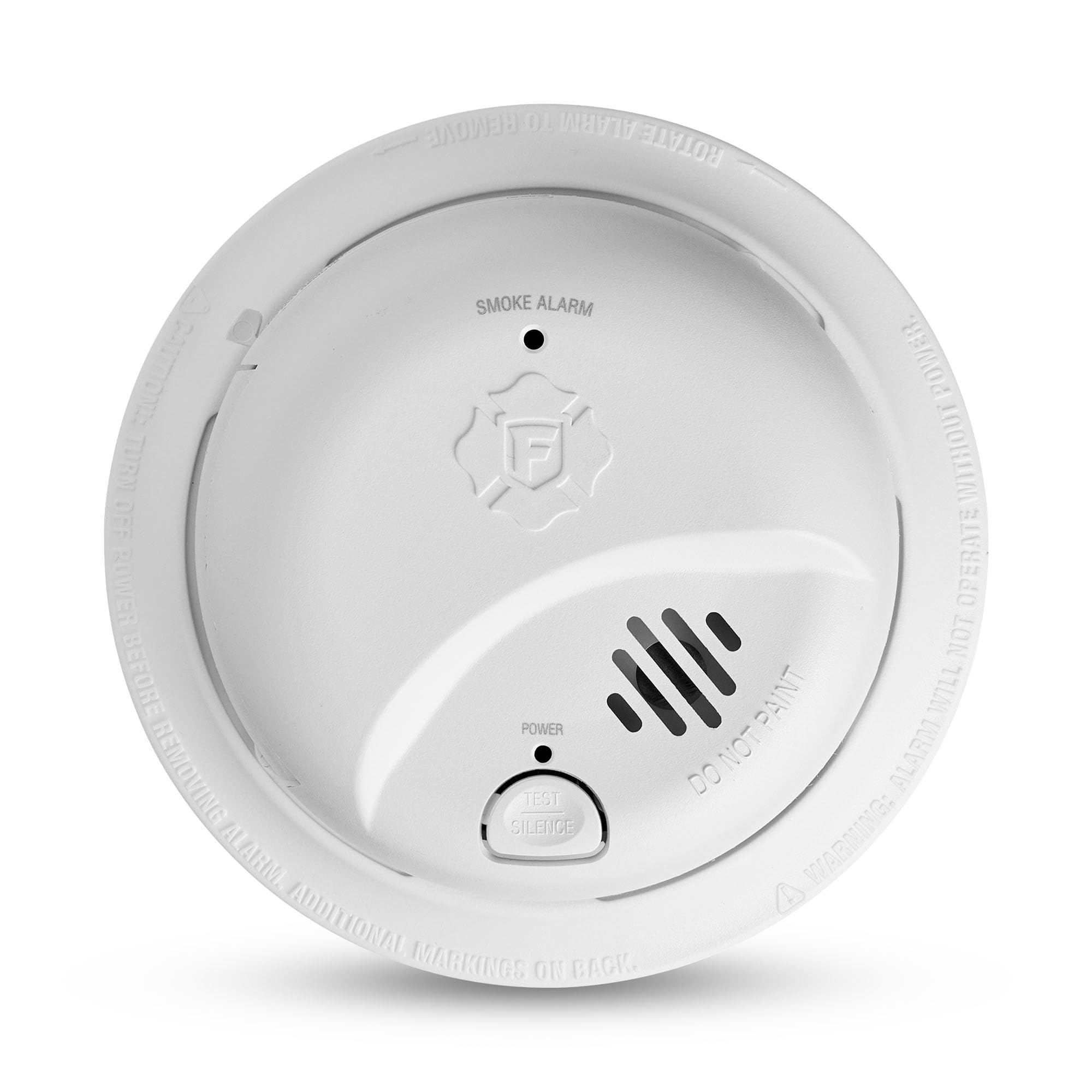
The First Alert SMI100-AC is a hardwired smoke alarm with a 9V battery backup, sold as a single unit for buyers replacing an existing wired alarm or adding one to a circuit that already runs through the ceiling. It suits homeowners who want a code-friendly, interconnectable style of alarm without paying for smart features, and it is a poor fit for anyone in a rental with no wiring in place. This review covers what the unit is built to do, how the backup battery changes ownership, and the maintenance routine it demands.
Check the current price on Amazon
Features and Specifications
Product: First Alert SMI100-AC Hardwire Smoke Alarm
Pack Size: 1-Pack
Power Source: Hardwired AC with 9V battery backup
Alarm Type: Smoke alarm
Mounting: Ceiling or wall, hardwired base
Best Use: Replacing or expanding a wired alarm circuit
The name tells most of the story. This is an AC-powered smoke alarm, meaning it draws its everyday power from the home’s electrical wiring rather than a battery alone, and the 9V battery inside is a backup that keeps the unit alive if the circuit drops. That combination is the standard approach in newer homes and in many rental properties, where building code often calls for wired alarms rather than battery-only models.
The single-pack format matters more than it first appears. Hardwired alarms are usually replaced one at a time as each unit ages out, so a one-pack suits the buyer who has one failed alarm on the ceiling and wants a like-for-like swap. Buyers wiring a whole floor at once will need multiple units, and the listing is priced and packaged for the single replacement job.
Build and Hardware
A hardwired smoke alarm is a two-part system: a mounting base that screws to the ceiling box and connects to the household wiring, and the alarm head that twists or clips onto that base. The SMI100-AC follows that pattern, which is what makes it a practical replacement rather than a project. The installer connects the existing wires to the base, then seats the head.
The practical benefit is that the wiring work happens once. When the alarm reaches the end of its service life, the head comes off and a new one goes on the same base, provided the base matches. Buyers replacing an older First Alert unit should confirm the base compatibility before ordering, because mixing brands or generations can mean swapping the base too.
Build quality at this price tier is functional rather than premium. The housing is standard consumer-grade plastic, the kind that survives a decade on a ceiling but will not win any design awards. That is the correct trade for a life-safety device: the money goes into the sensing chamber and the alarm circuit, not the finish.
Trade-off: The plastic housing and simple twist-on head feel utilitarian, and the unit offers no smart-home connection, app alerts or voice announcements — buyers wanting phone notifications need to look at a connected model instead.
Power and the 9V Backup
The 9V battery backup is the feature that decides how this alarm behaves in a real household. On a hardwired circuit, the alarm runs off mains power day to day, and the battery is held in reserve. When the power fails — a storm, a tripped breaker, a utility outage — the unit keeps watching the room instead of going dark.
That reserve is not unlimited. A 9V battery in backup duty will carry the alarm for a period, not indefinitely, and the unit will chirp when the battery runs low so the homeowner knows to replace it. The chirp is the single most common source of confusion with any backup alarm: it usually means a dying battery, not a fault in the alarm itself.
The other half of the power story is the wiring. Because the unit is AC-powered, installation means working at a ceiling box with live household current. Buyers comfortable with a breaker switch and a screwdriver can handle a straight swap; anyone unsure should hire an electrician, and local rules in some areas require it for hardwired alarm work anyway.
Trade-off: The 9V battery must be replaced on a schedule even though the alarm runs on mains power, and a dead backup battery produces the same chirp as a genuine fault, which sends some homeowners chasing the wrong problem.
Alarm Coverage and Placement
A single smoke alarm covers one area. The SMI100-AC is a one-pack, so it protects the room it is installed in and nothing more. Standard practice is one alarm per bedroom, one in the hallway outside sleeping areas, and one on each level of the home, which means most households need several units rather than one.
Placement drives performance more than any spec on the box. Ceiling mounting near the center of the room catches smoke as it rises; wall mounting works but should sit high, within the band the manufacturer specifies. Keeping the alarm away from bathrooms, cooking surfaces and forced-air vents reduces false alarms, which are the main reason people disable detectors they should leave alone.
Interconnection is the question buyers should ask before ordering. In many wired systems, all the alarms on the circuit sound together when one detects smoke, which gives earlier warning in a house with bedrooms down a hall. Whether the SMI100-AC ties into that network depends on the existing wiring and the model it replaces, so matching the old unit’s wiring scheme is the safe move.
Trade-off: As a single unit, one purchase protects one room, and buyers expecting whole-home coverage will need to budget for several alarms rather than one.
Maintenance and Longevity
Every smoke alarm has a service life, and the sensor inside degrades whether or not the unit ever sounds. Manufacturers generally date the device and call for replacement at the end of that window, so the install date written on the back of the alarm is worth recording. A hardwired unit does not last forever just because it has mains power.
Routine care is simple but easy to skip. The test button should be pressed periodically to confirm the alarm and its backup circuit respond, and the unit should be vacuumed or dusted now and then to keep the sensing chamber clear. Dust and cooking residue are the usual culprits behind nuisance alarms in older units.
Battery swaps are the recurring chore. The 9V backup should be changed on the schedule the manufacturer recommends, and immediately whenever the low-battery chirp starts. Buyers who dislike battery maintenance entirely should know that sealed-battery alarms exist, though they cost more and are discarded whole at end of life.
Trade-off: The alarm demands a testing routine and periodic 9V replacements, and skipping either shortens the window in which the unit can be trusted to work.
Who It Suits and Who It Does Not
This alarm fits the homeowner or landlord replacing a failed hardwired unit on an existing circuit, especially where the old alarm was a First Alert and the base can stay put. It also suits buyers who want a straightforward, code-friendly alarm without paying for app connectivity they will not use. The price tier makes it a sensible choice for outfitting several rooms without a large outlay.
It does not suit renters in homes with no wired alarm circuit, since there is nothing to hardwire into and a battery-only alarm is the correct answer there. Buyers who want phone alerts, voice announcements or remote silencing should look at a connected model. And anyone hoping one purchase covers a whole house should plan for multiple units from the start.
FAQ
-
What does the 9V battery backup actually do?
The battery keeps the alarm working when household power fails, so the unit continues to monitor the room during an outage. It is a reserve, not the primary power source. -
Can the First Alert SMI100-AC be used without wiring?
No. It is a hardwired alarm, so it needs an AC circuit at the mounting location. Homes without wired alarm boxes need a battery-only model instead. -
How often does the 9V battery need replacing?
Follow the manufacturer’s schedule and swap it immediately when the low-battery chirp starts. The chirp is the alarm’s signal that the backup is failing. -
Will one alarm cover a whole house?
No. A single unit protects the room it is in. Bedrooms, hallways and each level of the home typically need their own alarm. -
Does it connect to other alarms in the house?
Interconnection depends on the existing wiring and the unit being replaced. Buyers should match the old alarm’s wiring scheme before ordering. -
Can it be mounted on a wall instead of the ceiling?
Wall mounting is possible, but the unit should sit high on the wall and follow the manufacturer’s placement guidance for best performance. -
Why does the alarm chirp even though the power is on?
The most common cause is a failing 9V backup battery. Replacing it usually stops the chirp; persistent chirping after a fresh battery points to a different issue. -
How long does a smoke alarm last?
The sensor degrades over time, so manufacturers set a replacement window from the install date. Write that date on the unit and replace it when the window ends. -
Is this alarm hard to install?
A straight swap on an existing base is a screwdriver job once the breaker is off. New wiring or an unfamiliar circuit is a job for an electrician. -
Does it work with smart home systems?
No. This is a standalone hardwired alarm with no app, voice or smart-home integration.
Bottom Line
The First Alert SMI100-AC is the right answer for one specific job: replacing or adding a hardwired smoke alarm on an existing circuit without paying for connectivity. The 9V backup keeps it watching during outages, the single-pack suits one-at-a-time replacement, and the price tier makes outfitting several rooms affordable. Buyers with no wiring, or those who want app alerts, should choose a different alarm — everyone else can check the current price and get the ceiling covered.