Why there are Amazon links here: Brave Review is paid a commission for qualifying Amazon purchases made through the links below. Your price does not change, and using our links is entirely optional. How this works
Best Smoke Alarm for a Home: 5 Picks That Cover Every Setup
The best smoke alarm for a home is the one that fits the home’s wiring, budget, and layout — a battery unit for a rental, a hardwired kit for a whole-house replacement, a compact detector for a tight hallway. This short roundup covers five alarms that suit three common buyer profiles: renters and small-apartment owners who need a no-wire install, homeowners replacing a full set of hardwired units, and anyone who wants a single reliable detector for a small space. The overview below lines up every pick by key spec and best use, so a decision is possible in under a minute.
The Picks at a Glance
| Product | Key Spec | Best Use | Price Tier |
|---|---|---|---|
| SMI100, 1-Pack First Alert Battery Smoke Alarm | Battery-powered, single pack | Cheapest single-alarm backup | Budget |
| X-Sense SD2J0AX Photoelectric Smoke Alarm | 10-year battery, UL 217 certified | Low-maintenance no-wire install | Budget |
| Kidde Compact Smoke Detector 10SDR | 4-inch body, 85 dB alarm | Small spaces and tight hallways | Budget |
| First Alert BRK SMI100-AC Hardwired 6-Pack | Hardwired with battery backup, 6 units | Whole-home replacement | Mid-range (bulk) |
| SITERWELL Interconnected Hardwired Smoke Alarm | Hardwired, interconnected, 9V backup | Interconnected coverage on a budget | Mid-range |
1. SMI100, 1-Pack First Alert Battery Smoke Alarm
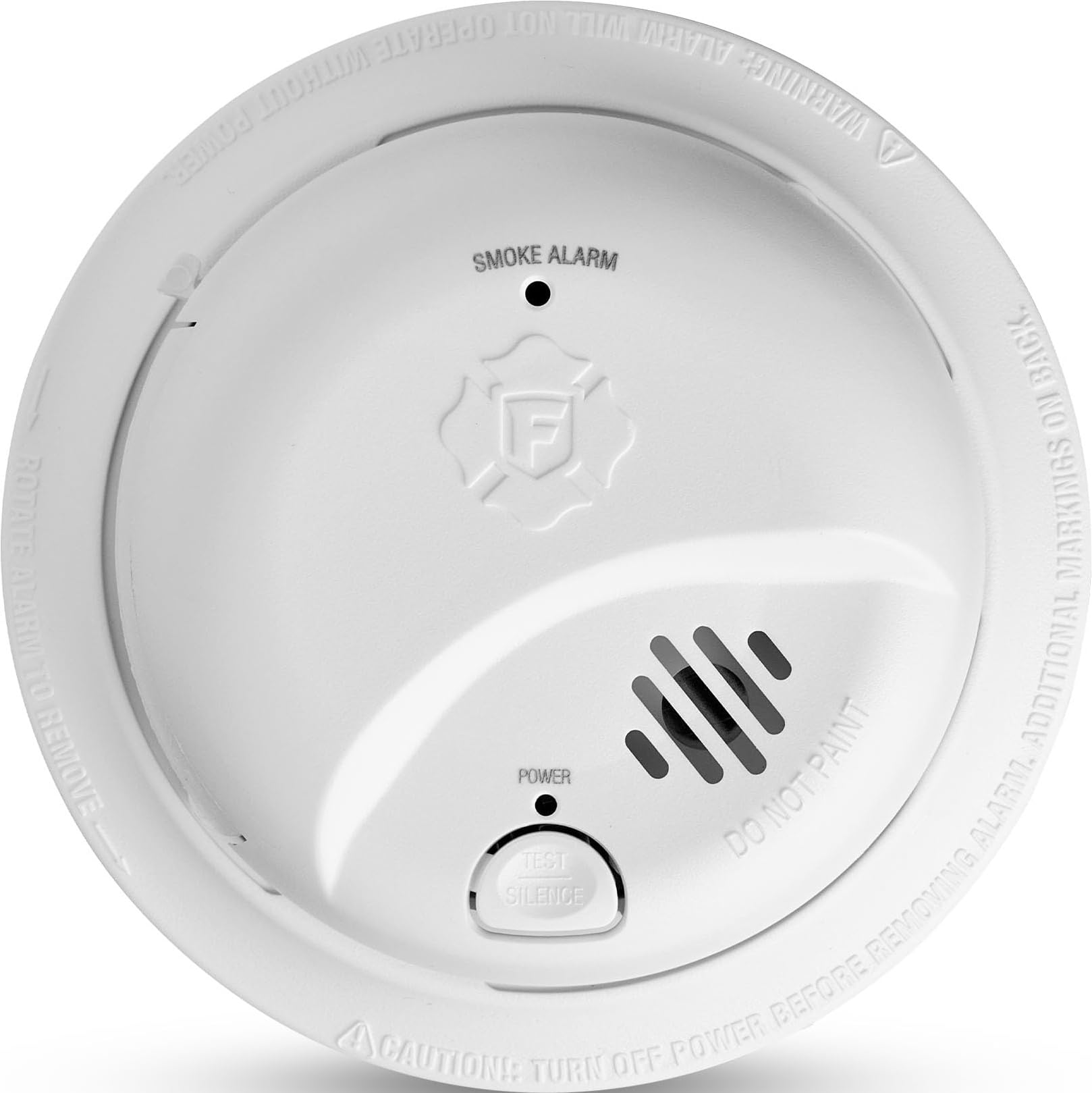
Type: Battery-powered smoke alarm
Pack size: 1-pack
Brand: First Alert
Power source: Battery
The SMI100 is the simplest thing in this roundup: a single battery-operated alarm from a brand most homeowners already recognize. There is no wiring, no interconnect line, and no panel to learn — it mounts, it chirps when the battery runs down, and it gets replaced or re-batteried. That makes it the natural pick for a hall closet, a basement stair, or a spare bedroom where running a circuit is not worth the trouble.
It is also the cheapest way to add one more alarm to an existing setup that already covers the main rooms. The trade-off for the low price and simple build is that each unit stands alone — one alarm sounding does not wake the rest of the house the way an interconnected system does, so a single SMI100 is a supplement, not a whole-home plan.
Trade-off: A standalone battery unit at this price will not link to other alarms, so it covers one room rather than the whole house.
Check the current price on Amazon
2. X-Sense Photoelectric Smoke Alarm, SD2J0AX

Sensor type: Photoelectric
Power source: 10-year sealed battery
Certification: UL 217
Controls: One-button hush and self-test
Installation: No-wire
The SD2J0AX is the pick for anyone who wants to install an alarm once and forget it. The 10-year battery is sealed into the unit, so there is no annual battery swap and no middle-of-the-night low-battery chirp from a dying cell — the alarm itself is replaced at end of life. The photoelectric sensor is the type that tends to be calmer around cooking smoke, and the one-button hush silences a nuisance alarm without pulling the unit off the ceiling.
UL 217 certification is the baseline safety mark for residential smoke alarms, and it is printed right in the product name here, which is more than most budget units bother to advertise. The self-test button means a monthly check takes seconds. This is the strongest all-around choice for renters and for anyone replacing an old battery alarm who does not want to think about it again for a decade.
Trade-off: The sealed 10-year battery cannot be swapped out, so the whole unit is retired when the battery reaches end of life rather than re-batteried.
Check the current price on Amazon
3. Kidde Compact Smoke Detector, 10SDR
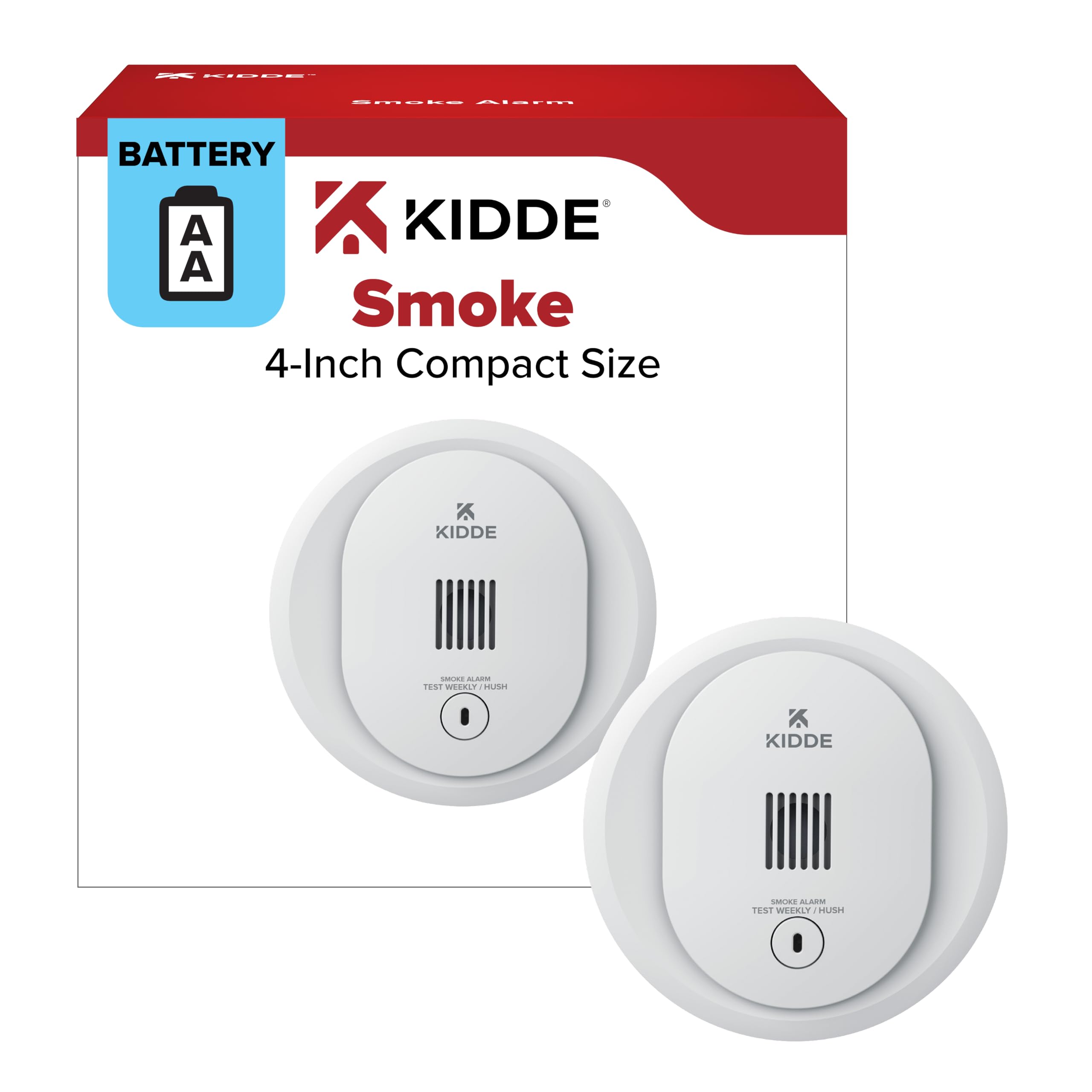
Type: Compact smoke alarm
Body size: 4-inch
Alarm volume: 85 dB
Power source: AA batteries
Indicators: LED status lights
The 10SDR is built around one idea: fit where a full-size alarm will not. The 4-inch body is noticeably smaller than a standard round detector, which matters in a narrow hallway, a small utility room, or a tight ceiling corner where a bigger unit crowds the space or looks out of place. The 85 dB alarm is loud enough to be heard through a closed door in most homes, and the LED status lights give a quick visual read on whether the unit is powered and working.
AA batteries are the practical choice here — they are cheap, available everywhere, and easy to swap without hunting for a specialty cell. The compact form is the whole pitch, and it comes with the usual compact-alarm trade-off: less internal room for sensor and battery means the unit is at its best covering a small area, not a large open-plan room.
Trade-off: The small 4-inch body suits closets, hallways, and utility rooms better than large open living spaces, where a full-size alarm covers more ground.
Check the current price on Amazon
4. First Alert BRK SMI100-AC Hardwired 6-Pack

Type: Hardwired smoke detector
Pack size: 6-pack
Power source: Hardwired with battery backup
Brand: First Alert / BRK
Installation: Wired
This is the pick for the homeowner who is replacing every alarm in the house at once. The SMI100-AC hardwires into the existing ceiling circuit and keeps a battery backup so the alarm still works during a power outage. Buying six at once is the practical move when a house has a detector in every bedroom, the hallway, and the basement — it is one order, one install session, one consistent set of units instead of a patchwork of mismatched alarms.
The battery backup is the feature that separates a hardwired unit from the battery-only picks above: no annual battery hunt on a ladder, just a backup cell that sits ready until it is needed. This is a mid-range bulk buy, and the per-unit cost lands well below what six separate premium alarms would run.
Trade-off: The 6-pack only makes sense for a whole-house job — a buyer who needs one or two alarms pays for four spares, and hardwiring requires an existing circuit or an electrician.
Check the current price on Amazon
5. SITERWELL Interconnected Hardwired Smoke Alarm
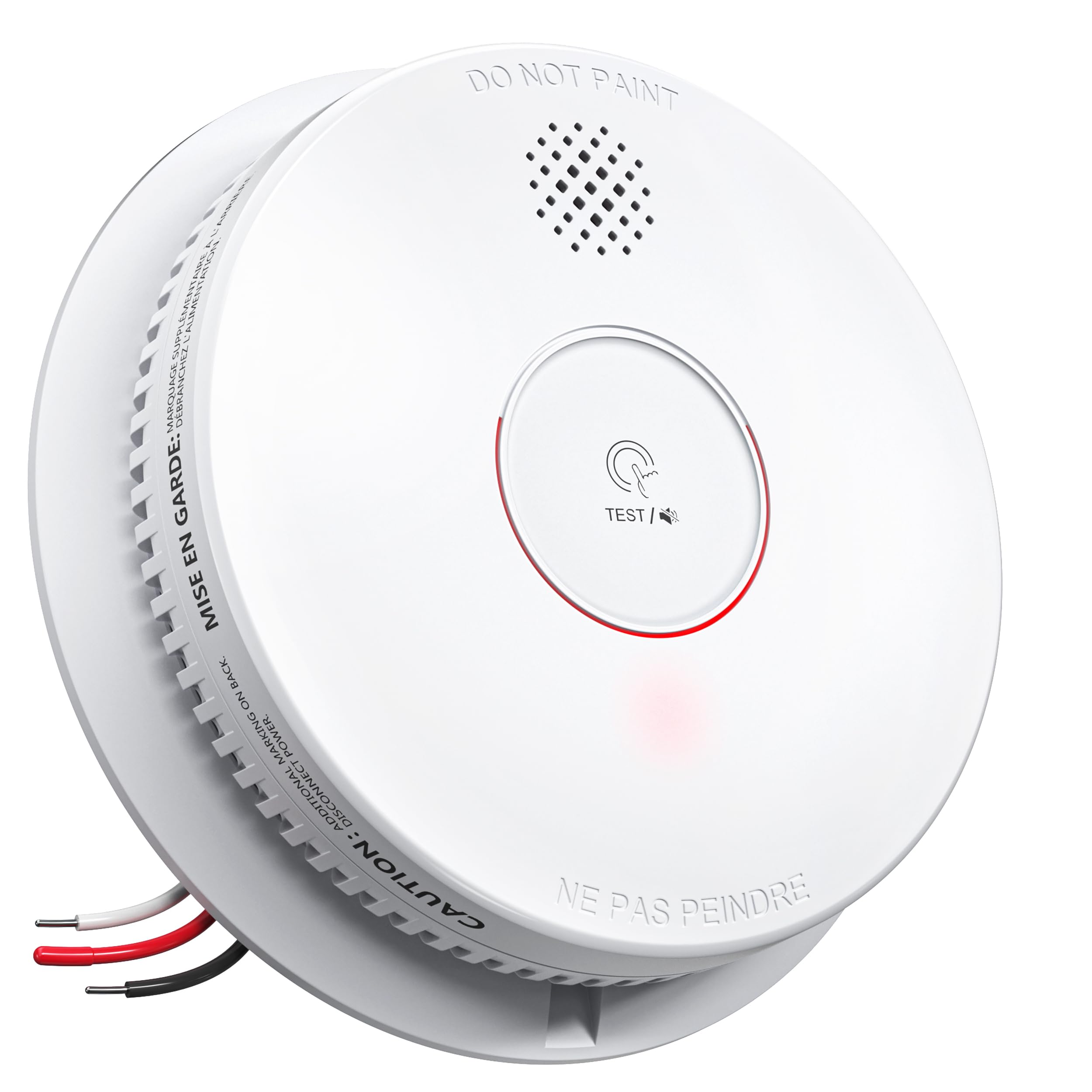
Type: Hardwired interconnected smoke alarm
Sensor type: Photoelectric
Backup power: 9V battery
Controls: Test/silence button
Pack size: 1-pack
The SITERWELL is the pick for a buyer who wants interconnected coverage — one alarm triggering all of them — without paying premium prices for it. The photoelectric sensor handles the smoldering-fire detection that matters most in bedrooms and living areas, and the interconnect line means a fire in the basement sets off the alarm outside the upstairs bedrooms. The 9V backup keeps it live through a power cut, and the test/silence button covers routine checks and nuisance alarms.
Buying one at a time is the point here: a buyer can add interconnected units room by room as budget allows, rather than committing to a six-pack up front. That flexibility is worth something, but it comes with the usual hardwired caveat — the unit needs an existing wired circuit, and the interconnect only works between compatible units on that circuit.
Trade-off: Interconnect compatibility is the catch — the alarm only links with matching units, so it works best as a planned set rather than a random add-on to an existing system.
Check the current price on Amazon
Before You Buy
- Wiring: Check whether the ceiling has a hardwired circuit before buying a hardwired unit; battery alarms need nothing but a mounting spot.
- Coverage: One alarm covers one area — a whole home needs a detector in each bedroom, the hallway outside them, and each level, so pack size matters as much as the unit.
- Interconnect: If one alarm should wake the whole house, buy interconnected units; standalone battery alarms sound only where they are mounted.
- Battery type: Sealed 10-year batteries mean no swaps but a whole-unit replacement at end of life; AA and 9V cells are cheap and easy to change.
- Space: A compact 4-inch unit fits tight hallways and closets that a full-size alarm crowds.
- Sensor type: Photoelectric sensors are the calmer choice around cooking smoke and are the common pick for bedrooms and living areas.
- Certification: Look for a UL 217 mark on the unit — it is the baseline safety certification for residential smoke alarms.
Frequently Asked Questions
-
How many smoke alarms does a home need?
A common rule is one in each bedroom, one in the hallway outside the bedrooms, and one on each level of the home, including the basement. -
Is a battery or hardwired alarm better?
Hardwired units with battery backup are the more permanent choice and can interconnect; battery units are simpler to install and suit rentals and retrofits. -
What does interconnected mean on a smoke alarm?
Interconnected alarms are wired together so that when one detects smoke, all of them sound — which matters for waking people in distant bedrooms. -
How long does a smoke alarm last?
Most units are replaced every ten years regardless of battery condition, and sealed 10-year-battery models are retired when that battery reaches end of life. -
Where should a smoke alarm not be placed?
Keep alarms a few feet away from cooking appliances and bathrooms to reduce nuisance alarms, and follow the manufacturer’s mounting guidance for each unit. -
Does a photoelectric alarm detect all fires?
Photoelectric sensors are strongest on smoldering fires; some homes pair them with ionization units for broader coverage across fire types.
Bottom Line
For most buyers, the X-Sense SD2J0AX photoelectric smoke alarm is the best smoke alarm for a home: a sealed 10-year battery, UL 217 certification, a hush button, and a no-wire install make it the least fuss for the longest stretch. Homeowners replacing a full set should go straight to the First Alert BRK 6-pack, and anyone covering a tight hallway or closet should look at the Kidde 10SDR.