Why there are Amazon links here: Brave Review is paid a commission for qualifying Amazon purchases made through the links below. Your price does not change, and using our links is entirely optional. How this works
Best Portable Solar Panel for a Home Battery: 5 Picks That Keep the Lights On
A portable solar panel for a home battery is the fastest way to add charging capacity without hiring an electrician or mounting anything on a roof. The five picks below cover three buyer profiles: the prepper building a blackout kit, the RVer or van lifter who charges on the road, and the homeowner who wants a foldable panel to top up an existing power station. The overview table shows the key spec and best use for each, so a decision is possible in under a minute, and each review covers the build, the capability and the trade-off.
The 5 Best Portable Solar Panel Picks at a Glance
| Product | Key Spec | Best Use | Price Tier |
|---|---|---|---|
| Jackery Solar Generator 1000 v2 and 200W Solar Panel | 1070Wh, 1500W AC, 100W USB-C | Whole-home backup bundle | Premium |
| Portable Solar Generator 300W with 60W Solar Panel | 280Wh, 110V pure sine wave | Budget camping and small devices | Budget |
| ZOUPW 480W Bifacial Portable Solar Panel | 480W, N-Type 16BB, IP68 | Large power stations and off-grid backup | Premium |
| Renogy 200W Portable Solar Panel | 200W, N-Type, 25% efficiency | Lightweight RV and camping charging | Mid-range |
| Jackery Solar Generator 300 and 40W Solar Panel | 292Wh, 300W AC | Travel and grab-and-go blackout power | Mid-range |
1. Jackery Solar Generator 1000 v2 and 200W Solar Panel

Battery Chemistry: LiFePO4
Capacity: 1070Wh
AC Output: 1500W
USB-C Output: 100W
Charge Time: 1 hr fast charge
Included Panel: 200W solar panel
This bundle pairs a LiFePO4 power station with a matching 200W folding panel, which makes it the closest thing here to a complete home backup kit in one box. The LiFePO4 chemistry is the long-life option, and the 1500W AC output runs fridges, routers, fans and small appliances during an outage. The 100W USB-C port charges laptops and phones at full speed without a wall adapter, and the one-hour fast charge means the battery refills quickly from mains power before a storm arrives.
The 200W panel is the solar side of the kit, sized to recharge the 1070Wh battery over a realistic day of decent sun. Buyers who want a single purchase that covers both storage and charging should start here. The trade-off is the price and the weight: a 1070Wh LiFePO4 station plus a 200W panel is a two-person carry, and the bundle costs more than buying a panel alone for a battery already owned.
Check the current price on Amazon
2. Portable Solar Generator 300W with 60W Solar Panel

Capacity: 280Wh
AC Output: 300W
Waveform: 110V pure sine wave
DC Output: USB QC3.0 and DC
Included Panel: 60W solar panel
Intended Use: Camping, RV, van, outdoor
The cheapest complete kit on the list, this 280Wh station with a 60W panel is aimed at campers and casual preppers rather than whole-home backup. The pure sine wave AC outlet is the important detail at this price: it runs sensitive electronics like laptops and small medical devices without the buzzing or overheating that modified sine wave outputs cause. The USB QC3.0 port adds fast phone charging, and the 300W AC ceiling handles lights, fans and a small screen.
The 60W panel is small, so this is a trickle-charge setup rather than a fast one. It suits buyers who want a light, affordable kit for weekend trips and short outages, and it works as a starter unit for someone testing whether solar backup is worth investing in. The trade-off is capacity: 280Wh covers a night of essentials, not a multi-day outage, and the small panel will not keep up with heavy daily use.
Check the current price on Amazon
3. ZOUPW 480W Bifacial Portable Solar Panel
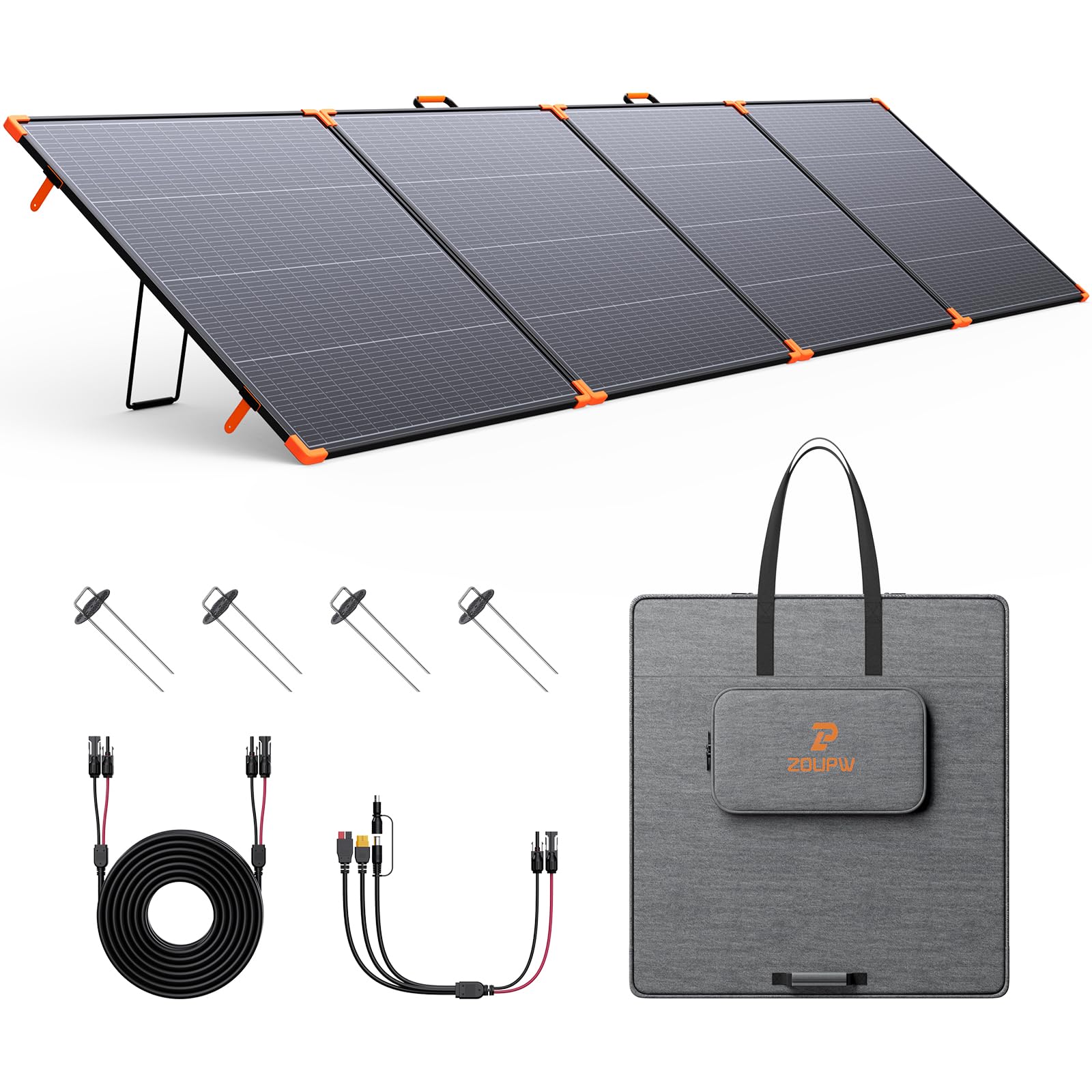
Output: 480W
Cell Type: N-Type 16BB
Design: Bifacial, foldable
Efficiency: 25%
Waterproof Rating: IP68
Compatibility: EcoFlow Delta, Bluetti, Anker C1000, power stations
Intended Use: Off-grid, RV, home power backup
This is the highest-output panel on the list and the one built for serious off-grid charging. The bifacial design collects light on both faces, so reflected light from snow, sand or a light-colored roof adds to the output, and the N-Type cells with 16BB busbars are the current generation of high-efficiency silicon. The IP68 rating means rain and dust are not a concern, which matters for a panel that lives outside on an RV or a backup rack.
The 480W figure is the reason it earns a place: it can meaningfully recharge a large home battery in a day. Buyers pairing it with a big power station from EcoFlow, Bluetti or Anker will get the most from it. The trade-off is that 480W of folding panel is bulky and heavy when packed down, and it is overkill for a small 300Wh station that cannot absorb the current anyway.
Check the current price on Amazon
4. Renogy 200W Portable Solar Panel
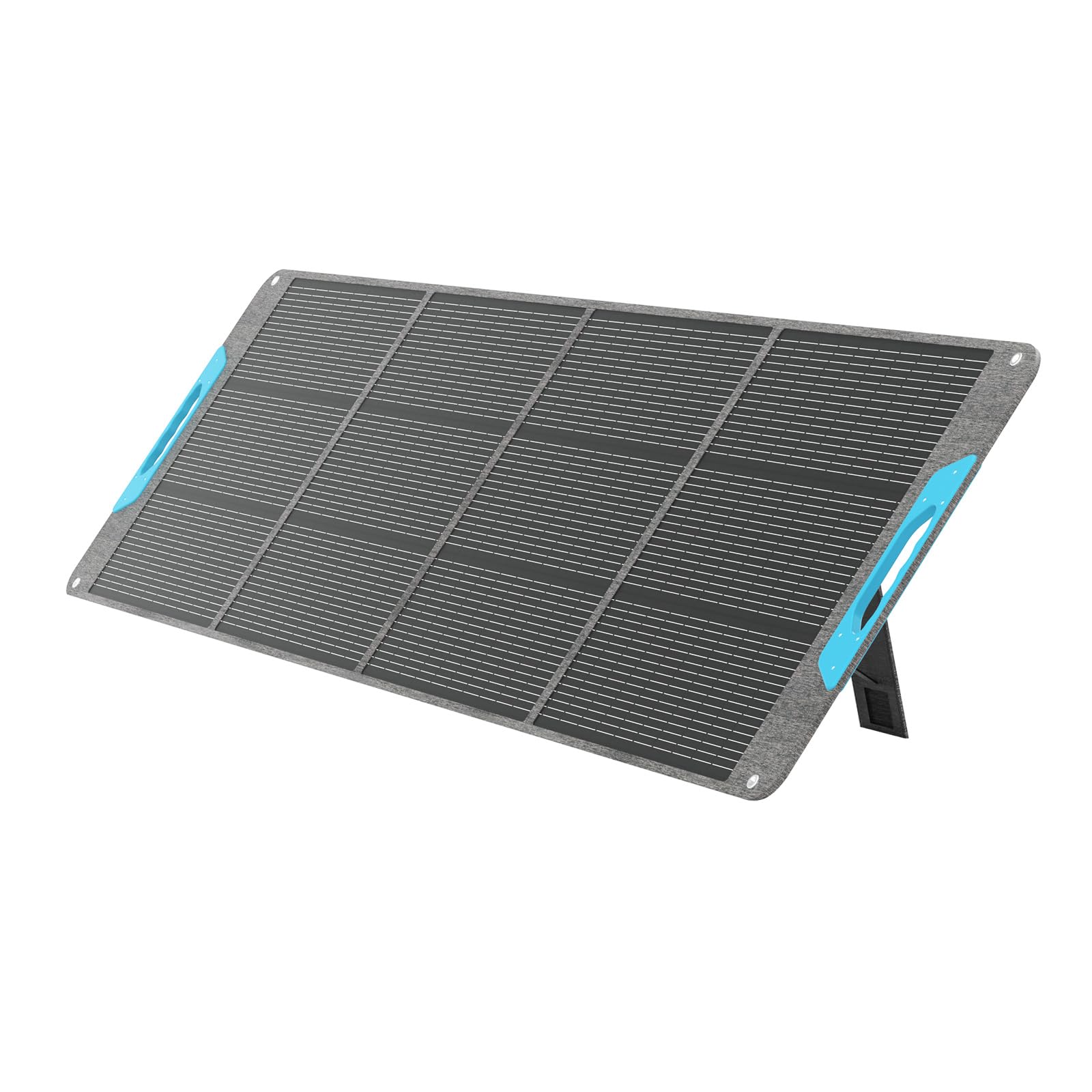
Output: 200W
Cell Type: N-Type
Efficiency: 25%
Design: Foldable with kickstand
Outputs: USB-A and Type-C
Intended Use: Camping, RV, blackout, off-grid, power stations
The Renogy 200W is the middle of the road in the best sense: enough output to charge a mid-size power station in a day, light enough to move alone, and priced below the big bifacial unit. The kickstand holds the panel at an angle toward the sun without propping it on a cooler, and the built-in USB-A and Type-C ports mean phones and tablets can charge directly from the panel without a power station in between.
The 25% efficiency rating puts it in the same class as the premium panels, so the footprint stays manageable for the output. It suits RVers, campers and homeowners who already own a power station and want a capable panel without the bulk of a 400W-plus array. The trade-off is the lack of a waterproof rating in the name: this is a panel to bring in when the weather turns, not one to leave mounted outside year-round.
Check the current price on Amazon
5. Jackery Solar Generator 300 and 40W Solar Panel
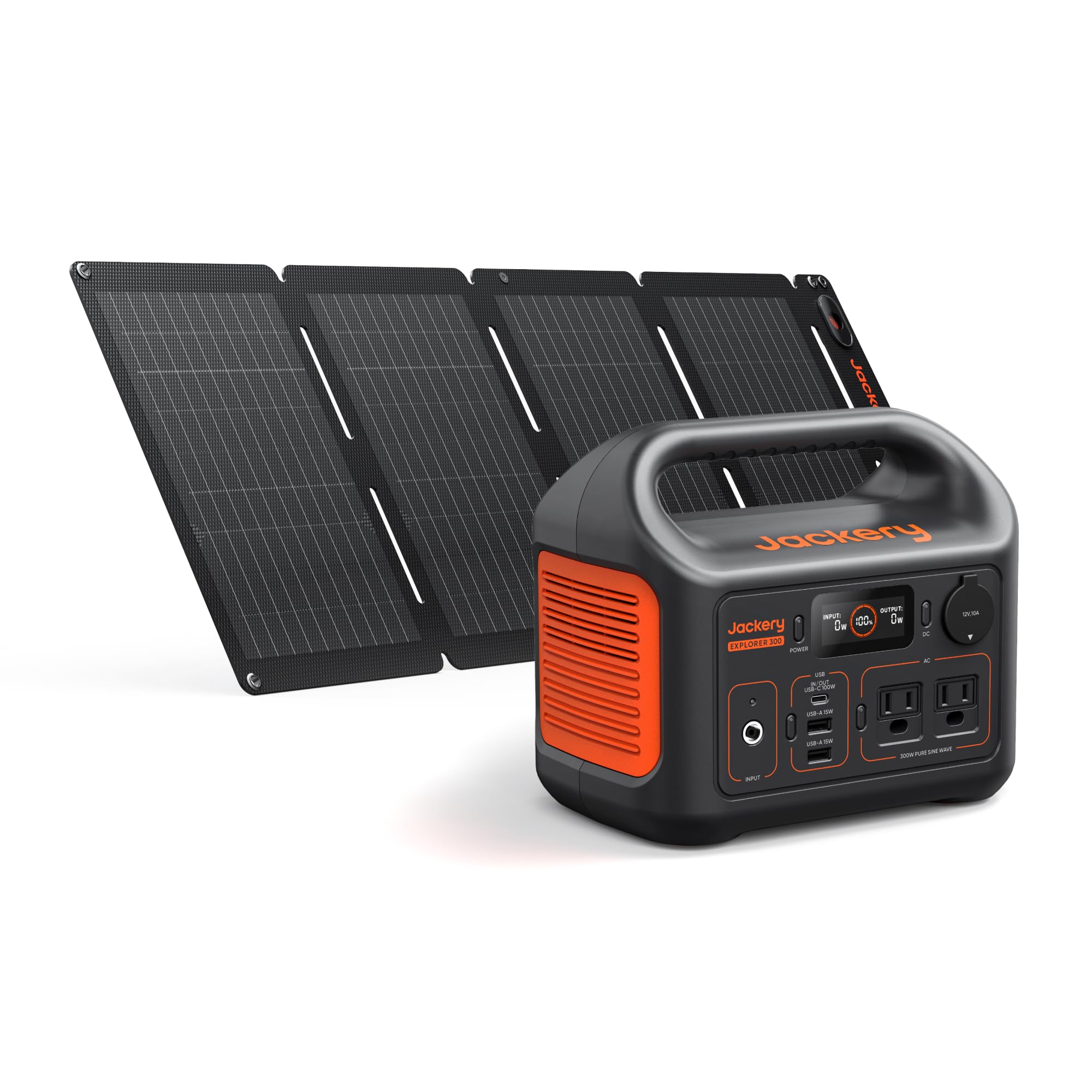
Capacity: 292Wh
AC Output: 300W
Waveform: Pure sine wave
Included Panel: 40W solar panel
Intended Use: RV, outdoors, camping, travel, blackout
This Jackery bundle is the grab-and-go option: a 292Wh station with a 40W folding panel that fits in a backpack or a car trunk. The pure sine wave AC outlet and 300W output cover the essentials, and the Jackery ecosystem means the panel and station are matched out of the box with no adapter hunting. It is the pick for travel, tailgating and short blackouts where portability matters more than capacity.
The 40W panel is the smallest here, so solar charging is slow and best treated as a top-up between mains charges. It suits buyers who want a light kit for the car or the tent and who value the brand’s build quality over raw output. The trade-off is that 292Wh and 40W together cannot carry a home through a long outage; this is a personal-device and lights kit, not a fridge kit.
Check the current price on Amazon
Before You Buy
- Panel output versus battery size: A panel that is too small will take days to refill a large battery. Match the panel wattage to the battery capacity, and expect the best results when the panel can recharge the station in a day of good sun.
- Compatibility: Check the connector type and the voltage range the power station accepts. Bundles are matched; standalone panels need an adapter or a compatible input port.
- Portability: A 400W-plus folding panel is a two-hand carry and takes up trunk space. Buyers who move the kit often should favor lower wattage or a lighter build.
- Weather resistance: An IP68 panel can stay outside in rain; a panel without that rating should come in when the weather turns.
- Cell type: N-Type cells and higher efficiency ratings mean more output per square foot, which matters when space on a balcony or RV roof is limited.
- Included accessories: Bundles ship with the cables and connectors needed for that station. Standalone panels may need a charge controller or adapter, so check the box contents.
- Storage: Foldable panels should be stored flat and dry, away from sharp edges, to protect the cells and the backing.
Frequently Asked Questions
-
Can a portable solar panel charge a home battery directly?
Most portable panels charge a portable power station, not a fixed home battery. For a wall-mounted home battery, a panel needs to match the battery’s solar input and voltage, which usually means a charge controller or a compatible all-in-one station. -
How many watts of solar panel does a home battery need?
A useful rule is that the panel should be able to refill the battery in a day of decent sun. A 1000Wh battery pairs well with 200W of panel; a 300Wh station works with 60W to 100W. -
Is a bifacial panel worth it for backup use?
Bifacial panels gain from reflected light off snow, sand or pale surfaces, so they can outperform a same-size single-face panel outdoors. The gain depends on the surface below, so it is a bonus rather than a guarantee. -
Can these panels run a fridge during an outage?
Only the larger bundles can. The 1070Wh Jackery kit with 1500W AC output can run a fridge for hours, while the 280Wh and 292Wh kits are better suited to lights, phones and small fans. -
Do portable panels need a charge controller?
Panels built for power stations usually connect straight to the station’s solar input, which handles regulation internally. Loose panels charging a bare battery do need a controller. -
How should a foldable panel be stored?
Fold it flat, keep it dry, and store it away from sharp objects that could puncture the backing. Avoid leaving it folded in direct sun for long periods.
Bottom Line
For most buyers, the Jackery Solar Generator 1000 v2 and 200W Solar Panel is the best portable solar panel for a home battery because it combines long-life LiFePO4 storage, a 1500W AC output and a matched 200W panel in one purchase. Buyers who already own a large power station should look at the ZOUPW 480W bifacial panel instead, and budget-minded campers will find the 280Wh kit covers the essentials for far less.