Why there are Amazon links here: Brave Review is paid a commission for qualifying Amazon purchases made through the links below. Your price does not change, and using our links is entirely optional. How this works
Best Power Setup for a Garden Studio for Quiet, Off-Grid Comfort
A garden studio needs steady power without a generator droning in the corner. The five picks below cover light daily use, heavy workshop loads, and everything between, and each one is a battery-based system rather than a fuel generator. Three buyer profiles matter here: the hobbyist running lights and a laptop, the maker running tools and a heater, and the homeowner who wants backup power that doubles as studio supply. The overview table shows the differences at a glance, and each review explains who the pick suits and where it falls short.
Overview of the Picks
| Product | Key Spec | Best Use | Price Tier |
|---|---|---|---|
| LiFePO4 Battery, 3,000W Surge, UPS, 6 AC Outlets, Solar Generator UDPOWER S2400 | 2,083Wh, 2,400W | All-round studio power with UPS backup | Mid |
| 3,072Wh LiFePO4 Battery, Expandable to 24kWh, Anker SOLIX F3000 | 3,072Wh, 6,000W | Heavy loads and future expansion | Premium |
| EGO POWER+ Portable Power Station, 3000W, PST3042 | 3000W, two 56V batteries included | Tool-focused outdoor studios | Mid |
| 1,191Wh LiFePO4 Battery, 1,200W, UDPOWER S1200 with 2 x 120W Solar Panels | 1,191Wh, 1,200W | Light daily use with solar included | Budget |
| 2,083Wh LiFePO4 Battery, 2,400W, UDPOWER S2400 with 210W Solar Panel | 2,083Wh, 2,400W | One-box solar setup for a small studio | Mid |
1. LiFePO4 Battery, 3,000W Surge, UPS, 6 AC Outlets, Solar Generator for Home Backup, RVs, Camping and Emergencies UDPOWER S2400 Portable Power Station, 2,083Wh, 2,400W

Battery Type: LiFePO4
Capacity: 2,083Wh
Continuous Output: 2,400W
Surge Output: 3,000W
Outlets: 6 AC
Backup Feature: UPS
The S2400 is the balanced choice in this group. Its LiFePO4 chemistry is the long-life battery type most buyers now look for in a solar generator, and the 2,400W continuous output covers a studio kettle, a small heater or a power tool one at a time. Six AC outlets mean a laptop, task lighting and a charger can stay plugged in together without a power strip. The UPS function is the detail that earns it a place in a garden studio: it switches over when mains power drops, so a desktop or router running out there does not lose work.
This is the pick for a buyer who wants one box that handles daily studio loads and acts as a backup when the house loses power. It is not for a buyer planning to run a welder or a large compressor, since the surge rating is modest for that class of equipment. The trade-off is that 2,083Wh is a middle figure — a studio drawing close to full output for hours will drain it faster than the expansion-ready models.
2. 3,072Wh LiFePO4 Battery, Expandable to 24kWh, Generator-Ready, 3,600W Solar Generator for Home, RVs, and Emergencies, UPS Anker SOLIX F3000 Portable Power Station, 3,072Wh, 6,000W, Solar Generators
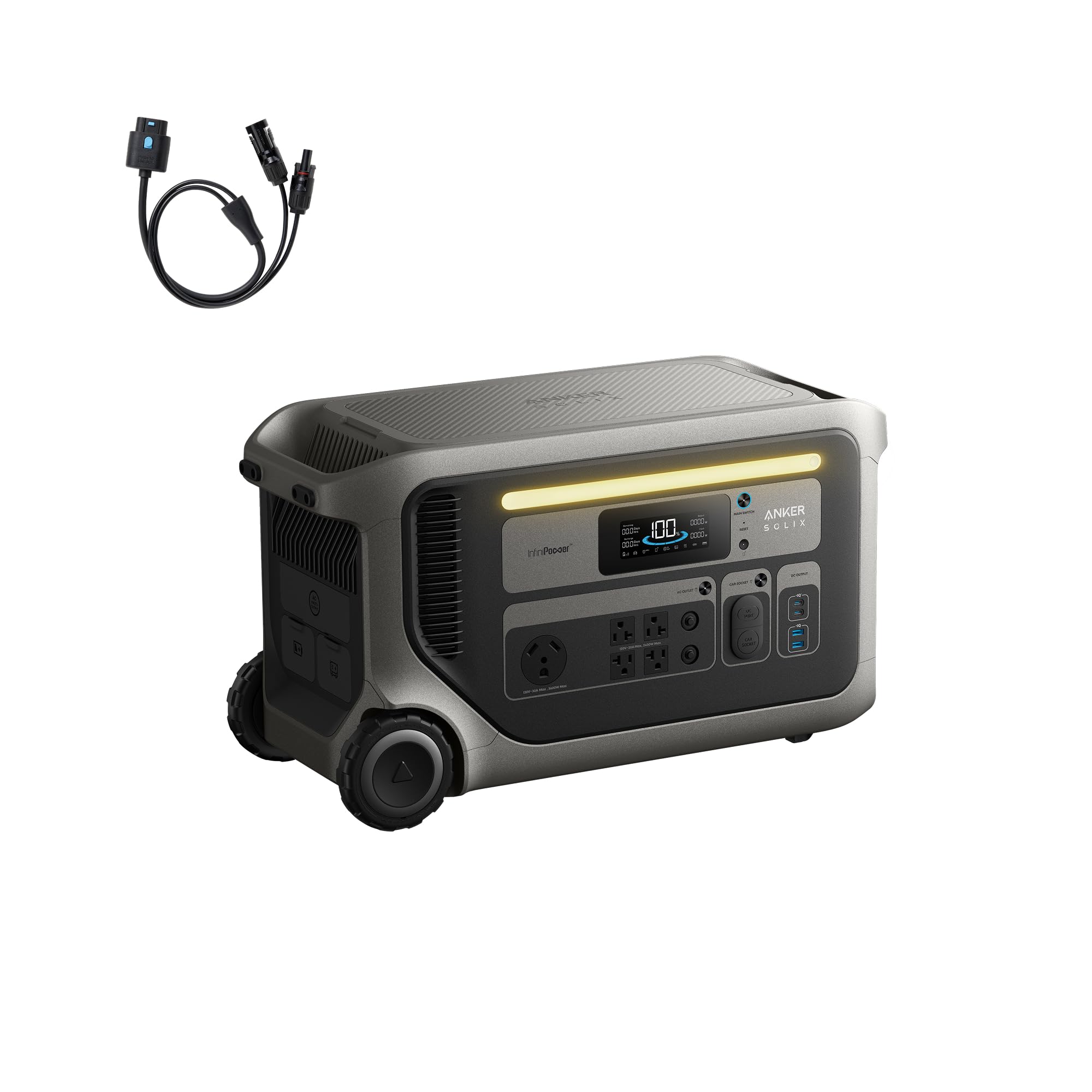
Battery Type: LiFePO4
Capacity: 3,072Wh
Expandable Capacity: Up to 24kWh
Continuous Output: 3,600W
Peak Output: 6,000W
Backup Feature: UPS
Charging: Generator-ready
The F3000 is the premium pick and the one to choose when the studio is really a workshop. Its 3,600W continuous rating runs heavier tools than the other picks here, and the 6,000W peak gives motors the headroom they need at startup. Expansion to 24kWh is the standout feature: a buyer can start with the base unit and add capacity later as the studio grows, rather than replacing the whole system. Generator-ready charging means a fuel generator can top it up during a long outage, which is the sensible pairing for a remote building.
This is the pick for a maker running serious equipment or a homeowner who wants whole-building resilience over time. It is not for a buyer on a tight budget or one who only needs lights and a laptop — the capacity is far beyond that, and the price tier reflects it. The trade-off is cost and bulk: this is a large, expensive unit, and the expansion path only pays off if the buyer actually intends to use it.
3. EGO POWER+ Portable Power Station, 3000W, Battery Powered, Inverter Generator for Home and Outdoor, Includes (2) 56V 7.5Ah Batteries and Charger – PST3042
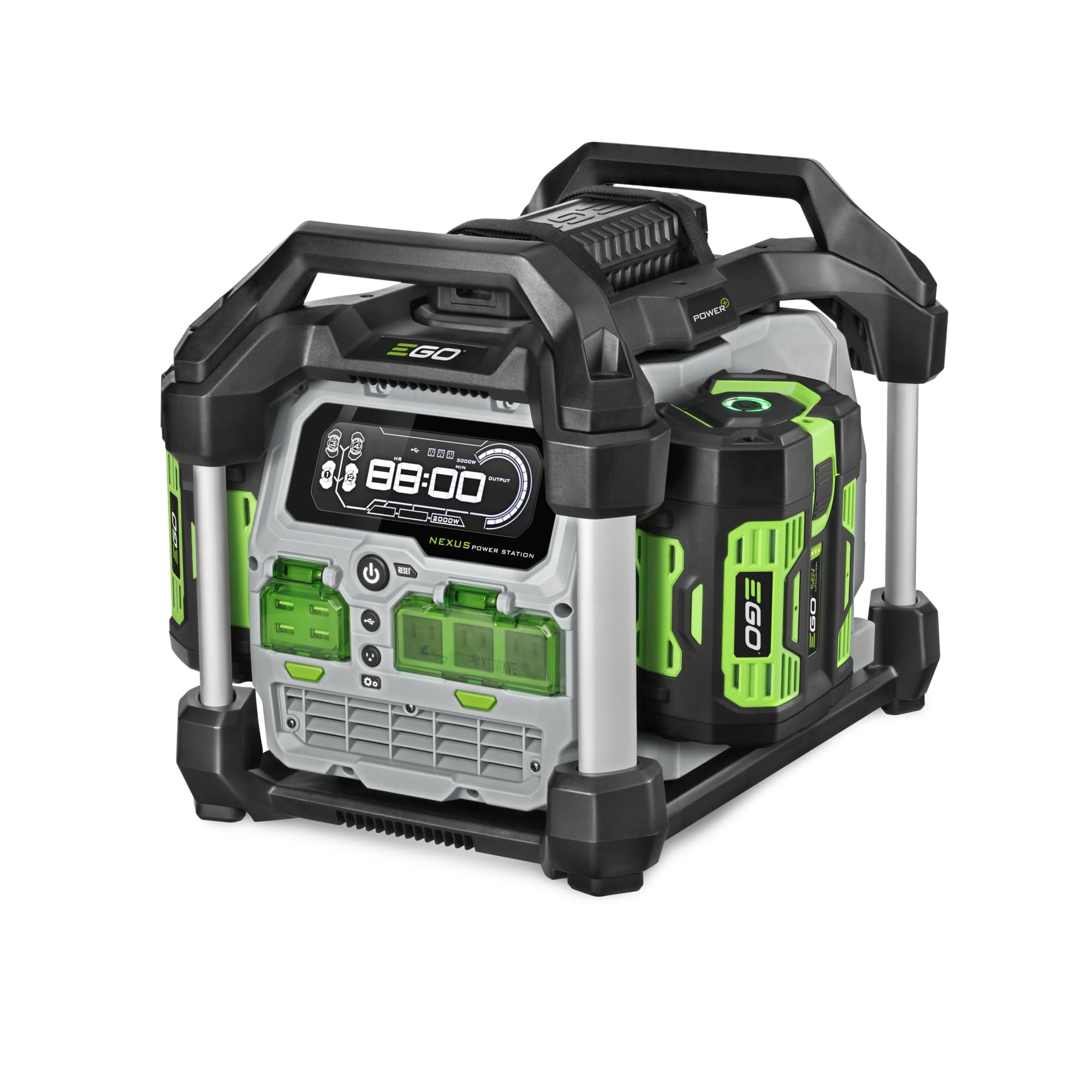
Type: Battery-powered inverter power station
Output: 3000W
Battery System: 56V
Included Batteries: Two 7.5Ah packs
Included Charger: Yes
Intended Use: Home and outdoor
The EGO PST3042 takes a different approach from the sealed solar generators: it runs on the brand’s own 56V battery packs, and two 7.5Ah packs plus a charger come in the box. For a buyer already using EGO outdoor equipment, that is a real advantage, because the same batteries can move between tools and the power station. The 3000W output is enough for a studio’s lights, a fan and a laptop, and the inverter design delivers clean power rather than the rough waveform of a cheap fuel generator.
This is the pick for a garden-studio owner who already owns EGO tools or wants a system where batteries are interchangeable across the shed and the studio. It is not for a buyer who needs long unattended runtime — the included packs are a starting point, not a large reserve. The trade-off is that capacity depends on how many packs the buyer owns or buys, so total runtime is a moving target rather than a fixed figure.
4. 1,191Wh LiFePO4 Battery, 1,200W Output, Solar Generator for Home Backup, Outdoor and Emergency Use UDPOWER S1200 Portable Power Station with 2 x 120W Solar Panels
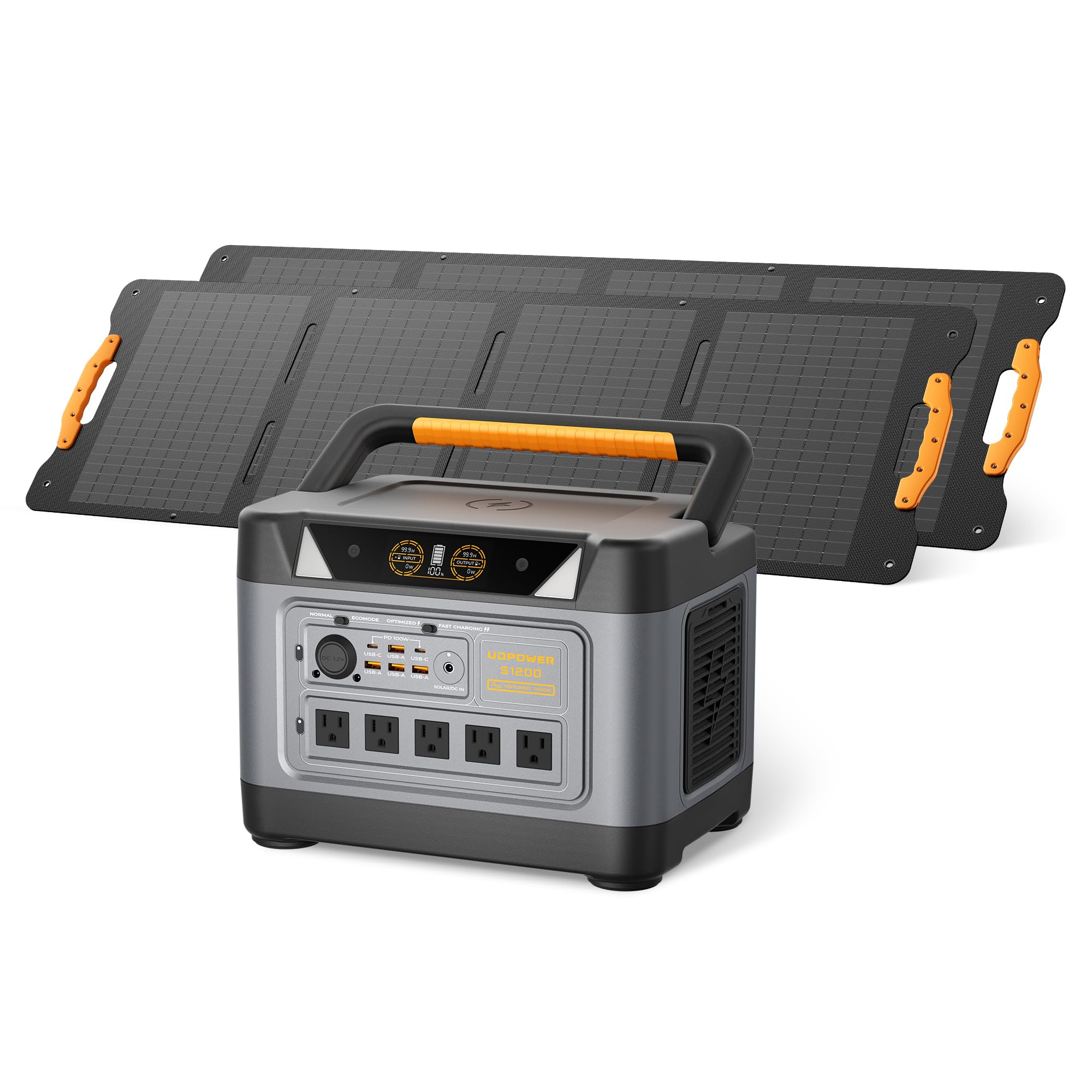
Battery Type: LiFePO4
Capacity: 1,191Wh
Output: 1,200W
Included Solar: Two 120W panels
Intended Use: Home backup, outdoor and emergency use
The S1200 is the budget pick and the only one here that ships with panels in the box. Two 120W solar panels mean a buyer can set the studio up to recharge from daylight without buying anything else, which matters for a building far from an outdoor socket. The 1,200W output covers the essentials — lighting, a laptop, a small fan, a phone charger — and the LiFePO4 battery keeps the chemistry consistent with the larger picks. For a light-use studio, this is the simplest path to a working setup.
This is the pick for a hobbyist or a writer who needs a quiet studio with lights and a computer, and for anyone who wants solar included rather than added later. It is not for a buyer running heaters, kettles or power tools, since 1,200W will not carry them. The trade-off is capacity: 1,191Wh is the smallest reserve here, so heavy evening use will need daily recharging.
5. 2,083Wh LiFePO4 Battery, 2,400W Output, UPS, Solar Generator for Home Backup, RVs, Camping and Emergencies UDPOWER S2400 Portable Power Station with 210W Solar Panel
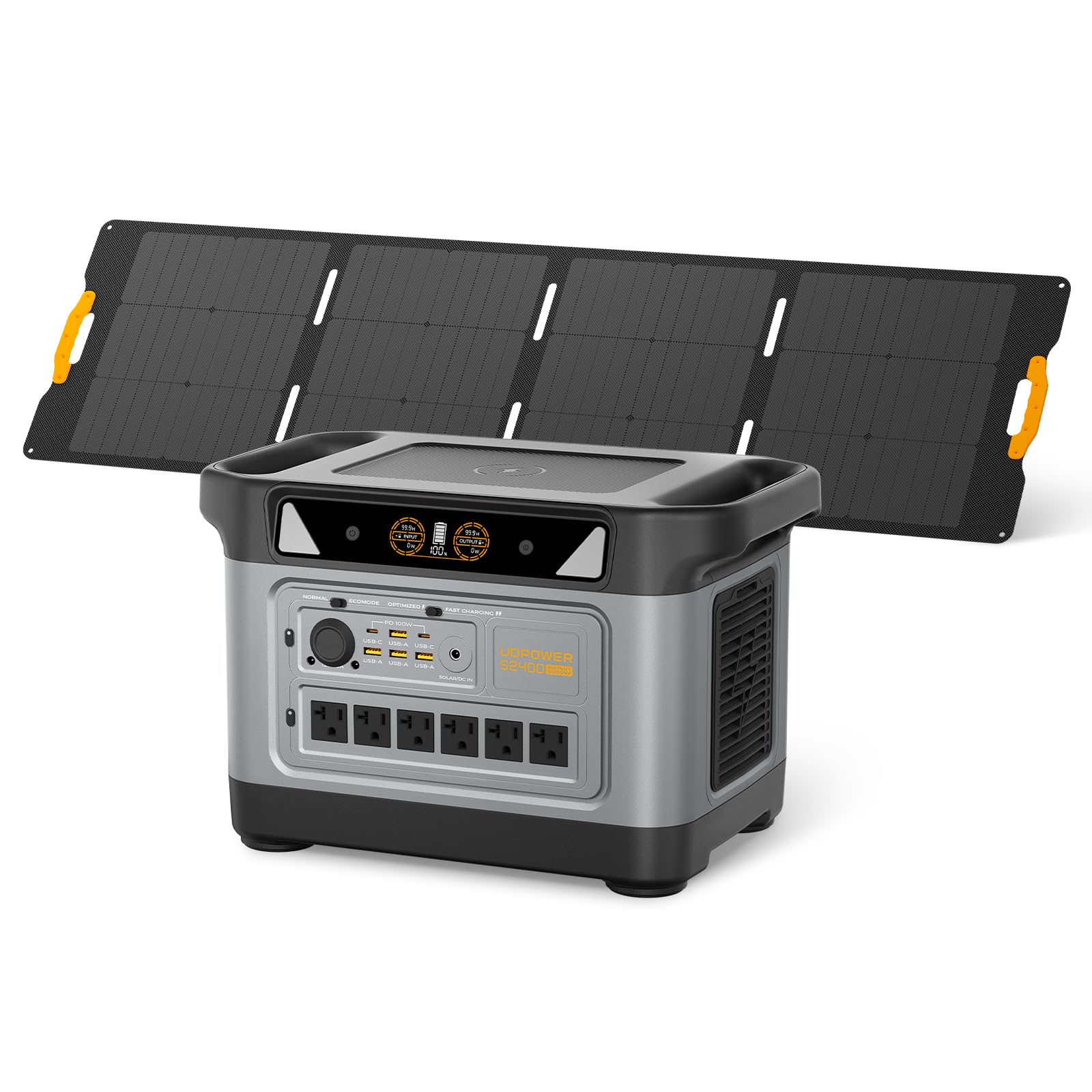
Battery Type: LiFePO4
Capacity: 2,083Wh
Output: 2,400W
Backup Feature: UPS
Included Solar: One 210W panel
Intended Use: Home backup, RVs, camping and emergencies
This bundle pairs the S2400 with a single 210W solar panel, which makes it the most complete one-box answer for a garden studio. The power station itself matches the first pick — 2,083Wh of LiFePO4 capacity, 2,400W output and UPS switching — but the included panel means the studio can recharge from sunlight without a separate purchase. For a building with no mains feed, that combination is the practical choice, and the UPS function still protects anything left running on mains.
This is the pick for a buyer who wants solar and backup in one order and does not want to research panel compatibility. It is not for a buyer who already owns panels, since the bundled one would be redundant, and it is not for heavy workshop loads. The trade-off is that one 210W panel is a modest array — recharging a 2,083Wh battery from it takes time, so a buyer drawing deeply every day may want to add panels.
Before You Buy
- Capacity: Match watt-hours to daily use; lights and a laptop need far less than a heater or a power tool.
- Output: Check continuous watts against the largest appliance the studio will run, and leave headroom for motor startup.
- Battery chemistry: LiFePO4 is the durable, long-life option and appears across most picks here; older chemistries age faster.
- Solar compatibility: A bundled panel saves research, but check whether the array is big enough to refill the battery in a day.
- Backup switching: A UPS function matters if a desktop, router or security device runs in the studio.
- Expansion: Only pay for expandable capacity if there is a realistic plan to add batteries later.
- Portability: Larger capacity means more weight; a studio that needs the unit moved regularly should favor a smaller model.
Frequently Asked Questions
-
How much power does a garden studio need?
A light-use studio with lights, a laptop and a charger can run on around 1,200W output and roughly 1,000Wh of capacity. Adding a heater, kettle or power tool pushes the requirement toward 2,400W or more. -
Is a solar generator better than a fuel generator for a studio?
A battery system runs silently, produces no exhaust and can sit inside the building. A fuel generator offers longer runtime for heavy loads but needs ventilation, fuel storage and maintenance. -
Can a power station run a studio heater?
Only the higher-output picks here can carry a small heater, and even then runtime is short because heating draws heavily. Capacity, not just output, decides whether it is practical. -
Does the UPS feature matter in a garden studio?
It matters when a computer, router or camera system runs out there. UPS switching keeps that equipment alive during a brief outage instead of shutting it down. -
Can the included solar panels fully recharge the battery?
A bundled panel recharges the battery over time, but a modest array will not refill a large battery quickly. Buyers drawing heavily each day should plan to add panels. -
Do these units work in cold weather?
Battery performance drops in low temperatures, which matters for an unheated garden studio in winter. Buyers in cold climates should plan to keep the unit above freezing where possible.
Bottom Line
The best power setup for a garden studio is the UDPOWER S2400 with the included 210W solar panel, because it combines a capable LiFePO4 battery, UPS backup and a solar panel in a single order. Buyers running heavy tools should step up to the Anker SOLIX F3000, while light-use studios can save with the S1200 bundle.
