Why there are Amazon links here: Brave Review is paid a commission for qualifying Amazon purchases made through the links below. Your price does not change, and using our links is entirely optional. How this works
Portable Power Station 300W vs Portable Power Station 500W: Capacity or Compact?
This comparison settles one decision: whether a small 300W-class station covers the job or whether the extra capacity of a 500W-class unit is worth the added bulk and cost. The 300W pick here suits short outages, CPAP use and light camping, while the 500W pick suits longer RV trips, multi-device charging and home backup. The short answer sits in the overview table, and the full breakdown follows.
The Picks at a Glance
| Product | Key Spec | Best Use | Price Tier |
|---|---|---|---|
| 1Hr Fast Charge Portable Power Station 300W | 192Wh, 300W / 600W surge, LiFePO4, 10ms UPS | CPAP, short blackouts, solo camping | Budget |
| 500W Portable Power Station | 519.48Wh / 140400mAh, 2 AC outlets, PD 60W USB-C | RV trips, longer outages, multi-device days | Mid-range |
1Hr Fast Charge Portable Power Station 300W
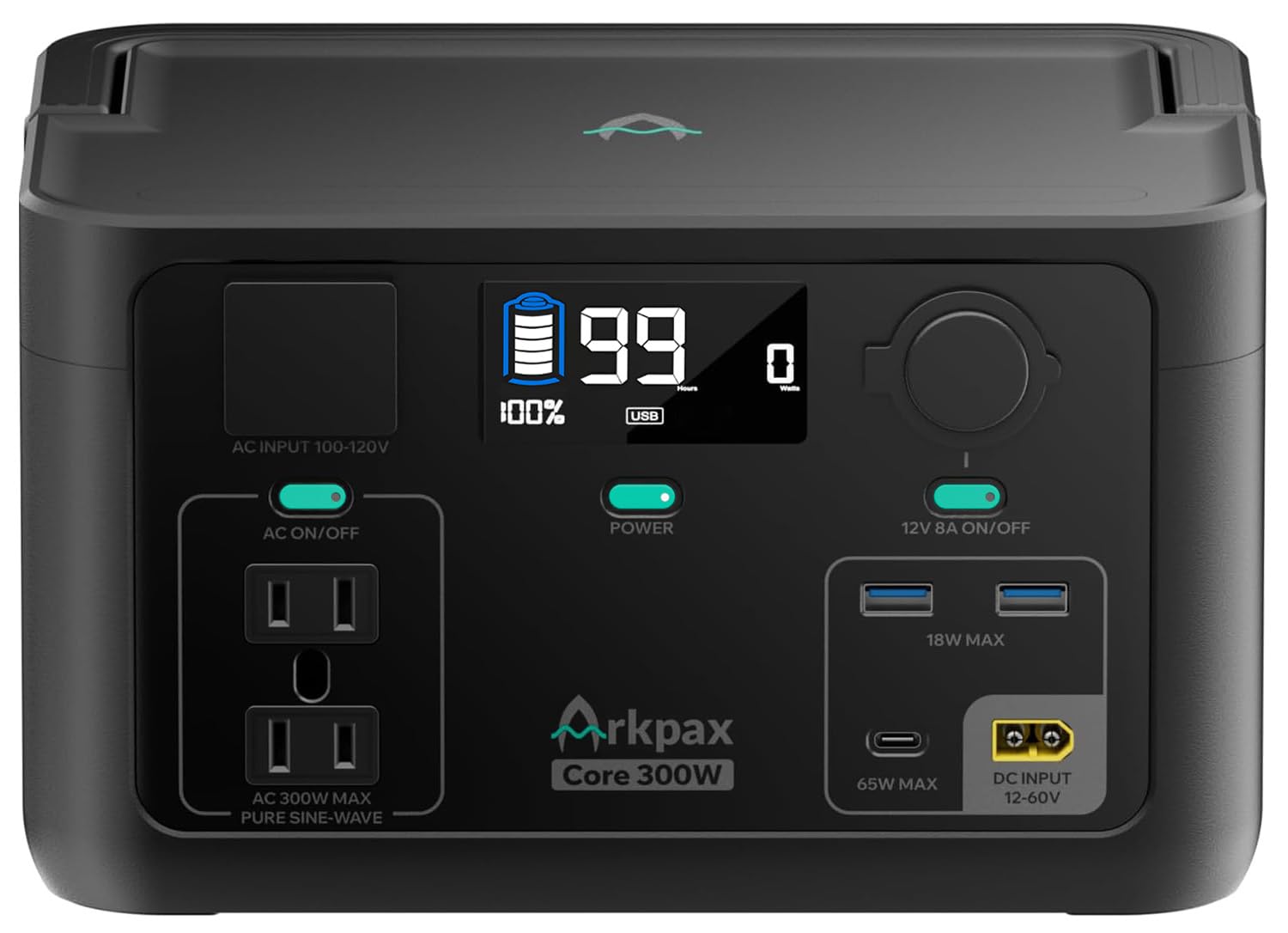
Capacity: 192Wh
Continuous Output: 300W
Surge Output: 600W
Battery Chemistry: LiFePO4
AC Outlet: 120V, with 10ms UPS switching
Recharge: 1-hour fast charge; solar panel optional
This is the compact end of the category, built around a lithium iron phosphate battery that trades total capacity for longevity and a smaller footprint. The LiFePO4 chemistry is the headline for buyers who plan to cycle the unit often, since that chemistry is generally the more durable option in small power stations. The 10ms UPS mode is the feature that separates it from a plain camping battery: it switches to backup fast enough for a home router, a lamp or a CPAP machine to ride through a short blackout.
At 192Wh, the realistic workload is narrow. A single low-draw device overnight, a phone and laptop top-up, or a few hours of lighting is the natural fit. The 600W surge rating gives motor-driven appliances a brief startup window, but sustained draws near the 300W ceiling will drain the pack quickly.
Trade-off: The small battery means heavy or continuous AC loads are out of reach, so buyers with a fridge or a multi-day trip should look at the larger unit.
Check the current price on Amazon
500W Portable Power Station
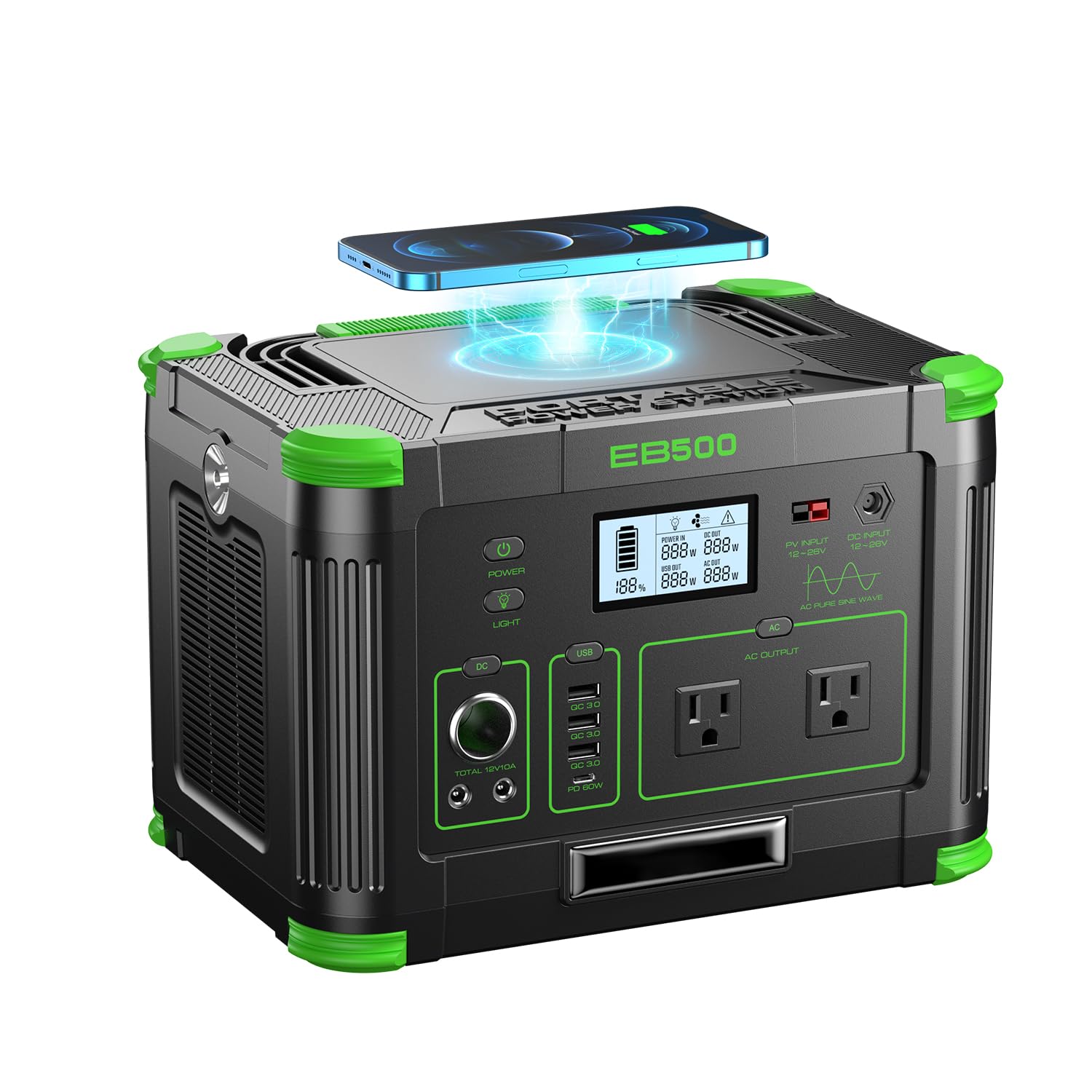
Capacity: 519.48Wh / 140400mAh
Continuous Output: 500W
AC Outlets: 2
USB-C Output: PD 60W
Battery Type: Lithium battery pack
Intended Use: Outdoor, RV camping, home outage, emergency backup
This unit roughly doubles the capacity of the 300W model and adds a second AC outlet, which changes what a buyer can run at once. Two AC outlets plus a 60W USB-C PD port covers a laptop, a phone and a small appliance simultaneously without shuffling plugs. The 500W continuous rating opens up devices the smaller station cannot sustain, and the capacity supports a full evening of mixed use rather than a single overnight charge.
The 60W USB-C PD output is the practical detail for modern buyers: it fast-charges laptops and phones directly, no AC adapter needed. For RV use, the combination of two AC outlets and a high-wattage USB-C port makes it a genuine multi-device hub rather than a phone charger with an outlet bolted on.
Trade-off: The larger battery and second outlet add weight and bulk, and the higher price tier only pays off for buyers who actually need the extra capacity.
Check the current price on Amazon
Side-by-Side Comparison
| Feature | 300W Station | 500W Station |
|---|---|---|
| Capacity | 192Wh | 519.48Wh / 140400mAh |
| Continuous Output | 300W | 500W |
| Surge Output | 600W | Not stated in name |
| Battery Chemistry | LiFePO4 | Lithium battery pack |
| AC Outlets | 1 (120V) | 2 |
| USB-C | Not stated in name | PD 60W |
| UPS Mode | 10ms switching | Not stated in name |
| Recharge | 1-hour fast charge | Not stated in name |
| Solar Input | Optional panel | Solar generator capable |
| Best For | CPAP, short outages, solo camping | RV, longer outages, multi-device |
The table reads out three real separations. Capacity is the biggest: the 500W unit carries well over twice the watt-hours, which translates directly into longer runtime at the same load. Outlet count is the second: one AC outlet versus two changes how many devices run at once. Battery chemistry is the third: LiFePO4 on the 300W model is the more durable chemistry, while the 500W model’s lithium pack is the more capacity-dense choice.
The UPS feature only appears on the 300W unit, and that is the one dimension where the smaller station wins outright. Buyers who need seamless blackout switching for medical or network equipment should weight that heavily. Buyers who need runtime and outlet count should weight the 500W unit’s advantages instead.
Which Should You Buy?
Choose the 300W station if the job is a single low-draw device through a short outage, CPAP backup, or solo camping where portability matters more than runtime. The LiFePO4 chemistry and 10ms UPS switching are the reasons to pick it over a generic small pack. It is not for buyers running a fridge, a space heater or multiple AC devices at once.
Choose the 500W station if the job involves RV trips, multi-day camping, or home backup where two AC outlets and a 60W USB-C port need to run several devices at once. The doubled capacity is the deciding factor. It is not for buyers who want the lightest possible pack or who only need to top up a phone.
FAQ
-
Is a 300W power station enough for a CPAP machine?
For most CPAP setups without a heated humidifier, yes. The 300W unit’s 10ms UPS switching makes it a reasonable overnight backup, though buyers with a heated humidifier should check the draw against the 300W ceiling. -
How much longer does the 500W station run at the same load?
The 500W unit carries roughly two and a half times the watt-hours of the 300W model, so runtime at an identical load scales up accordingly. -
Which one is better for RV camping?
The 500W unit. Two AC outlets and 60W USB-C PD cover multiple devices at once, and the larger capacity handles a full evening of mixed use. -
Does the 300W station support solar charging?
Yes, a solar panel is listed as optional for that model. Buyers planning off-grid use should budget for a compatible panel separately. -
Can either unit run a refrigerator?
Neither is a good fit for a full-size fridge. The 500W unit’s higher continuous rating gives more headroom, but sustained compressor draw will drain either pack quickly. -
Which one is lighter?
The 300W unit is the smaller, lighter pack by design. Buyers prioritizing portability over runtime should weight that. -
Do both have USB-C?
The 500W unit lists a PD 60W USB-C port. The 300W model’s USB-C capability is not stated in its product name, so buyers who need USB-C PD should confirm before purchase.
Bottom Line
For most buyers comparing these two, the 500W Portable Power Station is the better pick: double the capacity, two AC outlets and a 60W USB-C PD port cover RV trips, longer outages and multi-device days that the smaller unit cannot. The 300W model remains the right call for CPAP backup and short blackouts, where its LiFePO4 chemistry and 10ms UPS switching matter more than raw watt-hours.