Why there are Amazon links here: Brave Review is paid a commission for qualifying Amazon purchases made through the links below. Your price does not change, and using our links is entirely optional. How this works
Veise KS03 Keypad Door Knob: Keyless Entry Without the Smart Lock Price
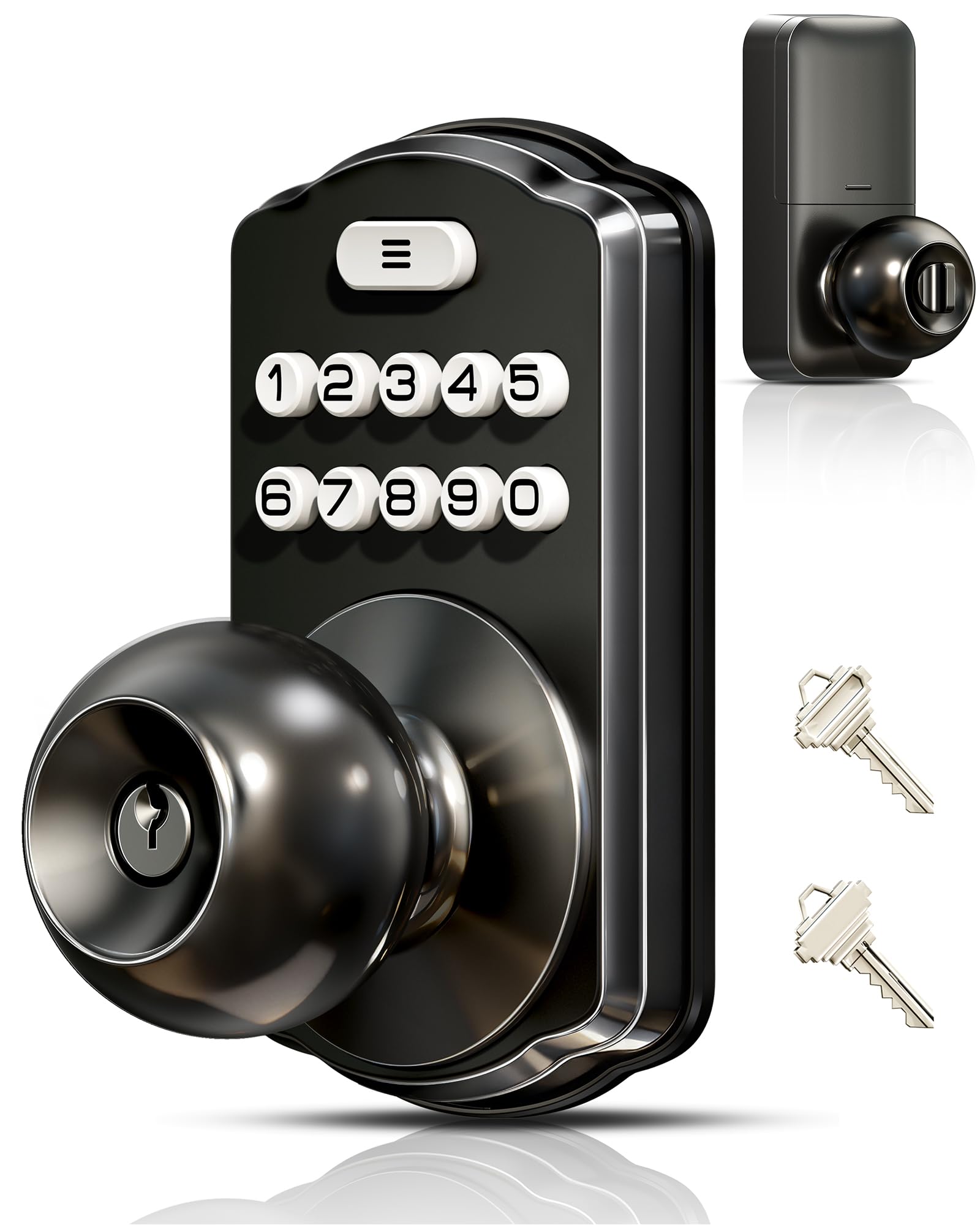
The Veise KS03 keypad door knob is a battery-powered, backlit keypad lock with an integrated handle, built for front doors and bedrooms that need keyless entry without an app, a hub or a Wi-Fi connection. It suits renters, second homes and anyone who wants a code to work the moment it is installed. This review covers the specifications that matter, how the lock is likely to behave in daily use, and where a budget keypad knob makes the most sense — and where it does not.
Check the current price on Amazon
Features and Specifications
Product: VeiseElectronic Backlit Keypad for Front Door & Bedroom, KS03 Keypad Door Knob
Type: Keyless entry door knob with integrated handle
Locking: Keypad code entry, auto lock, passage mode
Access Features: One-time code, backlit keypad
Alerts: Low battery alert
Finish: Matte black
The headline here is the feature set, not the hardware. A backlit keypad, auto lock, passage mode and a one-time guest code are the four functions buyers actually use day to day, and this knob carries all of them at a price that sits well below most smart locks. That combination is the reason the lock moves in volume — it reads as a connected lock without the connected price.
The second thing to understand is what the KS03 is not. There is no app, no Bluetooth pairing, no Wi-Fi bridge and no remote unlocking from a phone. Codes are managed at the keypad itself. For a front door that is a deliberate simplification; for a buyer who wants to grant access from another city, it is a hard stop.
Build and Hardware
The KS03 is a knob-style lock in matte black, which means it replaces a standard round knob rather than a deadbolt. The keypad and the handle are one unit, so the door gets a single piece of hardware instead of a separate keypad and latch.
That form factor is the practical story. A knob lock is a direct swap for the most common residential door prep, and the installation is a screwdriver job rather than a carpentry job — no new bore holes, no deadbolt cut. Buyers replacing an existing knob can reasonably expect to be finished in the time it takes to watch a short video.
The trade-off is security class. A knob lock is the entry-level tier of door hardware, and a keypad does not change that. On a front door, the KS03 is best understood as convenience hardware that works alongside a deadbolt, not as a replacement for one. On a bedroom or interior door, that distinction barely matters.
The matte black finish is a fingerprint-friendly choice for a keypad surface, and it hides smudges better than brushed metals typically do. It also reads as a modern finish against painted doors, which is part of why the lock photographs well and sells steadily.
Trade-off: A knob-style keypad is a convenience lock, not a security upgrade — buyers who want real forced-entry resistance on an exterior door should pair it with a deadbolt rather than rely on it alone.
Power and Battery Behavior
The KS03 runs on batteries, and the low battery alert is the feature that makes that arrangement workable. A keypad lock that dies without warning is a lockout waiting to happen; an alert gives the household days of notice to swap cells before the keypad stops responding.
Battery life in this category depends heavily on the backlight and on how often the lock cycles, so a busy front door will drain cells faster than a bedroom door used twice a day. Buyers should expect to replace batteries on a schedule rather than on a hunch, and keep a spare set within reach of the door.
The other power consideration is the one buyers forget: a keypad lock has no key override on the outside in most configurations of this type, so a dead battery plus a locked door is the failure mode to plan around. The low battery alert exists precisely to prevent that scenario, and treating the alert as a hard deadline rather than a suggestion is the whole discipline.
Auto Lock, Passage Mode and One-Time Codes
Auto lock is the feature that changes how a household uses a door. The lock re-engages on its own after a set delay, which removes the "did anyone lock up?" question from the evening routine and makes the knob behave like a commercial lock in a residential doorway.
Passage mode is the counterweight. It holds the latch open so the door swings freely — useful when carrying groceries, moving furniture, or when a room needs to stay accessible for a stretch of time. The catch is that passage mode is a deliberate suspension of security, and leaving it engaged on an exterior door overnight defeats the point of the lock.
The one-time code is the sleeper feature. It gives a cleaner, a dog walker or a contractor a code that works once and then expires, without the household having to add and later delete a permanent user. For a rental or a home with regular service visits, that single function justifies the lock on its own.
Code capacity on a lock of this class is modest, which is normal — a household, a cleaner and a neighbor is the realistic list. Buyers planning to issue codes to a rotating cast of many people should look at an app-connected lock instead.
Keypad, Codes and Daily Use
The backlit keypad is what makes the KS03 usable after dark. An unlit keypad on a front door is a fumble in the dark; backlighting means a code can be entered accurately without a porch light. For anyone who arrives home late, this is not a luxury feature.
Code entry itself is the routine interaction, and it is where keypad locks live or die. The KS03 keeps that interaction simple — punch the code, turn the knob — with no app handshake or wake-up step in between. Buyers who have been frustrated by smart locks that take several seconds to respond to a phone will find the directness refreshing.
The honest caution on this front is that a keypad is a shared surface. Codes should be changed when a relationship changes — a cleaner leaves, a tenant moves out — and the code should not be a birthday or a street number. That is a habit issue rather than a hardware flaw, but it is the one that decides whether a keypad lock is safer or less safe than a key.
Who the KS03 Suits, and Who It Does Not
The KS03 fits three buyer profiles well. The first is the renter or homeowner who wants keyless entry on a front door without drilling for a deadbolt or paying smart-lock money. The second is the household that needs a bedroom, home office or interior door to lock without carrying a key. The third is the short-term rental or second home where a one-time code solves guest access cleanly.
It does not fit buyers who need remote access. Anyone who wants to unlock a door for a delivery from another state, review an entry log, or issue codes by text needs a connected lock, and the KS03 will feel like a step backward. It also does not fit a household that wants the exterior door protected by a single piece of hardware — a keypad knob plus a deadbolt is the realistic front-door setup, not the knob alone.
Buyers replacing a deadbolt should also check the door prep before ordering. A knob lock and a deadbolt are different cuts, and the KS03 is a knob replacement, not a deadbolt replacement.
FAQ
-
Is the Veise KS03 keypad door knob a smart lock?
No. The KS03 is a standalone keypad lock with no app, Wi-Fi or Bluetooth. Codes are set and used at the keypad, which keeps it simple and keeps the price down, but it cannot be controlled remotely. -
Does the KS03 have a key backup?
The product is built around keyless entry, so buyers who need a physical key as a fallback should confirm the exterior key option before ordering. The low battery alert is the primary safeguard against being locked out by a dead battery. -
What is passage mode on a keypad door knob?
Passage mode holds the latch open so the door can be opened without a code. It is useful for moving furniture or high-traffic periods, and it should be turned off on an exterior door when normal security resumes. -
How does a one-time code work?
A one-time code grants a single entry and then expires. It is the clean way to let a cleaner, contractor or guest in without creating a permanent user code that has to be deleted later. -
Can the KS03 be used on a bedroom door?
Yes. A keypad knob is a natural fit for bedrooms, home offices and interior doors where keyless entry is more convenient than carrying a key, and the security limitations of a knob lock matter far less indoors. -
Does the keypad light up in the dark?
Yes. The keypad is backlit, which is the feature that makes late arrivals practical without a porch light or a phone flashlight. -
What happens when the batteries run low?
The lock issues a low battery alert ahead of failure. Buyers should treat that alert as the signal to replace the batteries immediately rather than waiting for the keypad to stop responding. -
Is a keypad door knob as secure as a deadbolt?
No. A knob lock sits at the entry level of door hardware, and a keypad does not change that. On an exterior door, the KS03 is best paired with a deadbolt rather than used as the only lock. -
Will the KS03 fit an existing door?
The KS03 is a knob-style lock, so it is designed to replace a standard door knob rather than a deadbolt. Buyers should check their current hardware and door prep before ordering. -
Is matte black a good finish for a keypad lock?
Matte black hides fingerprints and smudges better than most metal finishes, which matters on a surface that gets touched every day, and it suits modern door and trim colors.
Bottom Line
The Veise KS03 keypad door knob is the right purchase for a buyer who wants keyless entry, auto lock and a one-time guest code without paying for an app ecosystem they will not use. It is a convenience lock, not a security upgrade, and it belongs on a front door alongside a deadbolt or on an interior door on its own. Buyers who need remote access or entry logs should look elsewhere; everyone else gets the core features of a smart lock at a budget price.