Why there are Amazon links here: Brave Review is paid a commission for qualifying Amazon purchases made through the links below. Your price does not change, and using our links is entirely optional. How this works
Best Curtain Automation for a Rental: 5 Smart Openers That Leave No Holes
Renters who want scheduled curtains face one hard limit: nothing can be screwed into the wall, and nothing can be left behind at move-out. The best curtain automation for a rental therefore means retrofit openers that clamp onto an existing rod or glide onto an existing track, run on their own battery, and lift off again in minutes. The five picks below cover three buyer profiles — the smart-home tinkerer who wants app and voice control, the renter who only wants a remote and a timer, and the household automating two or three windows at once. The overview table shows the differences at a glance; individual reviews follow.
The Picks at a Glance
| Product | Key Spec | Best Use | Price Tier |
|---|---|---|---|
| SwitchBot 2025 Automatic Curtain Opener 3 (2-Pack) | Bluetooth + WiFi/app, Matter via Hub | Full smart-home setup, two windows | Mid |
| SwitchBot Automatic Curtain Opener | Bluetooth remote + app/timer, Hub optional | Single window, simple app control | Budget |
| Zigbee Rechargeable Curtain Robot | Zigbee hub required, I/U tracks and rods | Zigbee households, rechargeable | Mid |
| Automatic Curtain Opener and Closer (2 Pcs) | No hub required, remote, quiet mode | Two windows, remote only | Budget |
| Automatic Curtain Opener with Remote 2 Pack | 20 m remote range, route learning, no WiFi | Nursery, bedroom, offline reliability | Budget |
1. SwitchBot 2025 Automatic Curtain Opener 3 Rod-Bluetooth Remote Control (2-Pack)

Type: Retrofit rod-mounted curtain opener
Quantity: Two openers
Control: Bluetooth remote, WiFi and app
Voice control: Alexa, Google Home, HomeKit via Matter — hub required
Power: Battery-powered motor unit
Mounting: Clamps to an existing curtain rod
This is the two-pack version of SwitchBot’s rod-mounted opener, and it is the pick for a renter who wants a genuine smart-home curtain rather than a motorized toy. The unit grips the existing rod and drives the curtain along it, so nothing is drilled and nothing is left behind at move-out. Out of the box it works over Bluetooth with the bundled remote and the app’s timers and schedules. Adding SwitchBot’s hub unlocks WiFi control away from home plus Alexa, Google Home and HomeKit through Matter — that hub is the step that turns two openers into a proper automation.
The pair suits a renter automating a bedroom and a living-room window together, or a household with a wide double-rod setup. Buyers who never plan to add the hub should weigh whether they are paying for capability they will not use. The main caution is cost: this is the priciest route here once the hub is factored in, and the hub is a separate purchase that the product name makes clear is not in the box.
Trade-off: The full smart-home feature set only materializes after buying SwitchBot’s hub separately, so the entry price understates the real cost of voice control.
Check the current price on Amazon
2. SwitchBot Automatic Curtain Opener
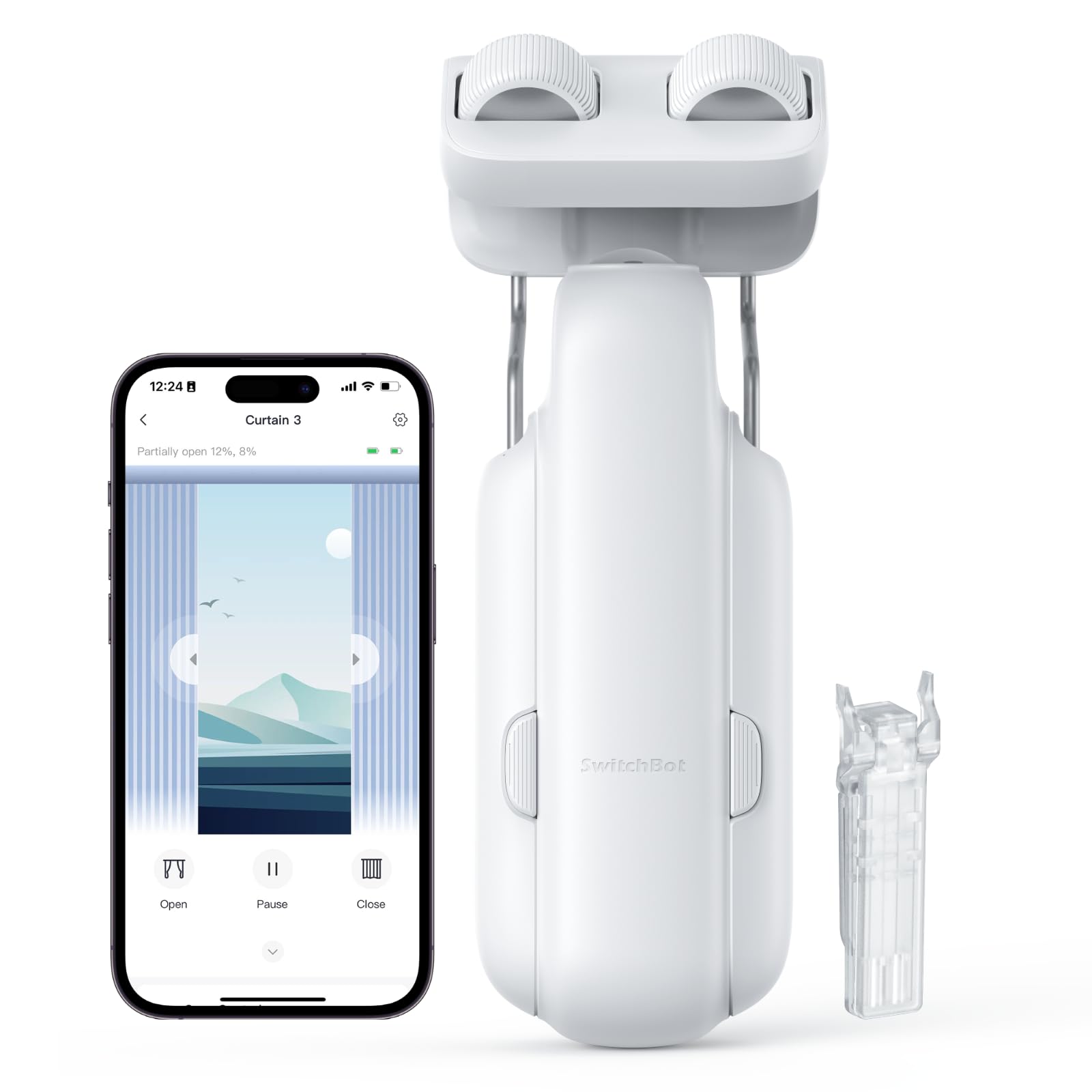
Type: Retrofit rod-mounted curtain opener
Quantity: Single opener
Control: Bluetooth remote, app, timer
Voice control: Alexa, Google Home, HomeKit — hub required
Power: Battery-powered motor unit
Mounting: Clamps to an existing curtain rod
This is the single-unit SwitchBot opener and the simplest way into the ecosystem: one motor, one remote, app timers, no hub needed for the basics. It mounts on the rod the same way as the two-pack above, which keeps the rental deposit safe. The app handles schedules and the remote covers manual override, so a renter can have curtains open at sunrise without touching a screwdriver. The upgraded high-performance motor in the name is the current generation of the same design.
It fits a renter automating one window — a bedroom, a home office, a single living-room panel — who may add a hub later. Households that already know they want voice control across several rooms should look at the two-pack instead, since buying singles one at a time costs more per window. The caution here is coverage: one unit moves one curtain run, and wide or heavy drapes may need a second opener on the same rod to pull evenly.
Trade-off: A single opener covers a single curtain run, so wide windows often need a second unit, which erodes the budget advantage.
Check the current price on Amazon
3. Zigbee Rechargeable Curtain Robot
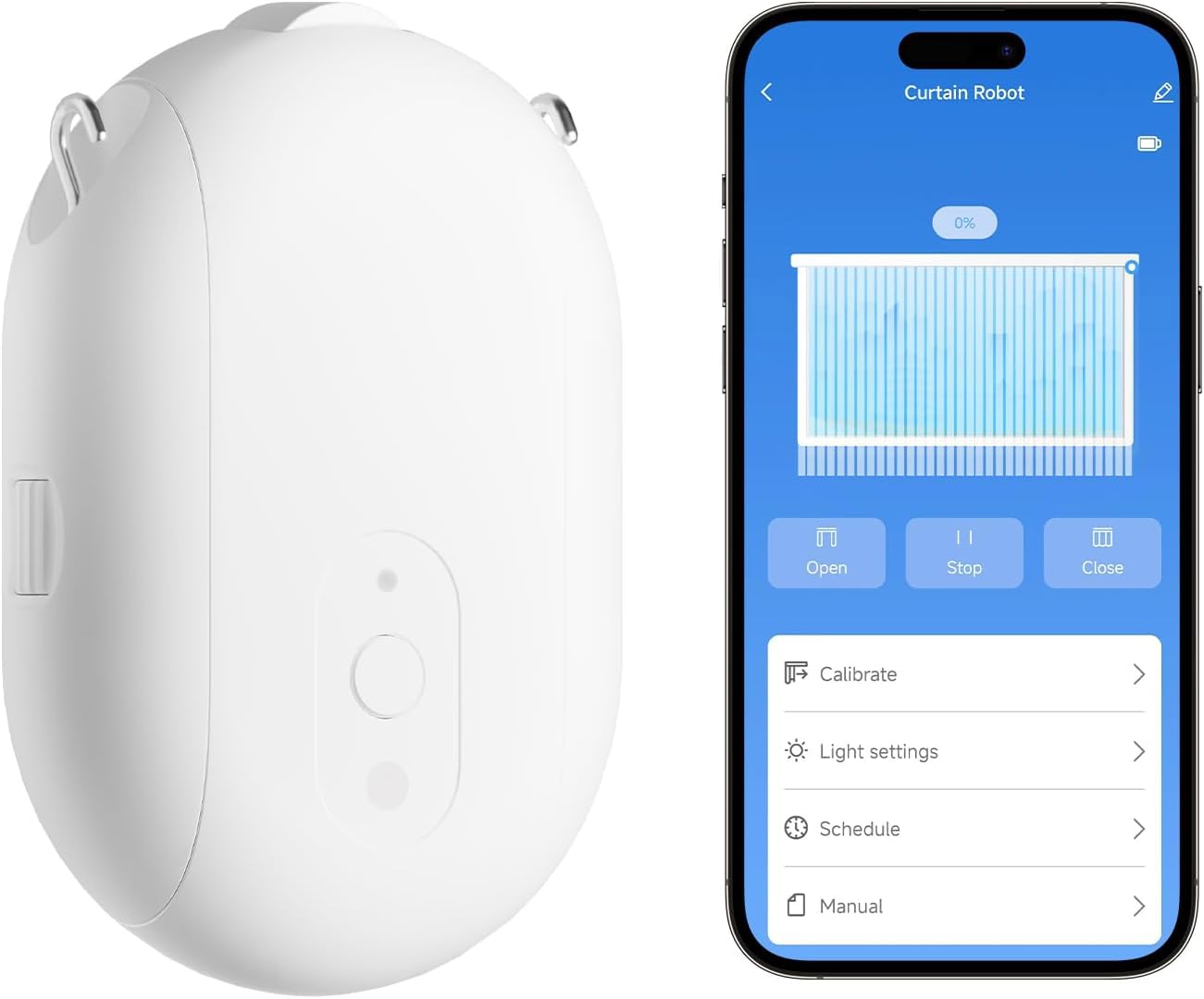
Type: Retrofit curtain robot for tracks and rods
Compatibility: I and U tracks, plus rods
Control: App, timer, schedule
Voice and remote: Requires a Zigbee hub
Power: Rechargeable battery
Mounting: Clips onto existing track or rod
This is the pick for a renter who already runs a Zigbee hub — SmartThings, Hubitat, or a Zigbee-capable speaker — and wants curtains folded into that network instead of a separate app. It handles both I and U tracks and rods, which covers the track-style curtains common in rented apartments as well as standard rods. The rechargeable battery avoids disposable cells, and app scheduling works without any hub at all. Voice and remote control are the parts that need the Zigbee hub, exactly as the name states.
It suits the renter with an existing smart-home backbone and track-mounted curtains that other openers cannot grip. Buyers with no Zigbee hub should price one in before committing, because the opener alone will not do voice control. The realistic caution is fit: track-mounted robots depend on the track profile being a clean I or U shape, and older or unusual tracks may not accept the clip cleanly.
Trade-off: The Zigbee hub requirement means this pick only makes sense for households already invested in that ecosystem.
Check the current price on Amazon
4. Automatic Curtain Opener and Closer with Remote (2 Pcs)
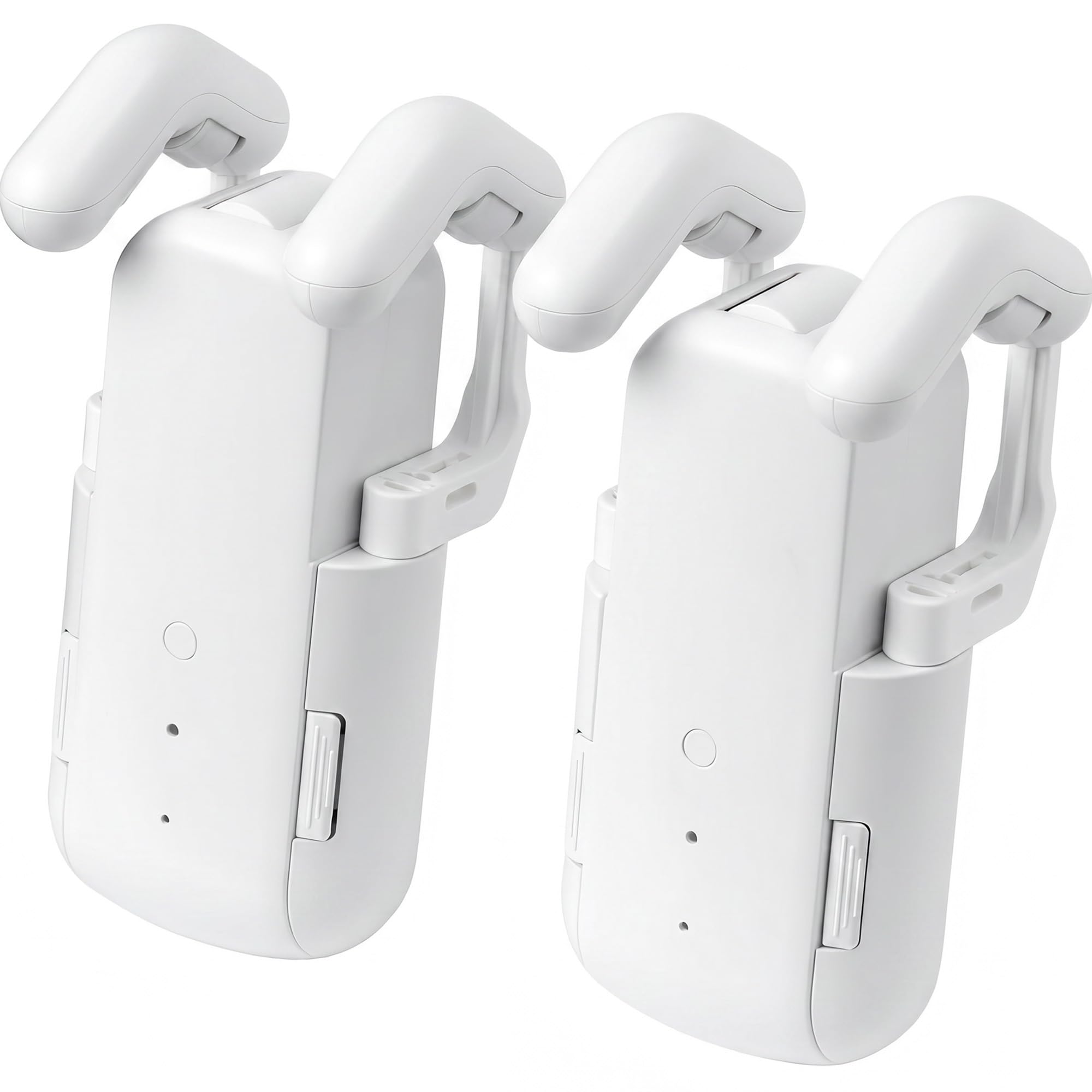
Type: Retrofit curtain opener and closer
Quantity: Two units
Control: Remote control
Hub: Not required
Modes: Quiet mode
Compatibility: Roman rods 8–40 mm, T and U tracks
Mounting: Clips onto existing rod or track
This two-pack is the no-app option: a remote, a quiet mode, and a stated fit range of 8–40 mm Roman rods plus T and U tracks. That range is the useful part for renters, because it covers the thin decorative rods and the chunkier wooden ones found in most rentals without adapters. No hub is needed, so setup is pairing the remote and clipping the units on. The quiet mode is aimed at bedrooms and shared walls where a whirring motor at 6 a.m. is unwelcome.
It suits a renter automating two windows who does not want another app, another account or another hub — a spare bedroom and a living room, or a home office and a small business frontage. The trade-off is scheduling: a remote-only design means no sunrise automation and no away-from-home control, so anyone who wants curtains that open on a schedule should look at the app-driven picks instead.
Trade-off: Remote-only control rules out timers and app scheduling, so this is motorized convenience rather than true automation.
Check the current price on Amazon
5. Automatic Curtain Opener with Remote 2 Pack (Route Learning)
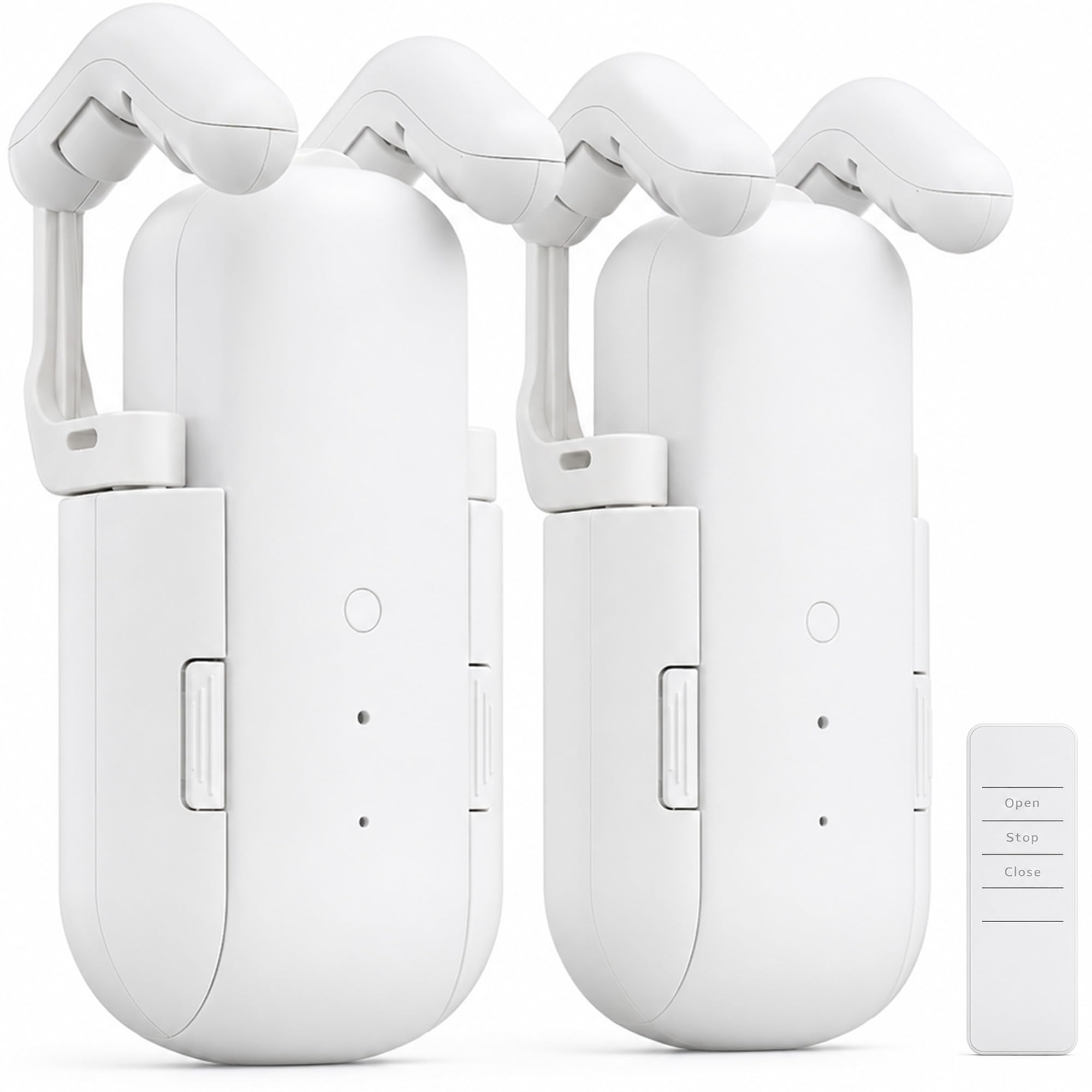
Type: Retrofit curtain opener with remote
Quantity: Two units
Control: Remote only — no WiFi, no app
Remote range: 20 m
Noise: 25 dB quiet mode
Learning: Route learning
Compatibility: Roman, U and T tracks
Mounting: Clips onto existing track
This pair is built for one job: quiet, reliable, offline curtain movement in a nursery, bedroom or home office. The 20 m remote range means the curtains can be operated from another room or across a large living space, and the 25 dB quiet mode is the headline for anyone opening curtains next to a sleeping child. Route learning lets each motor memorize where the curtain should stop at each end, which keeps the panels aligned instead of drifting. It is explicitly not WiFi and not app-based, which for some renters is the selling point rather than the compromise.
It fits the renter who wants dependable motorized curtains without cloud accounts, subscriptions or a hub, and who values silence and range over scheduling. Buyers who want sunrise routines or remote control from work should skip it. The caution is the flip side of that simplicity: no app means no timers, so the curtains only move when someone presses the remote.
Trade-off: The deliberate lack of WiFi and app support means no schedules and no control from outside the home.
Check the current price on Amazon
Before You Buy
- Mounting type: Confirm whether the window has a rod or a track before choosing — rod clamps and track robots are not interchangeable, and the Zigbee robot is the only pick here that explicitly covers I and U tracks alongside rods.
- Rod diameter: For rod-mounted units, measure the rod first; the remote two-pack states an 8–40 mm fit, and an oversized or shaped rod can defeat the clamp.
- Hub dependency: SwitchBot’s voice control needs its hub, and the Zigbee robot needs a Zigbee hub — budget for both if voice control matters.
- Power and charging: Rechargeable and battery-powered motors need periodic charging, so pick a model whose charging routine fits the household and reachable mounting height.
- Curtain weight and width: A single motor moves a single run; wide or heavy drapes may need two openers on one rod to pull evenly.
- Move-out plan: Retrofit openers clip on and lift off without tools, so confirm nothing is screwed or adhered before committing.
Frequently Asked Questions
- Can curtain automation be installed in a rental without drilling? Yes — every pick here is a retrofit opener that clamps onto an existing rod or clips onto an existing track, so nothing is fixed to the wall and everything lifts off at move-out.
- Do these openers need a hub? It depends on the model. The SwitchBot units work over Bluetooth without a hub but need one for voice control, the Zigbee robot needs a Zigbee hub for voice and remote, and the two remote-only two-packs need no hub at all.
- Which pick works with track curtains rather than rods? The Zigbee Rechargeable Curtain Robot and the two remote-controlled two-packs all state support for T and U tracks, and the Zigbee unit also covers I tracks.
- Can curtains be scheduled to open at sunrise? Only the app-driven models — the SwitchBot openers and the Zigbee robot — support timers and schedules; the remote-only two-packs have no app and no scheduling.
- Are these openers quiet enough for a nursery? The two remote-controlled two-packs both advertise a quiet mode, with one stating a 25 dB rating, which makes them the better fit for a nursery or shared bedroom.
- What happens to the hardware when the lease ends? Because the units clip on rather than screw in, they can be removed and taken to the next rental, leaving the rod or track as it was found.
Bottom Line
For most renters the best curtain automation for a rental is the SwitchBot 2025 two-pack: it clamps to the existing rod, needs no drilling, and grows from Bluetooth timers into full Alexa, Google Home and HomeKit control once the hub is added. Renters who want silence and simplicity over scheduling should take one of the remote-only two-packs, and Zigbee households should go straight to the rechargeable curtain robot.
Check the current price of the SwitchBot 2025 two-pack on Amazon