Why there are Amazon links here: Brave Review is paid a commission for qualifying Amazon purchases made through the links below. Your price does not change, and using our links is entirely optional. How this works
EF EcoFlow DELTA 3 Max vs Anker SOLIX S2000: Capacity or Value?
Two mid-size LFP power stations, two different pitches. The EF EcoFlow DELTA 3 Max leans on a larger battery, higher output and fast charging, while the Anker SOLIX S2000 undercuts it on price with a smaller reserve. This comparison breaks down the differences that actually decide a purchase: usable capacity, peak output, recharge time, and what each unit suits. A reader who wants the short version can scan the table below and move straight to a pick.
EF EcoFlow DELTA 3 Max Portable Power Station
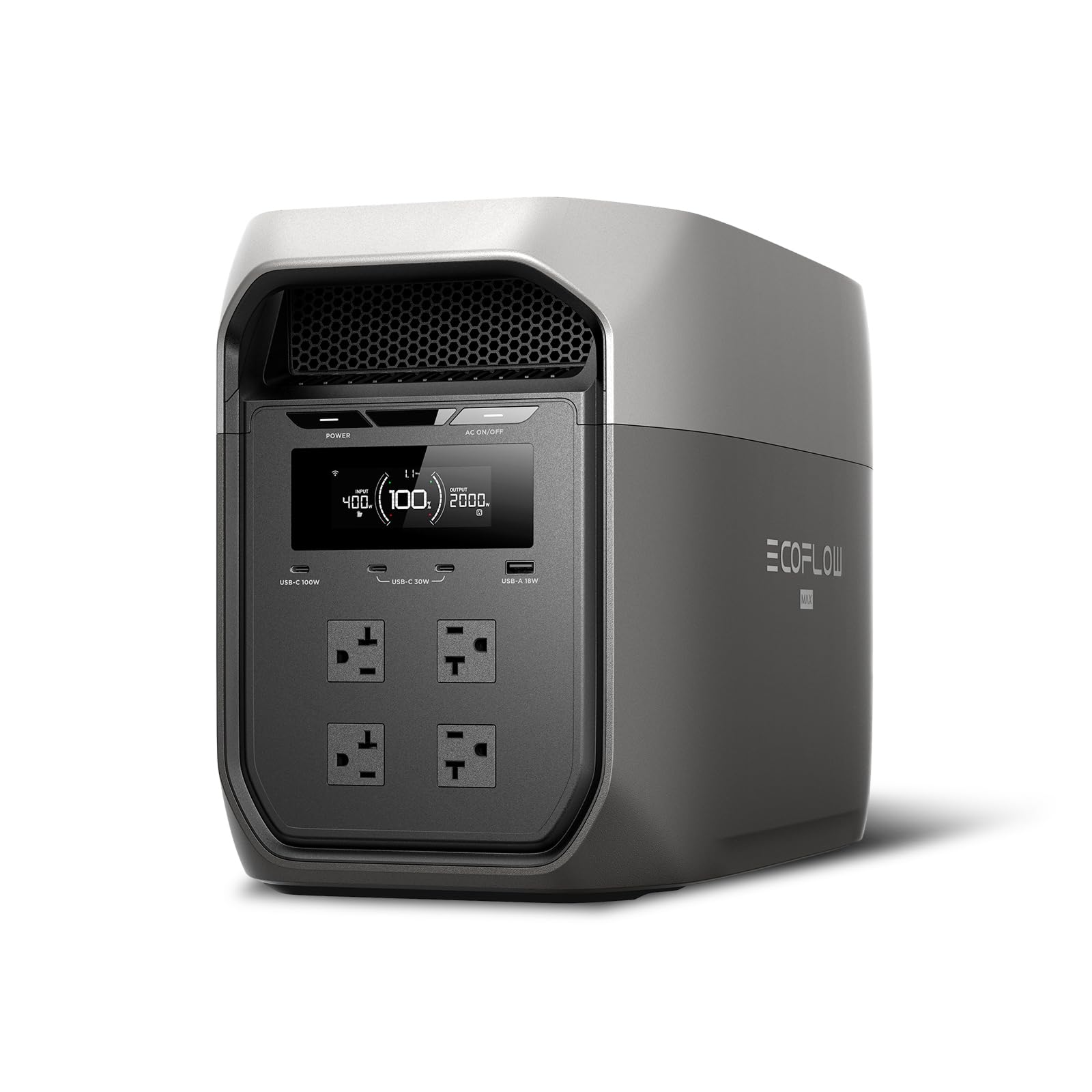
Battery Chemistry: LiFePO4 (LFP)
Capacity: 2048Wh
Rated Output: 2400W
X-Boost Output: 3400W
Recharge Time: 0-80% in 1.13 hours
Intended Use: Home backup, RV camping, solar generator (panel optional)
The DELTA 3 Max is built around a 2048Wh LFP battery, the chemistry that has become the default for stations meant to last through years of charge cycles. Its 2400W rated output covers most household appliances one or two at a time, and the 3400W X-Boost figure describes the surge headroom the unit can draw on for brief spikes from motor-driven loads. The 0-80% recharge in 1.13 hours is the headline feature: a station that refills this quickly is practical for grid-tied backup, where an outage window is unpredictable and waiting overnight for a charge is not an option.
The LFP cell choice matters for anyone planning to leave the unit plugged in as a standby. That chemistry tolerates frequent partial charging better than older lithium formulations, and it is the reason this class of station is marketed for home backup rather than weekend camping alone. Solar input is supported but the panel is sold separately, so a buyer planning off-grid use should budget for that addition rather than treat the station as a complete solar kit. The 2048Wh reserve is enough to run a fridge, router and a few lights through a moderate outage, but it is not a whole-home solution.
Trade-off: At this capacity and output the unit carries real weight and a higher price than the budget tier, so buyers who only need to top up phones and a laptop are paying for headroom they will never use.
Check the current price on Amazon
Anker SOLIX S2000 Portable Power Station
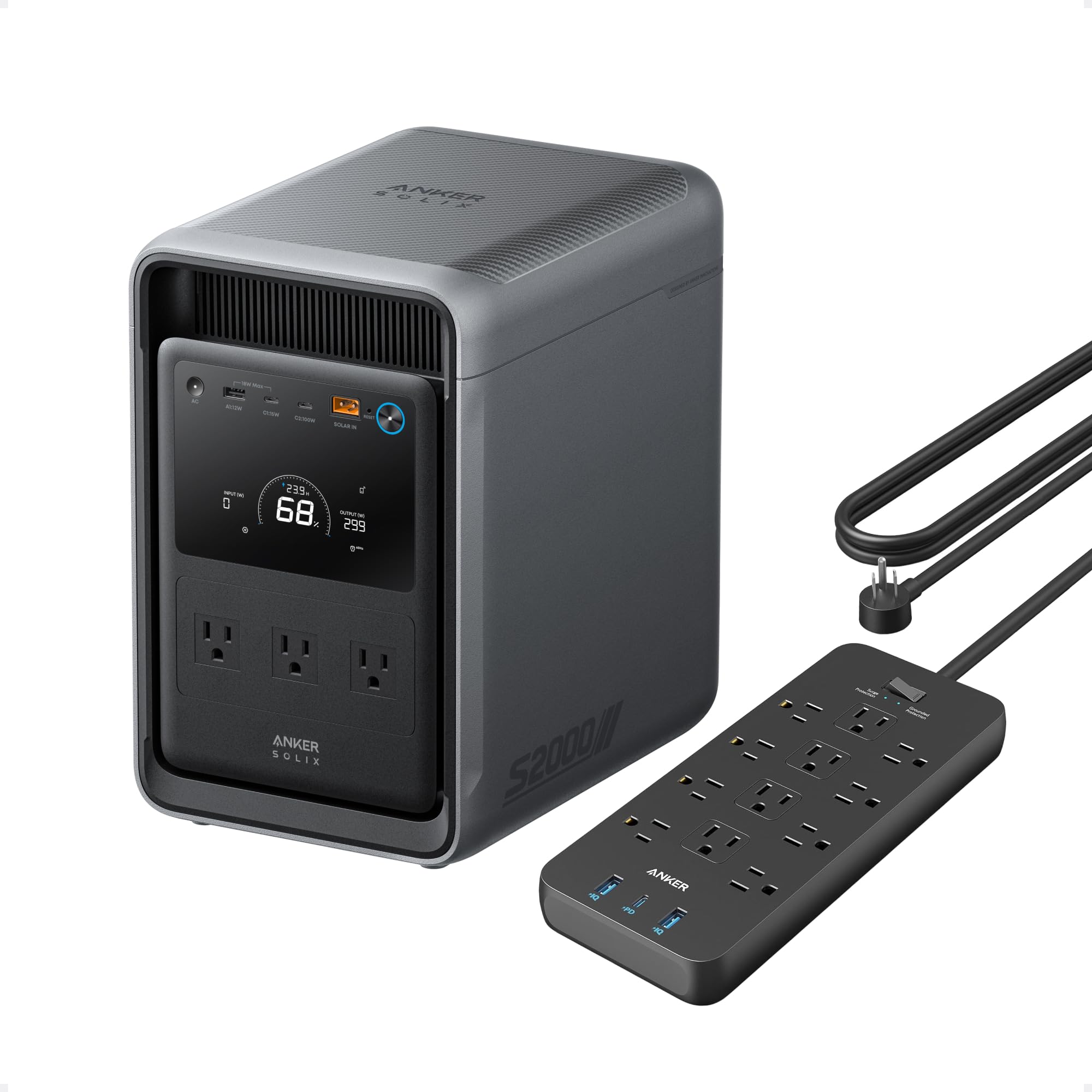
Battery Chemistry: LiFePO4 (LFP)
Capacity: 2010Wh
Rated Output: 1500W
Included Accessory: Power strip
Intended Use: Home backup, outdoor and emergency use
Power Source: Solar generator (panel optional)
The SOLIX S2000 sits just under the DELTA 3 Max on capacity at 2010Wh, again using LFP cells, so the longevity argument applies here too. Where it gives ground is output: 1500W rated is a meaningful step down, and it changes which appliances the unit can carry. A space heater, a large microwave or a power-hungry kettle that the EcoFlow handles may trip the Anker’s limit, so buyers should check the wattage of their critical loads before assuming either station covers them.
The included power strip is a small but practical addition, since it expands the number of devices that can draw from the unit at once without a separate purchase. At a lower price tier than the EcoFlow, the Anker reads as the value pick for emergency backup and outdoor use where the load list is modest: lights, a fridge, communications gear and small electronics. The capacity gap between the two is small enough that output, not reserve, is the real dividing line.
Trade-off: The 1500W ceiling rules out several high-draw appliances that buyers of a station this size often expect to run, and the lower output is not something an accessory can fix.
Check the current price on Amazon
Side-by-Side Comparison
| Spec | EF EcoFlow DELTA 3 Max | Anker SOLIX S2000 |
|---|---|---|
| Battery chemistry | LiFePO4 | LiFePO4 |
| Capacity | 2048Wh | 2010Wh |
| Rated output | 2400W | 1500W |
| Boost/surge output | 3400W X-Boost | Not stated in name |
| Recharge speed | 0-80% in 1.13 hr | Not stated in name |
| Solar input | Supported, panel optional | Supported, panel optional |
| Included accessory | None listed | Power strip |
| Price tier | Higher | Lower |
Where the Two Stations Diverge
Capacity is the closest call. The 2048Wh and 2010Wh figures sit within a few percent of each other, so neither unit wins a meaningful runtime advantage on the same load. A buyer comparing reserve alone will find the two nearly interchangeable, which is why the decision turns on other dimensions.
Output is the widest gap. The DELTA 3 Max’s 2400W rating and 3400W X-Boost surge give it room for appliances the SOLIX S2000’s 1500W ceiling will not accept. For home backup where a fridge compressor kicks on or a microwave runs, that headroom is the difference between a working plan and a tripped unit. Buyers whose backup list is all low-draw electronics will not notice the gap.
Charging speed favors the EcoFlow clearly, with the 0-80% figure in just over an hour. That matters in an outage scenario where the grid may return briefly and the station needs to bank power fast. The Anker’s recharge performance is not stated in the same terms, so buyers who prioritize fast grid refill should treat the EcoFlow as the safer bet on this dimension.
Price tier and the included power strip tilt toward the Anker. For outdoor and emergency use with a modest load list, the SOLIX S2000 delivers LFP longevity and comparable capacity for less money, and the bundled strip saves a small extra purchase. The trade is the lower output ceiling, which is fixed and cannot be upgraded later.
Which Should You Buy?
Choose the EF EcoFlow DELTA 3 Max if the plan involves home backup with real appliances, RV use with higher-draw gear, or a need to recharge fast between outages. The larger output and quicker refill justify the higher price tier for buyers who will actually use that headroom.
Choose the Anker SOLIX S2000 if the load list is modest — lights, router, fridge, phones and outdoor gear — and budget matters more than peak output. The capacity is close enough to the EcoFlow that the savings come with little practical loss for that use case, and the included power strip is a useful bonus.
FAQ
-
Is the capacity difference between these two stations significant?
No. At 2048Wh and 2010Wh the two are close enough that runtime on the same load will be nearly identical. Output and charging speed are the meaningful separators. -
Can the Anker SOLIX S2000 run a space heater?
Many space heaters draw more than the unit’s 1500W rated output, so buyers should check the appliance’s wattage first. High-draw heating loads are better matched to the EcoFlow’s 2400W rating. -
Do both stations use the same battery chemistry?
Yes. Both list LiFePO4, the chemistry favored for long cycle life and tolerance of partial charging in standby use. -
Is a solar panel included with either unit?
No. Both are described as solar generators with the panel optional, so off-grid buyers need to budget for a panel separately. -
Which one recharges faster from the wall?
The EF EcoFlow DELTA 3 Max states 0-80% in 1.13 hours. The Anker’s recharge time is not given in comparable terms, so the EcoFlow is the clearer choice for fast grid refill. -
Who should skip both of these?
Buyers who only need to charge phones and a laptop will find either unit oversized and overpriced for that job. A smaller, cheaper station covers light electronics duty. -
Does the Anker’s included power strip matter?
It adds outlets without a separate purchase, which is convenient for running several small devices at once. It does not raise the unit’s output ceiling.
Bottom Line
The EF EcoFlow DELTA 3 Max is the stronger all-round pick for anyone who needs real appliance output and fast recharge, and its 2048Wh LFP reserve covers genuine home backup. The Anker SOLIX S2000 remains the sensible value choice for lighter emergency and outdoor loads, where its near-identical capacity and lower price tier make more sense than paying for headroom that goes unused.
