Why there are Amazon links here: Brave Review is paid a commission for qualifying Amazon purchases made through the links below. Your price does not change, and using our links is entirely optional. How this works
Best Infrared Thermometer for Cold Spots to Find Drafts and Heat Leaks Fast
An infrared thermometer for cold spots turns an invisible problem into a number on a screen. Point the laser at a wall, a window frame, a vent or a corner of the floor, pull the trigger, and the readout shows exactly where the heat is escaping. This roundup covers five verified models at different price tiers, from a budget pocket pick to a Klein Tools unit built for trade work. Buyers chasing drafts in a home, checking HVAC output, or scanning a garage or rental property will find a match below. The overview table comes first so the shortlist is obvious in under a minute.
The 5 Best Infrared Thermometers for Cold Spots Compared
| Product | Key Spec | Best Use | Price Tier |
|---|---|---|---|
| Klein Tools IR1 Infrared Thermometer | 10:1 optical resolution, -4 to 752°F | Trade-grade home diagnostics | Mid |
| KNINE OUTDOORS Infrared Thermometer Gun | 12:1 distance-to-spot, -58 to 1112°F | Cooking plus HVAC crossover | Budget |
| Infrared Thermometer Gun with Color LCD | -58 to 1472°F, adjustable emissivity | High-temperature and repair work | Upper mid |
| TempPro TempScan Infrared Thermometer Gun | 16:1 distance-to-spot, dual laser | Pizza ovens and long-distance scans | Mid |
| Digital Infrared Thermometer Gun | -58 to 932°F, backlit display | First-time buyers on a tight budget | Budget |
1. Klein Tools IR1 Infrared Thermometer — Best Overall for Home Cold-Spot Hunting
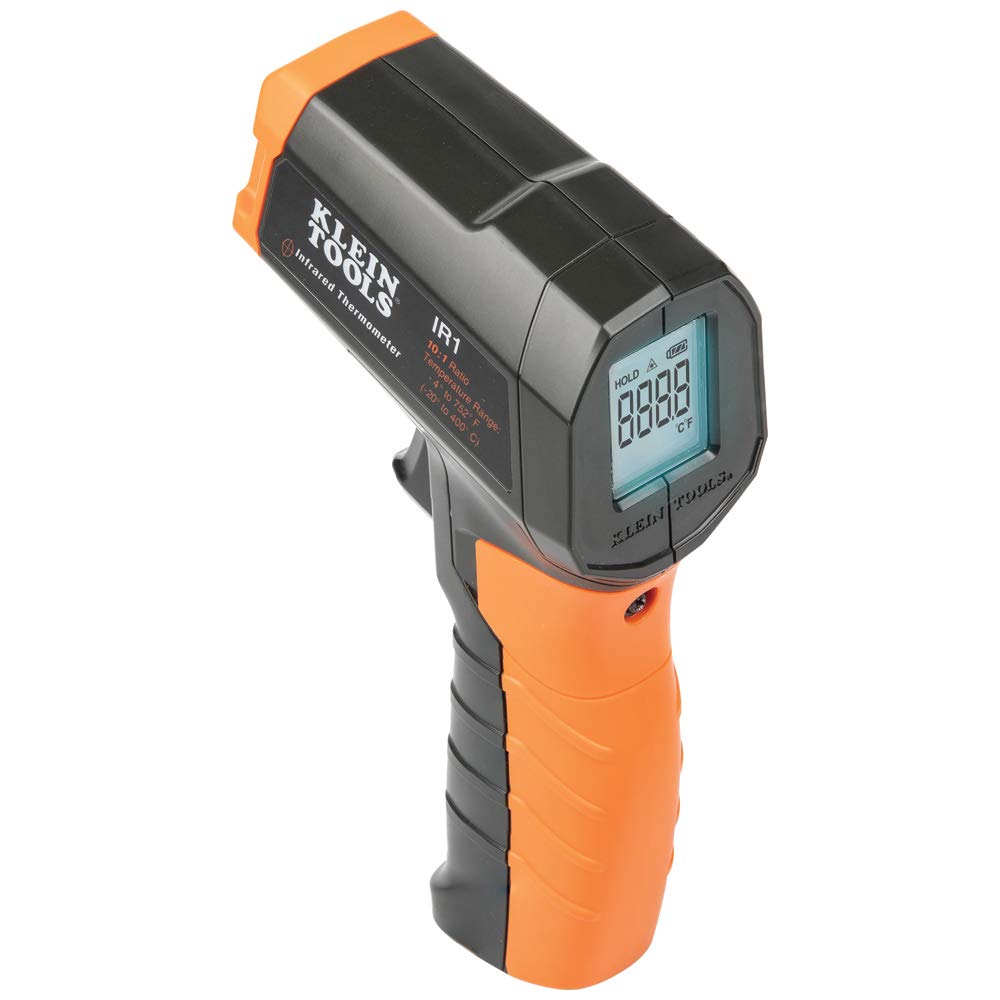
Type: Handheld non-contact infrared thermometer
Temperature Range: -4 to 752°F
Optical Resolution: 10:1
Targeting: Single laser
Display Features: Auto-hold
Brand: Klein Tools
The Klein Tools IR1 is the pick for buyers who want a tool that feels like job-site equipment rather than a kitchen gadget. The 10:1 optical resolution means the measurement cone widens predictably with distance, so readings stay meaningful when scanning a wall from across a room. Auto-hold freezes the last reading so the number can be read after pulling the trigger, which matters in dim basements and crawlspaces. The -4 to 752°F range covers interior surfaces, radiators, ductwork and vent output comfortably.
This is the pick for homeowners chasing drafts around windows and doors, and for anyone doing a pre-purchase walkthrough of a property. It earns its place because the brand is associated with electrical and HVAC trade work, and the feature set is aimed at diagnostics rather than cooking. The trade-off is price: this unit costs more than the budget picks here and offers a narrower range than the high-temperature models, so buyers who mainly want to check a pizza stone are paying for durability they may not need.
Check the current price on Amazon
2. KNINE OUTDOORS Infrared Thermometer Gun — Best Value All-Rounder

Type: Handheld laser temperature gun
Distance-to-Spot Ratio: 12:1
Temperature Range: -58 to 1112°F
Intended Use: Cooking, oven, BBQ, griddle, meat, HVAC, engine
Color: Orange
Brand: KNINE OUTDOORS
The KNINE OUTDOORS gun sits in the sweet spot for buyers who want one thermometer for the whole house and the grill. The 12:1 distance-to-spot ratio is a step tighter than the Klein unit, which helps when checking a cold corner from a few feet back. The -58 to 1112°F range reaches well above what cold-spot hunting needs, so the same tool handles oven, griddle and engine checks without complaint. The bright orange body is easy to find in a cluttered toolbox or kitchen drawer.
This is the pick for buyers who refuse to own two thermometers. It earns its place on range and price together — the ratio is respectable and the temperature ceiling is high for the money. The trade-off is build feel: at this price tier, the housing and buttons are likely to feel lighter and less sealed than a trade-brand unit, so buyers who plan to toss it in a work van daily should expect more wear.
Check the current price on Amazon
3. Infrared Thermometer Gun with Color LCD — Best for High-Temperature Work

Type: Non-contact digital laser thermometer
Display: Color LCD
Temperature Range: -58 to 1472°F (-50 to 800°C)
Emissivity: Adjustable
Intended Use: Cooking, HVAC, home repairs, humidity measurement
Brand: Not stated in listing title
This unit carries the highest temperature ceiling in the roundup and the most diagnostic features. Adjustable emissivity is the headline: different surfaces radiate heat differently, and being able to tune that setting makes readings on brick, metal and painted drywall more trustworthy. The color LCD is easier to read at a glance than a plain monochrome screen, and the -58 to 1472°F range covers cold-spot checks and hot-side work like pizza ovens and engine components.
This is the pick for buyers doing serious home repairs or restoration work, where surface types vary from room to room. It earns its place on adjustable emissivity, a feature usually reserved for higher-priced instruments, plus the widest range here. The trade-off is complexity and price: emissivity settings add a step for casual users who just want to point and read, and the unit costs noticeably more than the budget picks.
Check the current price on Amazon
4. TempPro TempScan Infrared Thermometer Gun — Best for Long-Distance Scans

Type: Handheld laser thermometer gun
Distance-to-Spot Ratio: 16:1
Temperature Range: -58 to 1022°F
Targeting: Dual laser
Emissivity: Adjustable
Intended Use: Cooking, HVAC, engine, pizza oven, grill
Brand: TempPro
The TempPro TempScan has the tightest measurement cone in the roundup at 16:1, which is the spec that matters most for cold-spot hunting at a distance. A tighter ratio means the reading stays focused on a small patch of wall or ceiling instead of averaging in surrounding surfaces, so a cold corner shows up clearly from across a room. The dual laser brackets the measurement area so buyers can see exactly what is being read. Adjustable emissivity adds accuracy across different surface materials.
This is the pick for tall ceilings, cathedral rooms and anyone scanning from floor level without a ladder. It earns its place on the distance-to-spot ratio and the dual-laser targeting, a combination that makes small cold spots easier to isolate. The trade-off is that a 16:1 ratio is overkill for close-in checks and the dual laser uses more battery, so buyers working at arm’s length pay for precision they will not always use.
Check the current price on Amazon
5. Digital Infrared Thermometer Gun — Best Budget Pick

Type: Handheld non-contact laser temperature gun
Temperature Range: -58 to 932°F (-50 to 500°C)
Display: Backlit
Intended Use: Cooking, BBQ, pizza oven
Human Use: Not for human temperature
Brand: Not stated in listing title
The cheapest pick here is also the most popular, and the backlit display is a real convenience in dim basements and crawlspaces where cold spots tend to hide. The -58 to 932°F range covers interior surfaces, vents, windows and appliance checks without trouble. The listing is explicit that the tool is not for human temperature, which is worth noting for buyers who have only seen forehead thermometers before. For occasional cold-spot checks around a house, the essentials are all present.
This is the pick for first-time buyers and renters who want a cheap way to find drafts without committing to a trade-grade tool. It earns its place on price and the backlit screen, which many budget units skip. The trade-off is precision: no distance-to-spot ratio or emissivity control is stated for this model, so readings at distance and on unusual surfaces will be rougher than the higher-tier picks.
Check the current price on Amazon
Before You Buy
- Distance-to-spot ratio: A higher ratio keeps the reading focused on a smaller patch at distance. Buyers scanning tall walls or ceilings should prioritize a tighter ratio over a higher temperature ceiling.
- Temperature range: Cold-spot hunting needs very little range, but a wider spread lets the same tool handle ovens, engines and grills. Buyers who want one thermometer for everything should look at the wider-range models.
- Emissivity control: Adjustable emissivity improves accuracy on brick, metal and painted surfaces. Buyers checking a variety of materials across a home will get more reliable numbers from a unit that offers it.
- Targeting laser: A single laser marks the center of the measurement cone; a dual laser brackets the area being read. Dual laser is more useful for isolating a small cold spot from a distance.
- Display: A backlit or color screen is a genuine advantage in dim crawlspaces, basements and attics where cold spots are usually found.
- Build and sealing: Trade-brand housings tend to hold up better to dust and job-site handling. Buyers who will keep the tool in a work bag should weigh build quality against price.
- Intended use: Some units are explicitly not for human temperature. Buyers should confirm the tool is meant for surfaces before buying.
Frequently Asked Questions
-
What does an infrared thermometer for cold spots actually measure? It reads surface temperature, not air temperature. Pointing it at a wall, window frame or floor shows how cold that surface is, which reveals where heat is escaping.
-
What distance-to-spot ratio is best for finding cold spots? A tighter ratio such as 12:1 or 16:1 keeps the reading focused on a small patch at distance. Buyers scanning from across a room or at ceiling height benefit most from a higher ratio.
-
Can these thermometers measure body temperature? No. Some models state explicitly that they are not for human use. They are designed for surfaces, cooking and HVAC work.
-
Why does adjustable emissivity matter? Different materials radiate heat at different rates. Adjusting emissivity lets the thermometer compensate, which improves accuracy on brick, metal and painted surfaces.
-
Is a budget infrared thermometer accurate enough for home cold-spot checks? For occasional checks around a house, a budget unit will show the obvious cold spots. Buyers who need reliable readings at distance or on varied surfaces should step up to a model with a stated ratio and emissivity control.
-
Where should cold spots be checked first? Window and door frames, exterior wall corners, floor edges above crawlspaces, and HVAC vents are the usual suspects. A quick scan of each shows where the biggest temperature gaps sit.
Bottom Line
The Klein Tools IR1 is the top pick for most buyers hunting cold spots, thanks to its predictable 10:1 optical resolution, auto-hold readout and trade-grade build. Buyers on a tight budget who still want a wide range should look at the KNINE OUTDOORS gun, while anyone scanning from a distance or across varied surfaces gets the most precision from the TempPro TempScan and its 16:1 ratio.
