Why there are Amazon links here: Brave Review is paid a commission for qualifying Amazon purchases made through the links below. Your price does not change, and using our links is entirely optional. How this works
Best Balcony Solar Panel Kit for Plug-and-Play Power in 2026
A balcony solar panel kit lets apartment dwellers and renters generate power without drilling into a roof or hiring an electrician. This guide covers five kits, from a small off-grid lighting set to a full grid-tie system with microinverters and WiFi monitoring. Three buyer profiles are served here: the renter who wants to offset household draw with a plug-in system, the prepper or camper who needs portable off-grid power, and the budget buyer testing solar for the first time. The overview table below lines up the picks so a decision can be made in under a minute.
Overview of the Picks
| Product | Key Spec | Best Use | Price Tier |
|---|---|---|---|
| 1600W Plug-in Balcony Solar Kit (8-Panel) | 1600W, 8 panels, APsystems microinverter | Whole-home offset for large balconies | Premium |
| 800W Plug-in Balcony Solar Kit (4-Panel) | 800W, 4 panels, APsystems microinverter | Renters starting with grid-tie solar | Mid-range |
| 1200W Plug-in Balcony Solar Kit (6-Panel) | 1200W, 6 panels, APsystems microinverter | The middle ground for most balconies | Upper mid-range |
| 15W Portable Solar Panel Kit | 15W, 12V battery, 4 bulbs | Off-grid lighting and small devices | Budget |
| ECO-WORTHY 200 Watts 12V/24V Kit | 200W, monocrystalline, 30A PWM controller | RV, camper, and off-grid setups | Budget-plus |
1. 1600W Plug-in Balcony Solar Kit (8-Panel)
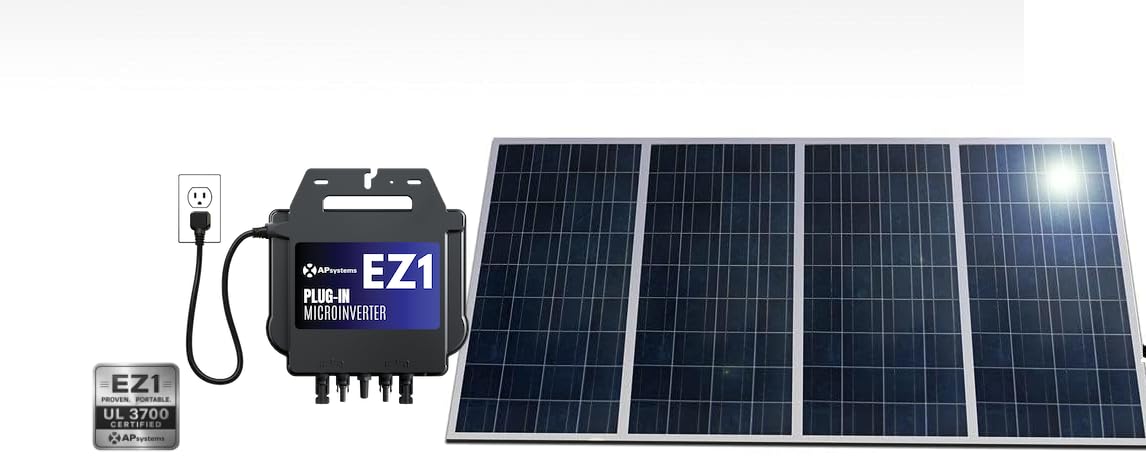
Panels: 8
Output: 1600W
System Type: Grid-tie, plug and play
Inverter: APsystems microinverter
Monitoring: WiFi
Certification: UL 3700
This is the largest kit in the lineup and the one built for serious output. Eight panels feed an APsystems microinverter, which converts DC to AC at the panel level so partial shade on one panel does not drag the whole array down. The UL 3700 certification is the detail that matters most: it signals the system is designed for grid-tie plug-in use, which is the category regulators are still sorting out state by state. WiFi monitoring lets the owner watch production in real time rather than guessing at savings.
The 1600W figure puts this kit in the range where a household can meaningfully offset daytime draw, especially in sunny climates. It suits a large balcony, a rooftop terrace, or a south-facing wall with room for eight panels. The trade-off is that a system this size needs real mounting space, and a small urban balcony will not fit it without sacrificing the entire outdoor area.
Trade-off: The high panel count demands substantial mounting space and a sturdy railing or wall, so it is a poor fit for compact balconies.
2. 800W Plug-in Balcony Solar Kit (4-Panel)
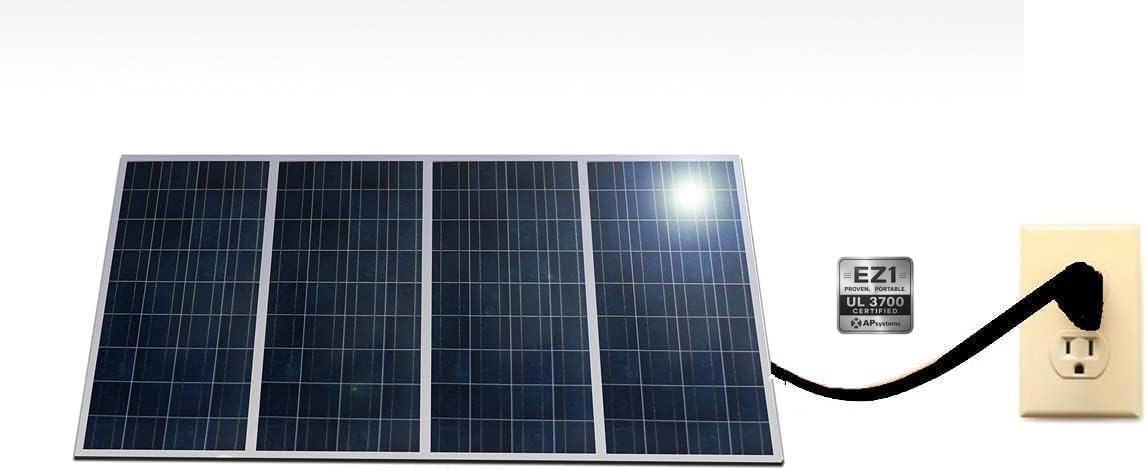
Panels: 4
Output: 800W
System Type: Grid-tie, plug and play
Inverter: APsystems microinverter
Monitoring: WiFi
Certification: UL 3700
This is the same grid-tie architecture as the 1600W kit, scaled down to four panels. The APsystems microinverter and WiFi monitoring carry over, so the owner gets per-panel conversion and live production data without the footprint of the full-size array. For renters with a standard balcony, 800W is often the sweet spot: enough to cover a fridge and some lighting, small enough to mount on a railing without a structural conversation.
It earned its place as the entry point into real grid-tie solar. Buyers who want to test the waters before committing to a larger array will find the wiring and monitoring experience identical to the bigger kits. The trade-off is headroom: 800W leaves little room to grow, and a household with heavy daytime load will outgrow it quickly.
Trade-off: The 800W ceiling limits how much household draw it can offset, so it suits modest consumption rather than whole-home coverage.
3. 1200W Plug-in Balcony Solar Kit (6-Panel)
Panels: 6
Output: 1200W
System Type: Grid-tie, plug and play
Inverter: APsystems microinverter
Monitoring: WiFi
Certification: UL 3700
The 1200W kit splits the difference between the two grid-tie extremes and will be the right answer for a lot of buyers. Six panels and an APsystems microinverter deliver a meaningful output bump over the 800W system while staying mountable on a typical balcony railing. WiFi monitoring and UL 3700 certification are both present, so nothing is sacrificed on the electronics side to hit this middle tier.
This is the pick for the buyer who has measured the balcony and knows eight panels will not fit but four feels thin. It handles a larger share of daytime load than the 800W kit without demanding terrace-sized real estate. The trade-off is that the middle tier is the easiest one to second-guess: buyers near the edge of the panel count may wish they had gone up or down a size.
Trade-off: Sitting between two clearer extremes, the 1200W kit can leave buyers unsure whether to size up or down, and the six-panel footprint still needs a generous railing.
4. 15W Portable Solar Panel Kit
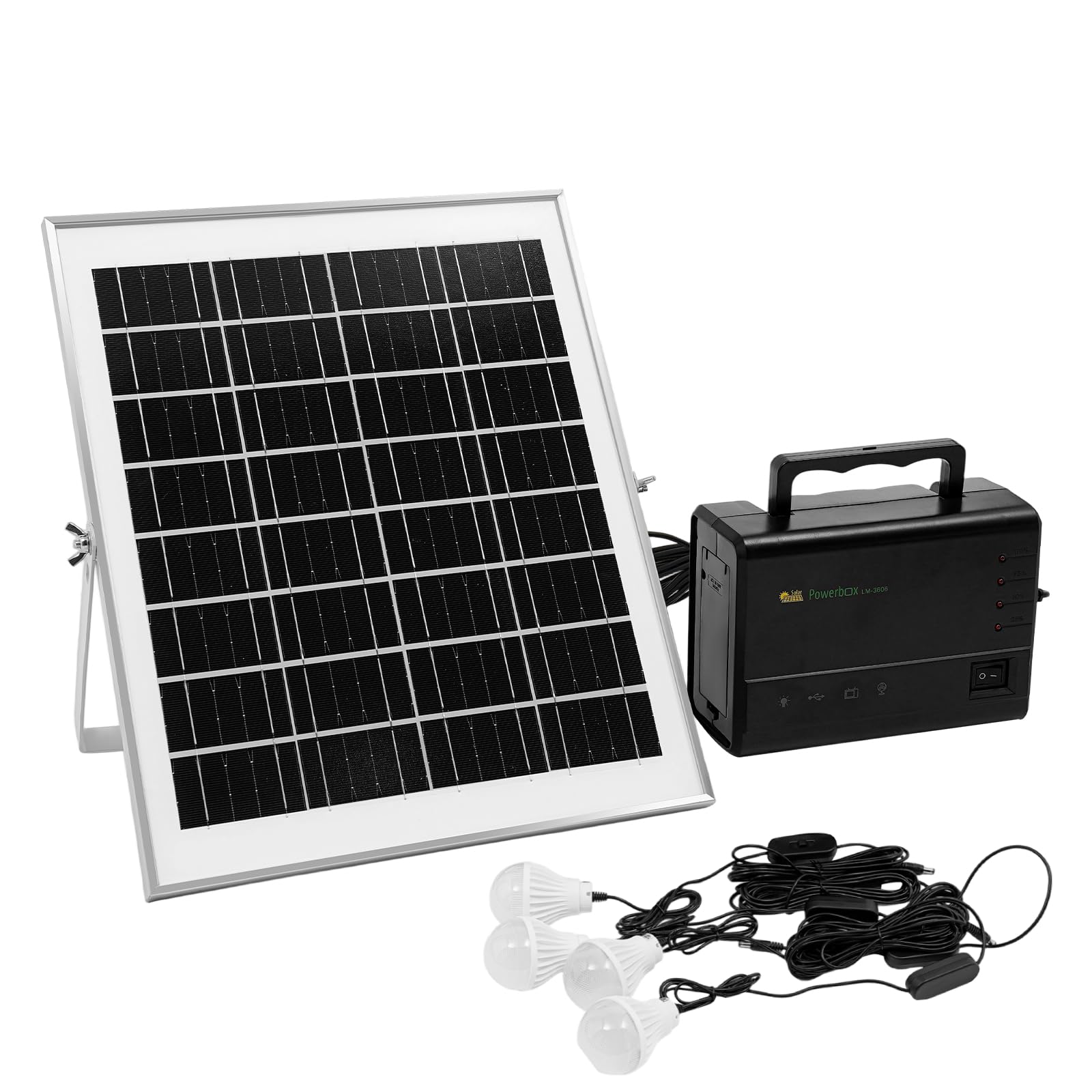
Output: 15W
Battery: 12V
Bulbs: 4 included
Ports: USB
Weather Rating: IP65
System Type: Portable solar lighting and power
This kit is not a grid-tie system and should not be compared to the three above on output. It is a self-contained solar lighting and small-device package: a 15W panel charges a 12V battery, which runs four included bulbs and a USB port. The IP65 rating means it can handle rain and dust outdoors, which matters for a balcony or shed installation. It is the cheapest way into solar in this lineup and the simplest to set up.
It suits the buyer who wants off-grid lighting for a balcony, patio, shed, or campsite, or who wants a USB charging point that does not depend on the wall outlet. It also works as a starter kit for someone curious about solar before spending on a full system. The trade-off is scale: 15W will not offset household consumption, and the kit is a lighting and gadget charger rather than an energy solution.
Trade-off: At 15W the kit is a lighting and USB-charging package, not a household power offset, so buyers expecting bill savings will be disappointed.
5. ECO-WORTHY 200 Watts 12V/24V Solar Panel Kit

Output: 200W
Voltage: 12V / 24V
Panel Type: Monocrystalline
Controller: 30A PWM charge controller
System Type: Off-grid
Best For: RV, camper, vehicle, caravan
This is the off-grid workhorse of the group. A 200W monocrystalline panel pairs with a 30A PWM charge controller, and the kit supports both 12V and 24V battery banks. Monocrystalline cells are the more efficient panel type, which matters when mounting space is limited to a balcony railing or an RV roof. The PWM controller is the simpler, more affordable charge technology, and it is well matched to a kit at this price.
It earned its place for buyers building an off-grid system rather than a grid-tie one: RV owners, campers, van dwellers, and anyone charging a battery bank for a shed or cabin. The 200W output is a real step up from the 15W portable kit while staying far below the grid-tie systems. The trade-off is that the PWM controller is a budget-tier component, and buyers planning a larger array later will likely want to upgrade to MPPT.
Trade-off: The included PWM charge controller is the budget option, so buyers planning to expand the array should budget for an MPPT upgrade later.
Before You Buy
- System type: Decide between grid-tie (the three APsystems kits) and off-grid (the ECO-WORTHY and 15W kits) before comparing output. They serve different jobs.
- Mounting space: Measure the balcony railing or wall first. Panel count drives footprint, and an eight-panel kit will not fit a compact balcony.
- Certification: For grid-tie plug-in use, UL 3700 on the product name is the marker to look for; local rules on plug-in solar still vary by state and utility.
- Battery bank: Off-grid kits need a battery to store power. Confirm the kit’s voltage support (12V, 24V, or both) matches the battery on hand.
- Controller type: PWM controllers are affordable and simple; MPPT controllers extract more from larger arrays. Match the controller to the planned system size.
- Included accessories: Check what ships in the box — panels, inverter or controller, mounting hardware, and cabling are not always bundled.
- Weather exposure: Balcony installations face rain and wind. Confirm the panel and connector ratings suit an outdoor, exposed location.
Frequently Asked Questions
-
What is a balcony solar panel kit?
A packaged solar system designed to mount on a balcony railing or wall. Grid-tie versions plug into the home’s wiring through a microinverter; off-grid versions charge a battery. -
Can a balcony solar kit lower an electric bill?
A grid-tie kit offsets daytime household draw, which reduces the power pulled from the grid. The 1600W and 1200W kits offer the most offset; the 15W kit is for lighting only. -
Does a plug-in solar kit need an electrician?
The grid-tie kits here are marketed as plug and play with microinverters and UL 3700 certification. Local rules on plug-in solar vary, so check with the utility before connecting. -
What is the difference between the three APsystems kits?
Panel count and output: 4 panels at 800W, 6 at 1200W, and 8 at 1600W. The inverter, WiFi monitoring, and UL 3700 certification are shared across all three. -
Which kit suits an RV or camper?
The ECO-WORTHY 200W kit, which is built for 12V/24V off-grid systems and names RV, camper, and caravan use directly. The 15W kit suits tent camping and small lighting needs. -
Do these kits include batteries?
The grid-tie kits do not need a battery because they feed the home’s wiring. The 15W kit includes a 12V battery; the ECO-WORTHY kit is a panel-and-controller package that pairs with a separate battery bank.
Bottom Line
For most renters with a standard balcony, the 1200W Plug-in Balcony Solar Kit (6-Panel) is the best balance of output, footprint, and plug-and-play simplicity. Buyers with a large terrace and bigger ambitions should step up to the 1600W kit, while RV and off-grid users are better served by the ECO-WORTHY 200W system.