Why there are Amazon links here: Brave Review is paid a commission for qualifying Amazon purchases made through the links below. Your price does not change, and using our links is entirely optional. How this works
EF ECOFLOW DELTA Pro Portable Power Station: Whole-Home Backup in One Box
The EF ECOFLOW DELTA Pro portable power station is a 3600Wh battery with 3600W of AC output that expands up to 25kWh with add-on batteries — closer to a home backup system than a camping gadget. This review covers its specifications, how the expandable architecture changes the buying decision, and where the unit falls short. It suits homeowners preparing for outages and RV or off-grid users who need serious capacity, and it is overkill for weekend campers. The short answer: check the current price on Amazon before deciding, because this is a premium purchase that deserves a careful look.
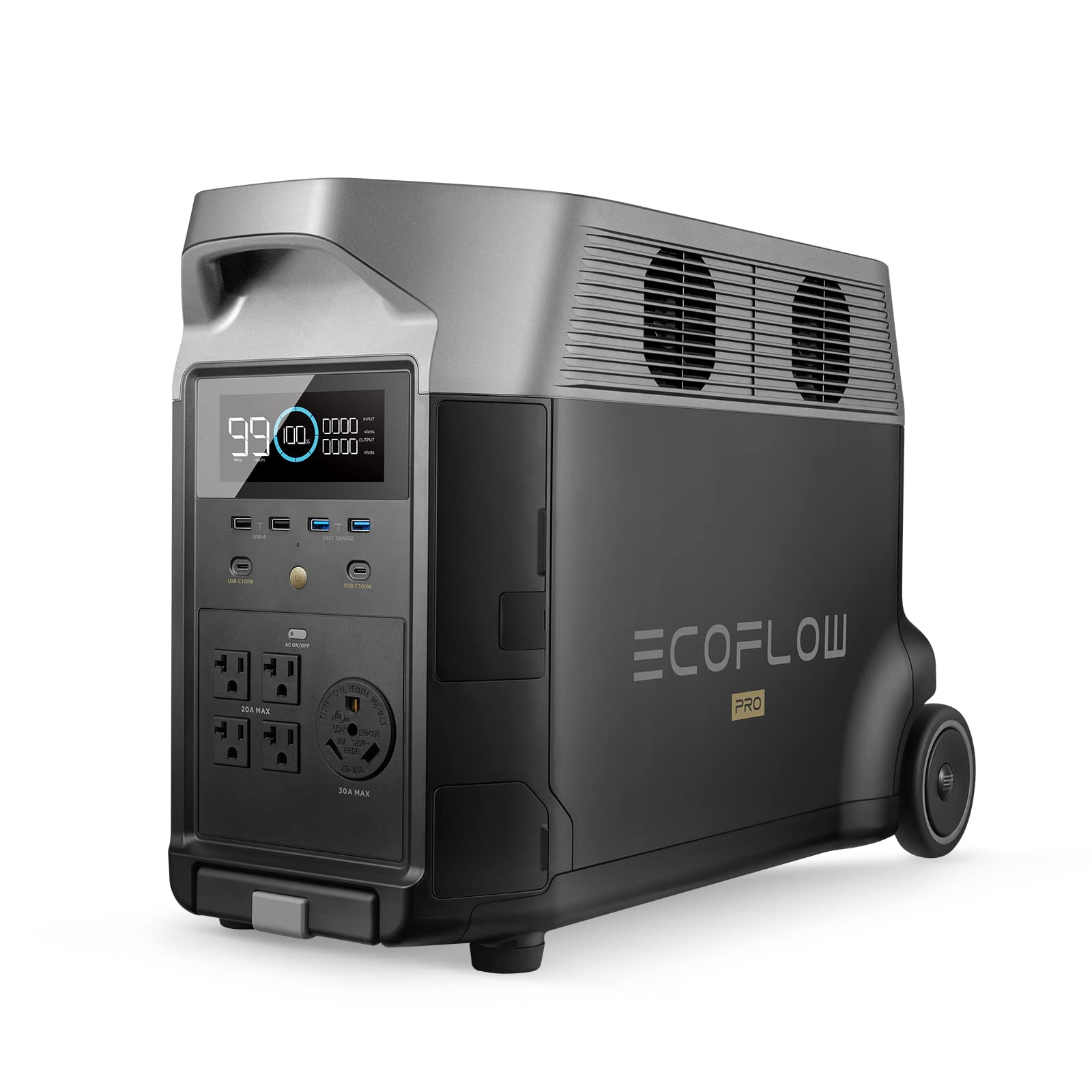
Features and Specifications
Battery Capacity: 3600Wh
Expandable Capacity: Up to 25kWh with add-on batteries
AC Output: 120V, 3600W
Charge Time: 2.7 hours (fast charge)
Intended Use: Home backup, power outages, camping, RV, emergencies
Power Source: Battery, rechargeable via AC or solar
Type: Portable power station / solar generator
The headline figure is the 3600Wh battery, which is roughly three to four times the capacity of a typical mid-size portable station. That capacity is what makes whole-home partial backup realistic rather than aspirational — a refrigerator, a few lights, a router and a phone charger can run for a long stretch without panic.
The 3600W AC output is the second number that matters. It sets the ceiling on what can be plugged in at once, and it is high enough for heavy-draw appliances that smaller stations simply cannot start. The 120V rating confirms this is a North American household unit, not a travel converter.
The 2.7-hour fast charge is the feature that separates this unit from older lead-acid backup boxes. A full recharge in under three hours means the station can be topped up between outages or during a brief grid window, rather than sitting drained for a day.
Expansion to 25kWh is the specification that changes the purchase entirely. Buyers are not just buying a battery; they are buying into a modular system that can grow toward whole-home coverage as budget and needs allow.
Build and Design
The DELTA Pro is built as a wheeled, floor-standing unit rather than a carry-on box. At this capacity the battery cells alone are heavy, so the design assumes the station will live in a garage, utility room or RV bay and be rolled into position when needed. Buyers should plan for floor space and a clear path, not a shelf.
The housing is a hard-shell enclosure with recessed handles and integrated wheels, a layout that prioritizes stability over portability. Ports and outlets sit on the front face for easy access, and the top surface is flat enough to stack a small solar panel or set down a phone. The overall impression is appliance-grade rather than camping-grade.
Materials at this price tier are expected to be durable plastics over a metal internal frame, with the battery chemistry sealed inside. The unit is not weatherproof, so outdoor use means shelter from rain and direct sun. Buyers who want to leave a station on a patio permanently should plan a cover or a shed.
Capacity and Expandability
Capacity is where the DELTA Pro justifies its price. The 3600Wh base unit covers a realistic outage scenario: a fridge cycle, lighting, communications and medical devices for a meaningful stretch. It is not a whole-house generator, but it is enough to keep a household functional through a multi-hour or overnight event.
The expansion path to 25kWh is the strategic part. Buyers can start with the base station and add batteries later, which spreads cost over time and lets the system scale with actual outage experience. That modularity is rare at this price point and is the strongest argument for choosing this unit over a fixed-capacity competitor.
The trade-off is that expansion batteries are a separate purchase and a separate storage commitment. A buyer who never expands is paying for capability that goes unused, while a buyer who does expand needs a dedicated corner for the growing stack.
Power Output and Charging
The 3600W AC output is the practical limit on what the station can run. It handles high-draw appliances that smaller stations trip on, and it gives buyers headroom to run several devices simultaneously without juggling plugs. For outage use, that means a fridge, a space heater or a microwave can be supported alongside smaller loads.
The 2.7-hour fast charge is the operational advantage. In a storm sequence with brief power windows, a station that refills in under three hours can be back to full between events. Slower units leave the household waiting and guessing.
Solar charging is part of the design brief, and the unit is marketed as a solar generator. Buyers should understand that solar input depends on panel wattage and sunlight, so panel selection is a separate decision that affects real-world recharge time. The station supports the input; it does not supply the panels.
Maintenance and Ownership
Ownership of a unit this size is closer to owning an appliance than owning a gadget. The station needs a dry, temperature-stable storage spot, periodic charge cycling to keep the battery healthy, and a plan for where the expansion batteries will live if the system grows. Buyers should treat the purchase as infrastructure.
The wheels and handles make repositioning manageable, but the weight means one person should not plan to carry it up stairs regularly. Setup is a roll-and-plug operation, not a lift-and-carry one. Buyers in apartments should confirm elevator and doorway clearance before ordering.
The fast-charge capability also has an ownership benefit: a station that refills quickly is easier to keep topped up on a routine schedule. That reduces the risk of discovering a drained battery at the start of an outage, which is the most common failure mode for backup power.
Trade-off: The DELTA Pro’s capacity and expansion headroom come with a footprint and a price that only make sense for buyers with a real backup or off-grid need — weekend campers and casual users will pay for power they never draw.
Check the current price on Amazon
Who Should Buy the EF ECOFLOW DELTA Pro
Homeowners in outage-prone areas are the core buyer. The combination of 3600Wh base capacity, 3600W output and expandability to 25kWh gives a household a scalable path from "keep the fridge cold" to "run most of the house," and the fast charge keeps the system ready between events.
RV and off-grid users are the second fit. The unit’s output ceiling supports RV appliances that smaller stations cannot, and the expansion path means the system can grow with a rig or a cabin. The wheeled design suits a bay or utility space better than a backpack.
Campers and tailgaters are the wrong fit. The unit is too heavy and too expensive for a weekend trip, and its capacity is wasted on a cooler and a few lights. Buyers in that group should look at a compact station and put the savings toward gear they will actually use.
Apartment dwellers with no storage space should also pause. The station needs floor space and a clear roll path, and the expansion batteries need a home too. A smaller, lighter unit fits that lifestyle better.
FAQ
-
What can the EF ECOFLOW DELTA Pro power during an outage?
With 3600W of AC output and 3600Wh of capacity, the unit can run a refrigerator, lighting, internet equipment and phone charging simultaneously for an extended period. High-draw appliances like space heaters and microwaves can be supported, but they draw down capacity faster. -
How long does the DELTA Pro take to charge?
The fast-charge design brings the battery to full in about 2.7 hours from an AC source. Solar recharge time depends on the wattage of the panels used and the available sunlight. -
Can the DELTA Pro really expand to 25kWh?
Yes — the station is designed to accept add-on batteries that raise total capacity up to 25kWh. Each expansion battery is a separate purchase and needs its own storage space. -
Is the DELTA Pro a true whole-home backup solution?
It is a scalable partial-home backup, not a replacement for a permanently installed generator. Buyers can expand capacity toward whole-home coverage, but the base unit is sized for essential circuits rather than every appliance in the house. -
Does the DELTA Pro work with solar panels?
The unit is marketed as a solar generator and accepts solar input. Buyers need to choose panels separately, and the recharge rate depends on panel wattage and conditions. -
How heavy is the DELTA Pro and can one person move it?
The unit is built with wheels and handles because the battery is heavy. One person can roll it into position on a flat surface, but lifting it up stairs or onto a shelf is not a one-person job. -
Is the DELTA Pro safe to store indoors?
The station is designed for indoor storage in a dry, temperature-stable space. It should not be left outdoors or in damp conditions, and it needs periodic charge cycling to stay healthy. -
Who should not buy the DELTA Pro?
Weekend campers, tailgaters and buyers without floor storage space should choose a smaller, lighter station. The DELTA Pro’s capacity, weight and price are built for backup and off-grid use, not casual outings. -
What is the difference between the DELTA Pro and a gas generator?
The DELTA Pro runs silently, produces no exhaust and can be used indoors, while a gas generator requires fuel, ventilation and outdoor placement. The trade-off is that the DELTA Pro’s runtime is finite and depends on recharging. -
Is the DELTA Pro worth the price?
For buyers with a genuine outage or off-grid need, the combination of capacity, output, fast charging and expandability justifies the premium tier. For casual users, a smaller station delivers better value.
Bottom Line
The EF ECOFLOW DELTA Pro portable power station is the right buy for homeowners and off-grid users who need real backup capacity and want a system that can grow to 25kWh over time. Its 3600W output and 2.7-hour fast charge make it operationally practical, not just spec-sheet impressive. Campers and casual users should pass — the weight and price only pay off when the need is serious.
