Why there are Amazon links here: Brave Review is paid a commission for qualifying Amazon purchases made through the links below. Your price does not change, and using our links is entirely optional. How this works
Hubitat Elevation C-8 Pro: The No-Subscription Smart Home Hub
The Hubitat Elevation C-8 Pro is a local smart home hub built for households that want Zigbee, Z-Wave and Matter devices running under one roof without a monthly fee. It suits tinkerers and privacy-minded buyers who would rather own their automation than rent it from a cloud service. This review covers what the hub is, how its radios and local processing shape daily use, and where it falls short. Buyers ready to compare it against a cloud-dependent system can check the price at Amazon first.
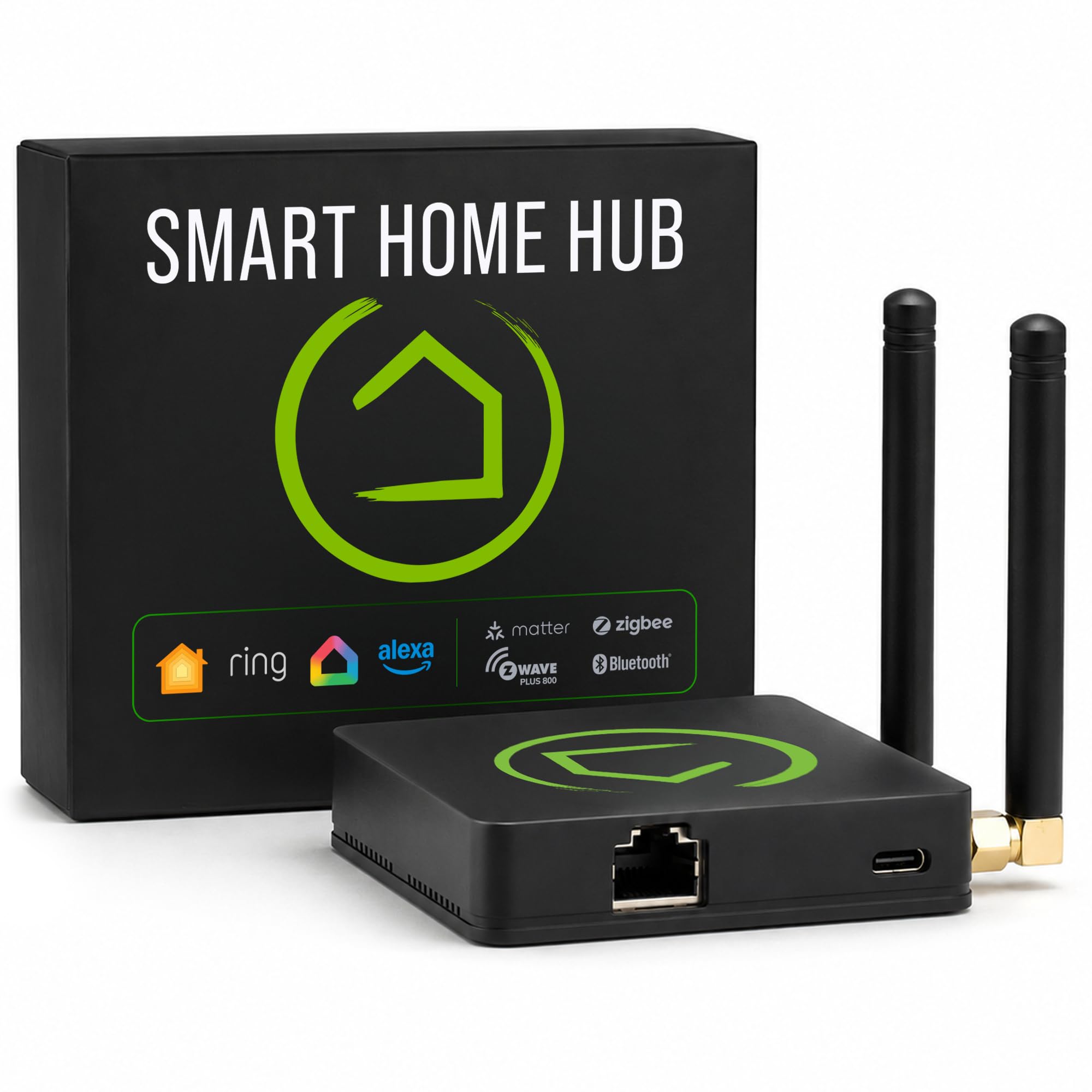
Features and Specifications
- Product: HubitatLocal Automation Elevation C-8 Pro Smart Home Hub
- Wireless protocols: Z-Wave, Zigbee, Matter, Bluetooth
- Voice and platform compatibility: Alexa, Google Home, HomeKit
- Camera compatibility: Ring cameras
- Subscription: None required
- Control type: Local automation with voice control
What the C-8 Pro Is Built For
The Elevation C-8 Pro is a hub in the classic sense: a small box that talks to the sensors, switches, locks and lights in a home and runs the rules that tie them together. The difference is that the logic lives on the device itself rather than in a manufacturer’s data center. That matters for two kinds of buyer — the one who dislikes paying a monthly fee for basic automation, and the one who wants lights and locks to keep working when the internet drops.
The radio lineup is the headline. Z-Wave and Zigbee cover the two largest ecosystems of smart switches, sensors and plugs, while Matter handles the newer generation of devices that speak the standard. Bluetooth rounds out the set for setup and short-range accessories. A single hub that speaks all of them means a household does not have to pick one brand’s walled garden and stay there.
Voice control is handled through the major assistants rather than replacing them. Alexa, Google Home and HomeKit compatibility means the hub slots into a home that already has smart speakers, with the hub doing the automation work in the background. Ring camera support adds a security angle for households already invested in that ecosystem.
Trade-off: The hub is a platform, not a finished product — buyers who want an app that works out of the box with zero setup will find the learning curve steeper than a mass-market starter kit.
Check the current price on Amazon
How the Radios and Local Processing Shape Daily Use
Protocol Coverage and Device Mixing
The practical value of Z-Wave, Zigbee and Matter in one hub is that a buyer is not locked to a single brand when adding devices. A Z-Wave lock, a Zigbee motion sensor and a Matter bulb can all live under the same automation. For households that have accumulated devices from several manufacturers over the years, that flexibility is the reason to consider a hub at all.
Each radio has its own strengths. Z-Wave tends to suit locks and in-wall switches, Zigbee suits sensors and bulbs, and Matter is where newer devices are heading. Having all three means the hub ages better than a single-protocol box, because new purchases do not force a replacement.
Local Automation and Reliability
Running automations on the hub itself changes how a home behaves when the network is down. Rules that turn on lights at sunset or lock doors at night keep running because the decision is made locally. Cloud-dependent systems often stall in that situation, which is the quiet frustration that pushes buyers toward local hubs in the first place.
The no-subscription model is the other half of that promise. There is no monthly bill to keep automations running, no premium tier that unlocks features, and no risk of a service shutting down and stranding the devices. The cost is upfront and finite.
Voice Control and Camera Integration
Alexa, Google Home and HomeKit compatibility means the hub does not demand a new way of talking to the house. Existing speakers keep working as the voice layer, while the hub handles the logic. Ring camera support extends that into security, letting camera events feed into automations rather than sitting in a separate app.
The caveat is that integration depth varies by platform. Some assistants expose more device types and states than others, so a buyer should confirm the specific devices and assistants in the plan before committing. The hub is broad, but "compatible" does not always mean every feature is surfaced everywhere.
Setup and Maintenance
A hub of this type rewards a methodical setup: pair devices room by room, name them clearly, and build automations in small steps. The payoff is a system that is easy to troubleshoot later. Buyers who enjoy that process get a flexible, private system; buyers who dread it will find the first weekend frustrating.
Maintenance is lighter than a cloud service in one sense — no account to manage, no subscription to renew — but firmware updates and rule adjustments still fall to the owner. That is the trade for local control: the household owns the system, including its upkeep.
Where the C-8 Pro Excels and Where It Stumbles
The strengths are concentrated in flexibility and ownership. Multi-protocol support, local automation, no subscription and broad voice compatibility add up to a hub that respects the buyer’s existing devices and does not rent access to them. For a household with a mix of Z-Wave, Zigbee and Matter gear, that combination is hard to match at this price tier.
The weaknesses follow from the same design. A local hub is a project, not an appliance, and the setup demands patience and a willingness to read documentation. Buyers expecting a polished, guided experience from a mass-market brand will find the C-8 Pro more demanding. The premium price also means it makes most sense for households with a real device mix, not for someone automating a single lamp.
Trade-off: The upfront cost is higher than a basic starter hub, and that money buys capability and independence rather than simplicity — a fair trade only for buyers who will use the radios and the local rules.
See the Hubitat Elevation C-8 Pro on Amazon
FAQ
-
What is the Hubitat Elevation C-8 Pro?
It is a local smart home hub that connects Z-Wave, Zigbee, Matter and Bluetooth devices and runs automations on the device itself, with no subscription required. -
Does the Hubitat C-8 Pro require a monthly subscription?
No. The product is sold as no-subscription-required, so automations run without an ongoing fee. -
Which voice assistants work with the C-8 Pro?
The hub is listed as compatible with Alexa, Google Home and HomeKit, so it can slot into a home that already uses those assistants. -
Does it work with Ring cameras?
Yes. Ring camera compatibility is part of the product’s feature set, which lets camera events feed into automations. -
What protocols does the hub support?
Z-Wave, Zigbee, Matter and Bluetooth, which covers most current smart sensors, switches, locks, bulbs and plugs. -
Do automations keep working if the internet goes down?
Because the logic runs locally on the hub, rules continue to run without a cloud connection, which is the main reason buyers choose a local hub. -
Is the C-8 Pro good for beginners?
It is better suited to buyers willing to plan device pairing and build rules step by step. Households wanting a guided, out-of-the-box experience may find it demanding. -
Who is the Hubitat Elevation C-8 Pro not for?
It is not for buyers automating a single device, or for anyone who wants a fully managed service with no setup or maintenance on their side. -
Can it mix devices from different brands?
Yes. Supporting Z-Wave, Zigbee and Matter together means devices from multiple manufacturers can run under one hub. -
What should a buyer check before ordering?
Confirm that the specific devices and voice assistant in the home are covered, and be ready to invest time in setup to get the most from the local automation.
Bottom Line
The Hubitat Elevation C-8 Pro is the pick for households that want their smart home to run locally, mix Z-Wave, Zigbee and Matter devices freely, and never pay a subscription. It asks for patience during setup and a higher upfront spend, but it delivers ownership and reliability that cloud-dependent hubs cannot match. Buyers with a real device mix and a willingness to tinker should check the price on Amazon and confirm compatibility with their existing gear.