Why there are Amazon links here: Brave Review is paid a commission for qualifying Amazon purchases made through the links below. Your price does not change, and using our links is entirely optional. How this works
TRENDnet TPE-115GI vs Omada POE160S: Which PoE+ Injector Fits
Two gigabit PoE+ injectors that solve the same problem in slightly different ways. The TRENDnet TPE-115GI brings a metal housing and a higher price, while the Omada POE160S undercuts it and adds wall mounting. This comparison breaks down the differences that actually matter for a home or small-office network, then names the pick for each type of buyer.
TRENDnet TPE-115GI PoE+ Injector
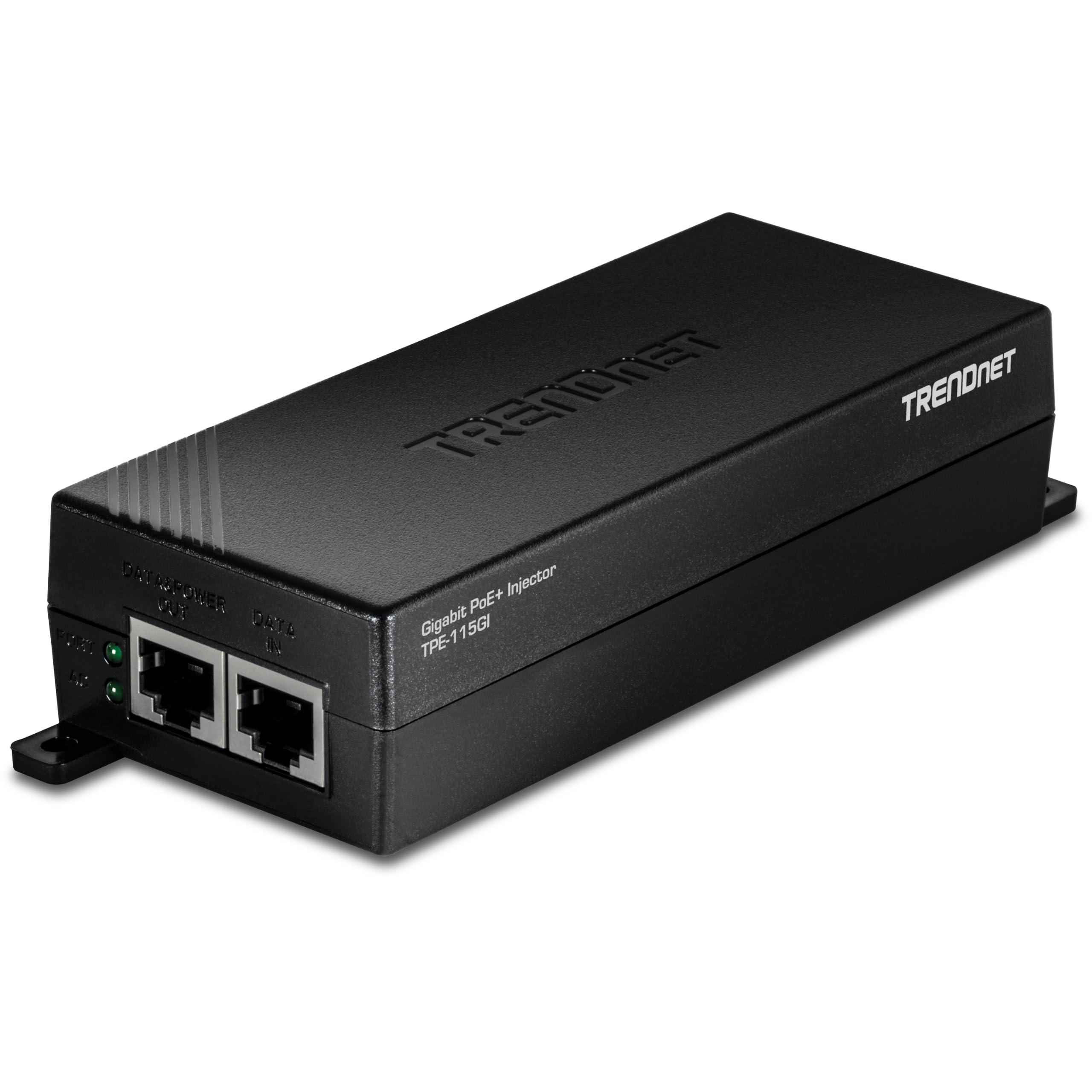
Type: Gigabit PoE+ injector
Power Output: Up to 30W
Range: Up to 100M (328 ft.)
Housing: Metal
Color: Black
Compliance: 802.3at/af PoE+
The TPE-115GI is a single-port injector that sits between a non-PoE switch and a powered device such as an access point, IP camera, or VoIP phone. It pushes up to 30W of PoE+ power over the same Ethernet cable that carries data, so no separate power run is needed at the far end. The metal housing is the headline difference here — it feels more substantial and handles heat better than a plastic shell in a closet or rack.
TRENDnet’s spec sheet ties the injector to a 100-meter cable run, which is the standard Ethernet limit and covers most residential and small-office installs. The unit is a passive inline device: it needs a nearby AC outlet, but it does not require configuration or management software. Buyers who want a set-and-forget injector with a sturdier case will find this one appealing.
Trade-off: The metal build and TRENDnet branding push the price above the Omada, and the injector offers no mounting hardware or wall bracket in the box — a minor inconvenience for anyone planning a tidy wall install.
Check the TRENDnet TPE-115GI price on Amazon
Omada POE160S PoE+ Injector

Type: Gigabit PoE+ injector
Power Output: Up to 30W
Range: Up to 100m (328 ft.)
Compliance: 802.3at/af
Mounting: Wall mountable
Certification: UL certified
Install: Plug and play
The POE160S is the value pick of the pair. It matches the TRENDnet on the specs that matter most — gigabit speeds, up to 30W of PoE+ output, 802.3at/af compliance, and a 100-meter range — but does it for less money. The wall-mountable design is a practical touch: the injector can be screwed to a wall or the side of a rack instead of dangling from a cable.
UL certification is worth noting for anyone installing networking gear in a commercial space or an insurance-sensitive building, since it signals the unit has passed a recognized safety standard. Setup is plug-and-play: connect the data-in port to the switch, the PoE-out port to the powered device, and plug in the AC adapter. No configuration, no management interface.
Trade-off: The housing is plastic rather than metal, so it feels less rugged than the TRENDnet and offers less heat dissipation in a hot closet — a fair trade for the lower price, but worth knowing before a permanent install.
Check the Omada POE160S price on Amazon
Side-by-Side Specs
| Spec | TRENDnet TPE-115GI | Omada POE160S |
|---|---|---|
| Type | Gigabit PoE+ injector | Gigabit PoE+ injector |
| Max Power | Up to 30W | Up to 30W |
| Range | Up to 100M (328 ft.) | Up to 100m (328 ft.) |
| Standard | 802.3at/af | 802.3at/af |
| Housing | Metal | Plastic (implied) |
| Mounting | Not stated | Wall mountable |
| Certification | Not stated | UL certified |
| Price Tier | Higher | Lower |
How the Two Injectors Differ
On paper, these two units are nearly identical. Both are single-port gigabit PoE+ injectors rated for up to 30W, both comply with 802.3at/af, and both support the standard 100-meter Ethernet run. For the vast majority of home access points, IP cameras, and VoIP handsets, either one will do the job without a hiccup. The decision really comes down to build, mounting, certification, and price.
The metal housing on the TRENDnet is the clearest physical difference. Metal enclosures tend to handle heat better and resist accidental knocks in a crowded rack, which matters in a small business closet or a garage install where temperatures swing. The trade-off is cost — the TRENDnet sits in a higher price tier, and the metal case is a big part of why.
The Omada counters with wall-mount hardware and UL certification. Wall mounting keeps the injector off the floor and out of the cable tangle, which is a real quality-of-life win in a tidy install. UL certification is the kind of box many commercial buyers want ticked before they power a device in a shared space. The plastic housing is the compromise, but for a stationary indoor injector that compromise is usually acceptable.
On price, the Omada wins outright, and the popularity figures reflect that: the Omada shows stronger recent sales volume, which is consistent with a lower-priced unit that covers the same core job. Neither injector adds management features — both are dumb inline devices, so buyers who want remote monitoring or per-port control should look at a managed PoE switch instead.
Which Should You Buy?
Choose the TRENDnet TPE-115GI if… the install calls for a sturdier metal housing, the injector will live in a warmer or higher-traffic spot, or the buyer simply prefers TRENDnet gear already in the rack. It is the more robust-feeling unit and the one to pick when the case itself matters.
Choose the Omada POE160S if… value and a clean install are the priorities. It matches the TRENDnet on power, speed, and range, adds wall mounting and UL certification, and costs less. Most home and small-office buyers will be better served here.
Buyers who need PoE for more than one device should skip both and price out a PoE switch. These injectors are best for a single run where adding a switch is overkill.
FAQ
-
Is the TRENDnet TPE-115GI better than the Omada POE160S?
Not across the board. The TRENDnet has the better housing, but the Omada matches it on power and range while costing less and adding wall mounting and UL certification. "Better" depends on whether metal build or value matters more. -
Do both injectors deliver 30W of PoE+ power?
Yes. Both are rated for up to 30W and comply with 802.3at/af, which covers PoE+ devices like access points, PTZ cameras, and VoIP phones. -
Can either injector be wall mounted?
The Omada POE160S is explicitly wall mountable. The TRENDnet’s mounting options are not stated in its product name, so buyers who need a wall install should lean toward the Omada. -
What does UL certification mean on the Omada POE160S?
UL certification indicates the unit has been tested to a recognized safety standard. It is a meaningful checkbox for commercial installs and shared spaces. -
Will either injector work with a non-PoE switch?
Yes. Both are designed to sit between a standard switch and a PoE device, injecting power inline. That is the entire point of an injector. -
Do these injectors need configuration?
No. Both are plug-and-play inline devices with no management interface. Buyers who want remote control need a managed PoE switch instead. -
Which injector is the better value?
The Omada POE160S. It matches the TRENDnet on the specs that matter for most installs and costs less, with wall mounting and UL certification as extras.
Bottom Line
For most buyers, the Omada POE160S is the smarter pick: same 30W PoE+ output, same gigabit speed, same 100-meter range, plus wall mounting and UL certification at a lower price tier. The TRENDnet TPE-115GI remains the choice when a metal housing is non-negotiable.
