Why there are Amazon links here: Brave Review is paid a commission for qualifying Amazon purchases made through the links below. Your price does not change, and using our links is entirely optional. How this works
Schlage Encode Smart WiFi Deadbolt Lock: Keyless Entry Without the Hub
The Schlage Encode Smart WiFi Deadbolt Lock is built for the household that wants keyless entry, remote locking and voice control without adding a separate smart-home hub to the wall. It connects straight to the home’s WiFi network, which makes it a fit for renters-by-choice, Airbnb hosts and anyone tired of hiding a spare key under a mat. This review covers how the lock is built, what the touchscreen and app actually do, where the setup demands patience, and which buyers should look elsewhere.
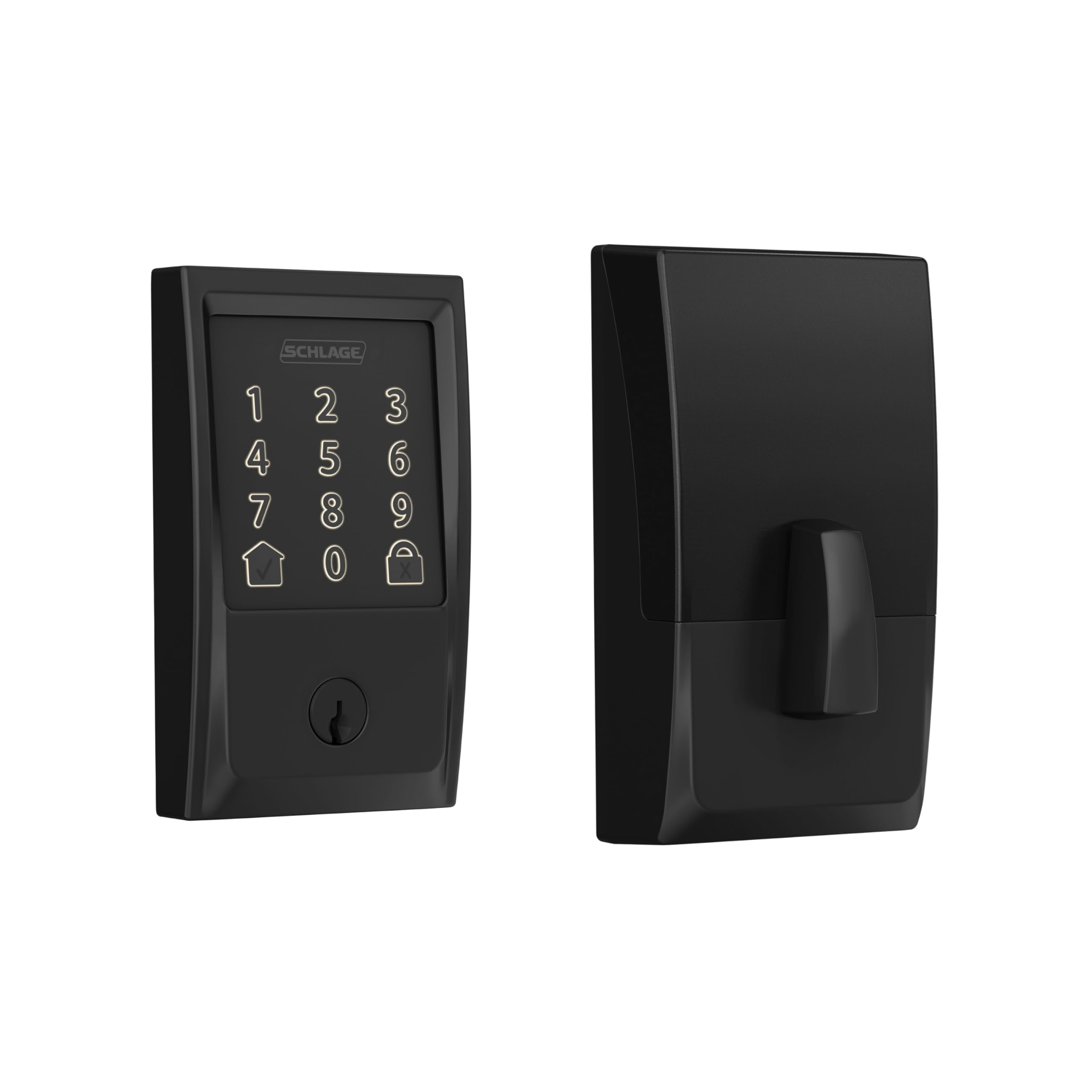
Features and Specifications
Type: Smart WiFi deadbolt with touchscreen keypad
Connectivity: Built-in WiFi, no hub required
Voice Assistants: Alexa and Google Home
Ecosystem Support: Ring and Airbnb compatible
Entry Methods: Keypad code and smartphone app control
Trim: Century trim in matte black
Security: Certified security rating
The headline here is the built-in WiFi radio. Most smart deadbolts at this tier need a bridge or hub to reach the internet, and the Encode skips that step entirely — the lock talks to the router directly. That single decision shapes everything else about the product, from setup to how reliably remote commands land.
The Century trim in matte black is a deliberate style choice rather than a neutral one. It reads modern and a little architectural, so it pairs best with contemporary doors and hardware finishes. On a traditional paneled door with brass fixtures, the matte black cylinder will stand out rather than blend in.
Build and Finish
The deadbolt itself is a full-size residential unit, not a slim retrofit that caps an existing cylinder. That means the interior thumb turn and the exterior keypad are both substantial pieces of hardware, and the matte black finish is applied to the visible trim rather than the bolt mechanism hidden in the door.
Buyers should expect a real installation rather than a stick-on upgrade. The existing deadbolt comes out, the new one goes in, and the door needs to be thick enough and drilled to standard residential dimensions. A door that already has a deadbolt bore is the easy case; a door without one is a locksmith job or a serious afternoon with a hole saw.
The finish is the part that ages visibly. Matte black coatings on exterior hardware can show scuffs and water spotting over time, and they are harder to touch up than brushed metal. A covered porch or recessed entry treats this trim far better than a door fully exposed to weather.
Capacity and Access
The touchscreen keypad is the everyday entry method, and it is where the lock earns its keep. Codes can be issued to family, dog walkers, cleaners and short-term guests, then revoked from the app without rekeying anything. For an Airbnb host, that is the core value proposition: a new guest code for every stay, no key handoff, no lockbox.
App control adds the remote layer. The lock can be checked and operated from a phone, which matters for confirming the door is locked after leaving or letting someone in from another city. Alexa and Google Home add voice commands, and Ring compatibility ties the lock into a broader camera-and-doorbell setup.
The trade-off in this category is always the same: convenience features depend on the network. A WiFi deadbolt is only as responsive as the signal at the door, and a router at the far end of the house will make the app feel sluggish. Buyers with weak WiFi at the entry should plan for a mesh node or extender before blaming the lock.
Power and Maintenance
A WiFi radio is a constant drain, and that is the honest cost of skipping the hub. The lock runs on batteries, and how often they need changing depends heavily on how much the app and remote features get used. Heavy remote access shortens battery life; keypad-only use stretches it.
The practical advice is to treat battery level as a routine check rather than a surprise. Most owners will want to glance at the app’s battery indicator monthly and keep a spare set on hand. A keyway is present as a backup, so a dead battery is an inconvenience rather than a lockout — provided the physical key is stored somewhere other than inside the house.
Maintenance otherwise is minimal. The touchscreen wants an occasional wipe, and the keypad surface should be cleaned gently rather than scrubbed. There is no hub to reboot, no bridge to re-pair, which removes one of the more common failure points in smart lock ownership.
The Trade-off
Trade-off: The hub-free design is genuinely convenient, but it puts the lock’s reliability squarely on the home WiFi network and on battery power, so buyers with a weak signal at the door or a dislike of battery maintenance will feel the compromise.
Who Should Buy the Schlage Encode
This lock suits the buyer who wants one app for the door and no extra hardware in between. Short-term rental hosts get the most from it, because guest codes can be created and killed remotely without a key exchange. Households with a mix of family, sitters and service people also benefit from per-person codes that can be revoked individually.
It is also a reasonable pick for the tech-forward homeowner already running Alexa, Google Home or Ring, since the lock slots into an existing ecosystem rather than demanding a new one. The matte black Century trim makes it a design decision as much as a security one.
It is not the right lock for everyone. Buyers in apartments with metal doors, unusual bore dimensions or landlord restrictions should check fitment before ordering. Anyone who wants a lock that works entirely offline, with no app and no cloud dependency, will find this product overbuilt for the job.
Check the current price on Amazon
FAQ
-
Does the Schlage Encode need a hub or bridge?
No. The lock has built-in WiFi, so it connects directly to the home router. That is the main reason buyers choose it over hub-dependent smart deadbolts. -
Does the Schlage Encode work with Alexa and Google Home?
Yes. The lock is compatible with both Alexa and Google Home for voice control, and it also works within Ring setups and with Airbnb for guest access. -
Can the Schlage Encode be used without WiFi?
The keypad and the physical key still work without a network, but app control, remote locking and voice commands all depend on WiFi. Buyers who want a fully offline lock should look at a simpler keypad deadbolt. -
Is the Schlage Encode good for Airbnb and rental hosts?
It is one of the stronger fits for that use. Hosts can issue a unique code per guest and revoke it after checkout, which removes the lockbox and key-handoff problem entirely. -
What happens when the batteries die?
A physical key provides backup entry, so a dead battery does not lock the owner out — as long as the key is stored outside the home. Checking battery level in the app regularly avoids the situation altogether. -
Does the matte black finish hold up outdoors?
Matte black exterior hardware generally wears better under a porch or overhang than in full direct weather. Buyers with a fully exposed door should expect more visible wear over the years than those with a covered entry. -
Can codes be set for different people?
Yes. Individual codes can be assigned to family members, cleaners, dog walkers or guests, then removed from the app when access is no longer needed. No rekeying is involved. -
Will the Schlage Encode fit an existing deadbolt hole?
It is designed as a standard residential deadbolt replacement, so a door already bored for a deadbolt is the straightforward case. Doors without an existing bore, or with nonstandard dimensions, need extra work or professional installation. -
Does the lock work with Ring cameras and doorbells?
Ring compatibility is part of the feature set, so the lock can be folded into a wider Ring setup at the entry. Buyers already in that ecosystem get more from it than those starting from scratch. -
Is a smart WiFi deadbolt as secure as a standard deadbolt?
The lock carries a certified security rating and uses a physical keyway as backup, so the core locking hardware is residential-grade. The added attack surface is the network and the app, which is why a strong router password and a unique account password matter.
Bottom Line
The Schlage Encode Smart WiFi Deadbolt Lock is the pick for buyers who want keyless entry, remote control and voice commands without buying a hub — particularly Airbnb hosts and households juggling codes for family, sitters and guests. The matte black Century trim gives it a modern look, and the Alexa, Google Home and Ring support means it fits an existing smart home rather than fighting it.
The caveat is honest and predictable: a WiFi lock leans on WiFi and batteries. Buyers with a strong signal at the door and a willingness to check battery level monthly will get exactly what they paid for. Those with a weak entry signal or a preference for fully offline hardware should look at a simpler keypad deadbolt instead.