Why there are Amazon links here: Brave Review is paid a commission for qualifying Amazon purchases made through the links below. Your price does not change, and using our links is entirely optional. How this works
Best Door and Window Sensors for Fast, Affordable Home Security
The best door and window sensors turn any entry point into an instant alert on a phone, and this guide covers five picks that suit three kinds of buyers: smart-home owners building an ecosystem, renters who want protection without a contract, and budget shoppers covering a whole house. Each pick below has a clear best use and a real trade-off, so the choice comes down to hub compatibility and how many openings need coverage. The overview table sums up every option before the reviews.
Overview of the Picks
| Product | Key Spec | Best Use | Price Tier |
|---|---|---|---|
| Ring Alarm Contact Sensor 6-Pack | 6 sensors, base station required | Whole-home coverage in the Ring ecosystem | Mid |
| Aqara Zigbee Door and Window Sensor 3 Pack | 3 sensors, Aqara hub required | Apple HomeKit and Alexa households | Mid |
| SONOFF SenseGuard DW Gen2 4-Pack | 4 sensors, tamper proof | Home Assistant and SmartThings tinkerers | Budget |
| Tapo Door Sensor Starter Kit | 3 sensors plus hub with chime | First-time smart-home buyers | Mid |
| Philips Personal Security Window and Door Alarm 4 Pack | 4 standalone alarms | Renters and quick no-app setups | Budget |
Ring Alarm Contact Sensor 6-Pack – 2nd Gen

Type: Contact sensor for doors and windows
Count: 6-pack
Battery Life: Approximately 3 years
Design: Slim profile
Requirement: Ring base station required
Alerts: Instant notifications
Ring Alarm Contact Sensor 6-Pack – 2nd Gen is the volume pick: six slim sensors cover six separate doors or windows in one purchase, and the roughly three-year battery life means fewer ladder trips over time. The sensors pair with a Ring base station, so alerts land in the Ring app alongside cameras and other Ring gear. Installation is designed to be simple, with the sensor and magnet mounting on either side of an opening. This set suits a house or apartment with several entry points rather than a single door.
The six-pack earns its place on cost per opening, which matters for anyone covering a full home. The slim design keeps sensors visually quiet on frames and sills. Check price on Amazon.
Trade-off: The set is useless without a Ring base station, so buyers outside the Ring ecosystem pay for hardware they cannot use.
Aqara Zigbee Door and Window Sensor 3 Pack

Type: Wireless mini contact sensor
Count: 3-pack
Protocol: Zigbee
Hub: Aqara hub required
Compatibility: Apple HomeKit, Alexa, IFTTT
Feature: Kid safety
Aqara Zigbee Door and Window Sensor 3 Pack is the pick for households already living inside Apple HomeKit or Alexa, since these mini sensors surface in those apps and can trigger automations through IFTTT. The Zigbee connection is low-power and reliable at short range, and the mini housing fits narrow frames where bulkier sensors crowd the trim. A kid-safety angle adds value for families who want alerts when a child opens a window or exterior door. Three sensors cover the most-used entries without overbuying.
This pack suits smart-home users who want sensors to feed routines rather than sit in a separate app. The small footprint and cross-platform compatibility are the draw. Check price on Amazon.
Trade-off: An Aqara hub is mandatory, so the real entry cost sits well above the pack price.
SONOFF SenseGuard DW Gen2 4-Pack
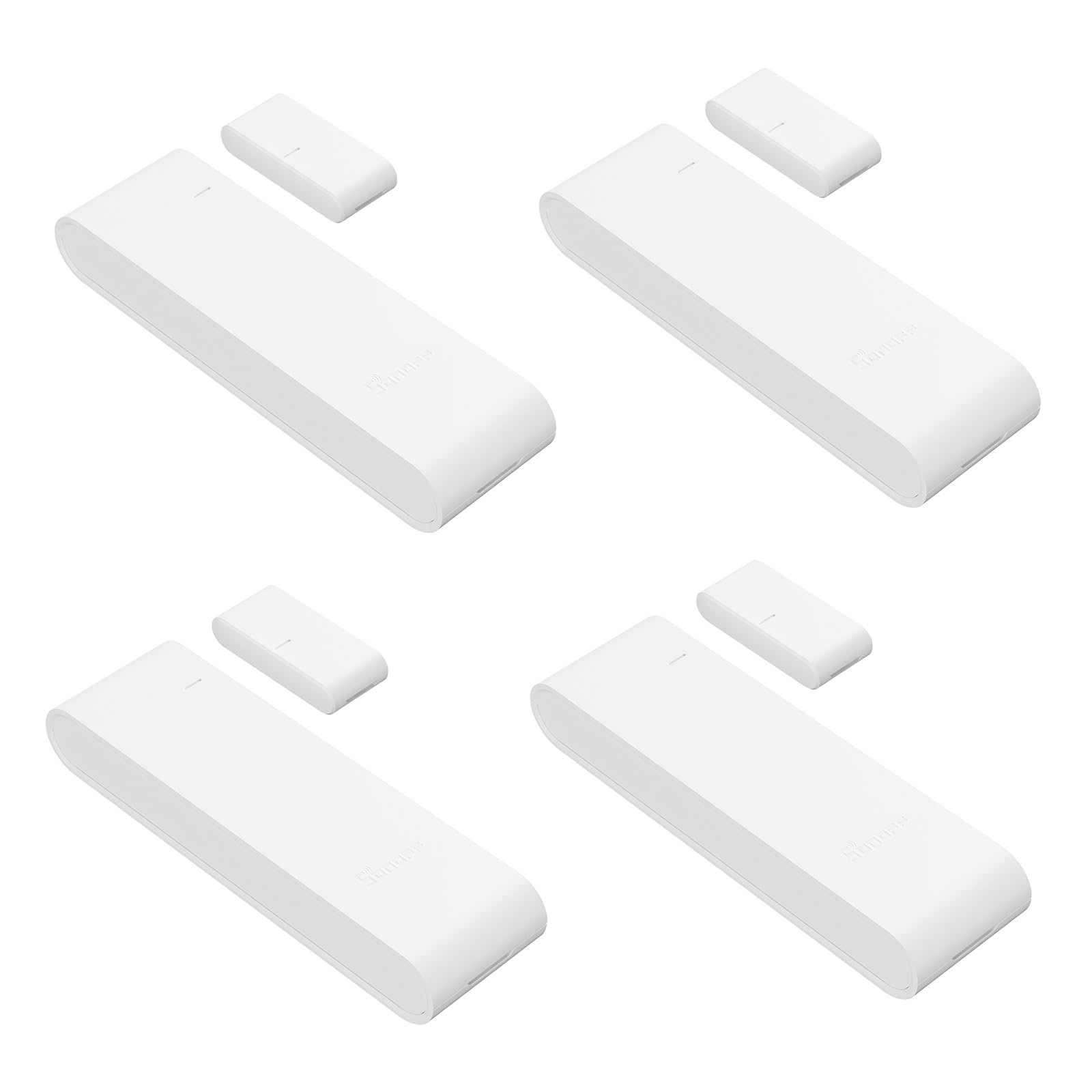
Type: Zigbee door and window contact sensor
Count: 4-pack
Feature: Tamper proof
Alerts: Phone alerts
Compatibility: Alexa, Home Assistant, SmartThings
Function: Open/close monitoring
SONOFF SenseGuard DW Gen2 4-Pack targets the tinkerer crowd: it speaks Zigbee and works with Home Assistant, SmartThings, and Alexa, so it slots into a self-built automation system rather than a walled garden. Open and close monitoring feeds phone alerts, and the tamper-proof design adds a layer of deterrence on exterior doors and windows. Four sensors in one box make it easy to cover a back door, front door, and a pair of ground-floor windows. The price tier keeps a full perimeter affordable.
This pack suits buyers who already run a hub and prefer local control over subscription services. It is the value option for a DIY smart home. Check price on Amazon.
Trade-off: Setup assumes comfort with hub pairing and app configuration, so buyers wanting plug-and-play simplicity should look elsewhere.
Tapo Door Sensor Starter Kit

Type: Contact sensor kit with hub
Count: 3 sensors plus 1 hub
Hub Feature: Built-in chime
Standard: Matter compatible
Alerts: Real-time notifications
Function: Smart automation
Tapo Door Sensor Starter Kit is the easiest on-ramp here because the hub ships in the box, so there is no separate bridge to buy or match. The built-in chime gives an audible alert inside the home in addition to phone notifications, which helps when a phone is silenced or left in another room. Matter compatibility points to broader ecosystem support going forward. Three sensors plus the hub make a complete starter setup for a small home or apartment.
This kit suits first-time smart-home buyers who want one box that works out of the gate. The included chime is a practical extra that many rivals charge for separately. Check price on Amazon.
Trade-off: Three sensors cover only the main entries, so larger homes need a second kit or add-on sensors.
Philips Personal Security Window and Door Alarm 4 Pack
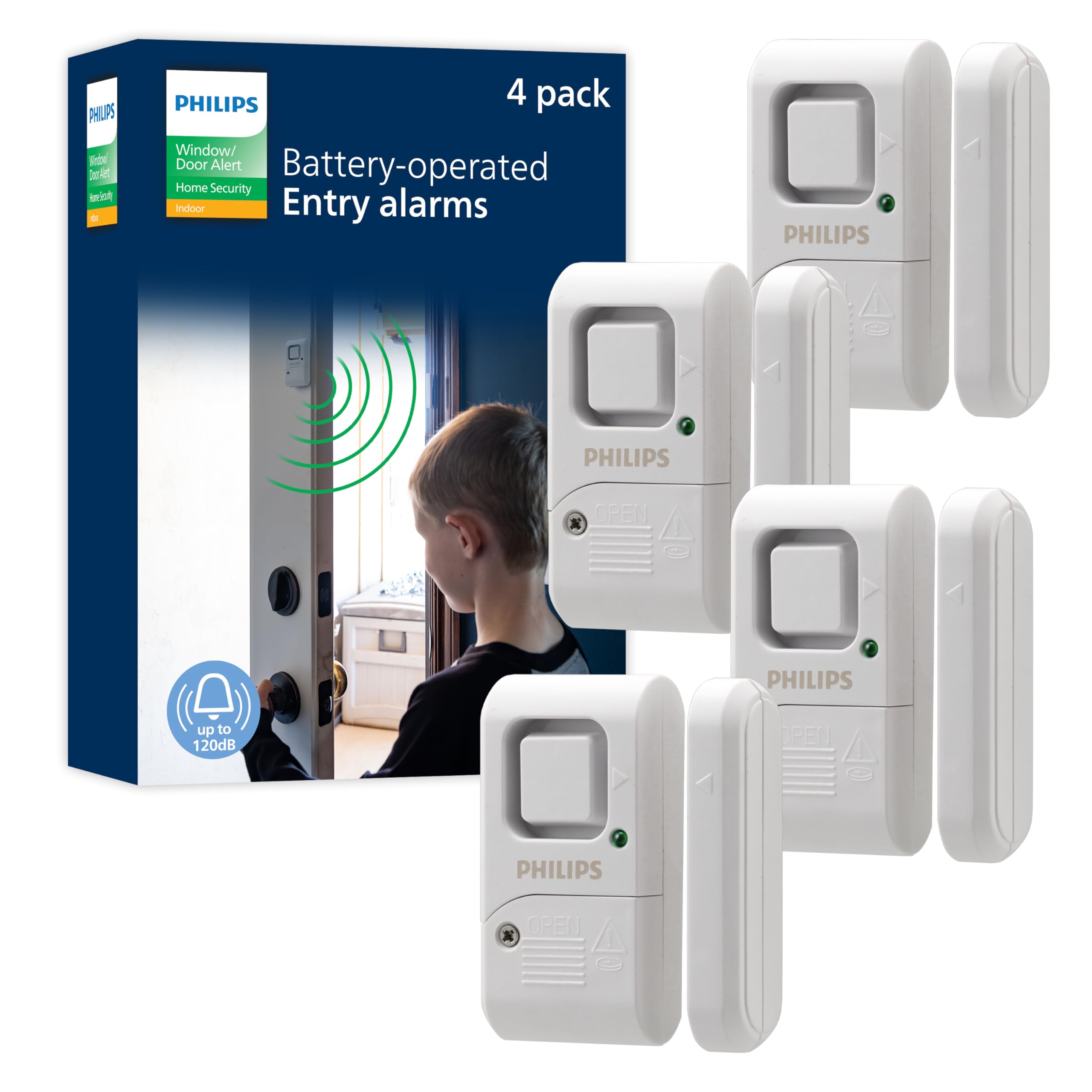
Type: Standalone window and door alarm
Count: 4-pack
Feature: Wireless chime
Function: Burglar alert
Installation: Easy, no hub
Use Cases: Home, garage, apartment, RV
Philips Personal Security Window and Door Alarm 4 Pack is the no-app, no-hub option: each unit is a self-contained alarm that sounds a local siren and can pair with a wireless chime when an opening is triggered. There is no smartphone integration and no account, which makes it ideal for renters, garages, apartments, and RVs where a permanent smart setup is impractical. Installation is simple enough to move between locations. Four units at the lowest price tier here make it the budget way to cover several openings at once.
This pack suits buyers who want a loud local deterrent without subscriptions or Wi-Fi. It also works well as a secondary layer on sheds and storage. Check price on Amazon.
Trade-off: Alerts stay local, so there is no phone notification when nobody is home to hear the siren.
Before You Buy
- Hub compatibility: Ring sensors need a Ring base station, Aqara sensors need an Aqara hub, and SONOFF sensors need a Zigbee hub — only the Tapo kit and the Philips alarms work without buying anything extra.
- Sensor count: Match the pack to the number of doors and windows to cover; a 3-pack rarely covers a whole house.
- Ecosystem: Apple HomeKit users should lean toward Aqara, while Home Assistant and SmartThings users get the most from SONOFF.
- Alert type: Smart sensors send phone notifications; standalone alarms sound a local siren only.
- Power and maintenance: Battery-powered sensors need periodic replacement, and longer-rated batteries mean fewer service trips.
- Mounting surface: Slim sensors fit narrow frames, but check clearance between the sensor and magnet on snug openings.
- Placement: Prioritize ground-floor windows and exterior doors before interior rooms.
Frequently Asked Questions
-
Do door and window sensors need a hub?
It depends on the model. Ring, Aqara, and SONOFF sensors require their respective hubs, while the Tapo kit includes one and the Philips alarms need none. -
Can these sensors work without Wi-Fi?
The Philips standalone alarms work entirely offline, sounding a local siren. Smart sensors rely on a hub and network for phone alerts. -
Which pick is best for renters?
The Philips 4-pack is the renter-friendly choice because it installs without a hub, account, or permanent wiring. -
How many sensors does a typical home need?
Most homes need coverage on exterior doors and ground-floor windows, which usually means four to six sensors. -
Are these sensors compatible with Alexa?
The Aqara, SONOFF, and Tapo options list Alexa support; the Ring sensors work through the Ring app and base station. -
What is the cheapest way to cover several openings?
The Philips 4-pack sits at the lowest price tier and covers four openings with no added hardware.
Bottom Line
For most buyers, the Tapo Door Sensor Starter Kit is the safest first purchase: the hub, chime, and three sensors arrive together, so the system works without hunting down extra parts. Ring owners should take the six-pack for whole-home coverage, and renters or budget shoppers get the most from the Philips standalone alarms.
