Why there are Amazon links here: Brave Review is paid a commission for qualifying Amazon purchases made through the links below. Your price does not change, and using our links is entirely optional. How this works
Best Alarm Testing and Maintenance Schedule Books for Keeping Fire Safety Records Audit-Ready
A working alarm testing and maintenance schedule is only as good as the paper trail behind it. This guide covers five log books and reference guides that let landlords, facilities teams, and safety officers record inspections, tests, and repairs in one place. The picks range from a low-cost panel log to a full field handbook for professional inspectors. The overview table below shows each option’s key spec, best use, and price tier at a glance.
Overview of the Picks
| Product | Key Spec | Best Use | Price Tier |
|---|---|---|---|
| Fire Alarm Testing Log Book (B0D9YX8CS1) | Multi-site blank log format | Landlords, schools, offices | Budget |
| THE FIRE ALARM INSPECTOR’S HANDBOOK (B0HG46N7Q9) | Comprehensive field reference guide | Professional inspectors | Mid-range |
| Fire Alarm Log Book (B08C8X97L8) | Compact panel and test log | Single-site small business | Lowest |
| Fire Alarm Log Book: Record Inspections, Tests & Maintenance (B0BVD3NGLM) | Structured inspection record | Facilities teams | Budget |
| Smoke Alarm Test Log Book (B0HH9BXRMT) | Smoke alarm maintenance record | Landlords, property managers | Budget |
1. Fire Alarm Testing Log Book: Fire Alarm Testing and Maintenance Log
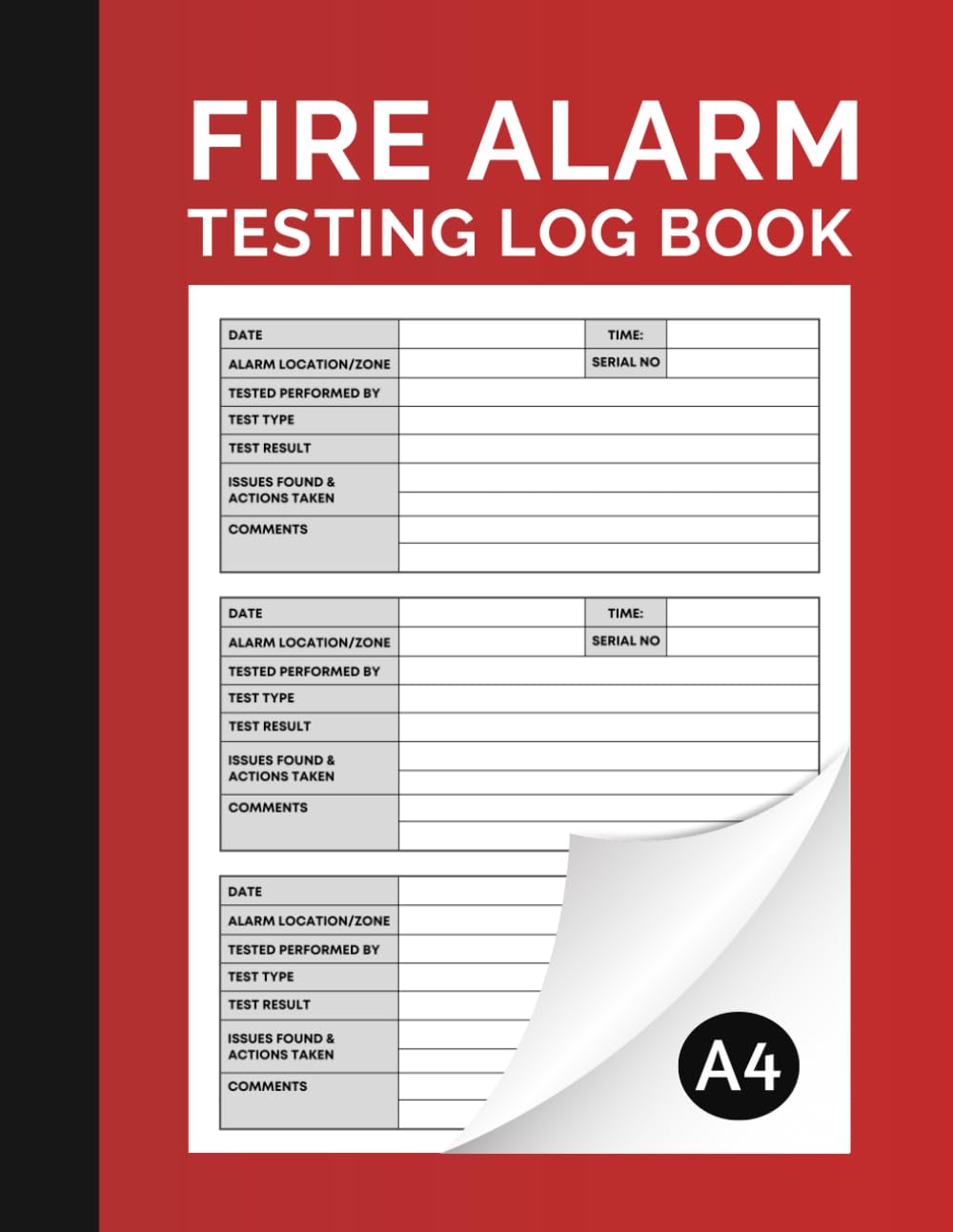
Format: Bound paper log book
Intended use: Fire alarm testing and maintenance records
Audience: Landlords, businesses, schools, offices, workplaces
Coverage: Testing and maintenance entries
This log book is built around the paperwork side of an alarm testing and maintenance schedule. The format is a bound paper book with dedicated entry pages, so a landlord or office manager can log each test date, the device checked, and any maintenance action taken. Its multi-site framing makes it a reasonable fit for a property manager overseeing several buildings. The book suits anyone who needs a single physical record that can be handed to an inspector or auditor.
The pick earns its place because it covers the widest range of premises in the group, from schools to workplaces. It is not for a buyer who wants technical guidance on how to test a system — this is a record keeper, not a reference manual. The trade-off is that a generic log format may not match the exact fields a specific fire authority requires.
2. THE FIRE ALARM INSPECTOR’S HANDBOOK: A Comprehensive Field & Reference Guide
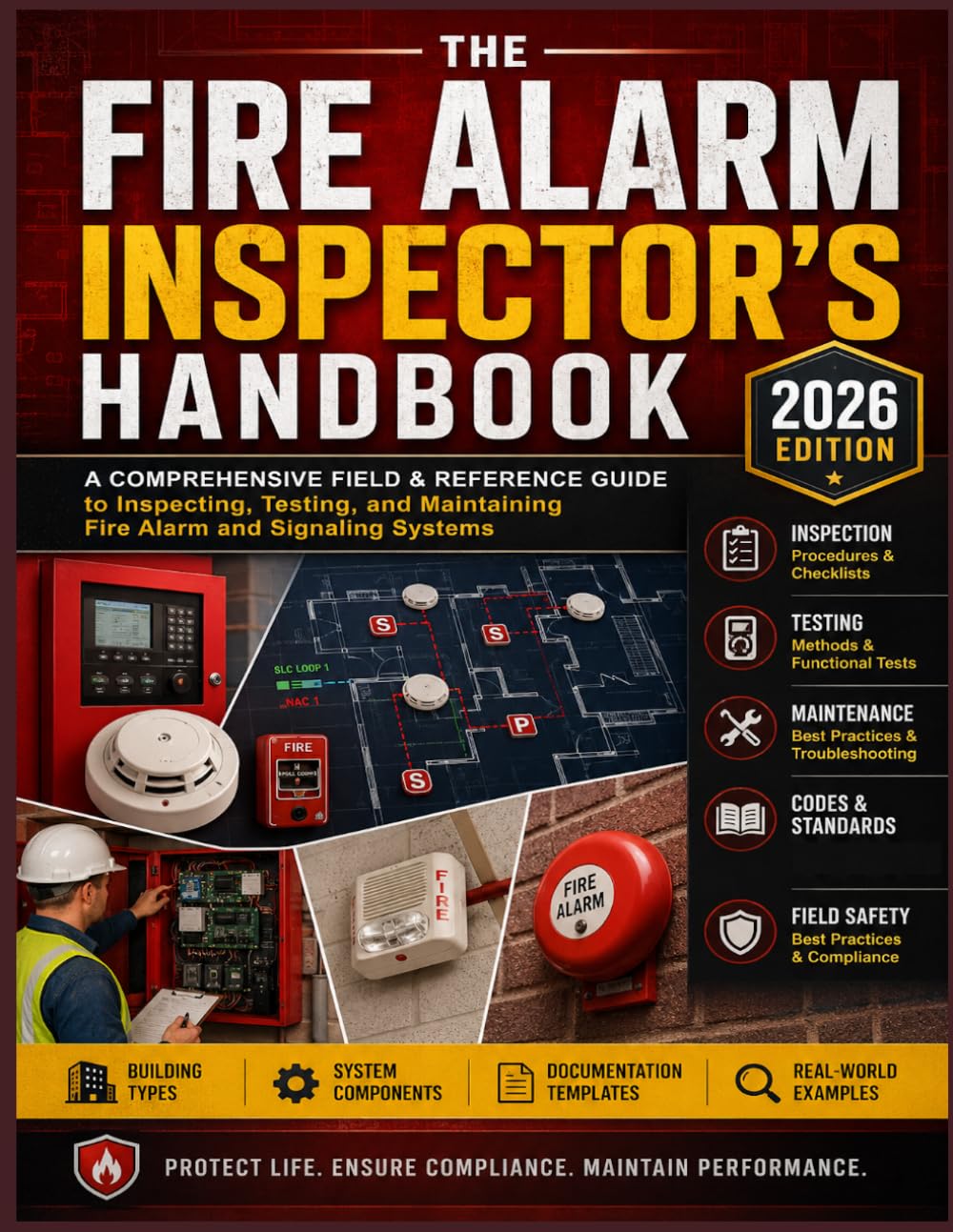
Format: Reference handbook
Intended use: Inspecting, testing, and maintaining fire alarm systems
Coverage: Fire alarm and signaling systems
Audience: Field inspectors and technicians
This is the only pick in the group that explains the work rather than just recording it. The handbook is written as a field and reference guide for inspecting, testing, and maintaining fire alarm and signaling systems, which makes it the natural companion to a log book. A technician can read up on a procedure on site, then log the result in a separate record. It suits professional inspectors, maintenance staff, and anyone building a formal testing routine from scratch.
It earned its place as the technical anchor of the list, and the higher price reflects that depth. It is not for a casual landlord who simply needs a place to write down test dates. The trade-off is that a reference of this scope assumes some background knowledge and is heavier reading than a simple log.
3. Fire Alarm Log Book: Fire Alarm Panel Log, Test LogBook, Safety Register

Format: Compact paper log book
Intended use: Panel log, test log, safety register, maintenance log
Coverage: Fire alarm and fire prevention entries
Audience: Single-site premises
This is the budget entry and the simplest way to start an alarm testing and maintenance schedule. The book combines a panel log, a test log, a safety register, and a maintenance log in one slim volume, so a small business can keep everything in a single place. Its compact build makes it easy to store near the alarm panel itself. It suits a shop, café, or small office running one premises.
The pick earns its place on price and simplicity, and it is the easiest of the five to justify for a first-time record keeper. It is not for a multi-site operation that needs to separate records by building. The trade-off is that a budget book offers fewer pages and less structure than the pricier options.
4. Fire Alarm Log Book: Record Inspections, Tests & Maintenance

Format: Structured paper log book
Intended use: Recording inspections, tests, and maintenance
Coverage: Inspection, testing, and maintenance entries
Audience: Facilities and maintenance teams
Fire Alarm Log Book: Record Inspections, Tests & Maintenance
This log book is organized around the three pillars of any alarm testing and maintenance schedule: inspections, tests, and maintenance. The structured layout keeps each type of entry separate, which helps a facilities team show an auditor that every stage was completed. It is a practical middle option for a building with an in-house maintenance crew. The book suits teams that already know the procedures and need a clean record.
It earned its place because the structured format reads well during an inspection. It is not for a buyer looking for guidance on what to test or how often. The trade-off is that a fixed layout can feel rigid for a site with unusual equipment.
5. Smoke Alarm Test Log Book: Complete Maintenance, Testing & Inspection Record

Format: Paper log book
Intended use: Smoke alarm maintenance, testing, and inspection records
Coverage: Smoke alarm testing and inspection
Audience: Landlords, property managers, facilities teams
This book narrows the schedule to smoke alarms rather than full fire alarm panels. That focus makes it a strong fit for a landlord with a portfolio of residential units, where the routine is about testing individual smoke detectors and recording the result. The layout covers maintenance, testing, and inspection in one record. It suits property managers who need a per-unit paper trail.
The pick earns its place as the residential specialist of the group. It is not for a commercial building that needs a panel-level fire alarm log. The trade-off is that a smoke-alarm-only book leaves no room to record a full fire alarm panel test.
Before You Buy
- Scope: Decide whether the record covers a full fire alarm panel or smoke alarms only, and pick a book that matches.
- Format: A paper log book suits inspections and audits; a reference handbook suits technicians who need procedure guidance.
- Premises count: A multi-site book suits property managers, while a compact log fits a single small business.
- Entry structure: A structured inspection, test, and maintenance layout reads better in an audit than a free-form log.
- Storage: Check the book’s size so it can be kept near the alarm panel or in a safety file.
- Companion use: Pair a log book with a technical handbook when the schedule needs both procedure and proof.
Frequently Asked Questions
-
What should an alarm testing and maintenance schedule record?
Each entry should note the date, the device or panel tested, the result, and any maintenance action taken, so the record shows a continuous history. -
Does a paper log book satisfy an inspector?
A well-kept paper log gives an auditor a clear history, but the required fields vary by authority, so check local rules before relying on any single format. -
Should a landlord choose the smoke alarm book or the fire alarm log?
A residential landlord testing individual smoke detectors is better served by the smoke alarm book, while a commercial site needs a panel-level log. -
Is a reference handbook needed alongside a log book?
A handbook helps technicians understand inspection and testing procedures, while the log book records that the work was done. -
Can one book cover several buildings?
A multi-site log can work for a small portfolio, but separate books per building usually keep records clearer during an audit. -
How often should entries be made?
Entries should be made at each scheduled test and after any maintenance, so the schedule stays continuous and gaps are easy to spot.
Bottom Line
The best starting point for most buyers is the Fire Alarm Testing Log Book, which covers the widest range of premises and keeps an alarm testing and maintenance schedule in one place. Professional inspectors should pair it with THE FIRE ALARM INSPECTOR’S HANDBOOK for the technical side.