Why there are Amazon links here: Brave Review is paid a commission for qualifying Amazon purchases made through the links below. Your price does not change, and using our links is entirely optional. How this works
Nest T3007ES Learning Thermostat: Smart Comfort Without the Fuss
The Nest T3007ES Learning Thermostat is a third-generation smart thermostat built for homeowners who want automatic temperature scheduling without babysitting an app. It suits people replacing an old dial or programmable unit who want a recognizable, well-supported brand and a polished stainless-steel finish on the wall.
This review covers what the T3007ES is, how it is built, what its specs mean for real households, and where it falls short. The goal is a fast decision: whether this thermostat fits a given home and budget, or whether a simpler unit makes more sense.
Features and Specifications
Product: Nest T3007ES Learning Thermostat, Easy Temperature Control for Every Room in Your House, Stainless Steel (Third Generation)
Generation: Third generation
Finish: Stainless steel
Type: Learning thermostat
Intended use: Whole-house temperature control, room by room
Control style: Automatic learning and easy temperature control
ASIN: B0131RG6VK
The name tells most of the story. This is the third-generation Nest Learning Thermostat in the stainless-steel finish, and the "every room in your house" phrasing points to a system designed to manage comfort across a whole home rather than a single zone. The learning label is the core promise: the unit studies a household’s patterns and builds a schedule instead of asking the owner to program one manually.
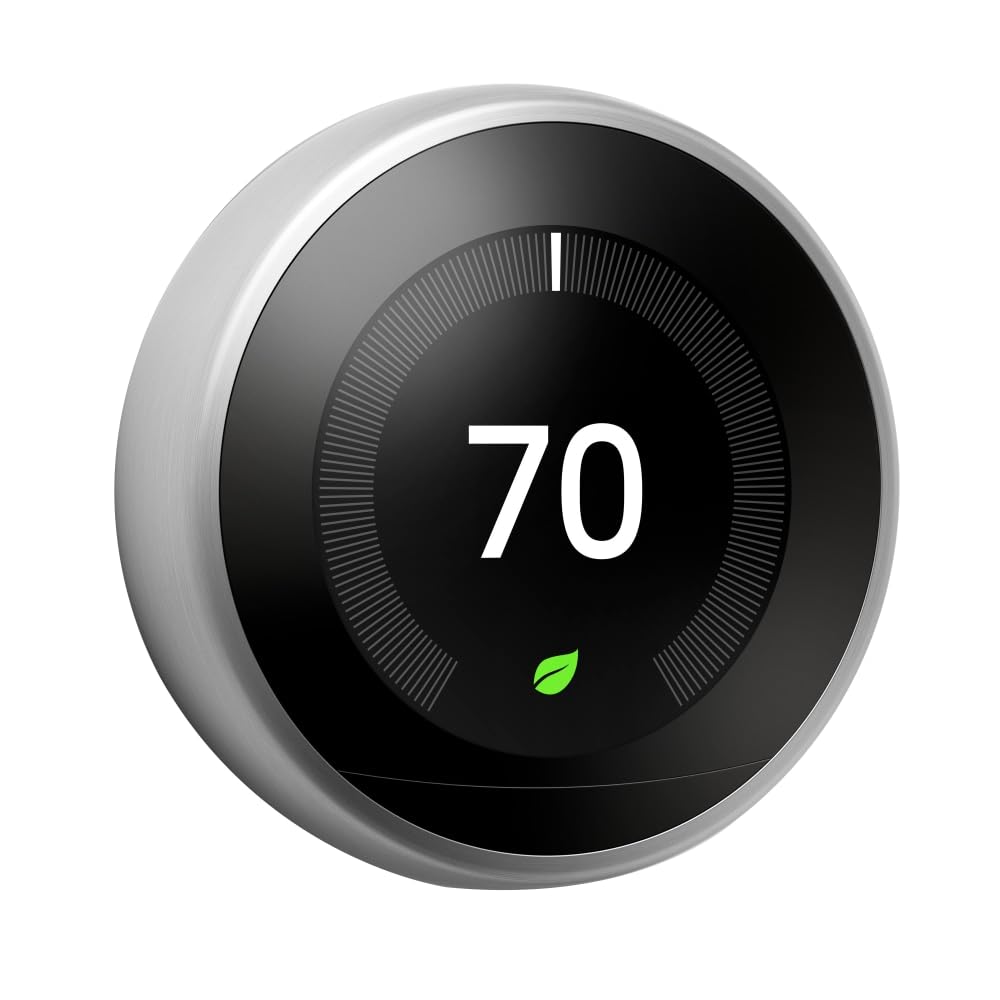
Stainless steel is the aesthetic choice here. It reads as a deliberate design object rather than a utilitarian wall box, which matters in open-plan living areas where the thermostat is visible. The third-generation badge also signals a mature product line — buyers are getting the refined version of a concept Nest has been iterating on, not a first attempt.
Build and Design
The T3007ES is a round, wall-mounted thermostat with a metal ring and a central display. That circular form is the signature of the Nest line, and the stainless-steel finish gives it a slightly warmer, more premium look than plain plastic housings. The display is the main interface: temperature, mode and settings appear on the device itself, and the ring turns to adjust.
Installation is a wall-mounted job that typically replaces an existing thermostat in the same spot. Buyers should expect to deal with low-voltage thermostat wiring, and homes with unusual HVAC setups — heat pumps, multi-stage systems, or no common wire — are the cases where professional installation or a compatibility check pays off. The physical footprint is small enough for a hallway or living-room wall without dominating it.
The design bet is that a thermostat should be pleasant to look at and touch, not hidden in a closet. That holds up in visible locations. In a utility corridor or a rental unit where nobody looks at the wall, the stainless-steel premium buys less.
Trade-off: The polished stainless-steel finish and round display invite fingerprints and dust, so a visible hallway location means occasional wiping.
Learning and Temperature Control
The learning engine is the reason to choose this model over a basic programmable thermostat. Rather than asking for a seven-day schedule up front, the thermostat observes adjustments over the first days and weeks and starts building a routine from them. Manual changes become the training data, and the unit begins pre-adjusting before the household wakes or comes home.
That approach suits households with reasonably stable patterns. A family with regular work and school hours gives the thermostat enough repetition to learn from. A household with erratic schedules, frequent travel, or shift work gives it much less to work with, and the automatic schedule becomes less useful — those buyers end up adjusting manually more often than the marketing implies.
The "every room" framing in the product name is worth reading carefully. A single thermostat controls the zone it is wired to; whole-home comfort across multiple zones requires additional sensors or multiple thermostats. Buyers in homes with hot and cold rooms should plan for that add-on rather than expecting one unit to equalize an entire house.
Power and Compatibility
The T3007ES is a low-voltage thermostat that draws power from the HVAC system wiring rather than a standard outlet. That is normal for the category, but it makes compatibility the single most important pre-purchase check. Older wiring, systems without a common wire, and some heat pump configurations are the usual friction points.
Buyers should confirm their system type and wiring before ordering. Nest publishes a compatibility checker for exactly this reason, and using it takes a few minutes. Skipping that step is the most common route to a return.
The third-generation model sits in the premium tier of the smart thermostat market. That price buys the learning behavior, the metal finish, and the brand ecosystem — not raw heating or cooling capability, which comes from the HVAC system itself. Buyers comparing against budget programmable units are paying for automation and design, and should judge the purchase on those terms.
Maintenance and Daily Use
Day to day, the T3007ES is a low-effort device. The screen shows the current temperature and mode, the ring adjusts the setpoint, and the learning schedule runs in the background once trained. There is no filter to change and no consumable part, so maintenance is mostly cosmetic: keeping the display and metal ring clean.
The one ongoing task is schedule correction. When routines change — a new job, a new baby, a season with different hours — the thermostat needs a few days of fresh adjustments to relearn. Buyers who expect a set-and-forget device forever should plan for occasional retraining rather than treating the first learned schedule as permanent.
Firmware and app updates are part of ownership for any connected thermostat, and this model is no exception. A stable home Wi-Fi network at the thermostat’s location keeps remote control and scheduling features working as intended. Homes with weak Wi-Fi at the hallway wall are the ones most likely to notice dropouts.
Trade-off: The connected, app-dependent design means a weak Wi-Fi signal or an account issue can interrupt remote control in a way a plain dial thermostat never would.
Who It Suits and Who It Does Not
This thermostat fits homeowners with a conventional single-zone HVAC system, a reasonably predictable weekly routine, and a visible wall location where the stainless-steel finish earns its keep. It also suits buyers who value a mature, well-documented product line and are willing to run a compatibility check before ordering.
It does not fit renters who cannot modify wiring, households with highly irregular schedules that give the learning engine little to work with, or multi-zone homes expecting one unit to manage every room. Buyers on a tight budget who only need basic scheduling are also better served by a simpler programmable model.
FAQ
-
What is the Nest T3007ES Learning Thermostat?
It is the third-generation Nest Learning Thermostat in a stainless-steel finish, a wall-mounted smart thermostat that learns household temperature patterns and builds a schedule automatically. -
Is the Nest T3007ES hard to install?
Installation is a low-voltage wall-mount job that replaces an existing thermostat. Buyers comfortable with basic wiring can usually handle it, while unusual HVAC setups are better left to a professional. -
Does the Nest T3007ES work with every home heating and cooling system?
No. Compatibility depends on system type and wiring, and buyers should run a compatibility check before ordering to avoid a return. -
How long does the learning feature take to build a schedule?
The thermostat builds its schedule from repeated manual adjustments over the first days and weeks of use. Households with consistent routines give it the most to learn from. -
Can one Nest T3007ES control every room in a house?
One unit controls the zone it is wired to. Whole-home coverage across multiple zones requires additional sensors or additional thermostats. -
Does the Nest T3007ES need Wi-Fi?
Yes. The connected features, including remote control and app-based scheduling, depend on a stable Wi-Fi signal at the thermostat’s location. -
Is the stainless-steel finish worth choosing over a plastic model?
It is a design preference. The metal ring looks more premium in visible locations, but it shows fingerprints and needs occasional cleaning. -
What happens if the household routine changes?
The thermostat relearns from fresh manual adjustments over a few days. The original schedule is not permanent and will adapt with new patterns. -
Does the Nest T3007ES reduce energy bills automatically?
The learning schedule can cut wasted heating and cooling by matching run times to actual routines, but savings depend on the home, the HVAC system and how the household uses the thermostat. -
Who should skip the Nest T3007ES?
Renters who cannot change wiring, buyers with erratic schedules, multi-zone homes, and budget-focused shoppers who only need basic programming are better served elsewhere.
Bottom Line
The Nest T3007ES Learning Thermostat is the right pick for a homeowner with a conventional single-zone system, a predictable routine, and a visible wall where the stainless-steel finish looks at home. It earns its premium through automatic scheduling and a mature, well-supported design rather than raw capability.
Buyers with irregular schedules, multi-zone homes, or a tight budget should look at simpler options first. For everyone else, the T3007ES is a straightforward upgrade that turns manual thermostat fiddling into a background task.
