Why there are Amazon links here: Brave Review is paid a commission for qualifying Amazon purchases made through the links below. Your price does not change, and using our links is entirely optional. How this works
THIRDREALITY Smart Plug Gen3 4-Pack: Real-Time Power Metering for Home Assistant
The THIRDREALITY Smart Plug Gen3 4-pack is built for the buyer who already runs a Zigbee hub and wants to know exactly what a device is drawing from the wall. Each plug reports precise real-time power use and doubles as a Zigbee repeater, so a four-pack extends the mesh while it meters. This review covers what the hardware does, where it fits in a smart home, and the limits a buyer should weigh before ordering. It is not a plug-and-play pick for someone without a hub.
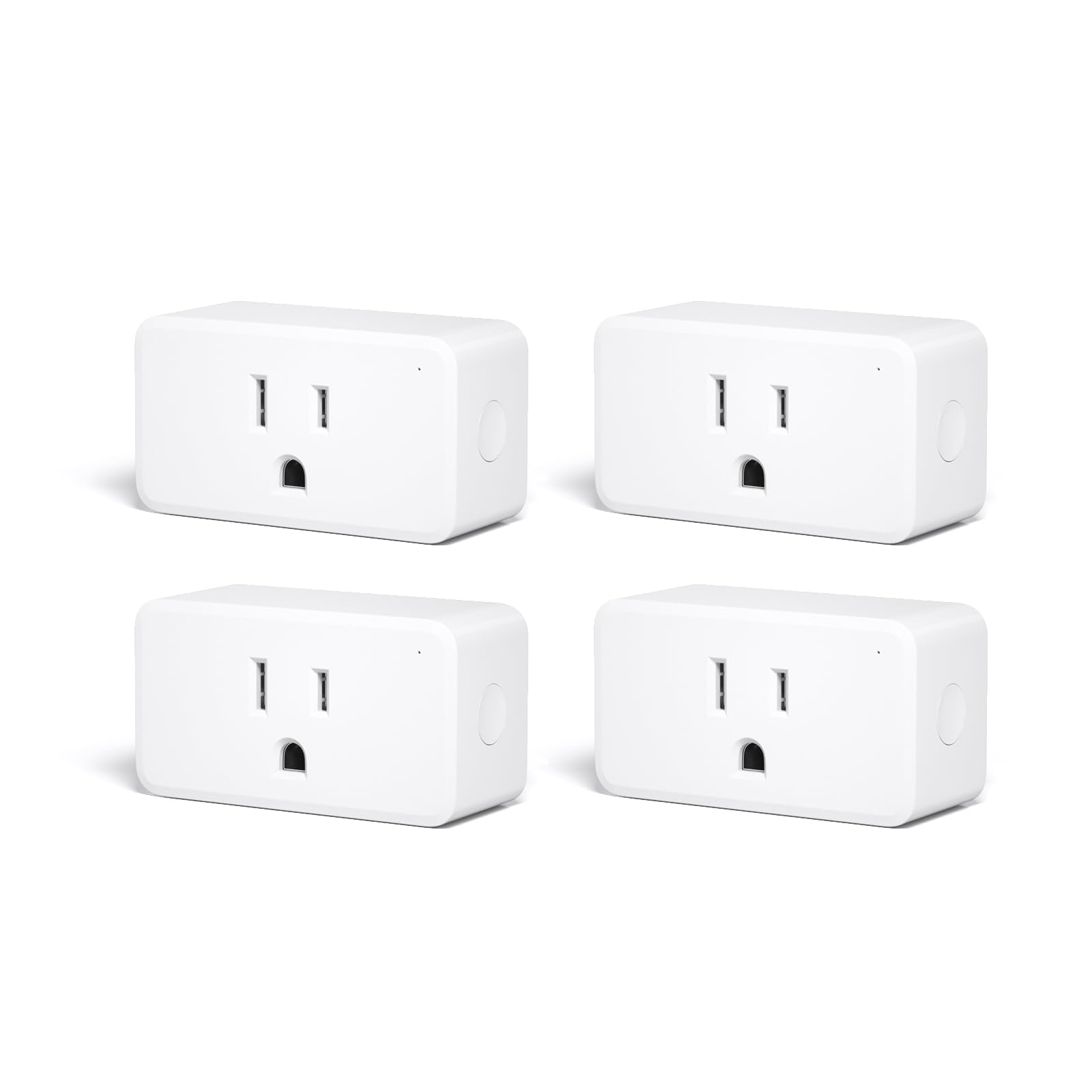
Features and Specifications
Type: Smart plug, Gen3
Pack Size: 4 plugs
Outlet Rating: 15A
Power Monitoring: Precise real-time power meter
Mesh Function: Enhanced Zigbee repeater
Certification: ETL certified
Hub Requirement: Zigbee hub needed
Compatibility: Home Assistant, Echo devices, SmartThings
The headline here is the power meter. Most budget smart plugs only switch power on and off; this one reports what the connected appliance is actually using, in real time, at a level of precision the name calls out specifically. For a buyer running Home Assistant, that turns a plain outlet into a data source — a way to see what a space heater, a window AC unit, a desktop setup, or an older fridge is pulling, and to build automations around those readings.
The second feature is the repeater role. Zigbee is a mesh network, and mains-powered devices like plugs act as routing nodes that strengthen the signal for battery-powered sensors at the edges of a home. Four plugs spread across a house can meaningfully improve coverage for door sensors, motion sensors, and buttons that were previously dropping off. The 15A rating puts it in the same class as a standard wall outlet, so it suits ordinary household loads rather than heavy-duty equipment.
Compatibility is broad but conditional. The plug works with Home Assistant, Echo devices, and SmartThings, which covers most of the popular Zigbee ecosystems. The catch is stated plainly in the name: a Zigbee hub is needed. This is not a Wi-Fi plug that connects straight to a router, and it is not a Bluetooth plug that pairs to a phone. The hub is the foundation, and without one the plugs have nothing to talk to.
Build, Power, and Mesh Role
The Gen3 designation suggests an iteration rather than a first attempt, and the feature set supports that reading. Precise metering is a step up from the coarse on/off reporting common at this price, and the enhanced repeater language points to a radio designed to hold a mesh link reliably rather than merely join one. ETL certification is the safety marker a buyer should look for on anything that sits in a wall outlet continuously, and its presence here is a genuine point in the product’s favor. The physical format is the compact plug body typical of this category, sized to sit in an outlet without dominating it.
Power handling is where the 15A figure matters. That rating covers the ordinary loads a home throws at a plug — lamps, fans, chargers, small kitchen appliances, entertainment gear — and it is the same ceiling a standard receptacle provides. It is not a circuit for a dryer or an EV charger, and no buyer should read it that way. The metering function is the more interesting half: a plug that reports real-time draw lets a household find the device quietly inflating the power bill, or confirm that a space heater is cycling the way it should.
The repeater function changes how a buyer should plan placement. A four-pack is not four identical gadgets to scatter randomly; it is four potential mesh anchors, and the value comes from putting them where the Zigbee network is thin. A plug in a detached garage, a far bedroom, or a basement does more for the mesh than a fourth plug clustered in the living room. Buyers who treat the pack as coverage infrastructure rather than as four independent switches get the most out of it.
Metering Accuracy and What It Is Good For
Real-time metering is the reason to choose this plug over a cheaper switch-only model, and it is worth being clear about what that means in practice. A metered plug reports consumption as it happens, which lets Home Assistant display current draw, log usage over time, and trigger automations when a device crosses a threshold. That is genuinely useful for catching a appliance that never sleeps, for confirming a heater shuts off on schedule, and for building a rough picture of what each circuit in a home costs to run.
The precision claim is the differentiator the product leads with, and it sets expectations: this is a plug for buyers who care about the numbers, not just the switch. Someone who only wants to turn a lamp on by voice will pay for metering they never look at. Someone who wants to know why the electricity bill jumped will find the feature earns its place quickly. The four-pack structure suits the second buyer, because metering gets more informative as more loads are tracked.
There is a practical ceiling to keep in mind. Metering tells a buyer what a device draws; it does not diagnose the device, and it does not replace a whole-home energy monitor for circuit-level analysis. It is a per-outlet instrument, and its value scales with how deliberately the plugs are placed. Buyers who map out which appliances are worth watching before installing will get more from the data than those who plug in whatever is nearby.
Hub Dependency and Setup Reality
The single most important thing to understand before buying is the hub requirement, because it decides whether the purchase works at all. A Zigbee hub — the buyer’s existing Home Assistant Zigbee coordinator, a SmartThings hub, or an Echo device with a built-in Zigbee radio — is the bridge between these plugs and the network. Without one, the plugs are inert hardware. Buyers who already run a Zigbee network will find setup familiar; buyers coming from Wi-Fi plugs may be surprised that there is an extra piece of infrastructure in the chain.
The upside of that dependency is local control. Zigbee devices talk to a local hub rather than routing every command through a cloud service, which is exactly what Home Assistant users want: automations that keep working when the internet does not. The plug’s compatibility list reads like a who’s-who of local-first smart home platforms, and that is not an accident. This is a product aimed at the tinkerer who has already committed to a hub-based setup and wants hardware that respects it.
The four-pack also implies a certain commitment. Buying four plugs at once makes sense for someone wiring up a whole home’s worth of metering and mesh coverage; it makes less sense for someone who wants to try one outlet first. That is a structural quirk of the pack format rather than a flaw in the plug, but it is worth naming, because the entry cost is four units rather than one.
Trade-off: The hub requirement is non-negotiable and the four-pack format forces a bigger commitment than a single-plug trial, so buyers without an existing Zigbee coordinator should budget for one before ordering.
Check the current price of the THIRDREALITY Smart Plug Gen3 4-pack on Amazon.
Who Should Buy It, and Who Should Not
This plug suits the Home Assistant or SmartThings user who already has a Zigbee hub running and wants to add metering and mesh coverage in one purchase. It suits the buyer chasing a mystery power draw, the household extending Zigbee coverage to a far corner of the house, and the tinkerer who wants local control rather than cloud dependency. Four plugs at a budget-tier price make the pack a sensible buy for someone with several outlets worth watching.
It does not suit the buyer who wants a plug that connects directly to Wi-Fi with no hub, the renter who wants to test one outlet before committing to four, or the household that only needs remote on/off and will never open a power graph. Those buyers are paying for metering and mesh routing they will not use. The plug is also not the right tool for heavy appliances; the 15A rating is a standard outlet ceiling, not a high-load allowance.
FAQ
-
Does the THIRDREALITY Smart Plug Gen3 need a hub?
Yes. The product name states a Zigbee hub is needed. It works with Home Assistant, Echo devices, and SmartThings, but a Zigbee coordinator or hub must be present for the plugs to connect. -
What does the real-time power meter actually do?
It reports how much power a connected device is drawing as it runs, rather than only switching the outlet on and off. That data can be displayed, logged, and used to trigger automations in a compatible hub. -
Is the 15A rating enough for a space heater?
The 15A rating matches a standard household outlet, which is the class small appliances are built around. Buyers should check the appliance’s own rating against the outlet’s limit rather than assuming any device will fit. -
Can these plugs extend Zigbee coverage in a large house?
Yes. The plugs are described as enhanced Zigbee repeaters, so mains-powered units route signal for the mesh. Spreading the four plugs to weak-signal areas does more for coverage than clustering them together. -
Will the plugs work with Alexa?
They are listed as compatible with Echo devices, which can act as Zigbee hubs in some configurations. The exact setup depends on the Echo model and the hub in use. -
Do the plugs work without internet?
Zigbee devices communicate with a local hub, which is the appeal for Home Assistant users. Local automations can keep running when the cloud is unavailable, though remote access from outside the home depends on the hub setup. -
Is ETL certification important on a smart plug?
It is a safety certification for electrical products, and it matters on anything plugged in continuously. Its presence on the name is a point buyers should weigh when comparing budget plugs. -
Can one plug be used on its own, or must all four be installed?
The plugs are independent units and can be used one at a time. The four-pack is simply the purchase format, and there is no requirement to install all four at once. -
What kind of devices suit a metered smart plug?
Lamps, fans, chargers, entertainment gear, and small kitchen appliances are the natural fit. Metering is most useful on devices whose runtime or draw is uncertain, such as heaters or older appliances. -
Does the plug report historical usage or only current draw?
The name specifies real-time metering. Long-term history depends on the hub and software recording the readings, which is where Home Assistant and similar platforms add value.
Bottom Line
The THIRDREALITY Smart Plug Gen3 4-pack is a deliberate purchase for a specific buyer: someone with a Zigbee hub already in place who wants precise power metering and better mesh coverage without paying premium prices. The 15A outlet, ETL certification, and broad platform compatibility make it a credible pick, and the four-pack format turns it into a small infrastructure investment rather than a single gadget. Buyers without a hub should look elsewhere; buyers with one will find the metering earns its keep.
