Why there are Amazon links here: Brave Review is paid a commission for qualifying Amazon purchases made through the links below. Your price does not change, and using our links is entirely optional. How this works
Best Backup Power for a Home with a Well Pump
A well pump is one of the hardest loads a home backup system has to carry, because it draws a heavy surge every time it kicks on and it has to run for as long as the house needs water. The five picks below cover the whole range: two fuel generators for whole-home service and long outages, and three battery stations for quiet, fume-free backup that can be recharged from the sun. Fuel-generator buyers will find the most capacity per dollar, while battery buyers get instant power and indoor-safe operation. The overview table below puts the key differences side by side before the individual reviews.
Overview of the Picks
| Product | Key Spec | Best Use | Price Tier |
|---|---|---|---|
| Westinghouse 12500 Watt Dual Fuel Portable Generator | 12,500 W, gas or propane | Whole-home backup on a fuel budget | Mid |
| Jackery HomePower 3600 Plus Power Station | 3,584 Wh, expandable to 21 kWh | Growing battery backup, solar-ready | Premium |
| Jackery HomePower 3000 Portable Power Station | 3,072 Wh, 3,600 W AC output | Compact battery backup for outages | Upper mid |
| BLUETTI Elite 400 Portable Power Station | 3,840 Wh LiFePO4, 2,600 W | Rolling backup with big reserve | Upper mid |
| Westinghouse 14500 Peak Watt Tri-Fuel Generator | 14,500 peak W, gas, propane, or natural gas | Whole-home backup with natural gas | Premium |
Westinghouse 12500 Watt Dual Fuel Home Backup Portable Generator

Type: Portable dual-fuel generator
Rated output: 12,500 watts
Fuel: Gasoline or propane
Starting: Remote electric start
Transfer switch: Ready
Intended use: Home backup
Check price on Amazon: https://www.amazon.com/dp/B07Q1DLKBG/?tag=wdowd-20
This is the workhorse of the group for a well pump plus a house. The dual-fuel design lets a household run on gasoline for maximum output or switch to propane for fuel that stores indefinitely and burns cleaner. Remote electric start means the unit can be brought online from indoors in bad weather, and the transfer-switch-ready wiring is what makes a well pump practical to power at all, since the pump and the rest of the panel need to be isolated from the grid before the generator feeds them.
The 12,500-watt rating is generous enough to run a pump alongside a refrigerator, furnace, and lights, which is the typical outage load for a rural home. It suits buyers who want real whole-home capability without paying for a permanently installed standby system, and it is the pick for households that already have a transfer switch or plan to add one.
Trade-off: A unit of this size is heavy, loud, and needs outdoor placement with clearance from windows, plus stored fuel that has to be rotated.
Jackery HomePower 3600 Plus Power Station

Type: Expandable battery power station
Battery: LFP (lithium iron phosphate)
Capacity: 3,584 Wh, expandable to 21 kWh
AC output: 3,600 watts
Recharge: Solar panel optional
Intended use: Home backup, emergencies, RV
Check price on Amazon: https://www.amazon.com/dp/B0FM8653F1/?tag=wdowd-20
This is the top of the battery side of the list, and the expandability is the reason. The base 3,584 Wh capacity is already enough for a well pump’s run cycles plus core household loads for a stretch, and the system can be built out toward 21 kWh by adding battery modules later. LFP chemistry is the durable choice for a unit that sits idle for months between outages, and the 3,600-watt AC output covers the surge a pump demands at startup.
It suits buyers who want no fuel, no exhaust, and no outdoor siting, and who are willing to pay for a system that grows with the house. Running it indoors or in a garage during a storm is a real advantage over a generator.
Trade-off: The premium price buys flexibility rather than raw output, and reaching the full 21 kWh means buying additional modules that push the total cost well past any generator here.
Jackery HomePower 3000 Portable Power Station
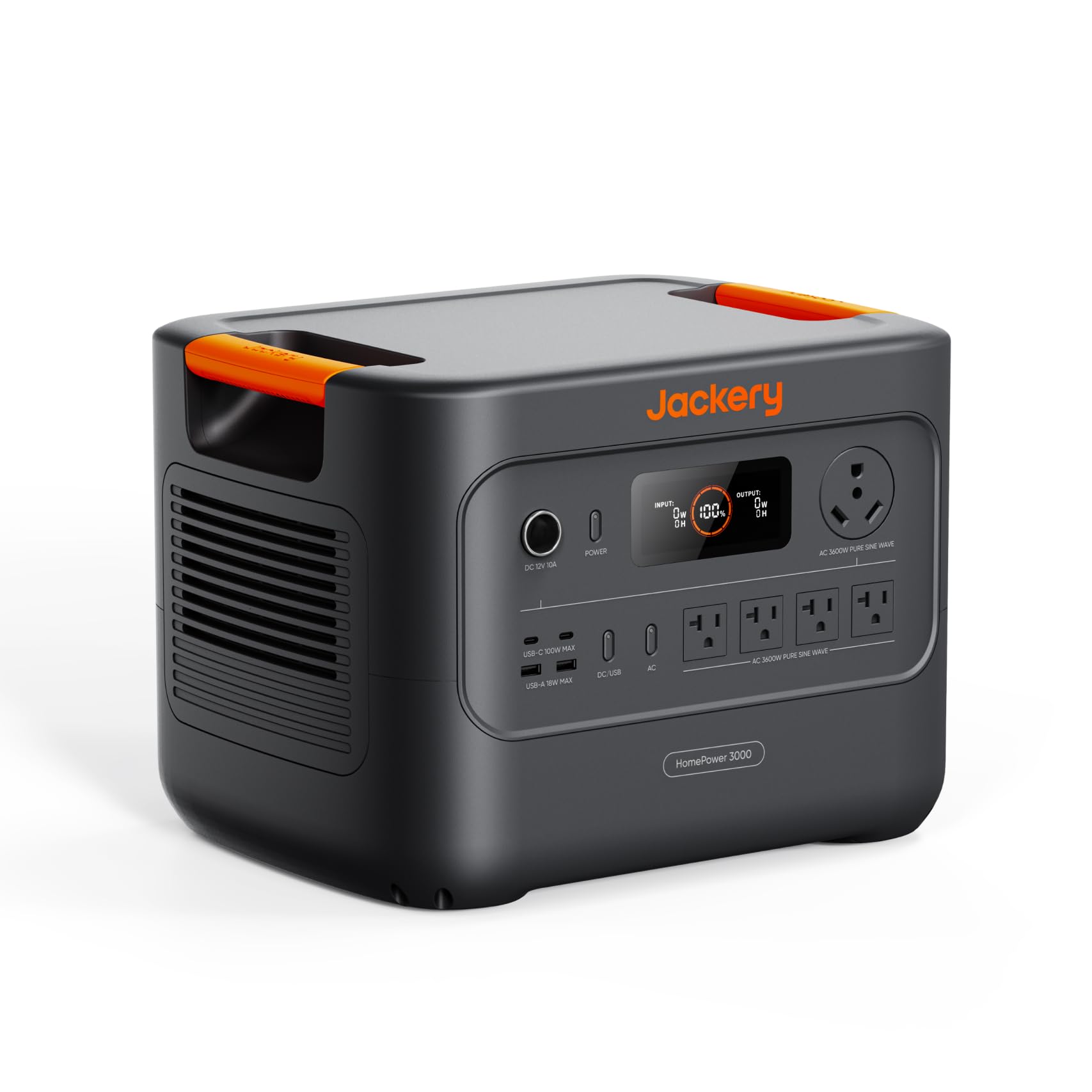
Type: Portable battery power station
Battery: LFP (lithium iron phosphate)
Capacity: 3,072 Wh
Surge output: 7,200 watts
AC output: 3,600 watts
Recharge: Solar panel optional
Intended use: Home backup, power outages
Check price on Amazon: https://www.amazon.com/dp/B0FFSLG3WZ/?tag=wdowd-20
The 7,200-watt surge rating is the headline here, and it matters specifically for pump owners: well pumps draw several times their running wattage for a second or two on startup, and a station that cannot absorb that spike will trip off. The 3,072 Wh LFP battery and 3,600-watt continuous output make this a credible whole-core-load backup for a smaller home, and the optional solar recharge means an outage can be ridden out indefinitely with enough panel capacity.
It fits buyers who want the quiet, indoor-safe operation of a battery station but do not need the expandable capacity of the larger model. The lower price tier makes it the more sensible entry point into battery backup for most households.
Trade-off: Capacity is fixed, so a long outage with heavy pump use will drain it faster than an expandable system, and a solar recharge depends on weather.
BLUETTI Elite 400 Portable Power Station
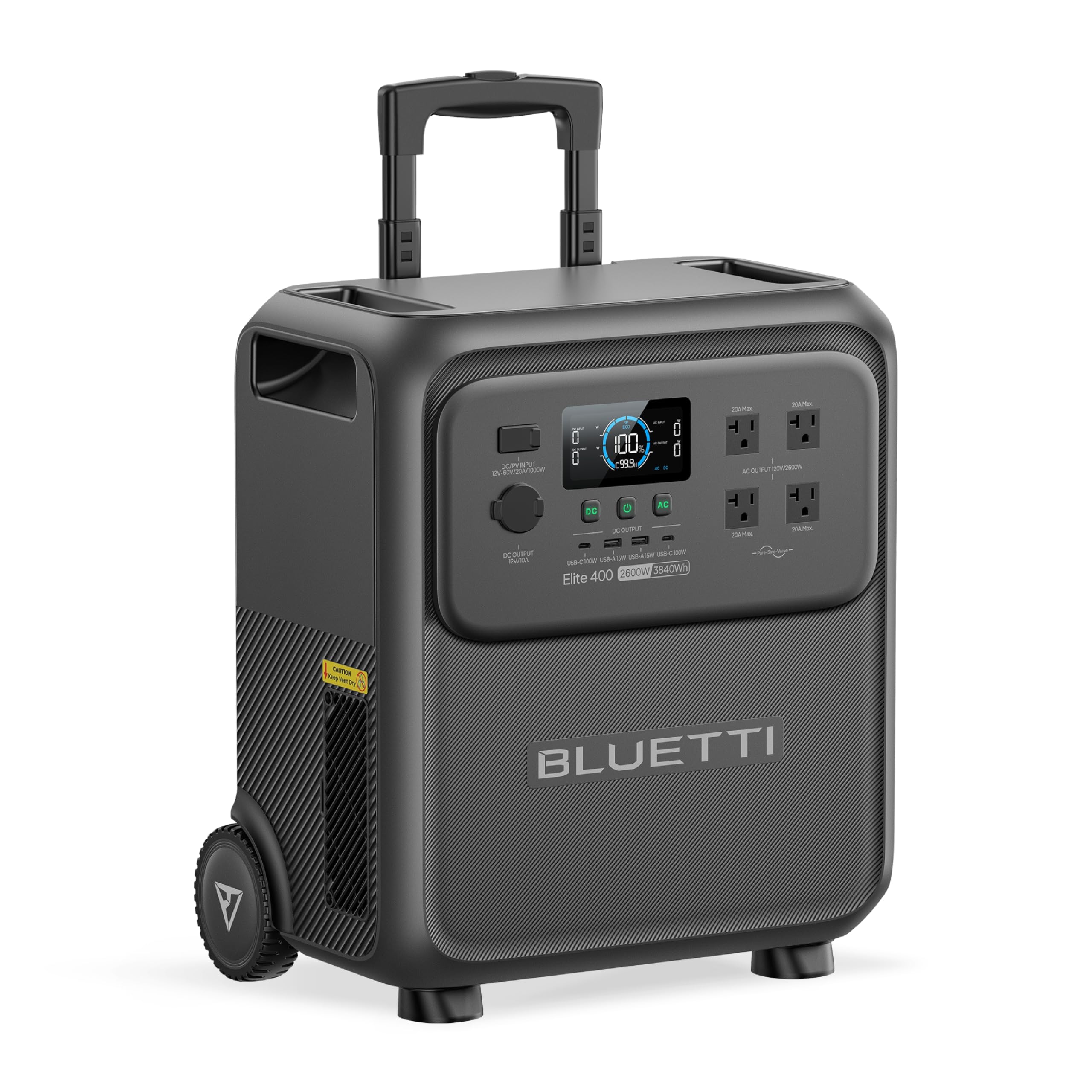
Type: Portable battery power station with wheels
Battery: LiFePO4
Capacity: 3,840 Wh
AC output: 2,600 watts
Surge capability: 3,900 W power lifting
Mobility: Wheels
Intended use: Home backup, power outages, RV life, emergencies
Check price on Amazon: https://www.amazon.com/dp/B0G8Y8DCC1/?tag=wdowd-20
This unit carries the largest battery in the group at 3,840 Wh, and the wheels are a practical touch on a box that heavy. The 2,600-watt continuous output is lower than the Jackery models, but the 3,900-watt power-lifting surge is built for exactly the kind of motor startup a well pump produces. LiFePO4 chemistry gives it a long service life for a unit that mostly sits in storage.
It suits buyers who want maximum stored energy per dollar and need to move the unit between the house, a garage, and an RV. The wheeled chassis makes that realistic in a way a fixed install is not.
Trade-off: The lower continuous wattage leaves less headroom for running a pump and other large appliances at the same time, so load management matters more here than on the higher-output stations.
Westinghouse 14500 Peak Watt Tri-Fuel Home Backup Portable Generator
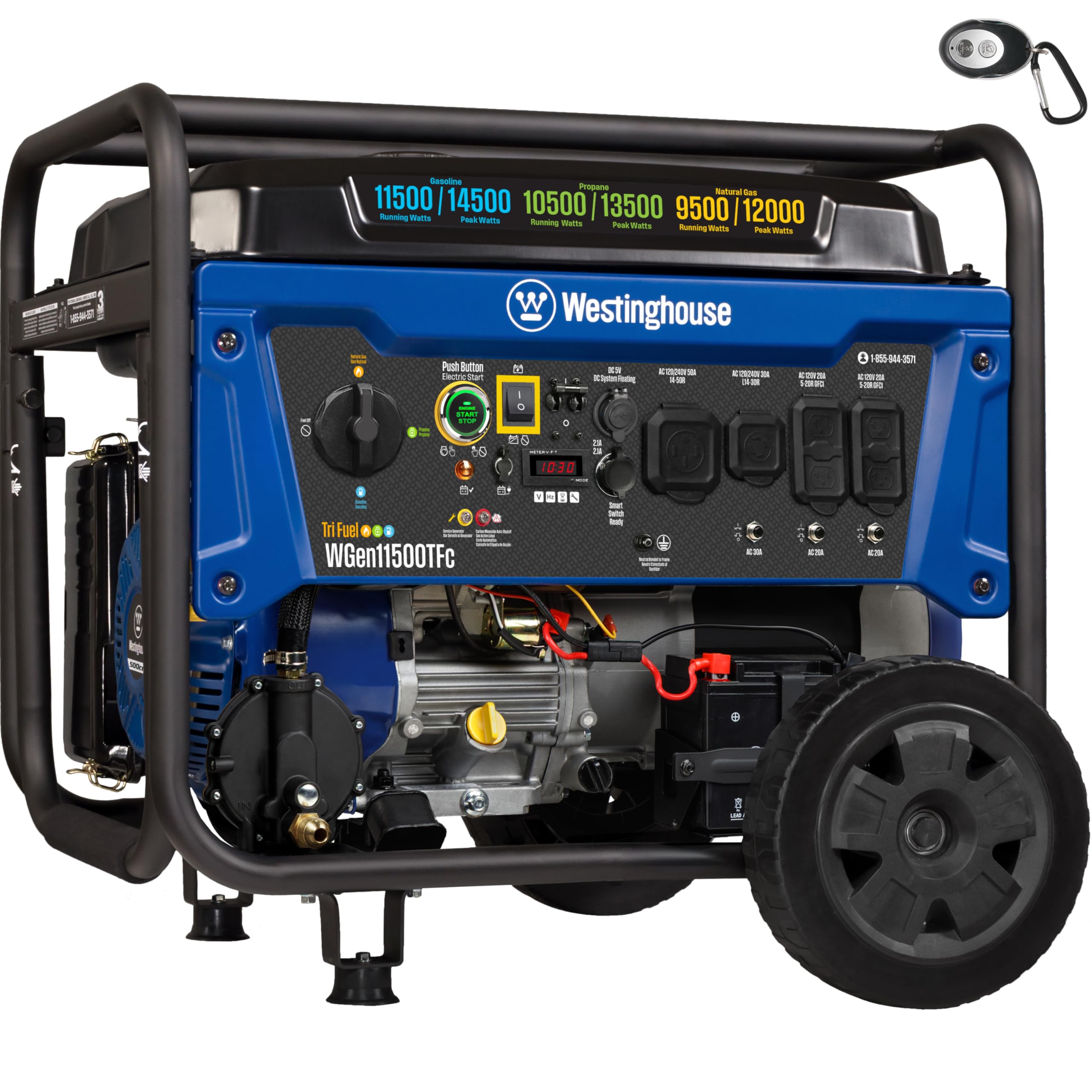
Type: Portable tri-fuel generator
Peak output: 14,500 watts
Fuel: Gasoline, propane, or natural gas
Starting: Remote electric start
Transfer switch: Ready
Intended use: Home backup
Check price on Amazon: https://www.amazon.com/dp/B0CLH9RBYD/?tag=wdowd-20
The tri-fuel option is what separates this from every other pick. A home with a natural gas line can run this generator indefinitely off the utility supply, which removes the fuel-storage problem entirely and makes it the strongest choice for a well-pump household facing multi-day outages. Propane and gasoline remain available as fallbacks, and the 14,500 peak watts handle a large pump, a well house, and a full panel of household loads.
Remote electric start and transfer-switch readiness mean it integrates into a home the same way a standby unit would, without the permanent installation cost. It suits rural buyers on natural gas who want the closest thing to whole-home security a portable can offer.
Trade-off: It is the largest and heaviest unit here, needs a natural gas connection or substantial fuel storage to shine, and still requires outdoor siting and regular exercise to stay reliable.
Before You Buy
- Surge capacity: A well pump draws far more power at startup than while running, so the surge or peak rating matters more than the continuous rating for this use.
- Fuel or battery: Fuel generators offer the most watts per dollar and unlimited runtime with a supply; battery stations are quiet, indoor-safe, and need no fuel but have finite stored energy.
- Transfer switch: A generator feeding a home panel needs a transfer switch to isolate the home from the grid, and this is a code and safety requirement, not an optional extra.
- Placement: Fuel generators must run outdoors with exhaust clearance; battery stations can sit indoors, which changes where the unit can live between outages.
- Recharge plan: Solar panels are optional on the battery stations, so budget for them if an outage is expected to outlast the stored capacity.
- Load management: Not every circuit needs to run at once. Prioritizing the pump, refrigeration, and heat keeps a smaller system viable.
- Maintenance: Generators need oil changes, fuel rotation, and periodic exercise; batteries need occasional top-up charging to stay healthy in storage.
Frequently Asked Questions
- Can a battery power station run a well pump? Yes, provided its surge rating covers the pump’s startup draw. The models here with high surge ratings are the safest match for pump use.
- How long will backup power last during an outage? It depends on pump cycle frequency and household load; a fuel generator runs as long as fuel is supplied, while a battery station lasts according to its stored capacity.
- Is a dual-fuel or tri-fuel generator better for a well pump? Tri-fuel adds natural gas, which allows indefinite runtime without fuel storage, so it is the stronger option where a gas line exists.
- Can these units be connected to a home’s electrical panel? The generators are transfer-switch ready, which is the correct and safe way to feed a panel; battery stations are typically used with dedicated circuits or a transfer setup.
- Do the battery stations need solar panels? Solar panels are optional, but they are the only way to recharge during a grid outage, so they are worth planning for.
- Can a generator run indoors? No. Fuel generators produce carbon monoxide and must run outdoors; battery stations produce no exhaust and can be used indoors.
Bottom Line
For most homes with a well pump, the Westinghouse 12500 Watt Dual Fuel Portable Generator is the best balance of output, fuel flexibility, and price, and it is the pick to start with. Households on natural gas should step up to the tri-fuel Westinghouse for unlimited runtime, while buyers who want quiet, indoor-safe, fuel-free backup should choose the Jackery HomePower 3600 Plus for its expandable capacity.
