Why there are Amazon links here: Brave Review is paid a commission for qualifying Amazon purchases made through the links below. Your price does not change, and using our links is entirely optional. How this works
Aqara Zigbee Presence Sensor FP1E vs ThirdReality Smart Soil Moisture Sensor Gen2: Two Different Jobs, One Zigbee Hub
This is not a close call between rival gadgets — it is a fork in the road. The Aqara FP1E watches a room for human presence using mmWave radar, while the ThirdReality Gen2 watches potted soil for moisture. Both run on Zigbee and both need a hub, but they solve unrelated problems.
The short version: buyers automating lighting, HVAC or occupancy alerts want the Aqara. Buyers keeping houseplants, a garden bed or a greenhouse alive want the ThirdReality three-pack. The comparison below lays out the real differences — power, placement, hub support and cost per device — so the decision takes a minute, not an afternoon.
Aqara Zigbee Presence Sensor FP1E

Type: Wired mmWave radar presence sensor
Hub Requirement: Aqara Zigbee hub
Detection Method: mmWave radar with AI spatial learning
Ecosystems: HomeKit, Alexa, Google Home, Matter over bridge
Power: Wired
Best For: Room-level occupancy automation
The FP1E is a presence sensor, not a motion sensor, and that distinction is the whole pitch. Infrared motion sensors go blind the moment a person sits still; mmWave radar keeps reporting a body in the room even when nobody has moved for twenty minutes. That makes it the right part for "lights off when the room is empty" rules that actually hold.
Aqara’s AI spatial learning is the feature that separates it from cheaper radar units. The sensor builds a map of the space and learns to ignore the ceiling fan, the curtain in the breeze and the robot vacuum, which are exactly the things that trigger false occupancy on a dumb radar. Buyers get fewer phantom lights-on events once the learning period settles.
The wired power is a genuine constraint rather than a spec-sheet footnote. There is no battery here, so the sensor needs a USB power source and a cable run at the mounting spot — fine above a desk or on a shelf with an outlet nearby, awkward on a bare ceiling. Buyers planning a hallway or closet install should check the outlet situation before ordering.
Trade-off: Wired power and the mandatory Aqara hub add cost and installation friction that a battery motion sensor avoids, and the radar is overkill for a room where simple on/off motion is enough.
Check the current price on Amazon
ThirdReality Smart Soil Moisture Sensor Gen2 3Pack
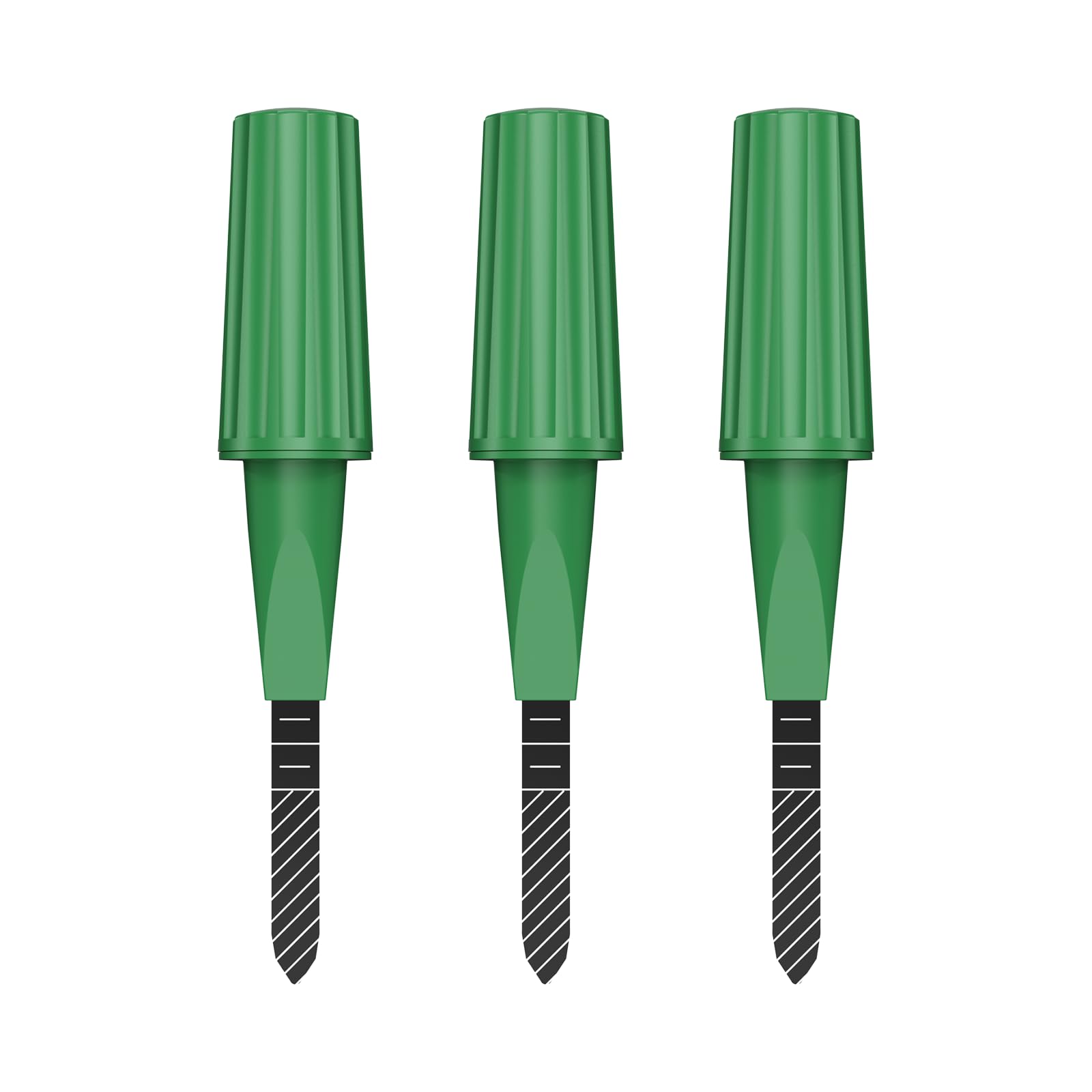
Type: Capacitive soil moisture sensor, three-pack
Hub Requirement: Zigbee hub
Sensing Method: Capacitive moisture monitoring
Signal: Enhanced signal stability
Platforms: Hubitat, SmartThings, Home Assistant, Homey
Best For: Plant and garden watering automation
Capacitive sensing is the correct technology for soil moisture, and ThirdReality leads with it for good reason. Resistive probes corrode in damp soil within a season; capacitive plates read moisture without exposed electrodes breaking down, so the sensor keeps working after months buried in a pot.
The three-pack is the practical unit here. One sensor tells a buyer about one plant; three let them cover a windowsill, a raised bed and a greenhouse shelf, or spread them across the thirstiest plants in a collection. Enhanced signal stability matters more than it sounds — soil and ceramic pots are hostile to radio, and a Zigbee device that drops off the mesh is a device that never waters anything.
Platform support is where this sensor earns its place. Hubitat, SmartThings, Home Assistant and Homey are the four ecosystems serious home-automation users actually build on, and ThirdReality names them directly rather than burying compatibility in a manual. Buyers already running one of those hubs can pair the sensors and build moisture-threshold automations without a proprietary bridge.
Trade-off: The pack only makes sense for buyers with three or more plants to monitor, and each sensor still needs a Zigbee hub and a battery-friendly install spot — a single houseplant owner pays for two sensors they will never use.
Check the current price on Amazon
Side-by-Side Specifications
| Attribute | Aqara FP1E | ThirdReality Gen2 3Pack |
|---|---|---|
| Type | Zigbee presence sensor | Zigbee soil moisture sensor |
| Hub Requirement | Aqara Zigbee hub | Zigbee hub |
| Sensing Method | mmWave radar, AI spatial learning | Capacitive moisture monitoring |
| Power Source | Wired | Not battery-free — hub-powered Zigbee device |
| Ecosystem Support | HomeKit, Alexa, Google Home, Matter over bridge | Hubitat, SmartThings, Home Assistant, Homey |
| Pack Size | Single unit | Three sensors |
| Best Use | Room occupancy automation | Plant and garden watering |
| Price Tier | Mid-range single device | Budget per-sensor, multi-pack |
What Actually Separates Them
The first difference is the job. The Aqara answers "is someone in this room?" and the ThirdReality answers "does this plant need water?" No automation goal makes one a substitute for the other, so a buyer comparing them is really deciding which project to start first.
The second is the hub. The FP1E needs an Aqara Zigbee hub specifically — an Aqara-branded bridge, not just any Zigbee coordinator — which makes it a poor fit for a household already standardized on another brand. The ThirdReality sensors work with a generic Zigbee hub and name four platforms outright, so they slot into an existing Home Assistant or SmartThings setup with less friction.
The third is power and placement. The Aqara is wired and wants a permanent outlet near the mount; the ThirdReality sensors go where plants go, which is usually wherever the light is. Buyers with no outlet near the ceiling should weight that heavily against the FP1E.
The fourth is cost structure. The Aqara is one premium sensor for one room. The ThirdReality pack spreads its cost across three sensors, so the per-plant price is far lower — but only if the buyer has three plants that need watching.
Which Should You Buy?
Choose the Aqara FP1E if the goal is occupancy-driven automation in a specific room — lights, heating or a security alert that stays accurate when someone is sitting still — and there is an Aqara hub in the house or a willingness to add one.
Choose the ThirdReality Gen2 3Pack if the goal is keeping plants alive with moisture-triggered watering, the house already runs Hubitat, SmartThings, Home Assistant or Homey, and there are at least three plants worth monitoring.
Buyers who want both should start with whichever project is already half-built. The sensor that fits an existing hub and an existing automation is the one that gets used.
FAQ
-
Do both devices need a Zigbee hub? Yes. The Aqara FP1E requires an Aqara Zigbee hub specifically, while the ThirdReality sensors need a Zigbee hub and list Hubitat, SmartThings, Home Assistant and Homey as compatible platforms.
-
Can the Aqara FP1E detect plants or soil moisture? No. It is a presence sensor built around mmWave radar and AI spatial learning, designed to detect people in a room, not environmental conditions.
-
Can the ThirdReality sensors tell if a person is in the room? No. They monitor capacitive soil moisture for garden and plant care and do not function as occupancy or motion sensors.
-
Is the Aqara FP1E battery powered? No. It is a wired sensor, so it needs a power source at the mounting location.
-
How many sensors come in the ThirdReality pack? Three. The Gen2 listing is a 3Pack, which suits buyers monitoring several plants rather than one.
-
Which one works with HomeKit? The Aqara FP1E supports HomeKit, Alexa and Google Home, plus Matter over a bridge. The ThirdReality sensors are aimed at Hubitat, SmartThings, Home Assistant and Homey instead.
-
Which is better for a beginner? It depends on the project. A buyer automating a room needs the Aqara hub and a wired mount; a buyer watering plants needs a compatible Zigbee hub and soil to bury the probes in. Neither is plug-and-play without a hub.
Bottom Line
These two devices do not compete — they split the Zigbee category into presence sensing and plant care. For room-level occupancy automation with still-body accuracy, the Aqara Zigbee Presence Sensor FP1E is the pick, provided an Aqara hub and an outlet are already in place. For keeping three or more plants watered on a schedule that responds to actual soil conditions, the ThirdReality Smart Soil Moisture Sensor Gen2 3Pack is the better value per sensor and the easier fit for a Home Assistant or SmartThings household.
