Why there are Amazon links here: Brave Review is paid a commission for qualifying Amazon purchases made through the links below. Your price does not change, and using our links is entirely optional. How this works
Best Quiet Tower Fan for Sleeping for a Cooler, Calmer Night
A fan that runs all night has to do two jobs at once: move enough air to keep a bedroom comfortable, and stay quiet enough to disappear into the background. This roundup covers five tower and table fans built around low-noise operation, ranging from a compact desk model to a full-height floor fan with adjustable height. Light sleepers, hot sleepers and anyone shopping for a small bedroom will find a match below. The overview table gives the short version, and each review explains who the pick suits and where it falls short.
The Picks at a Glance
| Product | Key Spec | Best Use | Price Tier |
|---|---|---|---|
| DREO 2026 Upgraded DC Motor Tower Fan | 28 ft/s velocity, 8 speeds, 4 modes | Best all-round bedroom fan | Mid-range |
| DREO Quiet Standing Fan (Black) | 28 ft/s velocity, 9 speeds, 12H timer | Best for large bedrooms | Upper mid-range |
| DR.PREPARE Tower Fan | 25 dB, 8 speeds, 16-inch desk size | Best budget pick | Budget |
| Levoit Tower Fan | 28 dB, 5 speeds, adjustable height | Best for shared bedrooms | Mid-range |
| Honeywell QuietSet Personal Table Fan | 4 power levels, oscillating | Best for nightstands | Budget |
1. DREO 2026 Upgraded DC Motor Tower Fan

Motor: DC
Oscillation: 90°
Modes: 4
Speeds: 8
Velocity: 28 ft/s
Remote: Included
The DC motor is the headline here, and it matters for sleepers: DC motors generally run smoother and draw less power than AC equivalents, which is why this model can offer eight speeds instead of the usual three. The bladeless tower housing keeps the airflow broad rather than a hard jet, and the 90° oscillation sweeps the room instead of parking on one spot. A remote is included, so speed and mode changes can happen from bed without fumbling in the dark.
Four modes give a sleeper more than just on and off, and the eight-speed ladder means a very low setting is available for the hours after midnight. The white finish and slim tower footprint suit a corner or bedside wall. This is the pick for a buyer who wants one fan to cover the whole bedroom without paying the top price in the category.
Trade-off: The bladeless tower design limits how much air reaches a bed on the far side of a large room, so very big bedrooms may want a second unit.
2. DREO Quiet Standing Fan (Black)

Motor: Upgraded DC
Oscillation: 90°
Modes: 4
Speeds: 9
Velocity: 28 ft/s
Timer: 12 hours
This is the larger sibling in the DREO lineup, and the extra speed step and long timer are what separate it from the white model above. Nine speeds give finer control over the low end, which is exactly where a sleeping fan spends most of its life. The 12-hour timer covers a full night and then some, so the fan can shut itself off after the room has cooled. The black tower housing disappears against dark furniture and reads less obtrusive in a dim bedroom.
The 90° oscillation and four modes carry over, and the DC motor keeps power draw modest for overnight running. Buyers with a bigger bed or a warmer room get more headroom from the higher speed ceiling. It is the pick for someone who wants the same formula as the first entry with a little more capacity.
Trade-off: The extra power and features push the price up, and a small bedroom will not use the top speeds that justify the premium.
3. DR.PREPARE Tower Fan

Noise Rating: 25 dB
Motor: DC
Oscillation: 80°
Speeds: 8
Timer: 1–8 hours
Size: 16-inch portable desk model
The 25 dB figure is the lowest noise claim in this group, and it is paired with a compact 16-inch desk footprint that fits on a nightstand or dresser. The DC motor and eight speeds give a genuine low setting for the middle of the night, and the 80° oscillation is slightly narrower than the floor models, which suits a fan placed close to the bed. A remote and an adjustable 1–8 hour timer round out the overnight features.
This is the budget entry, and the smaller housing is the reason. It suits a nightstand setup, a small bedroom or a home office where a full tower would be overkill. Buyers who want a quiet fan for sleeping without spending much will find the essentials here: low noise, fine speed control and a timer.
Trade-off: The compact desk size moves less air than a floor tower, so it works best close to the sleeper rather than across a large room.
4. Levoit Tower Fan
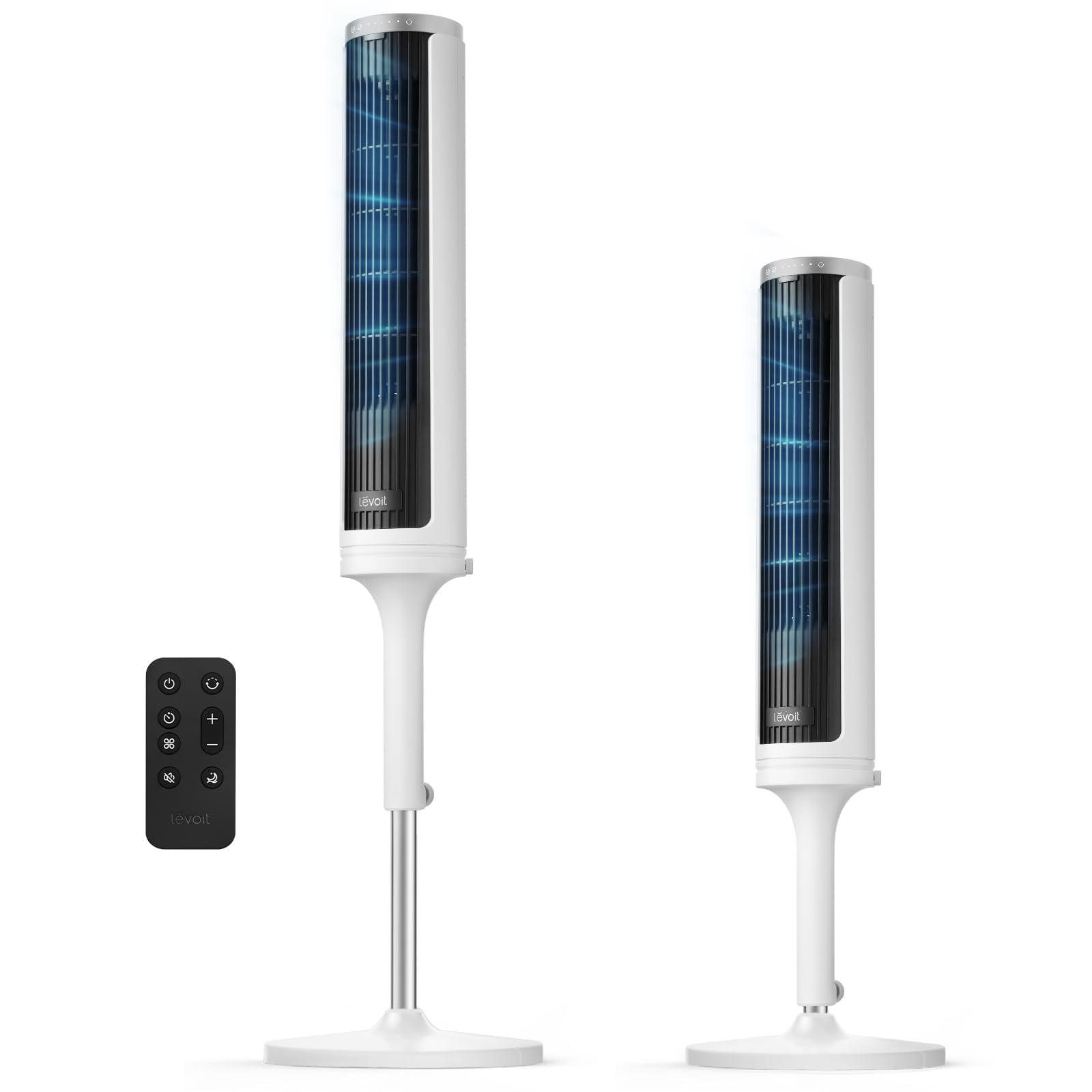
Noise Rating: 28 dB
Velocity: 23 ft/s
Oscillation: 90°
Speeds: 5
Modes: 4
Timer: 12 hours
Height: 36–47 inches, adjustable
The adjustable height is the standout feature here: the tower extends from 36 to 47 inches, which lets a buyer line the airflow up with the height of the mattress rather than blowing at the frame. The 28 dB rating and five speeds keep the noise floor low, and the 12-hour timer plus remote cover the overnight routine. Four modes and 90° oscillation round out the controls.
The 23 ft/s velocity is lower than the DREO models, which is a deliberate trade: a gentler, broader stream rather than a hard push. That suits a shared bedroom where one sleeper wants air and the other wants quiet. It is the pick for a buyer who cares more about placement flexibility and a soft stream than raw power.
Trade-off: The lower velocity means the fan needs to sit closer to the bed to feel effective, so very large rooms will notice the difference.
5. Honeywell QuietSet Personal Table Fan
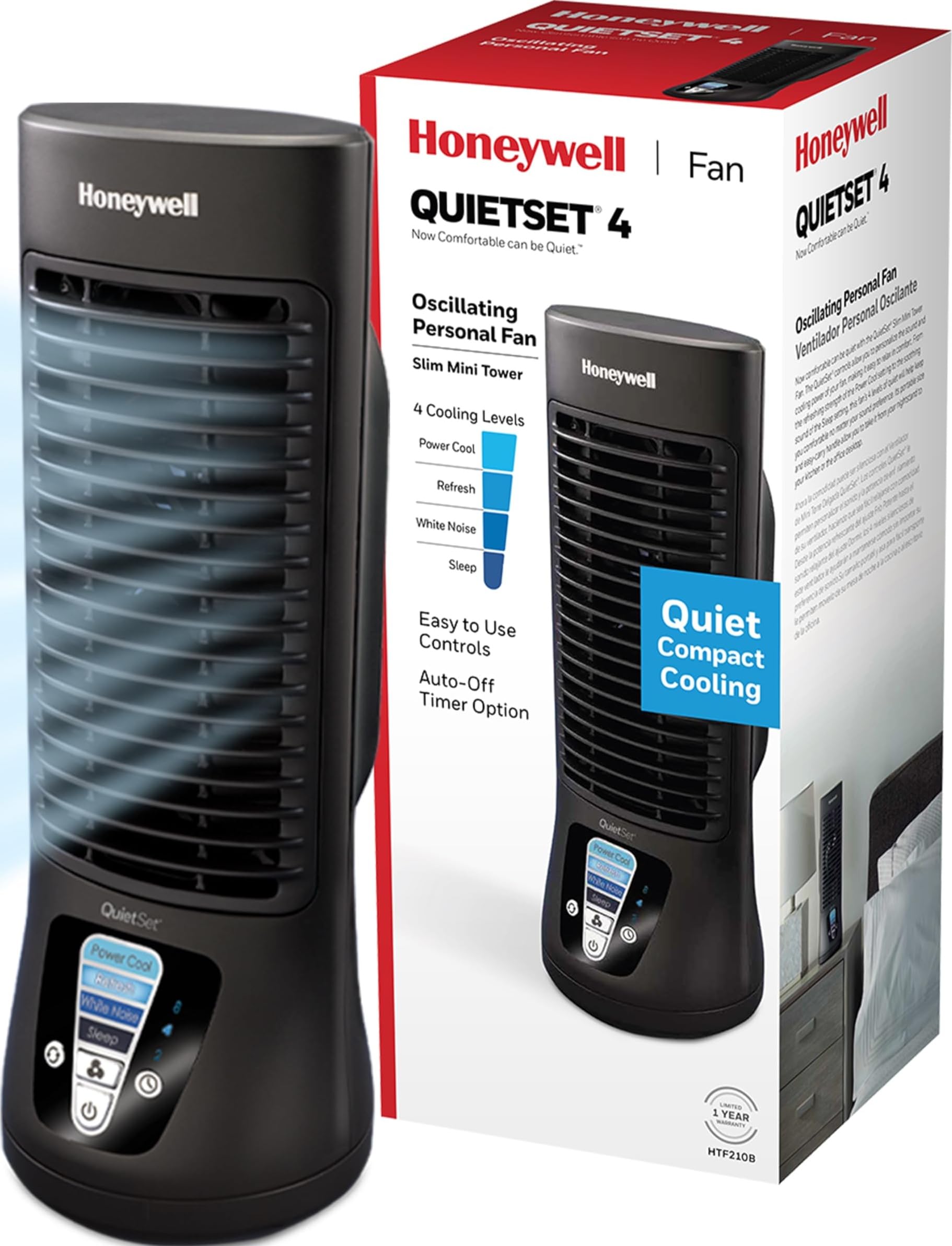
Type: Personal table fan
Power Levels: 4
Oscillation: Yes
Noise Control: QuietSet levels
Color: Black
Model: HTF210B
The QuietSet line is built around stepped sound levels rather than raw airflow, and this personal table model is the smallest and cheapest way into it. Four power levels let a sleeper pick a setting that matches the room’s background noise, and the oscillation spreads air across a nightstand or desk. The black housing is compact enough to sit beside a pillow without crowding the surface.
This is the pick for someone who wants air directly on them and nothing more — a bedside fan for a small sleeper, a guest room or a desk. It is not a whole-room solution, and the price reflects that. Buyers who need to cool an entire bedroom should look at the tower models above.
Trade-off: The personal size covers a small area only, and the four-level control is coarser than the multi-speed towers.
Before You Buy
- Noise rating: A dB figure is a lab measure, not a bedroom measure — treat it as a comparison tool between models, not a promise.
- Speed count: More speeds matter at the low end; a fan with eight or nine steps can sit quieter than one with three.
- Timer: An overnight timer lets the fan shut off after the room cools, which saves power and avoids a chilly early morning.
- Size and placement: Desk fans need to sit close to the sleeper; tower fans work across a room but take up floor space.
- Oscillation angle: A wider sweep covers more of the room but spends less time pointing at the bed.
- Remote: A remote is worth having for a bedroom fan, since adjusting settings in the dark is otherwise a chore.
Frequently Asked Questions
- How quiet is quiet enough for sleeping? A fan rated in the mid-to-high 20s dB is generally described as whisper-quiet, but the real test is whether the lowest setting fades into background noise in a bedroom.
- Is a bladeless tower fan quieter than a bladed fan? Bladeless tower designs tend to produce a smoother, broader airflow with less mechanical chop, which many sleepers find easier to ignore.
- Should a bedroom fan run all night? Running overnight is normal; a timer lets the fan stop after a set number of hours so the room does not get too cold by morning.
- Where should a quiet tower fan go in a bedroom? A corner or wall placement with the oscillation sweeping across the bed works well; a desk fan should sit within arm’s reach of the pillow.
- Does a DC motor matter for noise? DC motors generally run smoother and offer finer speed control than AC motors, which helps at the low settings a sleeper uses.
- Can a tower fan replace an air conditioner? No — a fan moves air and helps with perceived cooling, but it does not lower room temperature the way an AC unit does.
Bottom Line
For most bedrooms, the DREO 2026 Upgraded DC Motor Tower Fan is the best quiet tower fan for sleeping: eight speeds, a DC motor, 90° oscillation and a remote at a mid-range price. Buyers with a larger room should step up to the black DREO for its ninth speed and 12-hour timer, while a nightstand setup is better served by the compact DR.PREPARE or the Honeywell QuietSet.
