Why there are Amazon links here: Brave Review is paid a commission for qualifying Amazon purchases made through the links below. Your price does not change, and using our links is entirely optional. How this works
Best Starting Current Solutions for Pumps and Motors
High starting current is the reason a well pump trips a breaker, a table saw dims the shop lights, or a generator stalls on startup. The five devices here tackle that inrush from different angles: soft starters that ramp voltage up gradually, and magnetic starters that switch the load cleanly with proper overload protection. The picks suit three buyer types — well owners on generator or limited service, woodworkers and metalworkers with single-phase shop machines, and anyone wiring a pump or compressor who wants a proper push-button start instead of a bare breaker. The overview below sorts them by job in under a minute.
Overview of the Picks
| Product | Key Spec | Best Use | Price Tier |
|---|---|---|---|
| Soft Start Relay for Table Saw, Disk Saw, Grooving Machines | 2.7 kW, 110V, 25A, 60Hz, externally mounted | Shop power tools on 110V circuits | Budget |
| BAOMAIN Magnetic Starter Switch HUEB-16K | AC 110V, 12.5A–18A, 3-pole, enclosed | Small motors, pumps, compressors with push-button control | Budget |
| Well Pump Protection Box with AC Contactor and Float Switch | 1/2–2 HP, 208/240 VAC | Well pumps and fans needing float-switch start/stop | Mid-range |
| Magnetic Electric Motor Starter, 220/240V | 5.5 kW, 20–32A, 7.5 HP, single phase | Large single-phase motors and compressors | Mid-range |
| SoftStart Water Well Pump Soft Starter, ETL Listed | ETL Listed, generator ready | Deep well pumps on generator or weak service | Premium |
Soft Start Relay for Table Saw, Disk Saw, Grooving Machines, Angle Grinders, Cutting Machines
Type: Externally mounted soft start module
Rated Power: 2.7 kW
Voltage: 110V
Current: 25A
Frequency: 60Hz
Mounting: External

This module sits between the wall and a single 110V power tool, ramping the motor up instead of slamming it with full line current. That ramp is what stops a table saw or grinder from dimming the lights or tripping a shared 15A circuit on startup. The external housing means it mounts outside the tool, so it can be moved between machines rather than committed to one. It is aimed at home woodworkers and fabricators running 110V equipment in a garage or small shop where the breaker panel is already loaded. The 25A rating covers most benchtop and contractor-grade saws and grinders, though not large stationary machines.
This pick earns its place as the cheapest way to tame inrush on 110V tools without rewiring the shop. It suits the buyer who has one or two problem machines and wants a plug-in-style fix. The catch is that a module rated for a 2.7 kW tool will not carry a bigger motor, and an external box adds one more connection point to keep dry and secure.
Trade-off: The 25A ceiling rules out most 220V and high-horsepower shop equipment, so this is a 110V-only solution.
Enclosed AC 110V Starter with ON/OFF Push Buttons for Controlling Motors, Pumps & Compressors BAOMAIN Magnetic Starter Switch HUEB-16K
Type: Enclosed magnetic starter switch
Voltage: AC 110V
Current Range: 12.5A–18A
Poles: 3-pole
Controls: ON/OFF push buttons
Mounting: Enclosed housing
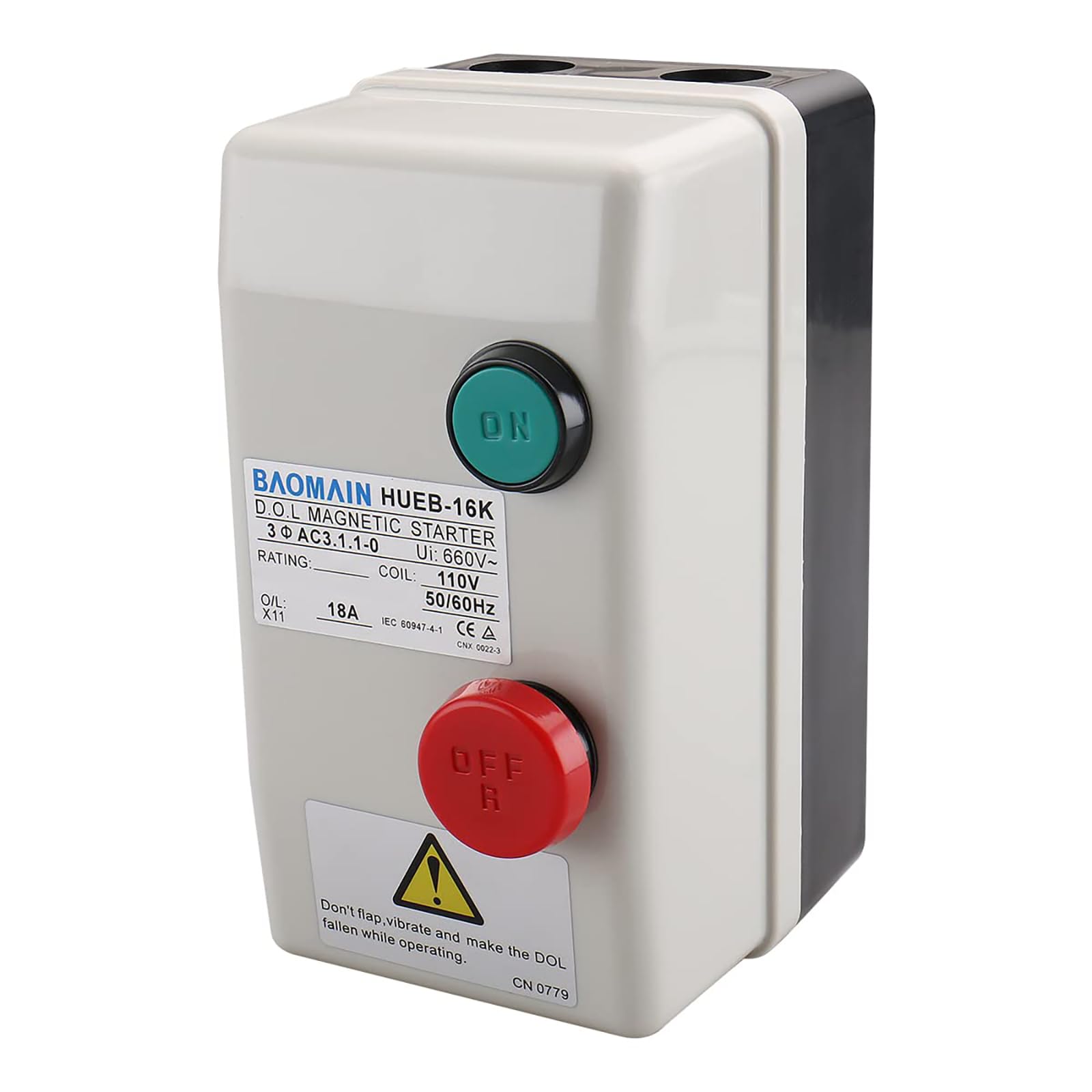
This is a proper motor starter rather than a plain switch: a magnetic contactor drops the load if power is lost, so a pump or compressor will not restart by itself when the line comes back. The three-pole design handles 110V single-phase work and gives the option of switching a neutral or a second circuit. The 12.5A–18A range fits small to medium motors — a typical shallow well pump, a small air compressor, or a bench machine. The enclosed housing and front push buttons make it a clean install on a wall next to the equipment, no separate control box needed.
It suits the buyer replacing a bare toggle switch or breaker-fed cord who wants stop/start control and no-restart safety. The adjustable current range is the reason it made the list: it can be dialed to the actual motor rather than guessed. The limitation is that 18A tops out well below larger single-phase motors, and the 110V coil means it is not a fit for 220V circuits.
Trade-off: The 18A upper limit and 110V coil exclude most 220V well pumps and larger compressors.
1/2-2 HP, 208/240 VAC Well Pump Protection Box with AC Contactor and Float Switch Start/Stop Device
Type: Pump protection box with contactor
Horsepower Range: 1/2–2 HP
Voltage: 208/240 VAC
Controls: Float switch start/stop
Intended Use: Motors, water pumps, fans

This box combines a contactor with float-switch control, so a well pump or fan runs only when the float calls for it and the contactor carries the switching load instead of the float itself. That arrangement is what protects a pump from short-cycling and keeps the high starting current off a small float switch. The 208/240 VAC rating and 1/2–2 HP range cover the common residential deep-well pump sizes. It is built for the buyer wiring a pressure or storage tank system who wants automatic start/stop with a contactor doing the heavy lifting.
The pick suits rural homeowners and anyone setting up a cistern, booster, or livestock watering system where a float controls the pump. Its place on the list comes from combining control and contactor in one enclosure, which simplifies the install. The caution is that it is a control and switching device, not a soft starter — it does not ramp current, so a generator-sized circuit still needs headroom for inrush.
Trade-off: It switches the pump on and off but does nothing to reduce starting current, so inrush remains full.
Magnetic Electric Motor Starter – 220/240V 5.5KW 20-32AMP – 7.5 HP Single Phase Magnetic Starter for Motors (Button Switch)
Type: Magnetic motor starter with button switch
Voltage: 220/240V
Power: 5.5 kW
Current Range: 20–32A
Horsepower: 7.5 HP
Phase: Single phase

This is the high-capacity option for 220/240V single-phase equipment: a 7.5 HP magnetic starter with an adjustable 20–32A range and front push buttons. It handles the big draws — a large air compressor, a heavy shop machine, or a farm-duty motor — that smaller starters cannot carry. The magnetic contactor provides no-restart protection after an outage, and the button switch gives proper local control. The adjustable trip range lets the installer match protection to the motor’s nameplate rather than accept a fixed setting.
It suits the buyer with a serious 240V single-phase motor who needs a starter rated well above the hobby tier. The 20–32A window is the reason it made the list: it covers motors that fall between small enclosed starters and full industrial gear. The caution is that a magnetic starter still applies full voltage at contact closure, so it manages and protects the circuit but does not soften the inrush itself.
Trade-off: At this power level the starter carries the current but does not reduce it, so wiring and breaker sizing must handle full starting draw.
SoftStart Water Well Pump Soft Starter, ETL Listed, Generator Ready
Type: Well pump soft starter
Listing: ETL Listed
Feature: Generator ready
Intended Use: Water well pumps
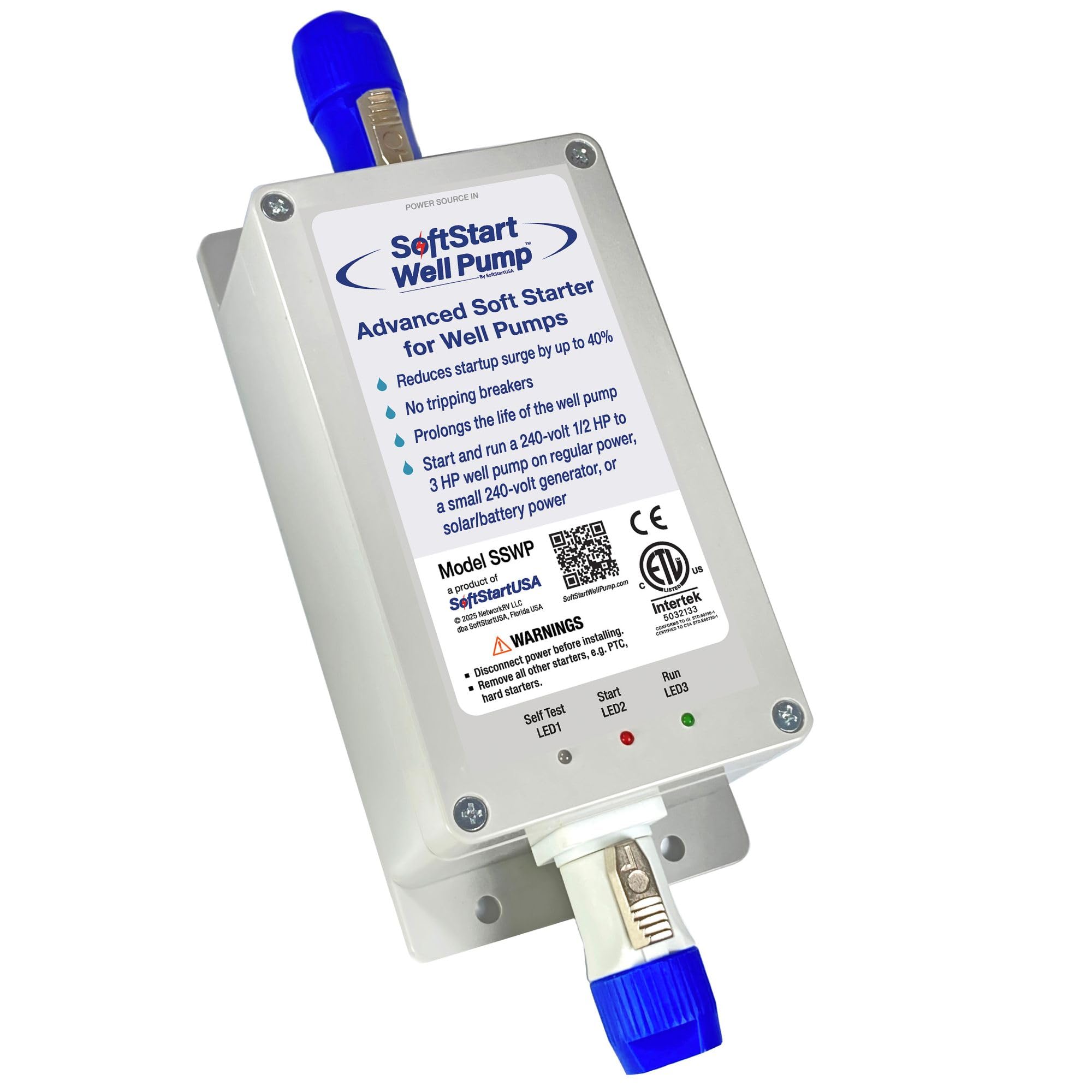
SoftStart Water Well Pump Soft Starter, ETL Listed, Generator Ready
This is the pick built specifically for the starting-current problem on well pumps: it ramps the motor up so the inrush spike shrinks, which is exactly what lets a pump run from a generator or a marginal service. The ETL listing is the notable detail, since it means the unit has been tested to a recognized safety standard rather than sold as an unlisted module. "Generator ready" describes the intended use case — a pump that previously stalled a generator can start on a smaller one with the ramp in place. It mounts at the pump’s electrical box and works with the pressure switch’s start/stop cycle.
It suits well owners on backup power, off-grid households, and anyone whose pump trips a breaker or browns out the house on startup. It earns the top spot because it addresses starting current directly on the appliance that suffers most from it. The caution is the premium tier: a listed, purpose-built soft starter costs more than a generic module, and it is specific to pump duty rather than shop tools.
Trade-off: The premium price and pump-specific design make it a poor value for anyone who needs to soften a saw or compressor instead.
Before You Buy
- Voltage match: Confirm the device’s voltage (110V, 208/240V, or 220/240V) matches the circuit before ordering; a mismatch is the most common return reason.
- Current and horsepower range: Size the starter to the motor’s nameplate amps or horsepower, and stay inside the stated range rather than at its edge.
- Soft start versus magnetic start: A soft starter reduces inrush; a magnetic starter switches and protects but applies full voltage — decide which problem needs solving.
- Generator headroom: A soft starter lowers the starting surge, but the generator still needs to carry the running load plus a margin.
- Enclosure and location: Choose an enclosed unit for wall mounting near the equipment, and keep external modules dry and secure.
- Control type: Push buttons suit manual start/stop; float switches suit automatic tank and cistern control.
- Listing and inspection: An ETL-listed device is easier to justify to an inspector than an unlisted module.
Frequently Asked Questions
-
What is starting current, and why does it matter for pumps and motors? When a motor starts, it briefly draws several times its running current. That surge is what trips breakers, dims lights, and stalls generators. Reducing or managing it is the whole point of the devices here.
-
Does a magnetic starter reduce starting current? No. A magnetic starter switches the motor and provides overload and no-restart protection, but it applies full voltage at contact closure. Only a soft starter ramps the current.
-
Can a soft starter let a well pump run on a smaller generator? Often yes. By ramping the motor up, the soft starter cuts the startup spike, which is the load a generator struggles with. The generator still needs to handle the pump’s running watts with margin.
-
Which pick suits a 110V table saw or grinder? The externally mounted soft start relay is the direct fit — it is rated for 110V, 25A, and 2.7 kW shop tools.
-
What size starter does a 240V single-phase motor need? Match the starter’s current range to the motor nameplate. The 20–32A, 7.5 HP unit covers larger single-phase motors; the 1/2–2 HP box covers residential well pump sizes.
-
Is an ETL listing important? It indicates the device was tested to a recognized safety standard, which matters for insurance and inspection on a permanent pump installation.
Bottom Line
For the core problem — high starting current on a pump or motor — the SoftStart Water Well Pump Soft Starter is the strongest pick: it is ETL listed, built for generator service, and attacks inrush directly rather than just switching around it. Buyers with 110V shop tools should take the budget soft start relay, while anyone wiring a 240V motor who mainly needs safe start/stop control can save money with one of the magnetic starters. Check the current price on the SoftStart well pump unit before sizing anything else.
