Why there are Amazon links here: Brave Review is paid a commission for qualifying Amazon purchases made through the links below. Your price does not change, and using our links is entirely optional. How this works
Best Solar Panel for a Shed Roof for Off-Grid Power
A shed roof is a small, awkward, often shaded surface, so the best solar panel for a shed roof is usually a compact, high-efficiency module rather than a big residential panel. This roundup covers five options, from a complete kit with a charge controller to bare high-output panels. It suits shed owners running lights and a trickle charger, DIYers building a small off-grid system, and anyone upgrading a workshop setup. The overview table below shows each pick’s key spec, best use and price tier at a glance.
Overview of the Picks
| Product | Key Spec | Best Use | Price Tier |
|---|---|---|---|
| ECO-WORTHY 200W Kit | 200W monocrystalline + 30A PWM controller | Complete first-time shed setup | Budget |
| HQST 400W (2 x 200W) | 400W total, N-Type, IP65 | Maximum output on a larger roof | Mid-range |
| Renogy 640W (2 x 320W) | 640W total, N-Type, IP68 | Big sheds and outbuildings | Premium |
| Renogy 200W Compact | 200W, smaller and lighter build | Tight roofs and vans | Mid-range |
| 200W Monocrystalline Panel | 200W, 18BB, N-Type | Lowest-cost single panel | Budget |
ECO-WORTHY 200 Watts 12V/24V Solar Panel Kit

Power Output: 200 watts
Cell Type: Monocrystalline
System Voltage: 12V / 24V
Included Controller: 30A PWM charge controller
Intended Use: RV, camper, vehicle, caravan, off-grid
ECO-WORTHY 200 Watts 12 Volt/24 Volt Solar Panel Kit
This is the pick for a shed owner who wants everything in one box. The kit pairs a 200W monocrystalline panel with a 30A PWM charge controller, so the buyer gets the two core pieces of an off-grid system without hunting for a matching controller. The 12V/24V compatibility means it can grow with a small battery bank. It is aimed at RV and caravan owners, but a shed running lights, a fan or a battery maintainer is squarely in its comfort zone.
The trade-off is the PWM controller, which is the simpler and less efficient controller type; a buyer chasing every last watt from the panel would do better with an MPPT unit bought separately. Buyers who want a plug-and-play starter kit rather than maximum harvest will find it fits the job. Check the current price on Amazon.
Trade-off: The bundled PWM controller is basic, so the kit leaves some panel output on the table compared with a separate MPPT setup.
HQST 400W Solar Panel, 2 x 200W
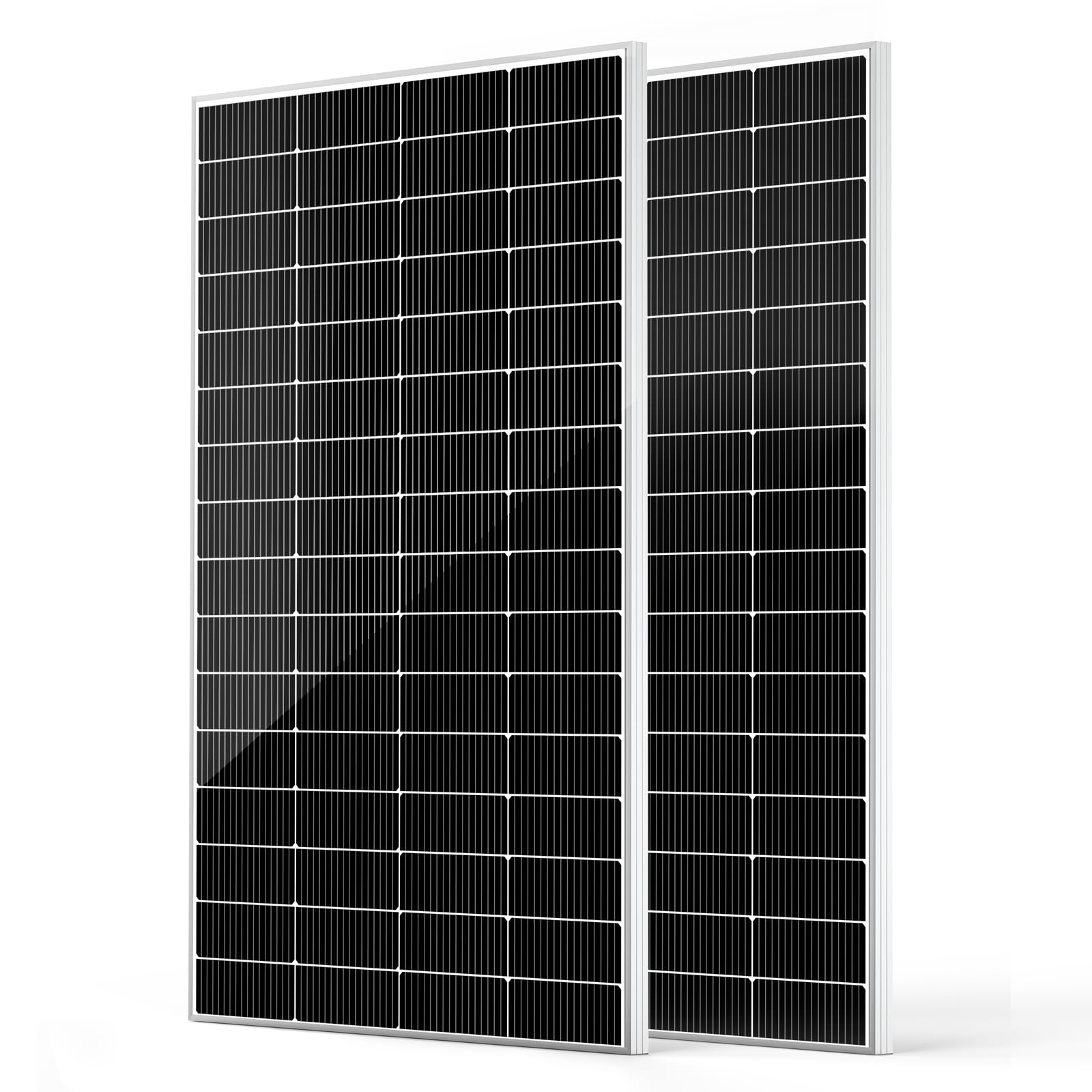
Total Output: 400 watts (2 x 200W)
Cell Type: N-Type, Grade A+, 16BB
Efficiency: Up to 25.4%
Dimensions: 46.3 x 30.1 x 1.2 inches
Weather Rating: IP65
Intended Use: RV, trailer, marine, rooftop, off-grid
HQST 400W Solar Panel, 2 x 200W
Two 200W N-Type panels give this set double the harvest of a single-panel pick, and the 16BB cell layout with up to 25.4% efficiency is a genuinely modern specification. The IP65 rating covers dust and water spray, which is adequate for a shed roof. HQST also calls out low-light performance, a real consideration for a shed tucked among trees or shaded by a house. The pair suits a larger shed roof that can take two modules side by side.
The caution here is size and count: two panels need roughly twice the mounting area and twice the mounting hardware, and a small shed roof may not have the room. Buyers also need to budget for a controller, since none is included. It rewards anyone with the roof space to use both panels properly. See the listing on Amazon.
Trade-off: No charge controller is included and the pair demands a generous, unshaded roof area, so it is a poor fit for small or shaded sheds.
Renogy Solar Panels 640 Watt, 2 x 320W

Total Output: 640 watts (2 x 320W)
Cell Type: N-Type, 18BB
Efficiency: 25%
Weather Rating: IP68
Intended Use: Homes, rooftops, farms, yards, sheds, off-grid
Renogy Solar Panels 640 Watt, 2 x 320W
This is the heavy hitter of the group. Two 320W N-Type panels with 18BB construction and 25% efficiency deliver the most power here, and the IP68 rating is the strongest weather sealing on the list — useful on an exposed shed roof that takes driven rain. Renogy explicitly lists sheds among the intended uses, and the pair is built for permanent rooftop and off-grid installations. It suits a large workshop shed running tools, lighting and a battery bank.
The obvious caution is price and scale: this is the premium pick, and 640W of panel needs a substantial roof, a matching controller and a battery system sized to absorb it. A buyer with a small garden shed and modest needs would be overbuying. It is the right call only when the shed’s power demand justifies the investment. Check availability on Amazon.
Trade-off: The highest cost and largest footprint on the list make it overkill for a small shed with light loads.
Renogy 200W Solar Panel for RV, Upgraded Smaller and Lighter

Power Output: 200 watts
Cell Type: N-Type, 16BB
Efficiency: 25%
Weather Rating: IP67
Intended Use: RV, van, marine, boat, trailer, roof
Renogy 200W Solar Panel for RV, Upgraded Smaller and Lighter
Renogy’s compact 200W panel is built around a smaller, lighter footprint than a standard module of the same output, which is exactly what a cramped shed roof needs. The N-Type cells with 16BB construction and 25% efficiency keep the harvest high despite the reduced size, and the IP67 rating handles rain and dust. It is aimed at vans, boats and trailers, but the space-saving design translates directly to a narrow shed roof with limited room. This is the most popular pick in the group, which fits its broad appeal.
The trade-off is that a compact panel achieves its size savings through denser, costlier cell construction, so the price per watt runs higher than a plain budget panel. Buyers with plenty of roof space could spend less elsewhere. For a tight roof where every inch counts, though, the smaller design is the whole point. View the price on Amazon.
Trade-off: The space-saving design carries a higher cost per watt than a conventional panel of the same output.
200 Watt Solar Panel, 18BB N-Type Monocrystalline
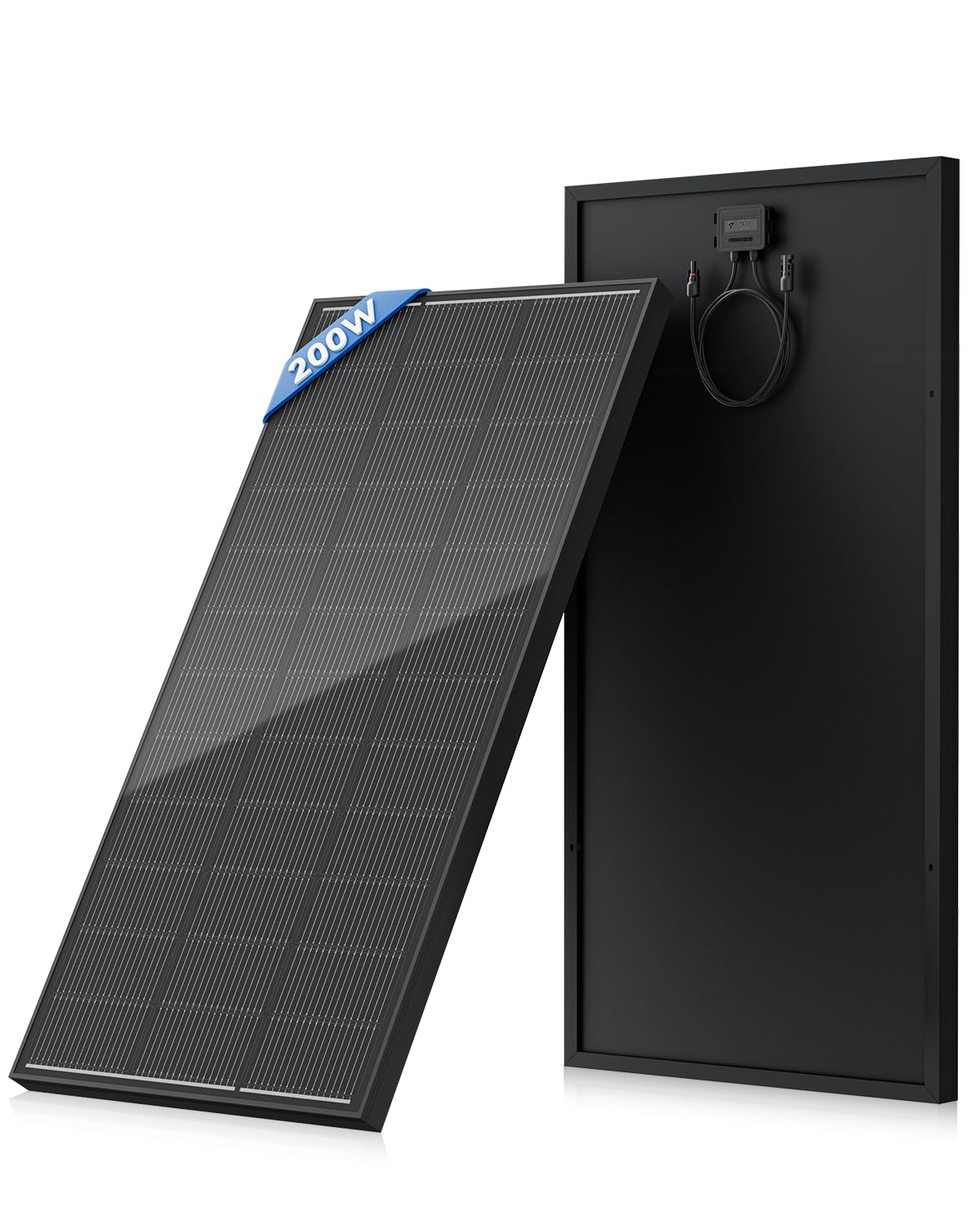
Power Output: 200 watts
Cell Type: N-Type, 18BB
Efficiency: 25%
System Voltage: 12V
Intended Use: Rooftop, RV, farm, trailer, marine, home off-grid
200 Watt Solar Panel, 18BB, N-Type
The lowest-priced pick is a bare 200W monocrystalline module with 18BB N-Type cells and 25% efficiency — the same modern cell technology as the pricier panels, at a fraction of the cost. It is a 12V panel, so it pairs naturally with a small 12V battery and a modest controller for a shed lighting or charging setup. No controller or mounting hardware is included, which is how the price stays this low. It suits a budget-conscious buyer who already knows what supporting gear is needed.
The caution is the missing extras and the unknowns that come with a low price point: the buyer supplies the controller, cabling and mounts, and should confirm the panel’s physical dimensions before ordering. Buyers who want a single, simple purchase should look at the kit above instead. For a DIYer assembling a shed system piece by piece, it is the value play. Check today’s price on Amazon.
Trade-off: A panel-only listing with no controller or mounts means the true installed cost is higher than the sticker price suggests.
Before You Buy
- Roof size: Measure the usable, unshaded area first; two-panel sets need roughly double the footprint of a single module.
- Shading: A shed often sits behind a house or under trees, and even partial shade hurts output, so favor panels with low-light performance claims.
- Controller: Kits may include a PWM controller, but panels bought alone need a separate controller sized to the array.
- Mounting: Z-brackets, rails and roof-safe fasteners are rarely included and must be budgeted for.
- Weather rating: An IP65 or higher rating matters on an exposed shed roof that takes wind-driven rain.
- System voltage: Confirm whether the panel is 12V, 24V or compatible with both before matching it to a battery.
- Battery and wiring: The panel is only one part of the system; battery capacity and cable gauge decide how well it performs.
Frequently Asked Questions
-
How many watts does a shed roof need?
A single 200W panel covers lights, a fan and battery charging; 400W or more suits tools and heavier daily use. -
Can a solar panel be mounted on a shed roof?
Yes, provided the roof structure can take the weight and the panel is fixed with proper brackets and sealed fasteners. -
Is a kit or a bare panel better for a shed?
A kit with a controller is simpler for beginners, while a bare panel is cheaper for buyers who already own the supporting gear. -
Do these panels work in shade?
Output drops in shade, but N-Type cells with low-light claims perform better than older cell types under partial cover. -
What else is needed to complete a shed solar setup?
A charge controller, a battery, cabling, fuses and mounting hardware are typically required. -
Can two panels be combined on one shed?
Yes, panels of the same type and output can be wired together, provided the controller is rated for the combined power.
Bottom Line
For most shed owners the ECO-WORTHY 200W kit is the best solar panel for a shed roof because it bundles a capable monocrystalline panel with a charge controller at a budget price, removing the guesswork from a first off-grid build. Buyers with a large, unshaded roof and bigger power demands should step up to the Renogy 640W pair, while anyone short on roof space gets the most from Renogy’s compact 200W panel. Check the ECO-WORTHY kit price on Amazon.