Why there are Amazon links here: Brave Review is paid a commission for qualifying Amazon purchases made through the links below. Your price does not change, and using our links is entirely optional. How this works
Best Portable Smart Home Hub for a Smarter, Simpler Setup
The best portable smart home hub depends on which ecosystem already runs the household. Alexa users want a wall-mountable control panel, Matter adopters want a compact bridge, and tinkerers want a hub that speaks every protocol. This roundup covers five hubs that suit renters, first-time smart home builders, and advanced automators who need something small enough to move between rooms or apartments. The overview table below puts the key differences side by side before the individual reviews.
Overview of the Picks
| Product | Key Spec | Best Use | Price Tier |
|---|---|---|---|
| Amazon Echo Hub | 8-inch customizable control panel with Alexa+ | Wall-mounted Alexa control | Mid-range |
| Aeotec Smart Home Hub2 – V4 | Zigbee and Matter gateway, no Z-Wave | SmartThings and Matter setups | Mid-range |
| Linkind Matter Smart Hub 2 | 2.4GHz Wi-Fi, up to 200 outdoor lights | Budget Matter lighting control | Budget |
| Aqara Smart Home Hub M3 | Thread border router with Zigbee, Bluetooth, PoE | Multi-protocol advanced automation | Mid-range |
| Home Assistant Green | Official Home Assistant hardware | Local, private automation | Premium |
Amazon Echo Hub
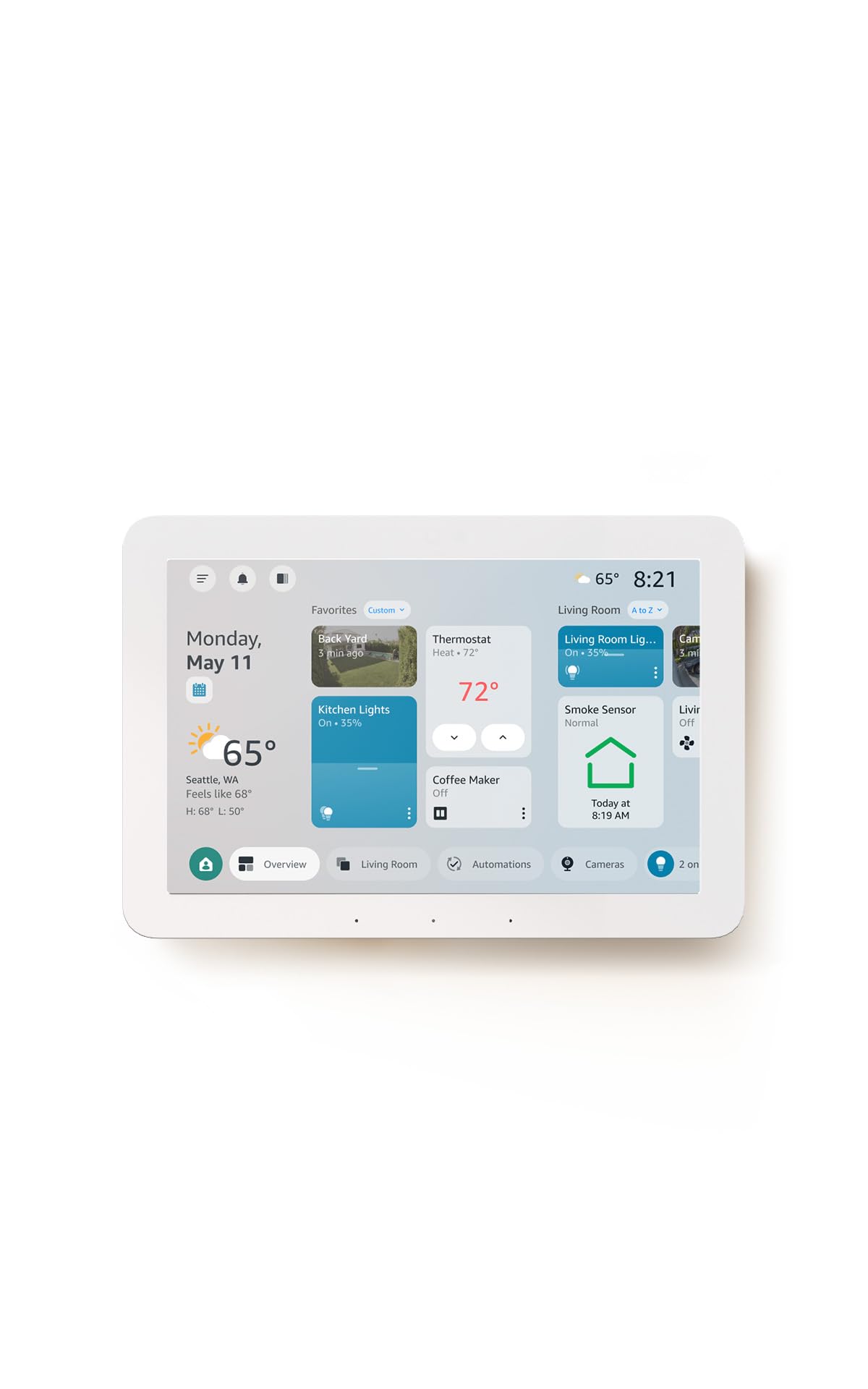
Display: 8-inch touchscreen
Ecosystem: Alexa+ with customizable controls
Compatibility: Thousands of devices
Mounting: Wall-mountable design
Type: Smart home control panel
Best For: Alexa households wanting a central dashboard
This is a control panel rather than a protocol bridge, built around an 8-inch screen that mounts on a wall and shows tiles for lights, locks, cameras, and thermostats. The redesigned interface leans on Alexa+ and customizable controls, so a household can arrange the dashboard around the devices it actually uses. It works with thousands of devices, which makes it a natural fit for homes already invested in Alexa speakers and plugs. The panel format means control lives in one fixed spot instead of on a phone that gets carried away.
The Echo Hub suits Alexa loyalists who want a permanent dashboard by the door or in the kitchen, and it earns its place because the screen makes daily control faster than voice alone. It is a poor match for anyone outside the Alexa ecosystem or for a renter who cannot mount hardware on a wall.
Trade-off: The wall-mount design and Alexa-first software limit usefulness for households committed to Google, Apple, or local-only automation.
Aeotec Smart Home Hub2 – V4
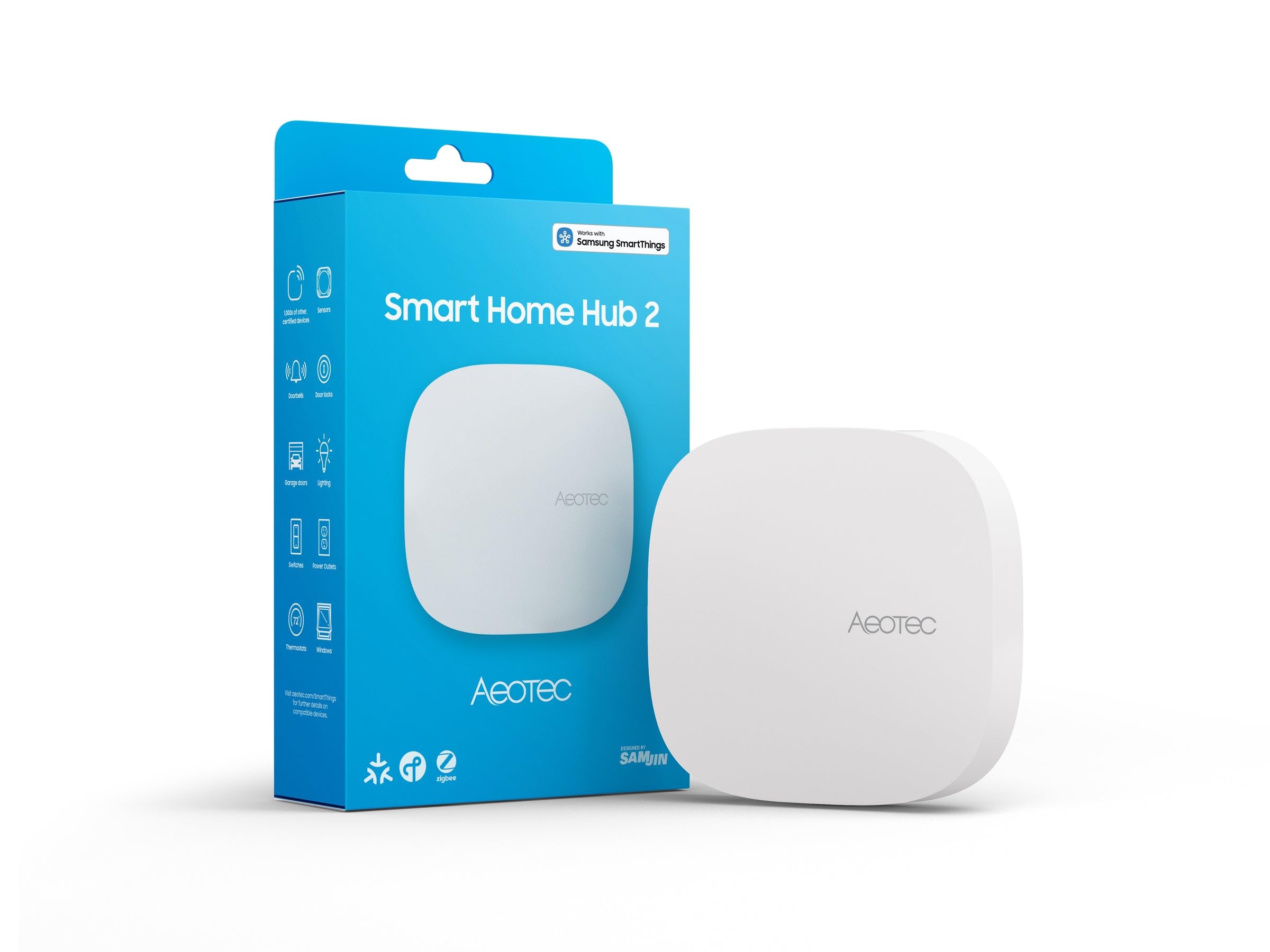
Type: SmartThings-compatible hub
Protocols: Zigbee, Matter gateway
Z-Wave: Not included
Voice Compatibility: Alexa, Google Assistant
Connectivity: Wi-Fi
Best For: SmartThings users and Matter adopters
This compact hub runs as a SmartThings hub and bridges Zigbee devices alongside Matter, giving a household one box for sensors, bulbs, and newer Matter gear. It works with Alexa and Google Assistant for voice control and connects over Wi-Fi, so placement only needs a power outlet and a decent signal. The small footprint makes it easy to tuck on a shelf or move between rooms. It is a sensible middle path for buyers who want a real hub without paying premium prices.
The Aeotec suits SmartThings households and Matter newcomers building out sensors and switches, and it earns its place as the most balanced protocol pick here. Buyers with older Z-Wave locks or sensors should look elsewhere, since this version leaves Z-Wave out.
Trade-off: The missing Z-Wave radio rules out a large installed base of older locks and sensors.
Linkind Matter Smart Hub 2
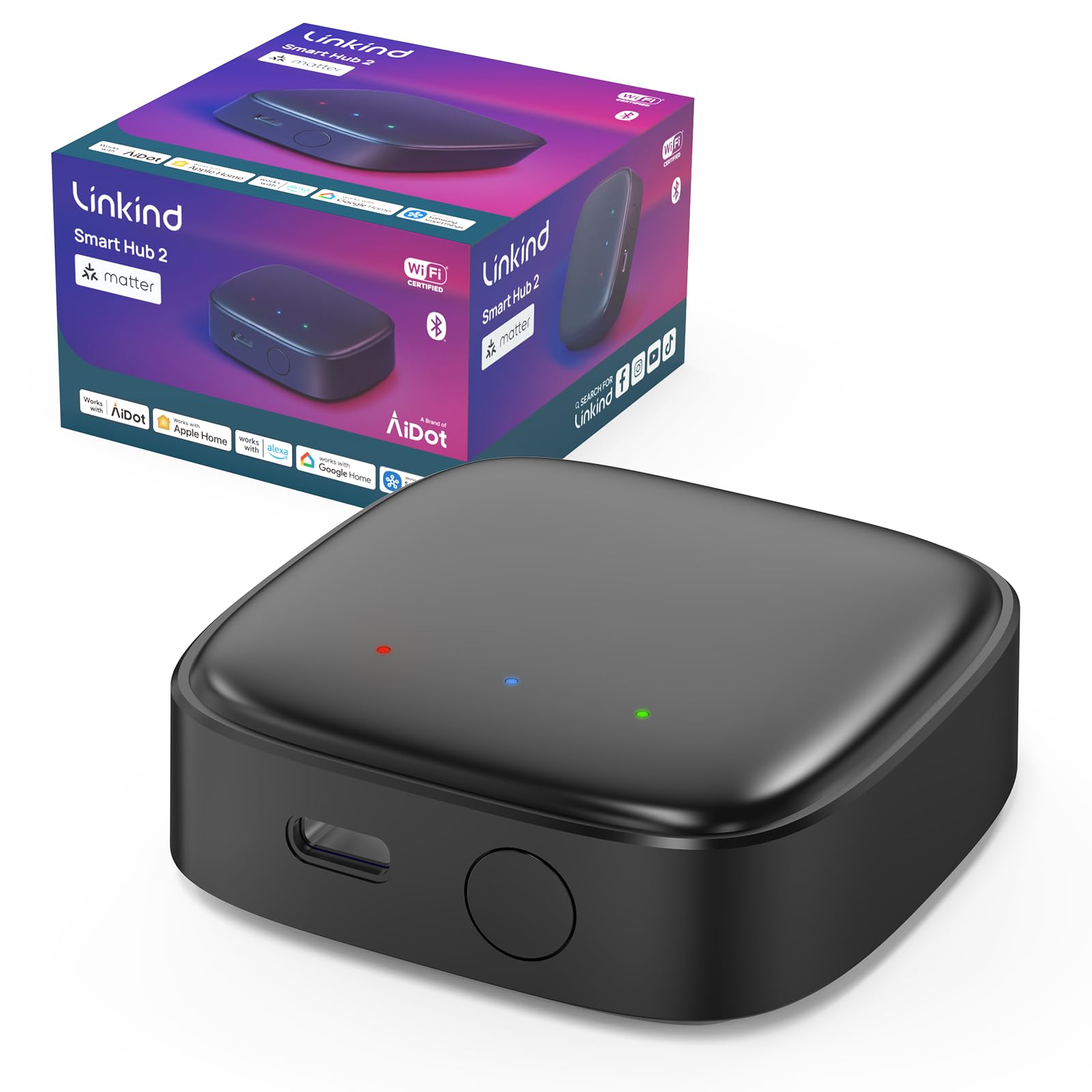
Ecosystems: Alexa, Google Home, Apple Home, SmartThings
Device Capacity: Up to 200 outdoor lights
Connectivity: 2.4GHz Wi-Fi
Features: Smart schedule, real-time battery and energy tracking
Type: Matter hub for lighting
Best For: Budget outdoor lighting control
This is the budget entry, a small Matter hub aimed squarely at outdoor lighting. It connects up to 200 outdoor lights and works across Alexa, Google Home, Apple Home, and SmartThings, which is unusual flexibility at this price. Smart scheduling and real-time battery and energy tracking round out the feature set, and the 2.4GHz Wi-Fi link keeps installation simple. For a household lighting up a yard or patio, it covers the basics without a big outlay.
The Linkind suits budget-conscious buyers automating outdoor lights across mixed ecosystems, and it earns its place as the cheapest way into Matter. It is not the pick for someone who needs a general-purpose hub for sensors, locks, and complex automation.
Trade-off: The lighting-first focus and Wi-Fi-only link make it a narrow tool rather than a whole-home hub.
Aqara Smart Home Hub M3

Type: Thread border router and Matter controller
Protocols: Zigbee, Bluetooth, Wi-Fi, PoE, IR
Ecosystems: Apple HomeKit, Alexa, SmartThings, Home Assistant
Feature: Advanced automation
Best For: Multi-protocol advanced automation
The M3 is the protocol Swiss Army knife of the group, combining a Thread border router with Zigbee, Bluetooth, Wi-Fi, PoE, and infrared control in one compact unit. It supports Apple HomeKit, Alexa, SmartThings, and Home Assistant, so it slots into almost any setup and can act as a Matter controller. PoE power is a genuine convenience for anyone who can run an Ethernet cable, and the IR blaster adds control of older appliances. Advanced automation is the headline, and the hardware backs it up.
The Aqara suits tinkerers running mixed ecosystems and Home Assistant users who want a bridge that speaks to everything, and it earns its place as the most flexible pick. Buyers who want a dead-simple plug-and-play hub may find the setup options overwhelming.
Trade-off: The breadth of protocols and automation options means a steeper learning curve than a single-ecosystem hub.
Home Assistant Green

Type: Official Home Assistant hardware
Feature: Advanced automation
Approach: Local, private control
Best For: Privacy-focused advanced automators
Skill Level: Enthusiast
Home Assistant Green is the official hardware for Home Assistant, a hub built for advanced automation with local control at its core. It runs the open-source platform natively, so automations stay on the device rather than routing through a cloud service. The box is small and quiet, designed to sit on a shelf and run continuously. For buyers who want full ownership of their smart home data, this is the most direct route.
The Green suits experienced automators and privacy-focused households willing to learn the platform, and it earns its place as the premium pick for local control. It is a poor first hub for someone who wants to unbox and control lights in ten minutes.
Trade-off: The premium price and open-source learning curve make it a commitment, not a casual purchase.
Before You Buy
- Protocol support: Match the hub to the devices already owned — Zigbee, Matter, Thread, and Z-Wave are not interchangeable.
- Ecosystem: Alexa, Google, Apple Home, SmartThings, and Home Assistant each favor different hubs.
- Power and placement: Wall-mount panels, PoE units, and shelf-top boxes each demand different wiring and space.
- Device capacity: Lighting-heavy setups need a hub rated for the number of lights planned.
- Setup skill: Plug-and-play hubs suit beginners; open platforms reward patience with flexibility.
- Local vs. cloud: Privacy-focused buyers should confirm automations run on-device.
Frequently Asked Questions
-
What makes a smart home hub portable?
A compact, self-contained unit that needs only power and Wi-Fi can move between rooms or apartments without rewiring. -
Does a hub need to support every protocol?
No. Matching the hub to existing devices matters more than covering every standard, though multi-protocol hubs offer room to grow. -
Can one hub work with Alexa, Google, and Apple Home?
Some Matter hubs bridge across all three, while ecosystem-specific hubs like the Echo Hub stay within one. -
Is a budget hub enough for outdoor lights?
Yes, if lighting is the main goal — a lighting-focused Matter hub covers scheduling and energy tracking at low cost. -
Do premium hubs require technical skill?
Open platforms like Home Assistant reward tinkering, while plug-and-play hubs suit buyers who want simple setup.
Bottom Line
For most households, the Aeotec Smart Home Hub2 – V4 is the best portable smart home hub overall, balancing Zigbee and Matter support with SmartThings compatibility at a mid-range price. Alexa loyalists should take the Echo Hub, budget lighting projects suit the Linkind, and advanced automators can step up to the Aqara M3 or Home Assistant Green.
