Why there are Amazon links here: Brave Review is paid a commission for qualifying Amazon purchases made through the links below. Your price does not change, and using our links is entirely optional. How this works
Best Circuit Planning for Future Loads: 5 Guides for Sizing Panels and Services
Circuit planning for future loads is the work of sizing a service, a panel, and its branch circuits so there is headroom left for what comes later — an EV charger, a heat pump, a shop, an addition. The five references below cover that job at different depths: a free NEC-based load calculation text, a sample drawing set, two beginner-friendly calculation manuals, and a full panel design handbook. The free title suits working electricians who want code-driven math, the drawing set suits visual learners and plan reviewers, and the manuals suit homeowners, students, and apprentices planning a service upgrade. The overview table below compares all five before the individual reviews.
Overview of the Picks
| Product | Key Spec | Best Use | Price Tier |
|---|---|---|---|
| Load Calculations and Circuit Design for Residential and Commercial Electricians, 2026 NEC | 2026 NEC edition, residential and commercial | Code-driven calculation practice for working electricians | Free |
| SINGLE-FAMILY HOME ELECTRICAL DESIGN DRAWINGS | Sample visual drawing-set reference | Learning how a real residential drawing set is laid out | Budget |
| Residential Load Calculation Manual For Beginners (HVAC & Service Planning) | Demand factors, HVAC calculations, service planning | Beginners who want HVAC and service sizing covered in depth | Premium |
| RESIDENTIAL LOAD CALCULATION MANUAL FOR BEGINNERS (Step-by-Step) | Step-by-step sizing of loads and panels | First-time panel sizing on a budget | Mid-range |
| ELECTRICAL PANEL DESIGN HANDBOOK | Residential, commercial, and industrial panelboards | Panelboard design across all three building types | Mid-range |
1. Load Calculations and Circuit Design for Residential and Commercial Electricians, 2026 NEC
Format: Reference text on load calculations and circuit design
Code Basis: 2026 NEC
Scope: Residential and commercial work
Intended Use: Calculation practice and code compliance for electricians
Price Tier: Free
Load Calculations and Circuit Design for Residential and Commercial Electricians, 2026 NEC is built around the current code cycle rather than a generic method, which matters because load calculation rules shift between editions. The title pairs calculation work with circuit design, so the reader gets the service and feeder math alongside the branch-circuit layout that follows from it. It covers both residential and commercial scope, making it a working reference rather than a single-family-only guide. At no cost, it is the lowest-risk way to test whether a code-based approach fits the reader’s workflow.
This pick earns its place for electricians and serious DIYers who already understand Ohm’s law and panel basics and want the calculation side sharpened against the 2026 NEC. The trade-off is that a free code-focused text tends to assume prior field knowledge, so a complete beginner may find the residential examples thin compared with a dedicated teaching manual.
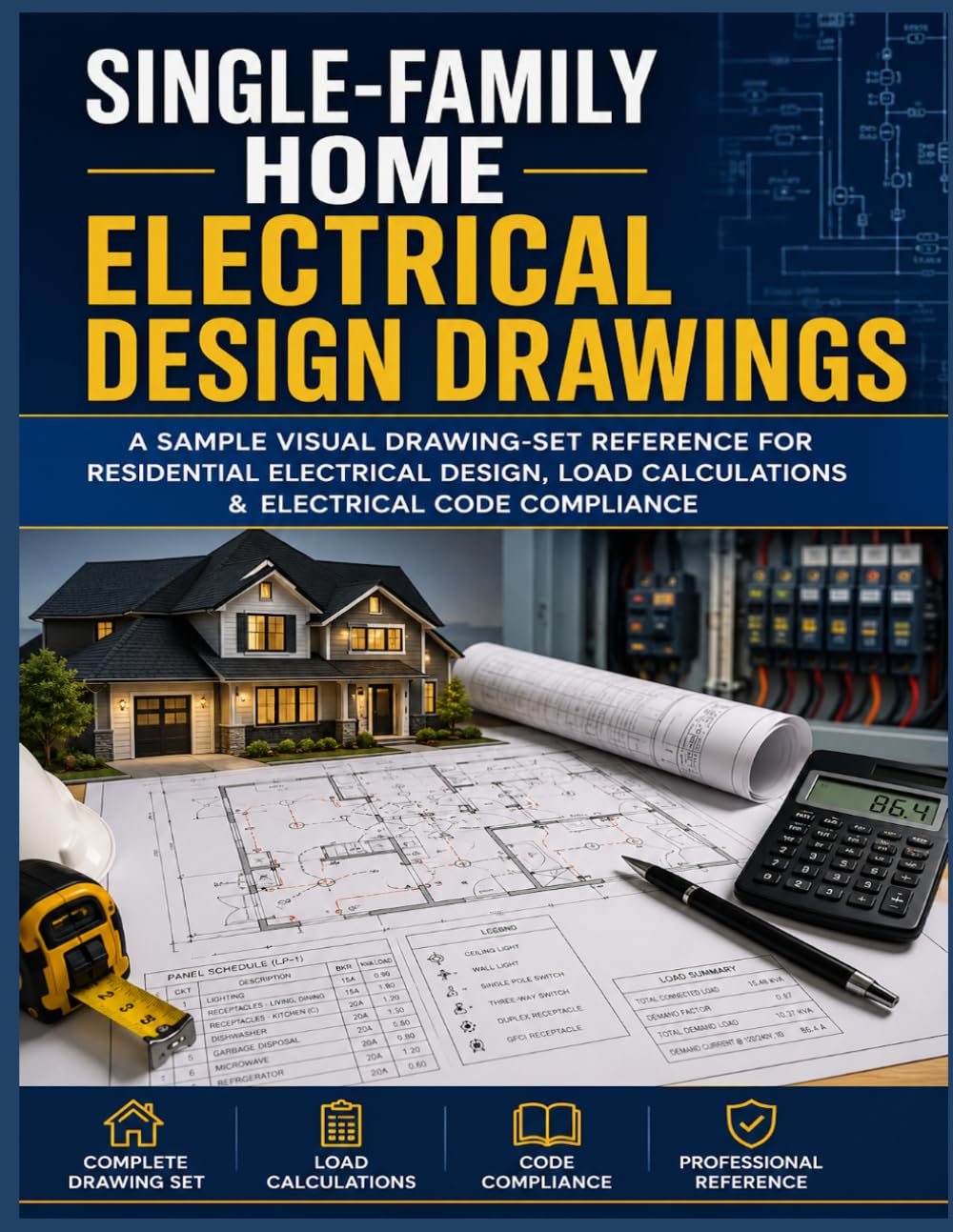
2. SINGLE-FAMILY HOME ELECTRICAL DESIGN DRAWINGS
Format: Sample visual drawing-set reference
Scope: Single-family residential
Coverage: Load calculations and electrical code compliance
Intended Use: Learning drawing-set layout and plan reading
Price Tier: Budget
SINGLE-FAMILY HOME ELECTRICAL DESIGN DRAWINGS takes a visual approach: it presents a sample drawing set for a single-family home rather than a wall of formulas. The set is organized as a reference, so the reader can see how panel schedules, circuit layouts, and load documentation sit together on real plan sheets. Load calculations and code compliance appear as part of the drawing package, which is how they show up on an actual job. It is the cheapest way here to see the finished product that circuit planning is supposed to produce.
This one suits visual learners, plan reviewers, and anyone who has read the math but never seen it assembled into a submittal-ready set. The trade-off is that a sample set documents one house’s design rather than teaching the method step by step, so it works best as a companion to a calculation manual, not a replacement.
3. Residential Load Calculation Manual For Beginners: A Practical Guide To Home Electrical Load Analysis, Demand Factors, HVAC Calculations, And Service Planning

Format: Practical beginner’s manual
Coverage: Load analysis, demand factors, HVAC calculations, service planning
Scope: Residential
Intended Use: Learning to size a home service with HVAC load included
Price Tier: Premium
Residential Load Calculation Manual For Beginners: A Practical Guide To Home Electrical Load Analysis, Demand Factors, HVAC Calculations, And Service Planning is the most complete beginner package in this group. HVAC calculations get dedicated coverage, which is the piece most load guides skip and the piece that most often decides whether a service upgrade is needed. Demand factors and service planning are treated as practical steps rather than theory, and the whole book is framed for readers doing this for the first time.
It suits homeowners planning an addition or a heat pump swap, apprentices, and students who want one manual that carries them from load analysis through service sizing. The trade-off is price: at the premium end of this list, it costs more than the other beginner manual, and a reader who only needs panel sizing without HVAC detail can get there for less.
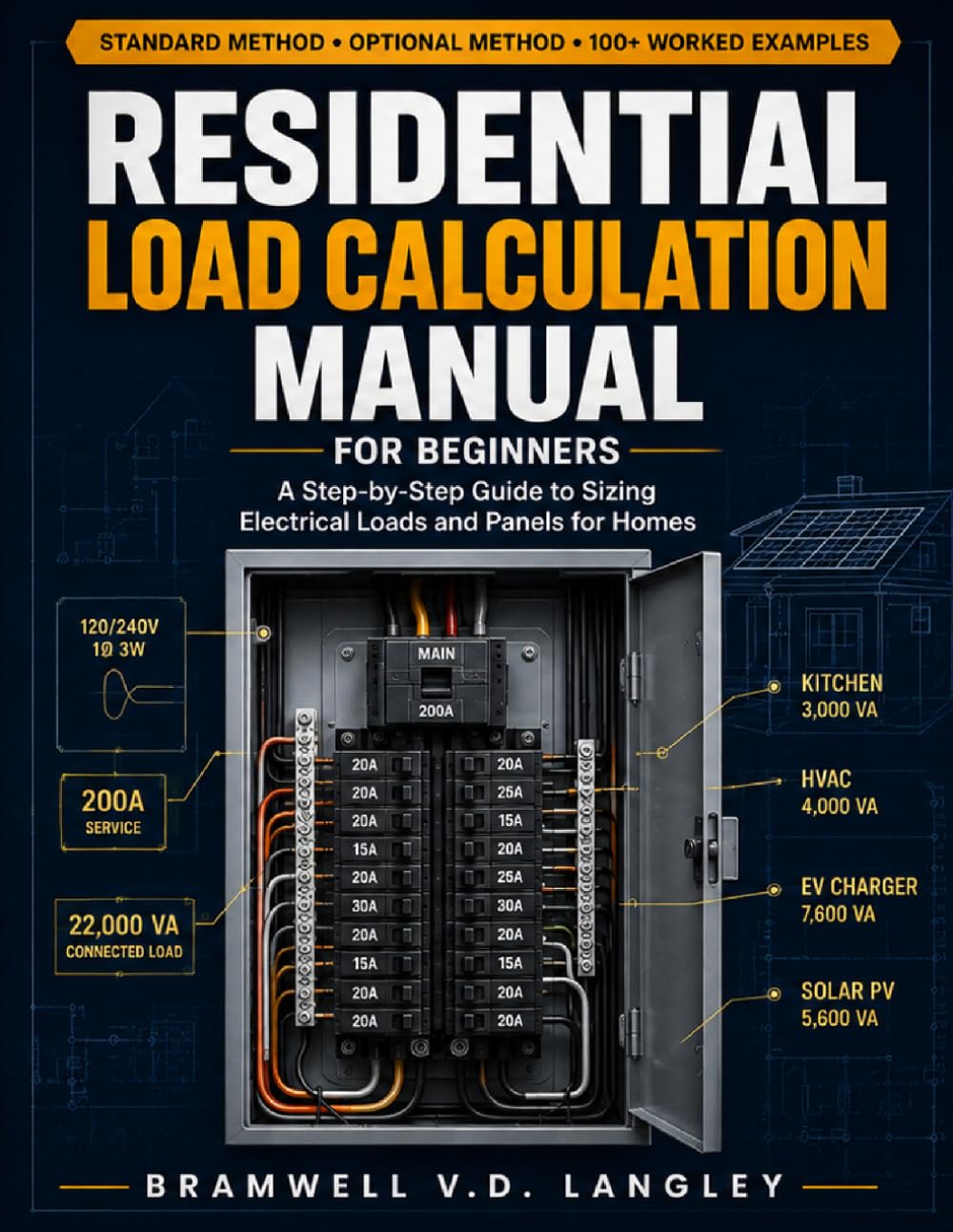
4. RESIDENTIAL LOAD CALCULATION MANUAL FOR BEGINNERS: A STEP-BY-STEP GUIDE TO SIZING ELECTRICAL LOADS AND PANEL FOR HOMES
Format: Step-by-step beginner’s guide
Coverage: Sizing electrical loads and panels
Scope: Homes
Intended Use: First panel sizing project
Price Tier: Mid-range
RESIDENTIAL LOAD CALCULATION MANUAL FOR BEGINNERS: A STEP-BY-STEP GUIDE TO SIZING ELECTRICAL LOADS AND PANEL FOR HOMES is organized around sequence: work through the steps in order and a load total and panel size fall out at the end. That structure is the reason it belongs here — circuit planning for future loads is a process, and a guide that mirrors the process is easier to follow than one organized by topic. It keeps its scope to homes, so the examples stay relevant to a single-family service. The price sits in the middle of this group, well under the premium manual.
This pick suits a first-time planner who wants a straight path from load list to panel size without the HVAC deep dive. The trade-off is that the narrow focus cuts both ways: readers who need commercial scope or detailed HVAC demand math will have to look elsewhere, and the step-by-step format rewards careful reading over quick reference.
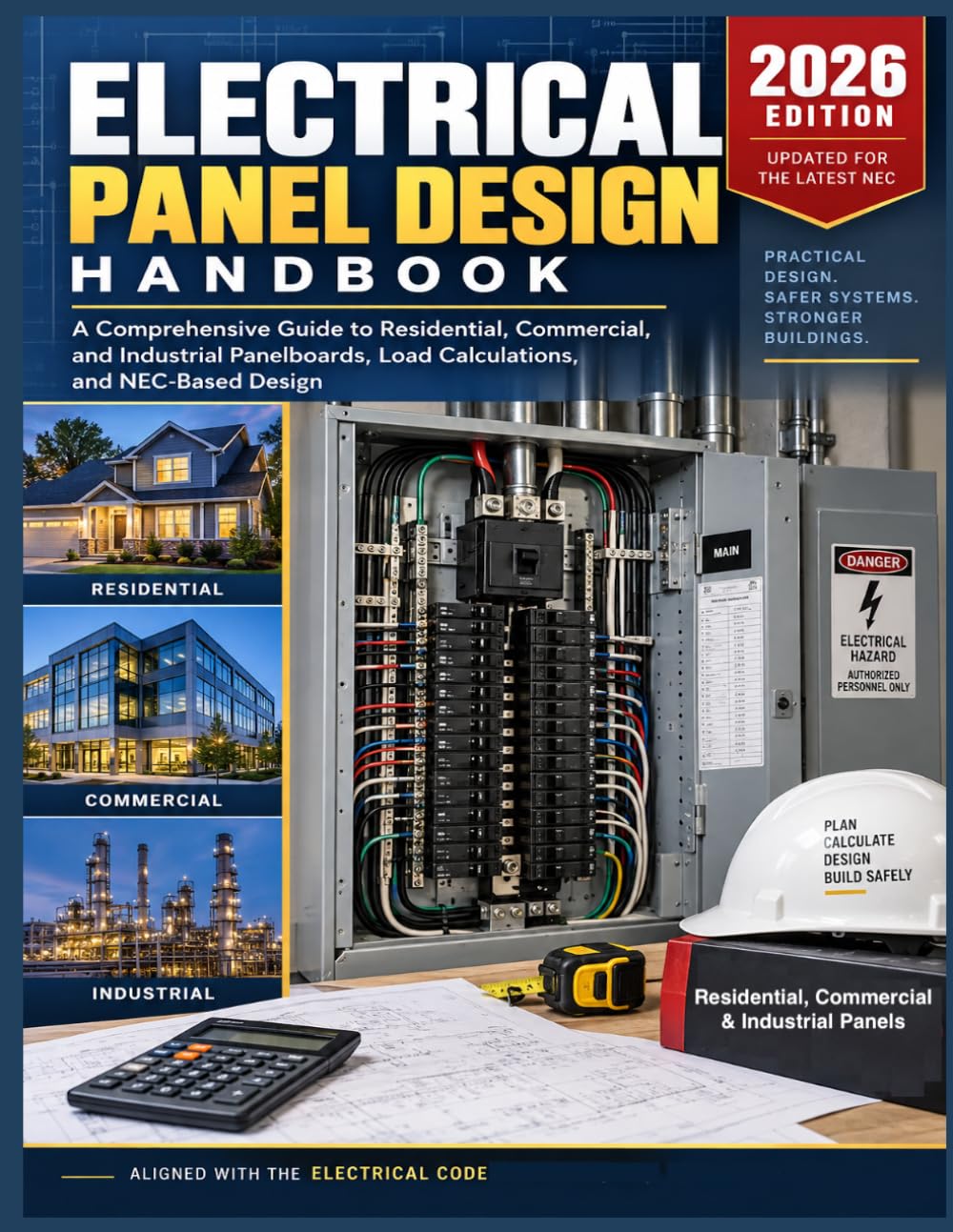
5. ELECTRICAL PANEL DESIGN HANDBOOK
Format: Design handbook
Coverage: Panelboards, load calculations, NEC-based design
Scope: Residential, commercial, and industrial
Intended Use: Panelboard design across building types
Price Tier: Mid-range
ELECTRICAL PANEL DESIGN HANDBOOK: A Comprehensive Guide to Residential, Commercial, and Industrial Panelboards, Load Calculations, and NEC-Based Design is the broadest title in the group, and the only one that treats panelboard design as the organizing subject. Load calculations and NEC-based design appear as parts of that larger job, which is the right frame when the question is not just how much load but how the panel is laid out to carry it. The three building types are covered in one volume, so the same method carries from a house to a shop to a plant. It sits in the middle price band, which makes it the value pick for readers who want range rather than hand-holding.
It suits electricians, designers, and facilities people who already know the basics and want a panel-centered reference that reaches beyond single-family work. The trade-off is that a comprehensive handbook moves fast and assumes background, so a true beginner is better served by the step-by-step manual first.
Before You Buy
- Code edition: Calculation rules change between NEC cycles, so match the guide to the edition the local authority enforces.
- Scope: Residential-only guides are simpler but useless for commercial or industrial panel work; the handbook covers all three.
- HVAC coverage: Heat pump and air handler loads often decide a service upgrade, so check whether the guide treats HVAC demand specifically.
- Format: A drawing set teaches layout, a manual teaches method, and a handbook teaches design — pick by how the reader learns.
- Prior knowledge: Free and comprehensive titles assume field experience; beginner manuals assume none.
- Price tier: A free text and a budget drawing set cover the basics before a premium manual is justified.
Frequently Asked Questions
-
What does circuit planning for future loads actually involve?
It means calculating the existing service load, applying demand factors, and reserving capacity for planned additions so the panel and service do not need replacing later. -
Which pick is best for a complete beginner?
The step-by-step residential manual is the gentlest entry, with the premium beginner manual as the upgrade if HVAC load matters. -
Can a free guide be enough?
For an electrician who already knows the field, the free 2026 NEC calculation text covers the code side at no cost. -
Why buy a drawing set instead of a manual?
A drawing set shows how calculations and code compliance appear on real plan sheets, which is the output a manual is working toward. -
Does any pick cover commercial work?
The free calculation text and the panel design handbook both extend beyond residential scope; the other three are home-focused. -
How much headroom should be planned for future loads?
The guides address this through demand factors and service planning rather than a single fixed number, since the right margin depends on the planned additions.
Bottom Line
For most readers, the free Load Calculations and Circuit Design for Residential and Commercial Electricians, 2026 NEC is the top pick: it is current to the 2026 code cycle, covers both residential and commercial work, and costs nothing to try. Beginners who need HVAC and service planning spelled out should step up to the premium beginner manual, and anyone designing panels across building types should take the handbook.
