Why there are Amazon links here: Brave Review is paid a commission for qualifying Amazon purchases made through the links below. Your price does not change, and using our links is entirely optional. How this works
Best Sensors for a Household with Pets
Pet owners shopping for motion sensors face one common problem: a sensor that cannot tell a burglar from a cat will trigger all night. This guide covers the best sensors for a household with pets, sorted by what each one actually does — deterring pets, securing a home without false alarms, or simply alerting when something moves. Three buyer types will find a match here: households that want a security system that ignores animals, owners who need to keep pets off furniture or counters, and budget shoppers who just want a chime or light when motion is detected. The overview below shows every pick side by side, and each review explains who it suits and where it falls short.
Overview of the Picks
| Product | Key Spec | Best Use | Price Tier |
|---|---|---|---|
| PetSafe SSSCAT Automatic Spray Pet Deterrent | Motion-activated from 3 ft, stainless spray, 4 AAA batteries | Keeping pets off counters and furniture | Mid |
| Ecolink Z-Wave PIR Motion Detector Pet Immune | Z-Wave PIR, pet-immune, wireless | Pet-friendly home security integration | Budget |
| Zigbee Motion Sensor with Tuya Hub | Zigbee connection, app alarm, HomeKit and Alexa compatible | Smart-home automation on a budget | Budget |
| Pet-Immune Smart Indoor PIR Motion Detector | Pet-immune PIR, temperature monitoring, multi-person detection | Reliable indoor security with climate data | Premium |
| 500 FT Range Wireless Motion Sensor Alert System | 500 ft range, motion-triggered LED light and chime | Driveways, shops, and outbuildings | Budget |
1. PetSafe SSSCAT Automatic Spray Pet Deterrent

Type: Motion-activated pet deterrent
Detection Range: Triggers from 3 ft away
Spray: Odorless stainless spray
Included: 1 refill can
Power Source: 4 AAA batteries
Intended Use: Cats and dogs indoors
This unit is not a security sensor in the traditional sense — it is a behavior tool. The device watches a zone and fires a short, odorless burst of spray when a pet crosses into it, which startles the animal without harming it. The stainless spray nozzle and the included refill can mean the unit is usable straight out of the box, and the battery power keeps it free of cords near counters and doorways. It suits households that need to protect a specific spot rather than monitor a whole room.
The pick earns its place because it solves a problem the other sensors cannot: it actively discourages the pet instead of just reporting the pet. Buyers should note that the trigger distance is short, so placement matters, and the refill can will eventually run out — a household with a determined pet may go through cans faster than expected. It is not for anyone looking for a security alarm or an app-connected device.
Trade-off: The short trigger range and consumable refills make it a targeted behavior tool rather than a whole-room solution.
2. Ecolink Z-Wave PIR Motion Detector Pet Immune

Type: Wireless PIR motion detector
Technology: Z-Wave
Pet Handling: Pet-immune, reduces pet-related false alerts
Compatibility: Compatible Z-Wave security systems
Color: White
Power Source: Battery
This is the classic choice for a home that already runs a Z-Wave security system. The PIR element is tuned to reduce alerts caused by pets moving at floor level, so a cat crossing the hallway at night does not set off the alarm while a person walking through still does. The wireless design means it mounts where coverage is needed without pulling cable, and the white housing blends into most walls and ceilings.
It earned a spot because it is the least expensive way to add pet-tolerant motion coverage to an existing Z-Wave network. The catch is compatibility: it only works with a Z-Wave controller, so a household without a hub has no way to use it. Buyers should also expect a pet-immune sensor to trade some sensitivity for that tolerance, which makes placement and aiming more important than with a plain detector.
Trade-off: It is useless without a Z-Wave hub, and pet immunity comes at the cost of some detection sensitivity.
3. Zigbee Motion Sensor with Tuya Hub

Type: Wireless Zigbee motion sensor
Connection: Zigbee, requires Colorpanda Tuya hub
App: App alarm and automation
Compatibility: HomeKit, Alexa, IFTTT
Intended Use: Home automation and kid safety
This sensor is aimed at automation rather than security alone. Once paired with the required Tuya hub, it can trigger app alarms and routines, and it works with HomeKit, Alexa, and IFTTT for cross-platform scenes. The small wireless body is easy to place on a shelf, wall, or doorway, and the low entry price makes it practical to buy several and cover a whole floor. It suits tinkerers who want motion to turn on lights or send a phone alert.
The pick is here because it is the cheapest route into a smart-home motion setup, and the broad platform support is unusual at this price. The requirement for a specific hub is the main limitation — the sensor is not a standalone alarm and will not do anything until that hub is purchased and configured. Households that want a self-contained siren or a simple chime should look elsewhere.
Trade-off: The mandatory Tuya hub adds cost and setup steps, and this is an automation accessory rather than a standalone alarm.
4. Pet-Immune Smart Indoor PIR Motion Detector
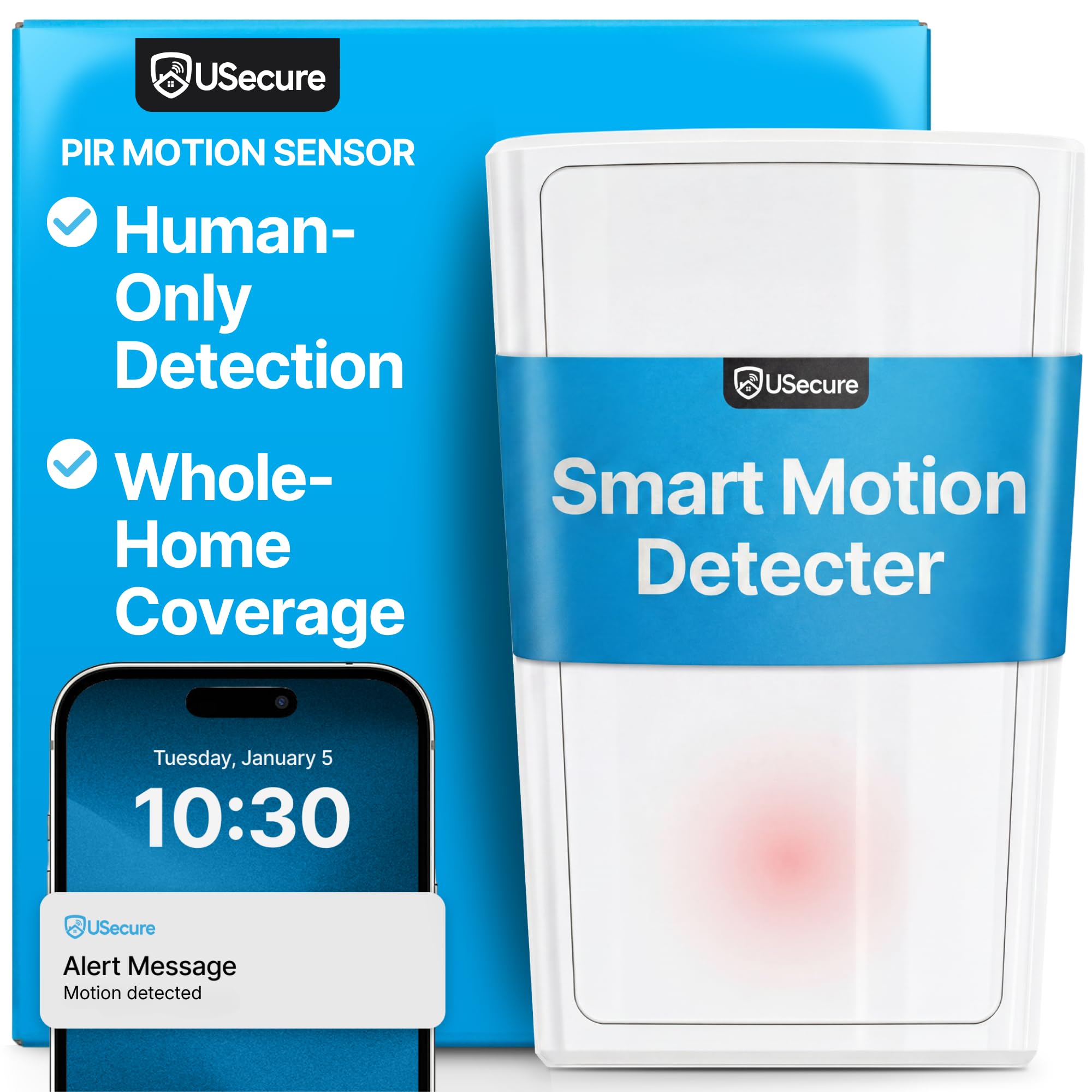
Type: Smart indoor PIR motion detector
Pet Handling: Pet-immune
Extras: Temperature monitoring, multi-person detection
Smart Home: Supports Google Home
Intended Use: Indoor security
This is the premium option, and the feature list explains the price. Beyond pet-immune motion detection, it monitors room temperature and can distinguish multiple people in its field of view, which is useful for occupancy-style automation and for understanding whether a room is genuinely occupied. Google Home support ties it into voice routines, and the indoor-focused design means it is meant for living spaces rather than garages or porches.
It earns its place for households that want security and climate awareness from one device and are willing to pay for the extra capability. The trade-off is that the premium buys features many homes will never use — a buyer who just wants an alert when someone walks in is overpaying here. It is also an indoor unit, so it is not the pick for a shed, driveway, or any space exposed to weather.
Trade-off: The premium price covers temperature and multi-person features that a basic security setup does not need.
5. 500 FT Range Wireless Motion Sensor Alert System

Type: Wireless motion sensor alert system
Range: 500 ft
Alert: Motion-triggered LED light and chime
Also Included: Door sensor
Intended Use: Home, business, store, office, school
This system takes a different approach: instead of an app, it uses a chime and LED light to announce motion, and the long range means the sensor can sit far from the receiver. That makes it a practical pick for a driveway, a detached garage, a shop, or a back gate where Wi-Fi may not reach. The included door sensor adds a second trigger point, and the whole setup works without a hub or subscription.
It is on the list for buyers who want a simple, self-contained alert rather than a smart-home integration. The caution is that this is an alerting device, not a pet-immune security sensor — it is not tuned to ignore animals, so a pet wandering past the sensor will set off the chime just like a person would. It also lacks app control, so anyone who wants phone notifications should choose a different pick.
Trade-off: It alerts on any motion, including pets, and offers no app or smart-home integration.
Before You Buy
- Pet immunity: A pet-immune sensor is tuned to ignore movement at floor level; a standard sensor is not, so match the rating to the household’s animals.
- Hub compatibility: Z-Wave and Zigbee sensors need a matching controller, and some require a specific brand of hub before they work at all.
- Range and placement: Short-range deterrents work best in doorways and on counters, while long-range alert systems suit outbuildings and driveways.
- Power source: Battery-powered units go anywhere but need periodic battery changes; check how the unit is powered before mounting it high.
- Consumables: Deterrent sprays use refill cans, so factor in the ongoing cost for a persistent pet.
- Indoor versus outdoor: Most smart PIR sensors are indoor-rated, and only a long-range alert system belongs in a garage or shed.
- Purpose: Decide up front whether the goal is deterring a pet, securing a home, or triggering automation — one device rarely does all three well.
Frequently Asked Questions
-
What does pet-immune actually mean on a motion sensor?
It means the sensor is calibrated to ignore the smaller heat signature of an animal moving near the floor, so pets are less likely to trigger an alarm while people still are. -
Can a pet-immune sensor still be triggered by a large dog?
Yes. Pet immunity is a general tuning, not a guarantee, and a large dog or a pet on furniture can still register as a person-sized target. -
Do these sensors need a subscription?
No. Every pick here works without a monthly plan, though the Zigbee and Z-Wave units do need a hub to function. -
Which pick is best for keeping a cat off the kitchen counter?
The PetSafe SSSCAT deterrent, because it responds to motion with a spray rather than an alert, which is what actually changes the pet’s behavior. -
Which sensor works without Wi-Fi or a hub?
The 500 FT alert system and the SSSCAT deterrent both operate independently, with no network or controller required. -
Is a smart sensor a replacement for a full security system?
No. These are individual sensors and alert devices; a monitored system adds a siren, cellular backup, and professional response.
Bottom Line
For most pet-owning households, the Ecolink Z-Wave PIR Motion Detector Pet Immune is the best sensors for a household with pets pick when a Z-Wave system is already in place, because it adds pet-tolerant coverage at the lowest cost. Households without a hub should start with the Pet-Immune Smart Indoor PIR Motion Detector for its broader feature set, and anyone whose real problem is a counter-surfing cat should go straight to the PetSafe SSSCAT deterrent instead.
