Why there are Amazon links here: Brave Review is paid a commission for qualifying Amazon purchases made through the links below. Your price does not change, and using our links is entirely optional. How this works
Best Locks to Check Before Ordering for Every Entry Door
A lock is one of the few purchases where getting the details wrong costs more than money — it costs security. This guide covers the five picks that cover the most common entry-door situations, from a budget keyed knob to a keypad deadbolt and a reinforcement latch. It suits renters replacing a worn knob, homeowners upgrading a front door, and anyone adding a second layer of security to an existing lock. The overview below sorts all five at a glance, and each review explains who the pick fits and where it falls short.
The Picks at a Glance
| Product | Key Spec | Best Use | Price Tier |
|---|---|---|---|
| BESTTEN Keyed Entry Door Knob | Reversible knob, adjustable latch | Budget knob replacement | Budget |
| TEEHO TE001 Keyless Entry Deadbolt | 20 user codes, IP54 waterproof | Keyless front door | Mid-range |
| Veise Keyed Single Cylinder Deadbolt | ANSI Grade 3, anti-drill | Heavy-duty keyed security | Mid-range |
| Door Reinforcement Lock | 8 screws, child-proof latch | Adding a second lock layer | Budget |
| Single Cylinder Keyed Deadbolt | Round exterior, satin nickel | Simple keyed deadbolt upgrade | Budget |
1. BESTTEN Keyed Entry Door Knob

Type: Keyed entry knob
Design: Reversible knob
Latch: Adjustable
Finish: Matte Black
Build: Heavy duty entrance lock
This is the pick for a straightforward knob swap. The reversible knob and adjustable latch mean it fits both left- and right-handed doors without special ordering, and the matte black finish gives an entrance door a clean, modern look at a budget price. The heavy-duty claim points to a solid metal body built for regular daily use rather than a flimsy interior-grade knob.
It earned its place as the entry-level option because installation is the whole point here: a universal design and adjustable latch remove the two most common reasons a knob replacement stalls. Buyers who want a keyed knob on a side door, garage entry, or rental unit get the most from it. The caution is that a keyed knob alone offers basic residential security — it is a convenience lock, not a deadbolt, so it should pair with a deadbolt on any exterior door.
Trade-off: A keyed knob secures the latch, not the frame, so it is a first layer rather than full door security.
2. TEEHO TE001 Keyless Entry Deadbolt with Keypad

Security Rating: ANSI Grade 3
Access: Keypad with 20 user codes
Weather Rating: IP54 waterproof
Extras: Low battery alert, one-touch lock, anti-peep password
Backup: 2 physical keys
Finish: Bronze
This keypad deadbolt is the pick for a front door that sees a lot of traffic. Twenty user codes let a household give each family member, a dog walker, or a cleaner their own entry code, and the anti-peep password feature lets a user add random digits around the real code so a nearby observer cannot read it from the wear pattern. The IP54 waterproof rating and low battery alert make it practical for an exterior door in wet weather.
It suits homeowners who are tired of hiding a spare key and want keyless entry without a smart-home setup. The two backup keys cover the case where the battery dies before the alert is acted on. The caution is that a keypad lock depends on battery discipline and a working keypad, so buyers who want zero electronics on the door should look at a purely mechanical deadbolt instead.
Trade-off: Keyless convenience depends on battery health and an electronic keypad that will eventually need attention.
3. Veise Keyed Single Cylinder Deadbolt
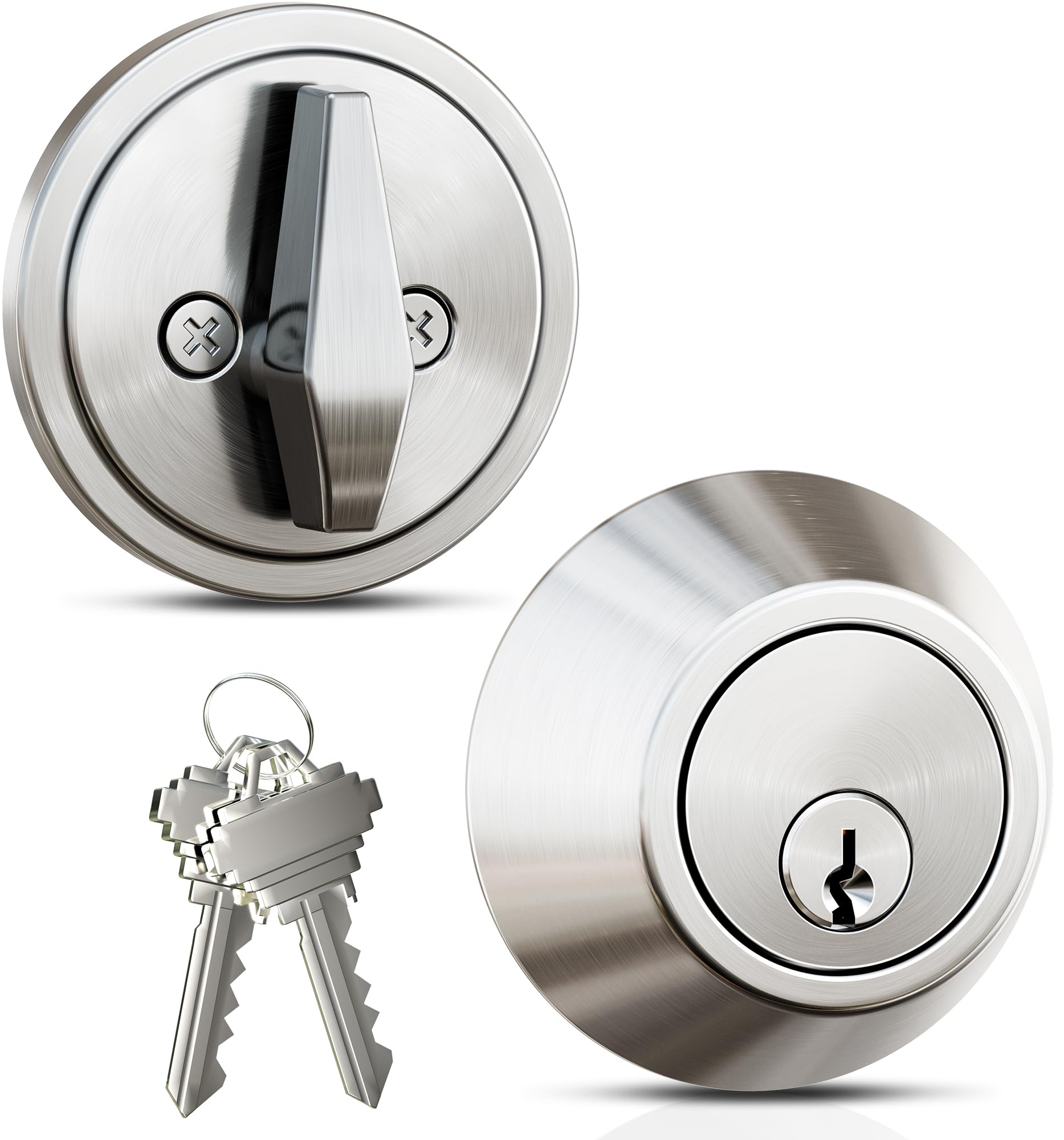
Security Rating: ANSI Grade 3
Type: Single cylinder deadbolt
Build: Heavy duty, anti-drill
Reversibility: Left/right reversible
Inside Operation: Thumb turn
Finish: Satin Nickel
This is the pick for buyers who want mechanical deadbolt security with no electronics. The ANSI Grade 3 rating and anti-drill construction put it a step above a basic builder-grade deadbolt, while the single cylinder design with an inside thumb turn means the door can be opened from inside without a key in an emergency. The left/right reversible build fits either door swing.
It suits a homeowner upgrading a front or back door who wants a dependable keyed deadbolt that will not need batteries, apps, or pairing. The satin nickel finish matches common door hardware. The caution is that a single cylinder design still leaves the inside thumb turn as the weak point in a break-in, so buyers who want maximum resistance should consider a double cylinder — and accept the trade-off of needing a key to exit.
Trade-off: The inside thumb turn is convenient for exits but is the softer point of a single cylinder deadbolt.
4. Door Reinforcement Lock for Front Door

Type: Door reinforcement latch
Included: 8 screws
Function: Entry door security, child-proof
Build: Reinforcement lock
Finish: Silver
This is not a replacement lock — it is the add-on pick. The reinforcement latch mounts to the door and frame to back up an existing lock, and the included eight screws signal a fix that spreads force across more of the door rather than relying on the deadbolt alone. The toddler-proof and child-proof framing points to a secondary latch that keeps a small child from opening an entry door unaided.
It earns its place for renters and homeowners who want an extra layer without replacing hardware, and for households with young children. The caution is that it is a supplement: it reinforces a door but does not replace the deadbolt, and installation requires drilling into the door and frame, which is a poor fit for a rental where holes are not allowed.
Trade-off: A reinforcement latch adds real strength but requires permanent mounting holes and cannot substitute for a deadbolt.
5. Single Cylinder Keyed Deadbolt, Satin Nickel

Type: Single cylinder deadbolt
Operation: One side keyed
Shape: Round exterior
Finish: Satin Nickel
Use: Front entry, inside door
This is the simplest pick on the list: a no-frills keyed deadbolt for a front entry or interior door that needs a basic, reliable lock. The round exterior and satin nickel finish give it a neutral look that blends with most door hardware, and the single cylinder design keeps operation familiar — key outside, thumb turn inside. It is the kind of deadbolt a buyer installs when the goal is a working lock at a low price.
It suits budget-conscious buyers, landlords fitting a rental, or anyone replacing a worn deadbolt on a secondary door. The caution is that this is a basic-tier deadbolt: it does not advertise an ANSI security rating, so buyers who want verified resistance to drilling or forcing should step up to the Veise pick above.
Trade-off: A basic deadbolt without a stated security grade trades verified resistance for a lower price.
Before You Buy
- Security rating: Look for an ANSI grade on the packaging — Grade 3 is the entry-level residential standard and a useful baseline.
- Door handing: Confirm whether the door is left- or right-handed; reversible knobs and deadbolts save a return.
- Door prep: Measure the existing bore and latch holes before ordering, since a deadbolt and a knob use different cutouts.
- Keyed vs. keyless: Decide whether the household wants physical keys, a keypad, or both — each has different maintenance needs.
- Backup access: For any electronic lock, confirm it ships with backup keys in case the battery dies.
- Layer vs. replacement: A reinforcement latch adds security but does not replace a deadbolt; plan the full door setup.
- Included hardware: Check that screws and mounting hardware are in the box so installation does not stall.
Frequently Asked Questions
-
What is the first thing to check before ordering a lock?
The door’s handing and bore measurements, since a lock that does not fit the existing cutout cannot be installed without extra work. -
Is a keyed knob enough for a front door?
No — a keyed knob secures the latch but not the frame, so an exterior door should pair it with a deadbolt. -
What does ANSI Grade 3 mean on a lock?
It is the entry-level residential security rating, indicating the lock has met a basic standard for durability and resistance. -
Do keypad deadbolts need a backup key?
A backup key is strongly recommended, since an electronic lock depends on battery power and a working keypad. -
Can a reinforcement lock replace a deadbolt?
No — it adds strength to an existing door and lock, but it is a supplement rather than a replacement. -
Should renters avoid screw-mounted reinforcement latches?
Generally yes, because installation requires drilling into the door and frame, which most leases prohibit.
Bottom Line
The right lock comes down to one question: is the door getting a replacement or an upgrade? For most front doors, the TEEHO TE001 Keyless Entry Deadbolt is the strongest all-around pick, pairing keypad convenience with an ANSI Grade 3 rating and backup keys. Buyers who want pure mechanical security should look at the Veise deadbolt, while a budget knob swap or a reinforcement latch covers the simpler jobs.
