Why there are Amazon links here: Brave Review is paid a commission for qualifying Amazon purchases made through the links below. Your price does not change, and using our links is entirely optional. How this works
Best Sensors for a Large House for Whole-Home Coverage
A large house is a set of rooms that behave differently: the far bedroom runs cold, the basement holds moisture and invisible gases, and doors on the far side of the layout are easy to forget. The five sensors below cover climate, occupancy, entry points and air quality, and each one earns its place for a specific kind of property. Households building a multi-room climate picture should start with the GoveeLife kit, security-focused owners will lean toward the Ring pack, and anyone with a basement should read the radon pick closely. The overview table below sorts all five by what they do best.
Overview of the Picks
| Product | Key Spec | Best Use | Price Tier |
|---|---|---|---|
| GoveeLife WiFi Thermometer Hygrometer 5-in-1 3-Pack with Gateway | Three sensors plus gateway, large LCD | Multi-room temperature and humidity tracking | Mid-range |
| ecobee SmartSensor 2-Pack | Temperature and occupancy, wireless magnetic mount | Balancing comfort across a house with an ecobee thermostat | Premium |
| Ring Alarm Contact Sensor 6-Pack – 2nd Gen | Six door/window contacts, slim design | Entry monitoring on a large layout | Mid-range |
| Tapo Door Sensor Starter KIT T31 | Three contacts plus hub with chime, Matter compatible | Budget-friendly entry alerts with automation | Budget |
| HOUND-1011S Portable Radon Detector | Long-term radon monitoring, audible and visual alarms | Basements and lower levels | Budget |
1. GoveeLife WiFi Thermometer Hygrometer 5-in-1 3-Pack with Gateway
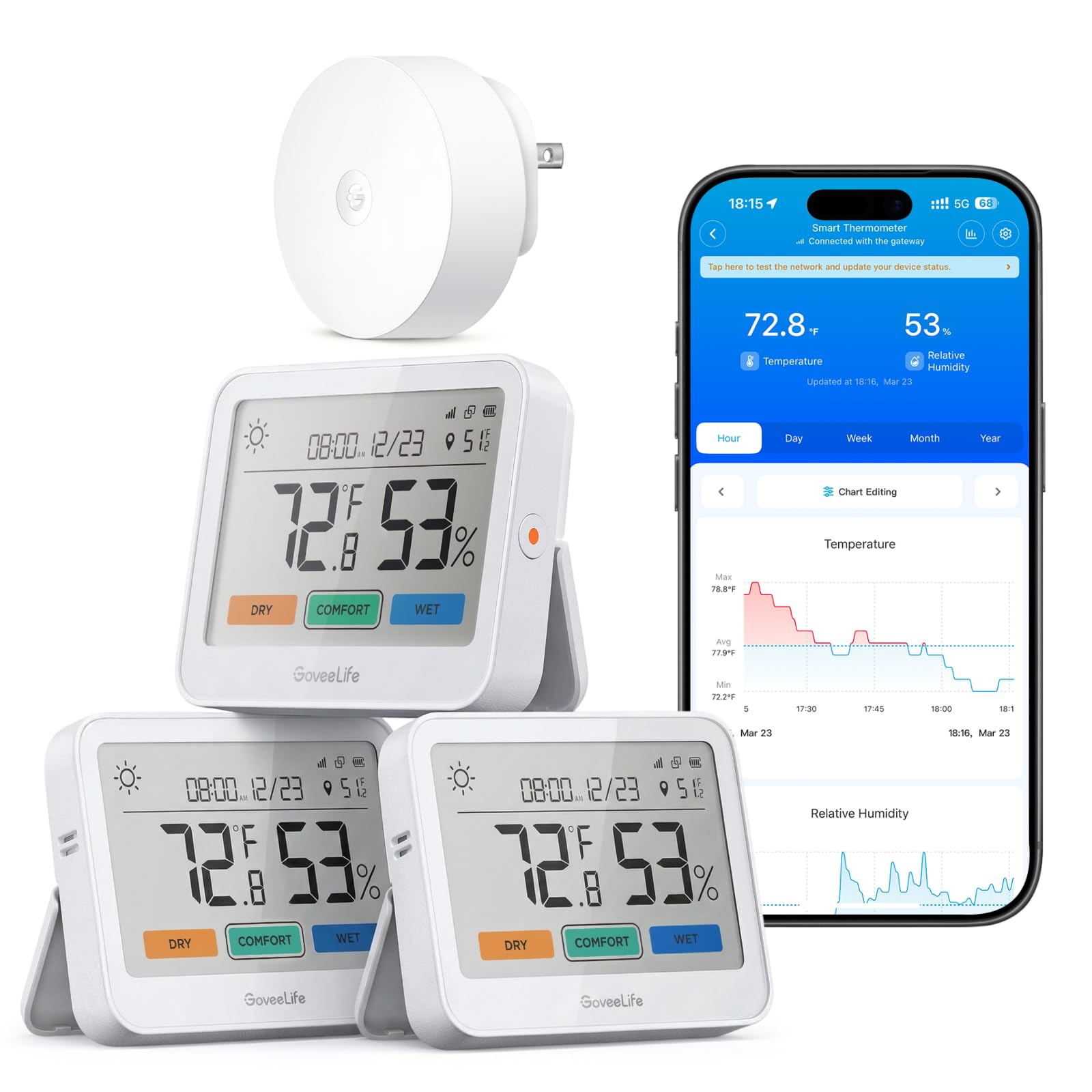
Type: WiFi temperature and humidity monitor with gateway
Sensors Included: Three remote units
Display: Large LCD
Functions: Five-in-one thermometer and hygrometer
Intended Use: Home, baby room, greenhouse
Check the current price on Amazon
This is the pick for mapping climate room by room rather than guessing. The gateway ties the three remote sensors into one WiFi picture, and the large LCD means the reading is legible from across a hallway rather than only up close. The five-in-one framing points to a unit that reports more than a single number, which suits a house where temperature and humidity drift apart between floors. A wide property with a nursery, a sunroom and a damp corner can place a sensor in each and compare them at a glance.
It earned its place because a large house rarely has one climate, and a single thermostat reading hides that. Owners who want to know why the upstairs bedroom feels stuffy while the kitchen is fine will get more from three sensors than from one. The trade-off is that a kit like this is a monitoring tool, not a control system — it tells the household what is happening rather than fixing it, so anyone expecting automatic correction should look elsewhere.
2. ecobee SmartSensor 2-Pack – Temperature & Occupancy Sensor

Type: Temperature and occupancy sensor
Pack Size: Two sensors
Mounting: Wireless and magnetic
Compatibility: ecobee thermostats
Functions: Temperature and occupancy detection
Check the current price on Amazon
This pair is for households already running an ecobee thermostat, and it is the most useful option here for actually changing how a large house heats and cools. Each sensor reads temperature and detects occupancy, so the thermostat can weigh the rooms people are actually in instead of relying on the hallway where it is mounted. Wireless magnetic mounting makes placement flexible, which matters in a property where the problem rooms are on the far side of the layout.
The occupancy angle is what makes it worth the premium: a big house with unused wings and guest rooms can let the thermostat prioritize occupied spaces. It earned its place as the comfort-balancing pick for that reason. The trade-off is compatibility — it only makes sense alongside an ecobee thermostat, so owners on another brand should skip it entirely rather than buy sensors that have nothing to talk to.
3. Ring Alarm Contact Sensor 6-Pack – 2nd Gen

Type: Door and window contact sensor
Pack Size: Six contacts
Battery Life: Approximately three years
Design: Slim
Installation: Easy, base station required
Function: Instant alerts
Check the current price on Amazon
Six contacts in one box is the right shape for a large house, where a single entry sensor barely covers the front door and the garage side door, let alone the rest. The slim profile keeps them unobtrusive on frames, and the roughly three-year battery life means a big property is not constantly asking for ladder work. Instant alerts push to the household the moment an entry point opens, which is the whole point on a layout with doors out of sight of the main living space.
It earned its place as the security-focused option: six sensors cover the typical set of exterior doors plus a couple of ground-floor windows. Owners should note the base station requirement — this pack needs a Ring Alarm base station to function, so it is a poor starting point for a household without one. The trade-off is that dependency: the sensors are only as useful as the hub they connect to.
4. Tapo Door Sensor Starter KIT T31

Type: Door and window contact sensor kit
Pack Size: Three contacts plus one hub
Hub: Built-in chime
Compatibility: Matter
Functions: Smart automation, real-time notification
Check the current price on Amazon
This kit is the budget entry point, and it is the only pick here that arrives complete: three contacts and the hub needed to run them, with a built-in chime so an open door is audible as well as pushed to a phone. Matter compatibility is the detail that matters most for a large house, because it lets the sensors join a broader smart-home setup rather than living in a single closed app. Smart automation support means an open door can trigger other devices rather than just sending an alert.
It earned its place for households testing entry monitoring before committing to a full alarm system, and three contacts cover the main doors of most properties. The trade-off is scale: three sensors will not cover every exterior door and window in a genuinely large house, so buyers with more openings should plan on adding contacts or stepping up to a bigger pack.
5. HOUND-1011S Portable Radon Detector
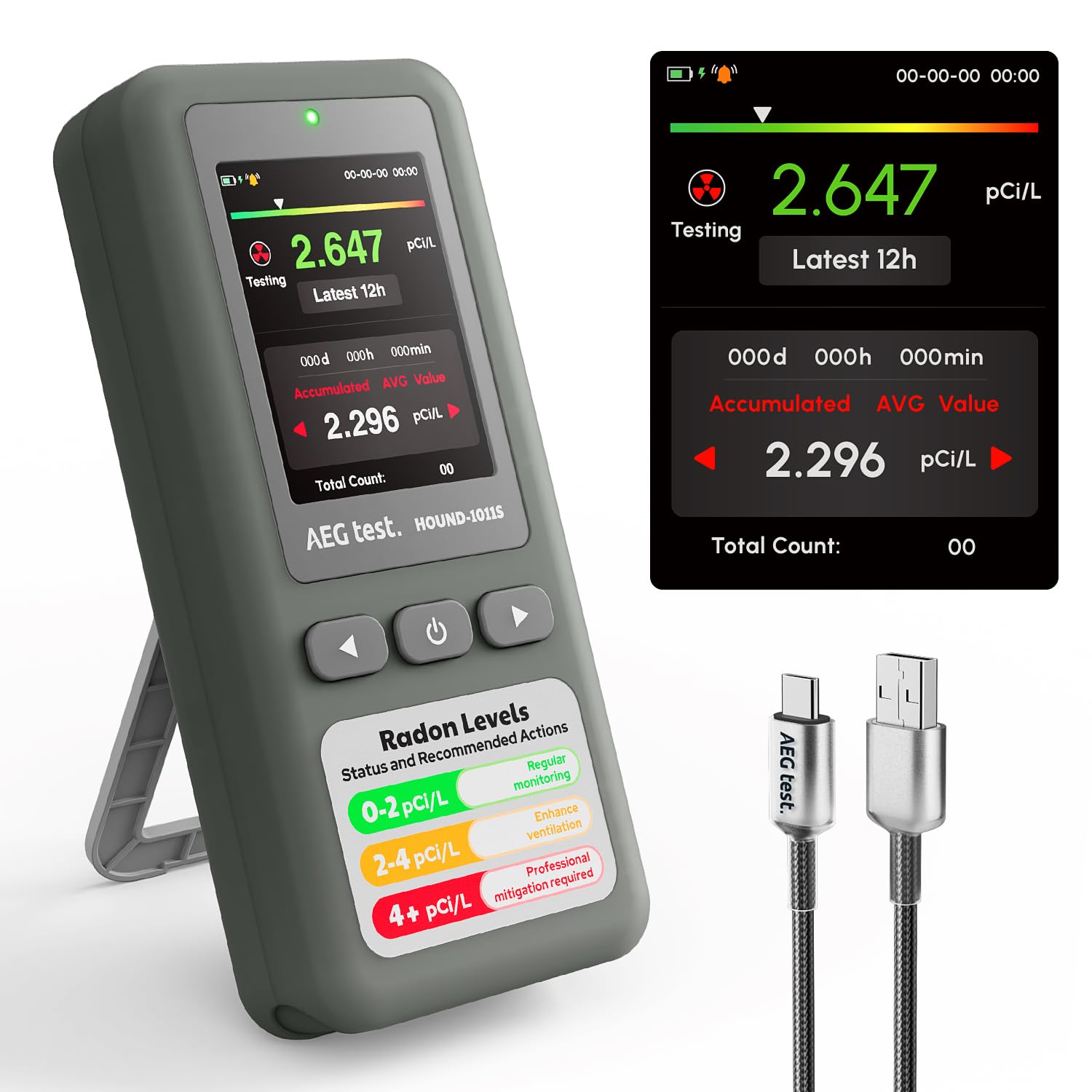
Type: Portable radon detector
Sensor: High-accuracy
Alarms: Audible and visual
Monitoring: Long-term
Display Units: pCi/L or Bq/m³
Intended Use: Basement
Check the current price on Amazon
Radon is the sensor category most large-house owners overlook, and it is the one where a lower level matters most. This unit is built for long-term monitoring rather than a one-off test, with audible and visual alarms so a rising reading gets noticed without checking an app. Readings display in pCi/L or Bq/m³, lightweight construction makes it easy to move between rooms, and the basement focus fits the part of a big property most likely to accumulate gas.
It earned its place because no other pick here addresses air quality, and a house with a finished basement or a deep foundation has a genuine reason to watch it. The trade-off is that long-term monitoring requires patience — a detector of this type needs to sit in place over time to be meaningful, so buyers wanting an instant verdict will find the process slower than expected.
Before You Buy
- Compatibility: Check which hub or thermostat a sensor needs before buying — the Ring pack requires a base station and the ecobee sensors require an ecobee thermostat.
- Coverage: Count exterior doors and problem rooms first; a three-sensor kit will not cover a genuinely large layout.
- Power and battery: Long battery life matters more in a big house, where sensors sit in places that are awkward to reach.
- Placement: Wireless and magnetic mounting gives flexibility, but range to the hub or gateway still limits where sensors can go.
- Purpose: Decide between monitoring and control — climate sensors that report are not the same as sensors that adjust heating.
- Air quality: A basement or lower level is the priority spot for a radon detector, and long-term monitoring suits it better than a quick check.
- Ecosystem: Matter compatibility widens options, while brand-locked sensors keep a household inside one app.
Frequently Asked Questions
-
How many sensors does a large house need?
Start with the rooms that behave differently and the exterior doors, then add. Three climate sensors cover the main living zones, while entry monitoring often needs five or six contacts for a large layout. -
Do these sensors work without a hub?
Not all of them. The Ring contacts require a base station and the ecobee sensors require an ecobee thermostat, while the Tapo kit includes its own hub and the GoveeLife kit ships with a gateway. -
Which sensor is best for a basement?
The HOUND-1011S radon detector is the one built for lower levels, with long-term monitoring and audible and visual alarms. It addresses air quality rather than temperature. -
Can these sensors lower heating bills?
The ecobee sensors can, because occupancy detection lets the thermostat prioritize rooms in use. The monitoring-only picks inform the household but do not adjust the system. -
What does Matter compatibility mean here?
It means the Tapo sensors can join a wider smart-home setup instead of staying in one app, which is useful in a large house with devices from several brands. -
Are wireless sensors reliable across a big property?
Range to the hub or gateway is the limiting factor. Wireless magnetic mounting helps placement, but sensors far from the hub may need the gateway positioned centrally.
Bottom Line
For most large houses, the GoveeLife WiFi Thermometer Hygrometer 5-in-1 3-Pack with Gateway is the best sensors for a large house starting point: three sensors plus a gateway give an immediate room-by-room climate picture at a mid-range price. Households with an ecobee thermostat should go straight to the ecobee SmartSensor 2-Pack for occupancy-aware comfort, while anyone with a basement should add the HOUND-1011S radon detector without delay. Check the GoveeLife kit on Amazon to confirm current pricing before deciding.
