Why there are Amazon links here: Brave Review is paid a commission for qualifying Amazon purchases made through the links below. Your price does not change, and using our links is entirely optional. How this works
Best Doorbells With Reliable Support for Fast, Hassle-Free Setup
Avoiding doorbells with poor support starts with choosing hardware that does not need much support in the first place. The five picks below are all self-contained wireless chimes: they pair out of the box, run on batteries, and skip the Wi-Fi app accounts that create most support headaches. They suit renters who cannot wire a door, small-shop owners who need an entry alert, and caregivers watching a door for a child or a family member with dementia. The overview table below sorts all five by key spec and price tier so a pick can be made in under a minute.
Overview of the Picks
| Product | Key Spec | Best Use | Price Tier |
|---|---|---|---|
| Satisure 600FT Long Range Open Door Bell | 600 ft range, 58 chimes | Entry alert for kids and dementia safety | Budget |
| AVANTEK Wireless Doorbell | 1,300 ft range, 2 receivers | Whole-home coverage with two chime points | Mid-range |
| Motion Sensor Doorbell Alarm Buzzer | 500 ft range, motion sensor | Shop and store entry alerts | Budget |
| PGST Wireless Doorbell | 1,000 ft range, 7 volume levels | Simple no-frills home doorbell | Budget |
| SECRUI Wireless Doorbell with 2 Buttons | 1,000 ft range, 2 buttons | Front and back door on one chime | Mid-range |
1. Satisure 600FT Long Range Open Door Bell
Range: 600 ft
Chimes: 58
Volume Levels: 5
Type: Wireless sensor alarm / entry alert
Best For: Kids, toddler and dementia safety
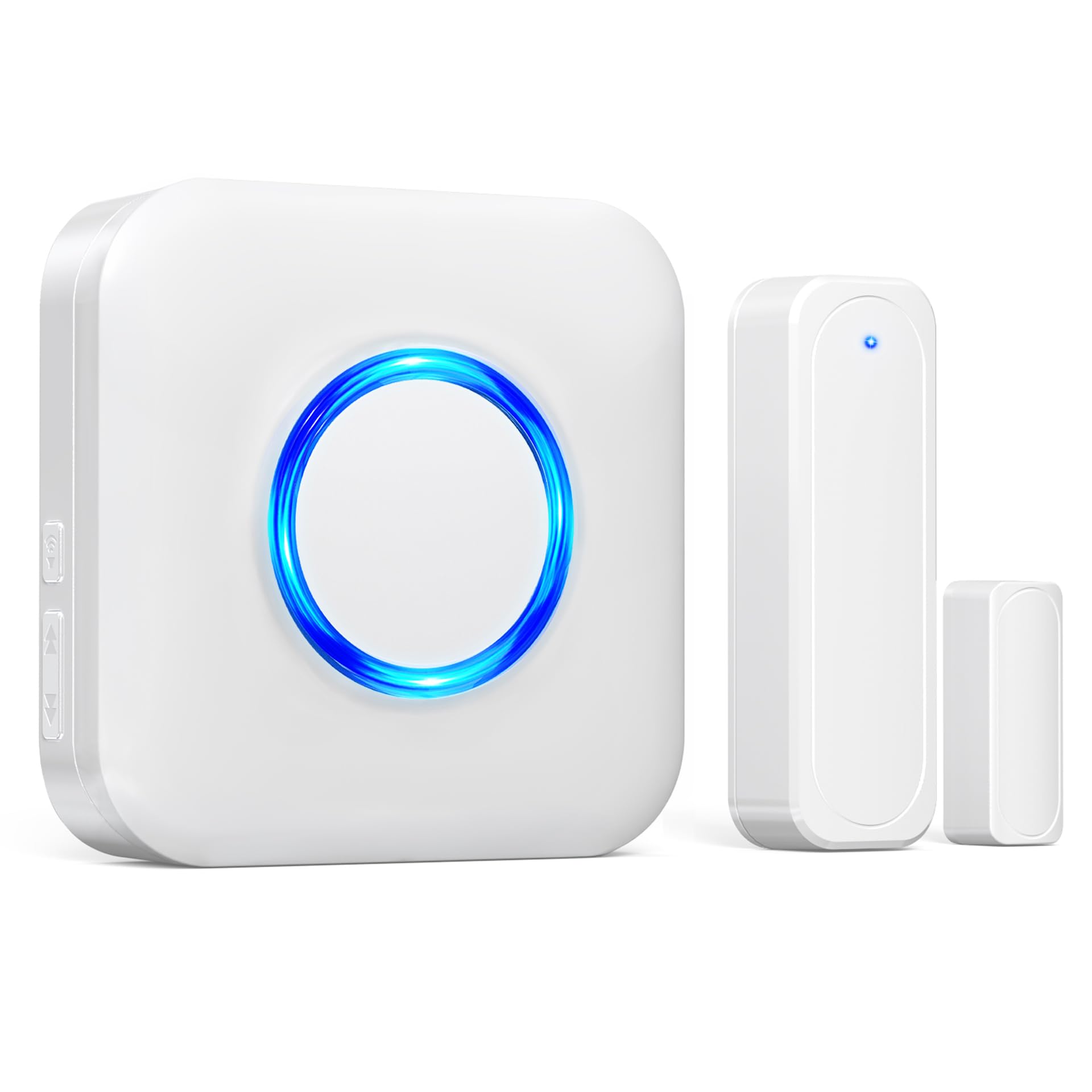
This Satisure unit is built as an entry alert rather than a conventional push-button doorbell. A sensor trips when a door opens, and the receiver plays one of 58 chimes at one of five volume levels, so the household hears the door rather than waiting for a visitor to press anything. The 600 ft range covers most single-family homes and small shops, and the long list of chimes lets the alert be tuned to something distinct from other sounds in the house.
It earns its place for caregivers and parents who need to know the moment a door opens — a toddler slipping outside, or a family member with dementia wandering. The caution is that an open-door sensor fires on every opening, including the household’s own comings and goings, so a busy home will hear it constantly unless the receiver is muted or moved.
Trade-off: The sensor triggers on every door opening, so constant foot traffic makes for near-constant chiming.
2. AVANTEK Wireless Doorbell
Range: 1,300 ft
Volume: 115 dB
Chimes: 52
Waterproof Rating: IP55 button
Receivers: 2
Battery Life: 3-year battery claim
Connectivity: No Wi-Fi or fees

The AVANTEK is the heavy-coverage option: a 1,300 ft range, a button rated IP55 for rain, and two receivers in the box so one chime can sit in the kitchen and another upstairs. The 115 dB top volume is loud enough for a large house or a noisy workshop, and the LED flash adds a visual cue for anyone hard of hearing. It runs without Wi-Fi, apps or subscription fees, which is exactly the kind of low-support design this list is built around.
Two receivers make it the pick for multi-floor homes and long properties where a single chime would be out of earshot. The caution is that the loudest setting is genuinely loud — in a small apartment it will startle rather than notify, so the volume needs dialing down on setup.
Trade-off: The 115 dB maximum is overpowering in small spaces and needs reducing right after pairing.
3. Motion Sensor Doorbell Alarm Buzzer
Range: 500 ft
Tunes: 32
Volume Levels: 5
Sensors: 1
Receivers: 1
Type: Wireless motion sensor chime

This is a motion-triggered chime rather than a push-button bell: a sensor watches an area and the receiver sounds when something moves through it. The 500 ft range is the shortest on this list but ample for a store entrance, a back hallway or a stockroom door, and 32 tunes across five volume levels give enough choice to distinguish it from a phone or till. It suits small-business owners who want to know when someone walks in without installing a full alarm system.
It earns its spot for shop and office entry alerts where a customer or delivery arriving should be announced automatically. The caution is that motion sensors cannot tell a customer from a passing shopper or a pet, so placement matters — aimed at a doorway rather than an open aisle keeps false alerts down.
Trade-off: Motion triggering cannot distinguish a genuine visitor from passing traffic or pets, so sensor placement is critical.
4. PGST Wireless Doorbell
Range: 1,000 ft
Chimes: 36
Volume Levels: 7
Memory Function: Yes
Installation: Battery, out-of-the-box pairing
Waterproof: Yes
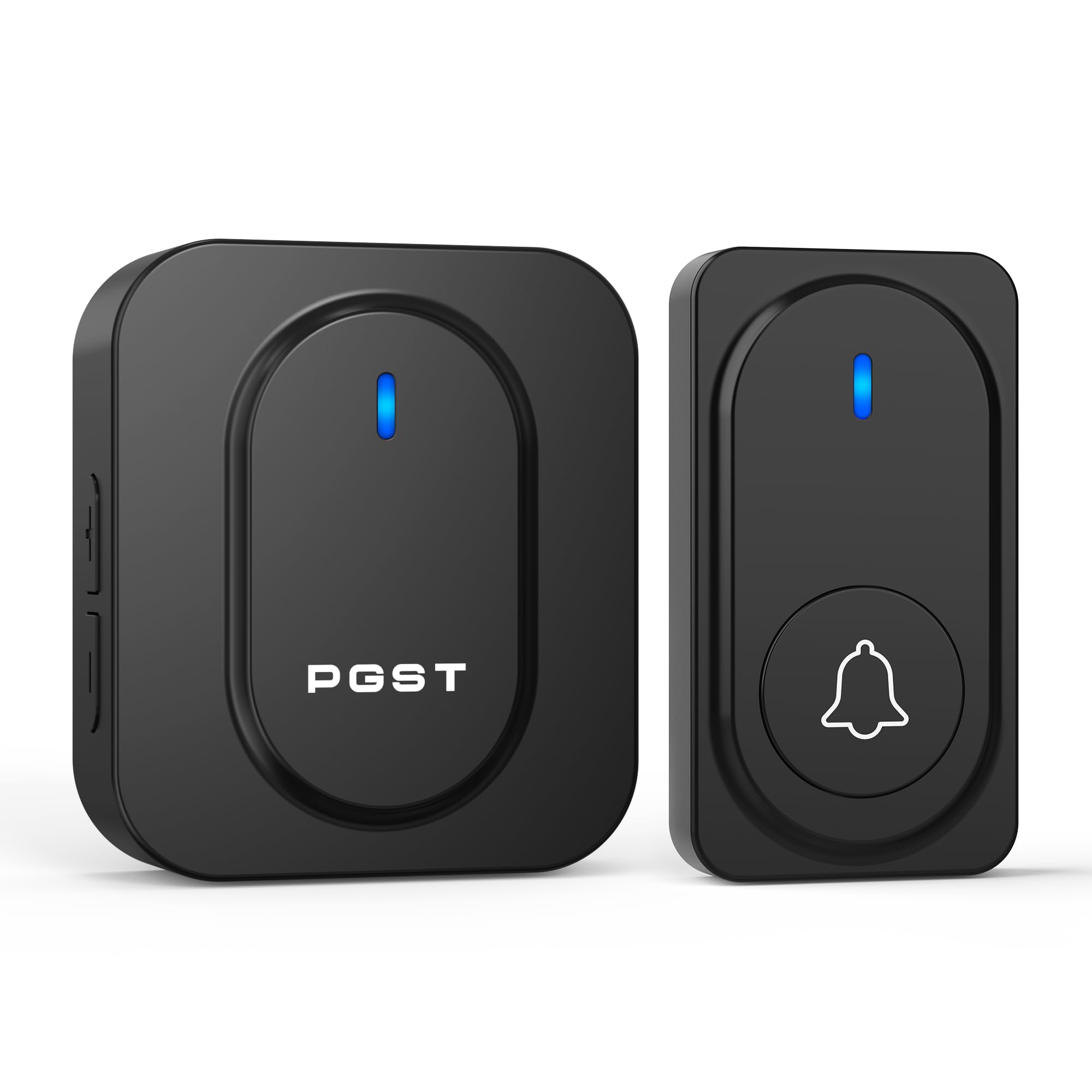
The PGST is the straightforward home doorbell of the group: a waterproof push button, a 1,000 ft range, and 36 chimes across seven volume levels. The memory function holds the chosen chime and volume through a power cycle instead of resetting, which is one of the small frustrations that drives support calls on cheaper units. It pairs out of the box with no app, hub or account, so installation is a battery and a mounting screw.
It suits a first-time buyer who wants a plain, reliable doorbell for a house or office without any connected features. The caution is that seven volume steps still top out at a chime-level volume rather than the near-alarm loudness of the AVANTEK, so very large or noisy properties may find it underpowered.
Trade-off: Volume tops out at a standard chime level, which can be lost in a large or noisy property.
5. SECRUI Wireless Doorbell with 2 Buttons
Range: 1,000 ft
Volume: 110 dB
Chimes: 58
Buttons: 2
Modes: Mute mode, colorful LED flashing
Waterproof: Yes

The SECRUI bundles two buttons with one receiver, so a front door and a back door (or a side gate) can ring the same chime. The 1,000 ft range and 110 dB volume put it near the top of the group for reach and loudness, and the mute mode with colorful LED flashing means the bell can go silent and still show a visual alert. It is the pick for a two-entrance home that wants one chime point without buying two separate systems.
It earns its place for households with more than one door to watch, and the LED flash is a genuine help for anyone hard of hearing. The caution is that both buttons ring the same receiver with the same chime, so the household cannot tell which door was pressed unless different tunes are assigned per button.
Trade-off: Both buttons share one receiver and one chime, so which door rang is not obvious by sound alone.
Before You Buy
- Range: Match the stated range to the distance between door and chime, and remember walls and floors cut it down — a 600 ft rating is an open-air figure.
- Power source: These are battery units; check whether the button and receiver both take standard batteries and how often they need changing.
- Waterproofing: Only the button needs to survive weather — confirm the button is rated for outdoor use, not just the receiver.
- Number of receivers: A large or multi-floor home benefits from two receivers in the box, as with the AVANTEK.
- Number of buttons: Two-door homes should look for a two-button kit like the SECRUI rather than buying two systems.
- Trigger type: A push button rings only when pressed; a motion sensor rings on movement, which suits shops but not busy hallways.
- Support model: Prefer units that pair without an app, account or subscription — no connected service means nothing to go down and no support queue to wait in.
Frequently Asked Questions
- Do these doorbells need Wi-Fi or an app? No — all five are self-contained wireless chimes that pair directly and run on batteries, with no account, hub or subscription required.
- Which pick has the longest range? The AVANTEK lists the longest range at 1,300 ft, followed by the PGST and SECRUI at 1,000 ft.
- Which is best for a shop or store entrance? The Motion Sensor Doorbell Alarm Buzzer, because it alerts on movement through a doorway rather than waiting for a button press.
- Which is best for a home with two doors? The SECRUI, which ships with two buttons ringing one receiver.
- Are these suitable for a rental? Yes — they mount with screws or adhesive and need no wiring, so nothing permanent has to be installed.
- What is the main reason doorbells need support? App pairing and account setup are the usual culprits, which is why these picks deliberately avoid connected features.
Bottom Line
For most buyers avoiding doorbells with poor support, the AVANTEK Wireless Doorbell is the safest pick: two receivers, a long range, a weatherproof button and no app or fees to troubleshoot. Shops and storefronts should take the motion sensor unit, while two-door homes get more value from the SECRUI kit. Every pick here is self-contained, so the fastest route to a working doorbell is to check the current price on Amazon and pair it in minutes.
