Why there are Amazon links here: Brave Review is paid a commission for qualifying Amazon purchases made through the links below. Your price does not change, and using our links is entirely optional. How this works
Siterwell GS525A Smoke Alarm 10-Pack: Whole-Home Coverage in One Box
The Siterwell GS525A is a 10-pack of photoelectric smoke alarms with a test-silence button and a 10-year battery backup, sold under the SITERLINK name. It is aimed at homeowners, landlords, and property managers who need to outfit an entire house in a single purchase rather than buying detectors one at a time. This review covers how the GS525A is built, what the sealed battery means for long-term upkeep, and where a bulk pack like this makes the most sense — and where it does not.
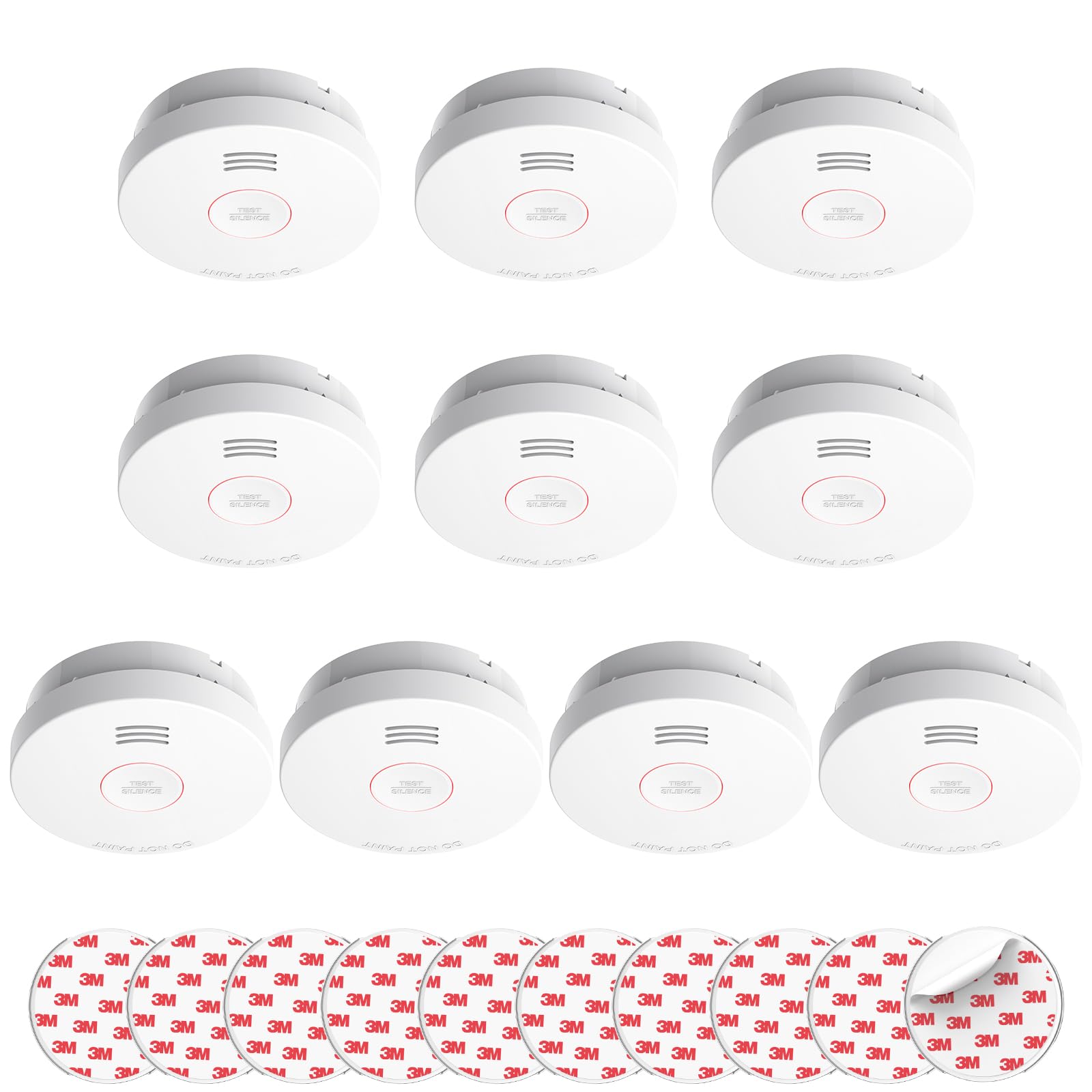
Features and Specifications
Product Name: Smoke Alarm with Test-Silence Button, Photoelectric Sensor Fire Alarms Smoke Detectors with LED Lights for Home SITERLINK Smoke Detectors 10 Year Battery Backup, GS525A 10 Pack
Sensor Type: Photoelectric
Power Source: 10-year battery backup
Controls: Test-Silence button
Indicator: LED lights
Pack Size: 10 units
Intended Use: Home smoke detection
ASIN: B0DJ6XPXTM
The headline feature here is the pack size. Ten alarms is enough to cover a typical single-family home — one per bedroom, one in the hallway outside the sleeping area, one on each level, and a spare or two for a basement, garage entry, or laundry room. Buying in bulk also means every unit matches, which simplifies maintenance and keeps the alarm sound consistent from room to room.
The photoelectric sensor is the other defining spec. Photoelectric alarms are generally better at catching smoldering, smoky fires — the kind that start in upholstery, bedding, or overloaded wiring — than ionization units, and they tend to be less prone to nuisance alarms from cooking steam and shower moisture. For a whole-house install where the alarms sit close to kitchens and bathrooms, that matters.
Build and Sensor Design
The GS525A uses a photoelectric sensing chamber, which works by detecting light scattered by smoke particles rather than by measuring ionized air. In practical terms, this design is the standard choice for living spaces and bedrooms, and it is the reason photoelectric units are often recommended over ionization models for areas near kitchens. The housing is a standard ceiling- or wall-mount design, so installation follows the usual bracket-and-screw routine that most homeowners and electricians already know.
Because these are battery-backed units rather than hardwired ones, there is no need to run interconnect wiring through walls or ceilings. That makes the 10-pack especially useful for older homes, rentals, and finished basements where adding wiring would be expensive or disruptive. The trade-off is that battery-only alarms are not interconnected — when one sounds, the others do not automatically join in, which is a meaningful difference from a hardwired system in a large house.
Power and the 10-Year Battery
The "10 Year Battery Backup" in the product name is the spec that drives the long-term cost calculation. A sealed lithium battery that lasts the life of the alarm means no annual battery swap, no ladder work every daylight-saving change, and no chirping at 2 a.m. because a nine-volt cell is dying. For a landlord managing multiple properties, that alone can justify the pack.
The flip side is that the battery is not user-replaceable in the conventional sense — when the battery reaches end of life, the whole alarm is replaced rather than recharged or refilled. That is a common design across the category, and it is why the 10-year figure should be read as the alarm’s service life, not just a battery claim. Buyers should plan on replacing the full set roughly a decade out, and should note the install date on each unit so the replacement cycle is easy to track.
Test-Silence Button and LED Indicators
The test-silence button serves two jobs. Pressed briefly, it runs a test cycle so the alarm’s horn and sensor can be checked without smoke. Pressed during a nuisance alarm — toast, a hot shower, a smoky pan — it temporarily silences the horn so the unit does not have to be fanned or pulled down. That second function is the one that gets used most, and it is a genuine quality-of-life feature in a home where the alarm sits near a kitchen.
The LED lights provide status at a glance: a normal heartbeat blink confirms the unit is powered and monitoring, while a different pattern signals alarm or fault. In a 10-pack install, that visual check is faster than testing every unit by hand, and it gives a landlord a quick way to confirm all ten are live during a turnover inspection.
Maintenance and Whole-Home Coverage
Maintenance on the GS525A is deliberately minimal: dust or vacuum the sensor openings periodically, press the test button monthly, and log the install date. There is no battery to change, which removes the single most common reason smoke alarms fail in real homes — a removed or dead battery. The 10-pack structure supports a simple routine where all units are tested on the same day each month.
The caution with any bulk battery-only pack is coverage planning. Ten alarms go fast in a large multi-level home, and a buyer who needs more than ten will be buying a second pack. It is worth sketching the floor plan before ordering — one alarm per bedroom, one in the hallway outside each sleeping area, and one per level is the usual baseline, and that count can exceed ten in bigger houses.
Trade-off: The battery-only, non-interconnected design keeps installation simple and cost low, but it means a smoke event in one room will not automatically trigger the alarms elsewhere in the house.
Check the current price on Amazon
Who the GS525A Is For
The clearest fit is a homeowner doing a full alarm refresh in one order. Ten matching photoelectric units with sealed batteries cover a typical three-bedroom house with room to spare, and the single purchase removes the guesswork of matching models across rooms. Landlords and property managers are the second strong fit: a 10-pack covers a small rental, and the sealed battery simplifies turnover inspections because there is no missing-battery problem to chase.
The GS525A is a weaker fit for large homes with more than ten detection points, for buyers who specifically want interconnected alarms that sound together, and for anyone who prefers a hardwired system tied into home electrical. It is also not the right pick for a single-apartment buyer who needs two or three alarms — the pack size would leave most of the box in storage.
FAQ
-
What type of sensor does the Siterwell GS525A use?
It uses a photoelectric sensor, which is generally better suited to smoldering fires and less prone to nuisance alarms from cooking and steam than ionization sensors. -
How many smoke alarms come in the GS525A pack?
The pack contains 10 alarms, which is enough to cover a typical single-family home with a few spares for a basement or utility area. -
Does the GS525A need to be hardwired?
No. It is a battery-backed unit, so installation does not require running electrical wiring through walls or ceilings, which makes it practical for older homes and rentals. -
What does the 10-year battery backup mean in practice?
The sealed battery is designed to last the service life of the alarm, so there is no annual battery replacement. When the battery reaches end of life, the alarm itself is replaced. -
Can the alarm be silenced during a false alarm?
Yes. The test-silence button temporarily silences the horn during a nuisance alarm, such as smoke from cooking, and also runs a manual test cycle. -
Are the alarms in the pack interconnected?
No. These are standalone battery units, so an alarm in one room does not automatically trigger the others. Buyers who want whole-home interconnection should look at hardwired or wirelessly linked systems. -
Where should the 10 alarms be placed?
The usual layout is one per bedroom, one in the hallway outside each sleeping area, and one on each level of the home, including the basement. A floor plan sketch before ordering helps confirm ten is enough. -
What do the LED lights indicate?
The LEDs show status at a glance — a normal blink confirms the unit is powered and monitoring, while other patterns signal an alarm or a fault condition. -
Is the GS525A suitable for rental properties?
It is a practical choice for landlords because the sealed battery removes the missing-battery problem and the matching pack simplifies inspections and replacements across units. -
How should the alarms be maintained?
Vacuum or dust the sensor openings periodically, press the test button monthly, and record the install date on each unit so the replacement cycle is easy to track.
Bottom Line
The Siterwell GS525A 10-Pack is the straightforward answer for a homeowner or landlord who needs to equip a whole house at once with photoelectric alarms and sealed 10-year batteries. The test-silence button and LED status lights make day-to-day management easy, and the matching pack keeps maintenance on one schedule. Buyers who need interconnected alarms or more than ten detection points should look elsewhere — but for a standard home refresh, this pack covers the job in a single order.