Why there are Amazon links here: Brave Review is paid a commission for qualifying Amazon purchases made through the links below. Your price does not change, and using our links is entirely optional. How this works
DJI Power 1000 V2 Portable Power Station: A 1024Wh LFP Battery for Home Backup and Camping
The DJI Power 1000 V2 is a portable power station built around a 1024Wh lithium iron phosphate battery, aimed at buyers who want a compact unit for home backup, camping and RV trips. This review covers its specifications, what the build and capacity mean in practice, and the trade-offs that come with the design. The short version: it suits buyers who prioritize fast recharge times and a stable output in a compact body, and it is not the right pick for anyone chasing maximum capacity per dollar.
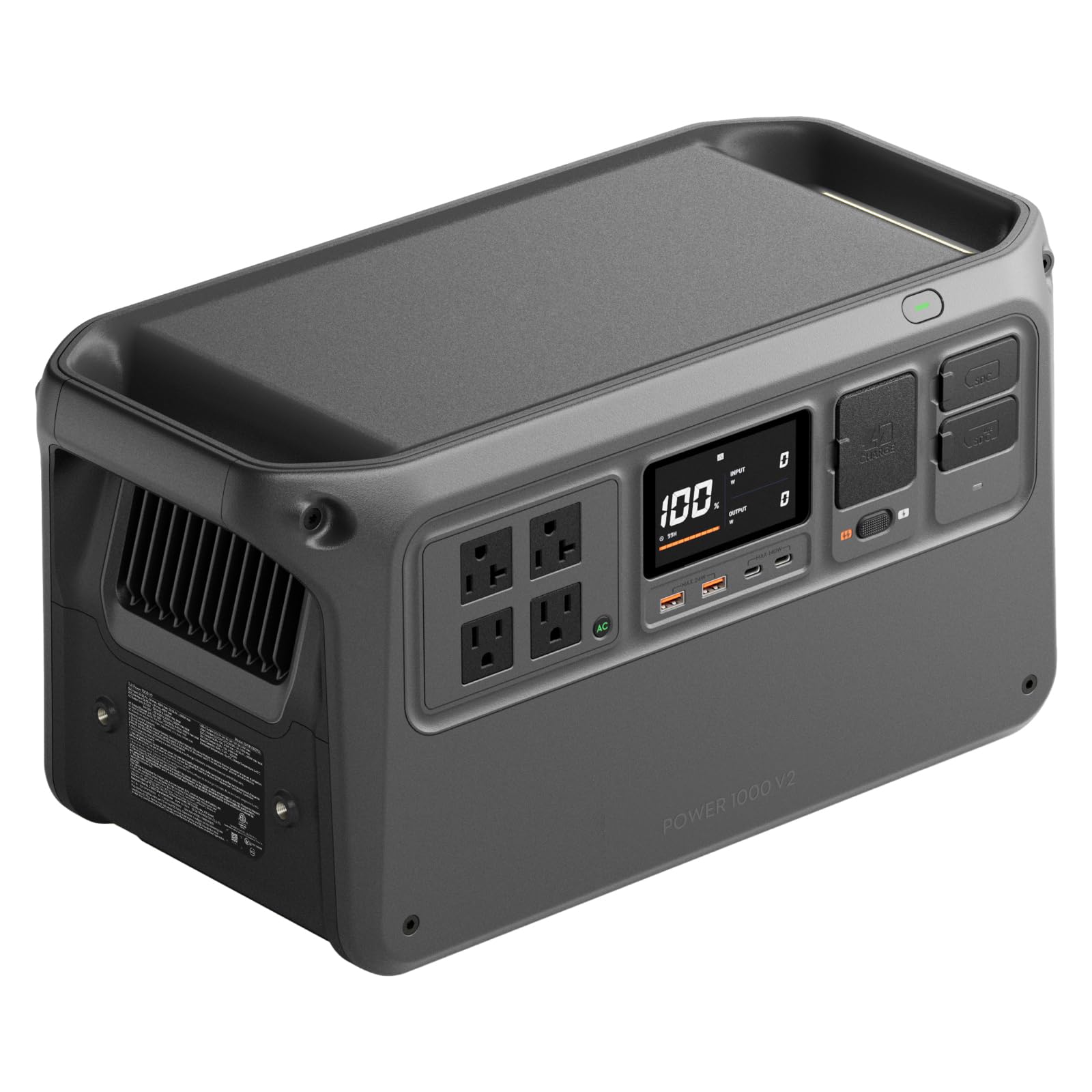
Features and Specifications
Type: Portable power station / electric generator
Battery Chemistry: LFP (lithium iron phosphate)
Battery Capacity: 1024Wh
Output: 2600W stable output
Recharge Time: 0–80% in 37 minutes
Form Factor: Compact size
Intended Use: Home use, camping, RVs, outdoors
The headline figure is the 1024Wh capacity paired with a 2600W stable output. That combination puts the DJI Power 1000 V2 in the mid-size class of portable power stations — enough to run a fridge, a CPAP machine, a laptop setup or a small appliance load through an outage, and enough to keep a campsite or RV powered for a day or two depending on draw.
The LFP chemistry is the other number worth understanding. Lithium iron phosphate batteries are heavier than some alternatives at the same capacity, but they are known for a longer usable lifespan and better thermal stability. For a unit that will sit in a garage or the back of an RV for years, that is the more relevant spec than raw capacity.
Build and Design
The compact form factor is the defining physical trait here. A 1024Wh station is not a pocket device, but DJI has positioned this one as smaller than the capacity class would suggest. That matters for buyers who need to move it from a closet to a kitchen counter during an outage, or load it into a vehicle for a camping weekend.
A compact body usually means a trade-off in handle ergonomics or port placement, and buyers should expect a denser, heavier lift than a smaller station. The compact size is a convenience, not a weight reduction — the battery still has to go somewhere.
Capacity and Power Output
The 1024Wh capacity is the practical ceiling on everything the unit does. Run a 2600W load and the battery drains in well under an hour; run a few hundred watts of electronics and it stretches across a day. That range is what makes the station useful for both backup and outdoor use rather than one or the other.
The 2600W stable output is the more interesting spec for home backup. Stable output means the unit is designed to hold a consistent waveform under load, which is what sensitive electronics and motor-driven appliances need. Buyers planning to run a fridge, a furnace fan or a sump pump should size their loads against that 2600W figure and the 1024Wh reserve together.
Recharging Speed
The 0–80% recharge in 37 minutes is the standout feature of this model. Most portable power stations in this capacity class take hours to recharge from a wall outlet; a sub-40-minute top-up changes how the unit gets used. It can be recharged between errands, during a short generator run, or in the gap before a storm arrives.
That speed depends on the charging source and the circuit it is plugged into, so buyers should treat the 37-minute figure as the best-case wall-charging number rather than a guarantee. It is still the strongest argument for this unit over slower competitors at a similar capacity.
Maintenance and Longevity
LFP batteries are the low-maintenance choice in this category. They do not need the careful partial-charging discipline that older lithium chemistries demanded, and they hold up better to being stored at partial charge. For a unit that lives in a closet between outages, that is the difference between a battery that is ready when needed and one that has degraded from neglect.
Buyers should still plan to top the unit up periodically and store it away from extreme heat. The compact body means less thermal mass around the cells, so a hot car trunk in summer is a worse home for it than a climate-controlled garage.
Trade-off: The compact body and LFP chemistry push the price up relative to capacity, so buyers who only need occasional small-device charging will pay for capability they rarely use.
Check the current price on Amazon
Who It Suits and Who It Does Not
The DJI Power 1000 V2 suits buyers who want one unit that covers home backup and outdoor trips, and who value fast recharging over maximum capacity per dollar. It fits RV owners, campers who bring real appliances, and homeowners who want a compact station they can move room to room.
It is not the right pick for buyers on a tight budget who only need to charge phones and a laptop — a smaller, cheaper station does that job. It also is not for anyone who needs to run high-draw appliances for many hours; that requires a larger capacity class or a fuel generator.
FAQ
-
What can the DJI Power 1000 V2 run?
With a 1024Wh battery and 2600W stable output, it can run fridges, fans, lights, laptops, medical devices and small appliances. High-draw appliances work but drain the battery quickly. -
How long does the DJI Power 1000 V2 take to recharge?
The unit recharges from 0 to 80% in 37 minutes under ideal wall-charging conditions. Actual times depend on the charging source and circuit. -
Is the DJI Power 1000 V2 good for home backup?
Yes, for short outages and essential loads. The 1024Wh capacity covers electronics, lights and a fridge for a limited window, not whole-home backup. -
What is an LFP battery and why does it matter?
LFP stands for lithium iron phosphate. It is a battery chemistry known for longevity and thermal stability, which suits a station that sits in storage between uses. -
Can the DJI Power 1000 V2 be used while camping?
Yes. The compact size and 1024Wh capacity make it a fit for car camping and RV trips where real appliances come along. -
Is 1024Wh enough for an RV?
It covers lights, electronics and a fridge for a stretch, but not air conditioning or long high-draw runs. RV owners with heavy loads need more capacity. -
How much does the DJI Power 1000 V2 weigh?
The compact body is denser than its size suggests, and LFP cells are heavier than some alternatives. Buyers should plan for a two-handed lift. -
Does the DJI Power 1000 V2 work with solar panels?
The product is positioned for home, camping and RV use, and portable power stations in this class typically accept solar charging. Buyers should confirm panel compatibility before pairing. -
Is the DJI Power 1000 V2 worth the price?
It is worth it for buyers who value fast recharging, LFP longevity and a compact body. Buyers who only need small-device charging will find cheaper options. -
What is the difference between the DJI Power 1000 V2 and a gas generator?
The power station is quiet, emission-free and safe indoors, but it stores a fixed 1024Wh rather than generating fuel-backed power indefinitely. It suits short outages and outdoor use, not multi-day whole-home backup.
Bottom Line
The DJI Power 1000 V2 is the pick for buyers who want a compact, LFP-based portable power station with genuinely fast recharging and enough stable output for essential home loads and outdoor trips. The trade-off is price relative to capacity — this is a capability purchase, not a bargain one. Buyers who fit that profile should check the current price on Amazon and confirm availability.
