Why there are Amazon links here: Brave Review is paid a commission for qualifying Amazon purchases made through the links below. Your price does not change, and using our links is entirely optional. How this works
Best Smart Heating Controls for a Fast Payback Period
The payback period for smart heating controls depends on three things: what the home already heats with, whether the device matches that system, and how much of the day the space sits empty. This roundup covers five controls that range from a budget programmable unit to a whole-zone radiant system, so a shopper can match the device to the house instead of the other way around.
It is written for three buyer profiles: the renter or first-time smart-home buyer watching every dollar, the homeowner with electric baseboard heaters looking for the quickest return, and the renovator who wants underfloor or radiator zones wired in properly from the start. The overview table below puts all five side by side.
Overview of the Picks
| Product | Key Spec | Best Use | Price Tier |
|---|---|---|---|
| Ultra-slim 13mm Programmable Heating Thermostat | 6-period weekly programming, ±1℃ control | Simple scheduled heating on a budget | Budget |
| Mysa Smart Thermostat LITE | 120V–240V, HomeKit/Alexa/Google | Electric baseboard heaters | Mid-range |
| meross Matter Smart Thermostat | 120–240V, Matter, four ecosystems | Baseboard heat with multi-brand setups | Mid-range |
| WiFi Smart Wired Thermostat with Smartcare | Underfloor and radiator control, Matter | Radiant zones in a renovation | Premium |
| Menstrual Heating Pad | Rechargeable, cordless, heat and massage | Personal warmth, not home heating | Budget |
Ultra-slim 13mm Programmable Heating Thermostat
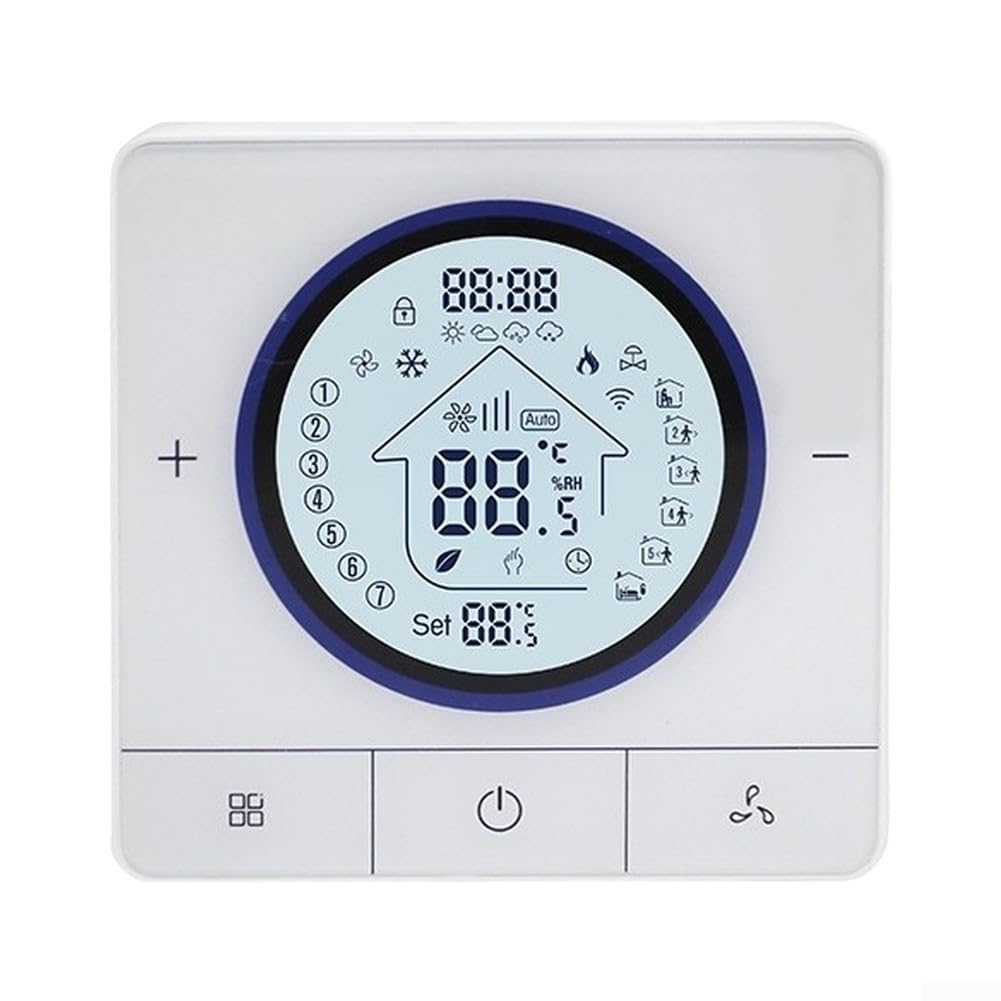
Type: Wired programmable heating thermostat
Profile: Ultra-slim 13mm design
Control: ±1℃ precision
Programming: 6 periods per week
Display: Clear LED screen
Price tier: Budget
This is the classic payback play: a wired thermostat that replaces a manual dial or a dumb timer and asks nothing of the home network. The six-period weekly schedule lets a household carve out morning warm-up, daytime setback, evening comfort, and overnight setback without buying into an app ecosystem. The ±1℃ control band is tighter than most mechanical dials manage, and the slim housing sits close to the wall for a clean finish.
The LED screen is large enough to read temperatures and schedule steps at a glance, which matters for anyone who does not want to open a phone to change a setpoint. Because it is a wired unit, installation means working at the wall plate behind the existing thermostat, and the schedule is set on the device itself rather than remotely.
Trade-off: There is no app or voice control here, so a household that wants remote setback from the car or a vacation override will find the feature set thin.
Check the current price on Amazon
Mysa Smart Thermostat LITE for Electric Baseboard Heaters
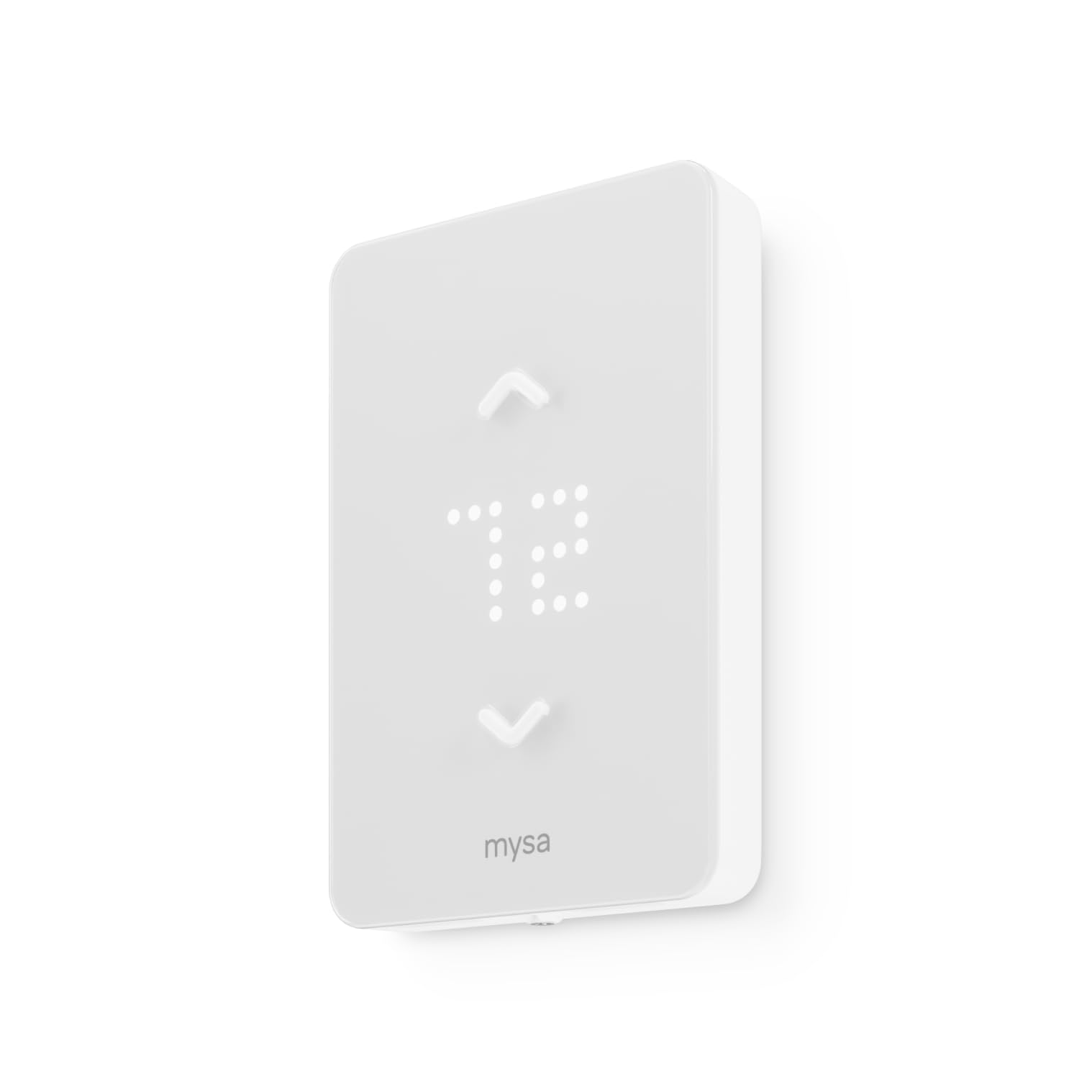
Type: WiFi smart thermostat for electric baseboard
Voltage: 120V–240V
Scheduling: 7-day
Ecosystems: HomeKit, Alexa, Google
Claimed savings: Up to 26% on heating
Price tier: Mid-range
Electric baseboard is one of the most expensive ways to heat a home per hour, which makes it the system where a smart control pays for itself soonest. Mysa’s LITE model is purpose-built for line-voltage baseboard circuits, handling both 120V and 240V installs, and the seven-day schedule allows a different pattern for weekends than weekdays. HomeKit, Alexa, and Google support means it slots into whichever assistant the household already uses.
The brand’s own figure of up to 26% savings on heating is the number most buyers anchor to, and it is achievable when a schedule actually matches occupancy rather than defaulting to constant heat. The LITE version keeps the essentials and trims the extras, which is why it sits below the company’s full-featured models.
Trade-off: It is designed for electric baseboard, so a household with a gas furnace, heat pump, or hydronic radiators needs a different control entirely.
Check the current price on Amazon
meross Matter Smart Thermostat for Electric Baseboard Heaters
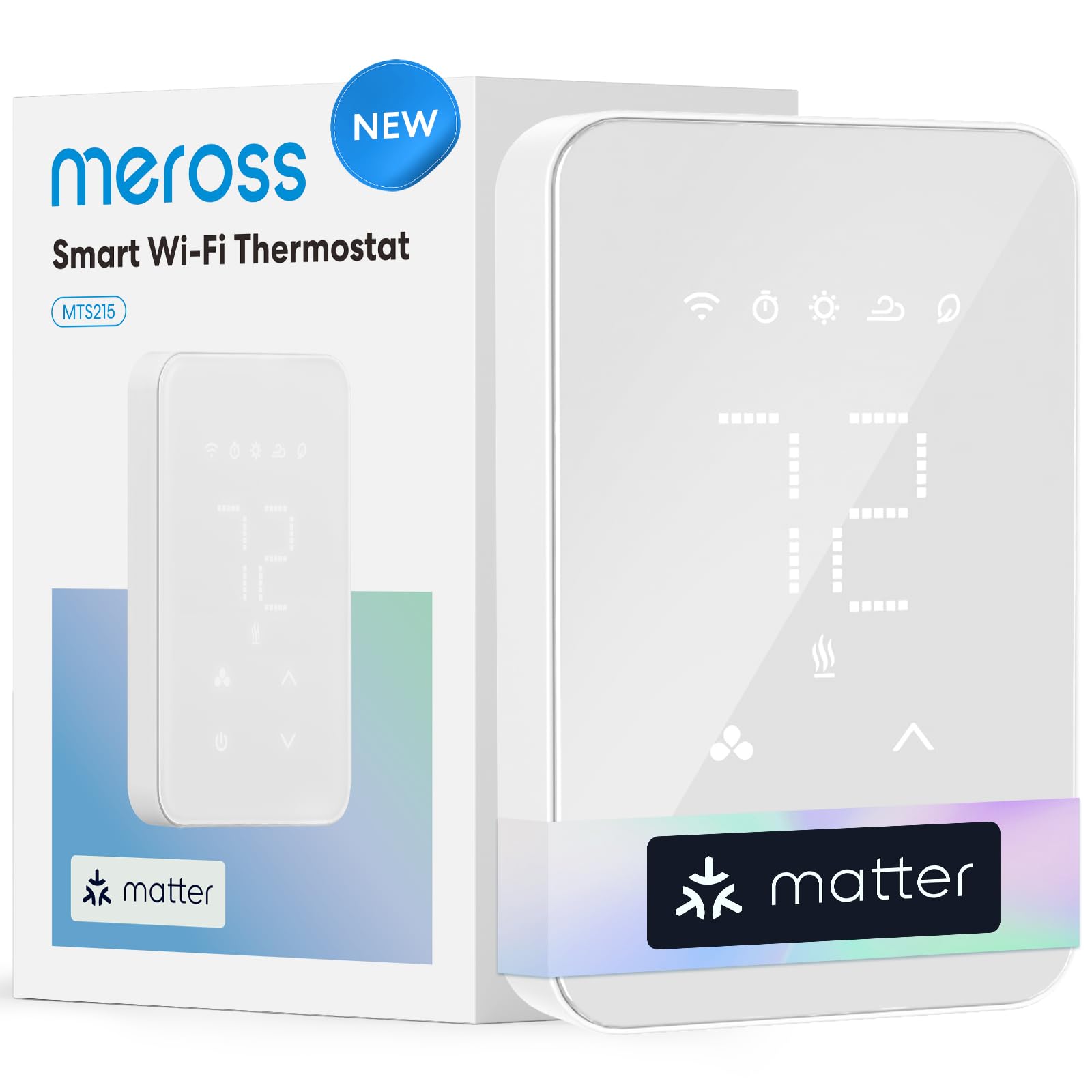
Type: WiFi programmable thermostat, Matter
Voltage: 120–240V
Ecosystems: HomeKit, Alexa, Google Home, SmartThings
Control: Remote
Price tier: Mid-range
This meross unit targets the same electric baseboard audience as the Mysa but leans harder into ecosystem flexibility. Matter support plus explicit HomeKit, Alexa, Google Home, and SmartThings compatibility means it is one of the few line-voltage thermostats that will not force a household to pick a side. Remote control from a phone allows setback from anywhere, which is where most of the real savings come from.
Programmability and energy-saving scheduling are built in, and the 120–240V range covers the common residential baseboard circuits. For a home already standardized on Matter, adding this to an automation routine alongside lights and plugs is straightforward.
Trade-off: Matter setups still depend on a hub or border router for some integrations, and buyers without one may find the out-of-box experience less plug-and-play than the listing implies.
Check the current price on Amazon
WiFi Smart Wired Thermostat with Smartcare
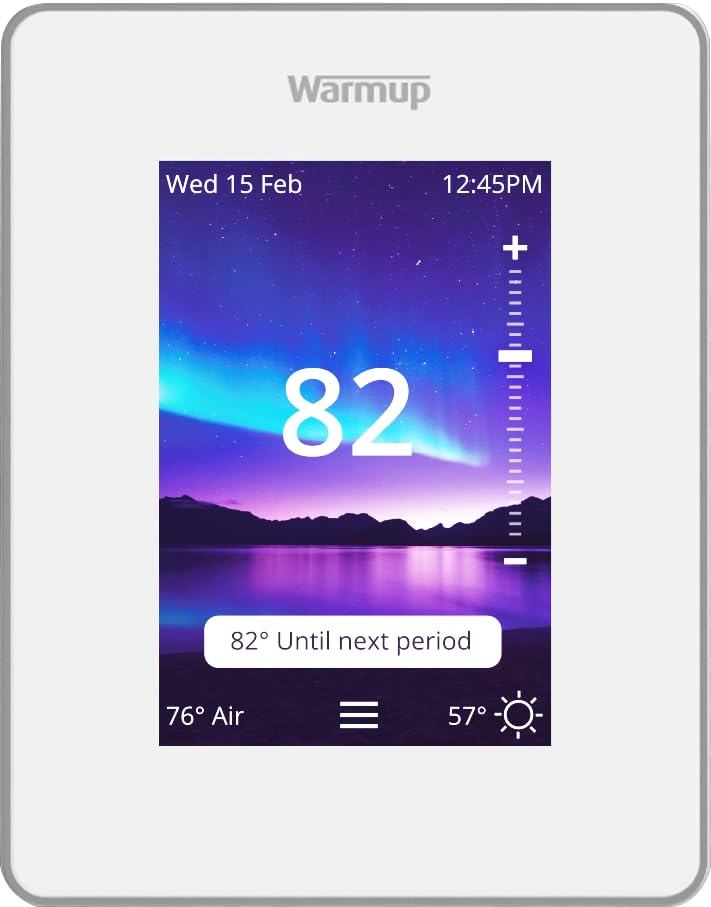
Type: WiFi wired radiant heat thermostat
Zones: Single zone
Systems: Underfloor and radiator heating
Technology: Matter
Installation: DIY
Colour: White
Price tier: Premium
This is the specialist pick. It is built for radiant systems — underfloor loops and radiators — rather than forced-air or baseboard, and it controls a single zone. Matter support keeps it interoperable with modern smart-home platforms, and the DIY installation claim means a competent homeowner can handle the swap without a contractor visit. The white housing is designed to disappear into a wall.
Radiant heat is slow to respond, so the value of a smart control here comes from long, gentle pre-heating cycles rather than rapid setback. A single-zone unit suits one room, one floor, or one manifold, and a whole-house radiant install will need several.
Trade-off: The single-zone limitation and the premium price mean the payback math only works when the zone being controlled is large or heated for long hours.
Check the current price on Amazon
Menstrual Heating Pad for Period Cramps

Type: Wearable cordless heating pad
Features: Heat and massage
Power: Rechargeable, wireless
Use: Personal pain relief
Price tier: Budget
This entry is included because it surfaces in heating-control searches and deserves a clear answer: it is a personal wearable, not a home heating control. It delivers targeted heat and massage to the lower abdomen, runs cordless off a rechargeable battery, and is designed to be worn under clothing while moving around. For someone whose actual goal is comfort rather than a lower utility bill, it does that job well.
It has no scheduling, no thermostat function, and no connection to a heating system, so it contributes nothing to a payback calculation on home energy.
Trade-off: Buyers researching heating payback should skip this one — it is a personal care device and will not reduce a heating bill by any amount.
Check the current price on Amazon
Before You Buy
- System compatibility: Match the control to the heat source first — line-voltage baseboard, radiant underfloor, radiator, or a low-voltage furnace all need different hardware.
- Voltage: Confirm the circuit voltage before ordering; a 120V-only home cannot use a 240V-only unit without changes.
- Zones: A single-zone thermostat controls one loop or one room, so a multi-zone home needs one device per zone to see the full saving.
- Ecosystem: Check which assistants and hubs the household already runs; Matter support widens options but may still need a border router.
- Scheduling depth: More programmable periods per day allow tighter setbacks, which is where most of the payback comes from.
- Installation: Wired thermostats involve mains wiring at the wall plate; a qualified electrician is the safe route where local rules require it.
Frequently Asked Questions
-
How long is the payback period for smart heating controls?
It varies with climate, energy price, and how much the schedule actually reduces run time. Homes that are empty during the day and heated around the clock tend to see the fastest return; a device that costs more than a season’s savings will take longer. -
Which control pays back fastest?
A budget programmable thermostat on electric baseboard usually wins, because baseboard is expensive to run and the hardware cost is low. Premium radiant controls pay back more slowly unless the zone is large. -
Do smart thermostats work with electric baseboard heaters?
Only line-voltage models rated for 120V–240V do. Standard low-voltage thermostats are not compatible with baseboard circuits. -
Is a smart thermostat worth it in a home that is occupied all day?
Less so. Savings come mainly from setback during empty hours, so a household that is home around the clock sees a smaller benefit. -
Can a renter install one?
Only with landlord approval, since wired thermostats modify the property’s electrical fittings. Plug-in or portable options avoid that issue. -
Does Matter support matter for payback?
Not directly for energy savings, but it extends useful life and avoids lock-in, which protects the investment when a household changes platforms.
Bottom Line
For the fastest payback period for smart heating controls, the Mysa Smart Thermostat LITE for Electric Baseboard Heaters is the strongest pick: it targets the most expensive common heating type, spans 120V–240V, and works with all three major assistants. Buyers on a tight budget who only need a schedule should look at the ultra-slim programmable unit, while radiant-system owners should go straight to the WiFi Smart Wired model.
