Why there are Amazon links here: Brave Review is paid a commission for qualifying Amazon purchases made through the links below. Your price does not change, and using our links is entirely optional. How this works
Reolink Duo 3 PoE vs Reolink Duo 3V: Which Panoramic PoE Camera Fits the Job
The Reolink Duo 3 PoE and the Reolink Duo 3V are two dual-lens PoE cameras built to cover a wide area without panning motors. The Duo 3 PoE is the value pick for general home coverage, while the Duo 3V adds higher resolution and a vandal-resistant housing for exposed or public-facing spots. The short version: pick the Duo 3V for maximum detail and durability, the Duo 3 PoE for budget-conscious coverage.
This comparison covers the dimensions that actually separate them — resolution, build, mounting, storage and price tier — so the choice takes minutes rather than hours.
Overview of the Two Picks
| Product | Key Spec | Best Use | Price Tier |
|---|---|---|---|
| Reolink Duo 3 PoE | Dual-lens 180° panoramic view, person/vehicle/animal detection, up to 512GB microSD | Whole-yard or driveway coverage on a budget | Lower |
| Reolink Duo 3V PoE | 16MP UHD dual-lens, IK10 vandal-proof, wall mount bracket included | High-detail coverage in exposed or public-facing areas | Higher |
Reolink Duo 3 PoE
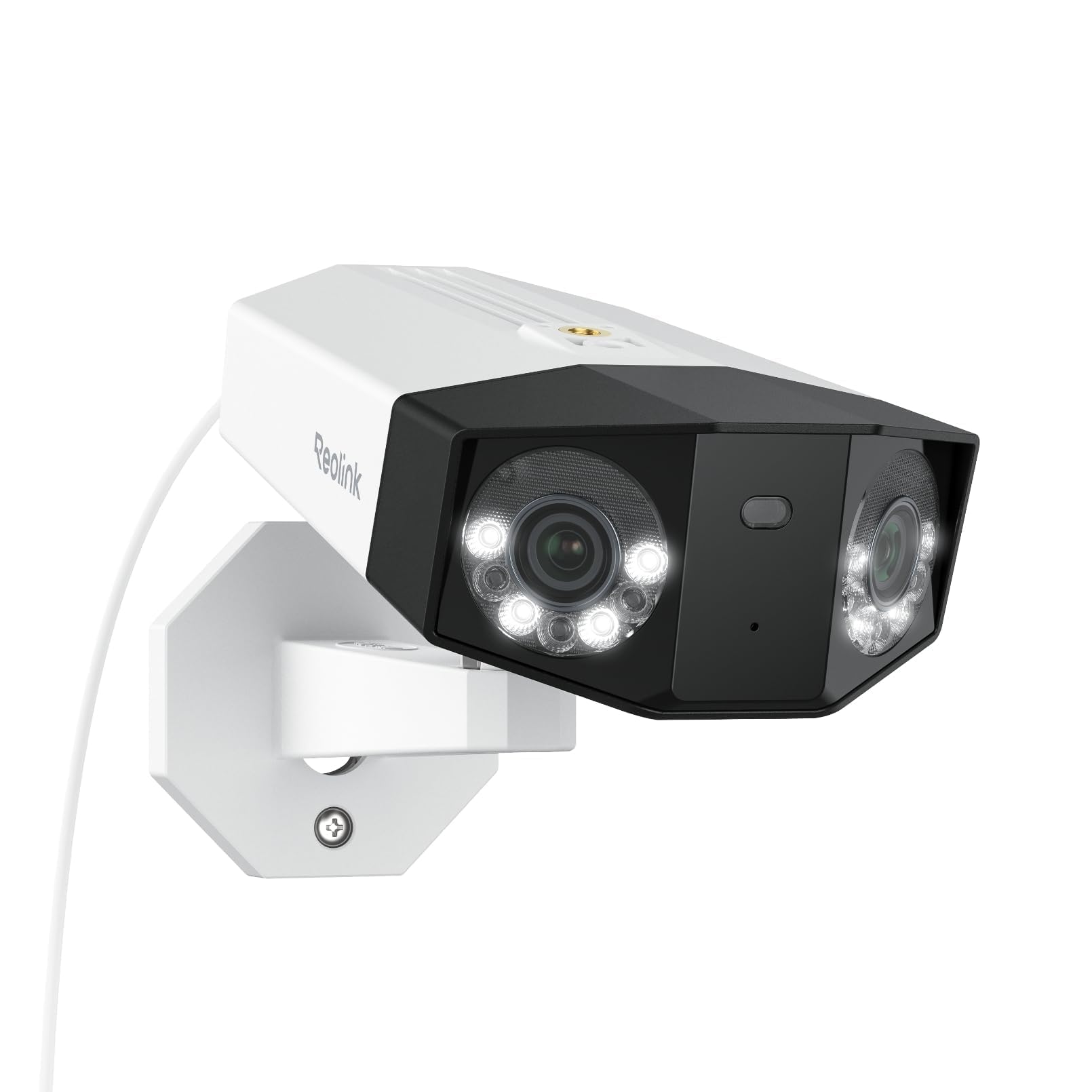
Type: Dual-lens PoE security camera
View: 180° panoramic
Night Vision: Color night vision with F1.6 lens
Detection: Person, vehicle and animal
Audio: Two-way talk
Storage: Up to 512GB microSD card
Recording: 24/7 and motion-triggered
The Duo 3 PoE is built around a dual-lens array that stitches two views into a single 180° frame, so a wide yard, driveway or side path can be watched without a moving head. Motion tracking keeps a subject in frame once detection fires, and the person/vehicle/animal classification cuts down on alerts triggered by wind-blown branches. The F1.6 aperture is designed to pull color out of low-light scenes rather than dropping straight to black-and-white infrared.
Power over Ethernet means one cable carries both data and power, which suits buyers who already run PoE to outdoor cameras or plan to. Two-way talk makes it usable as a front-door camera where couriers and visitors need to be addressed. Local recording to the onboard microSD slot removes any subscription requirement for basic footage.
Trade-off: The lower resolution tier means less fine detail when zooming into faces or plates at distance, and the housing is not rated as vandal-proof — a poor fit for street-level fences or public walkways.
Check the Reolink Duo 3 PoE on Amazon
Reolink Duo 3V PoE
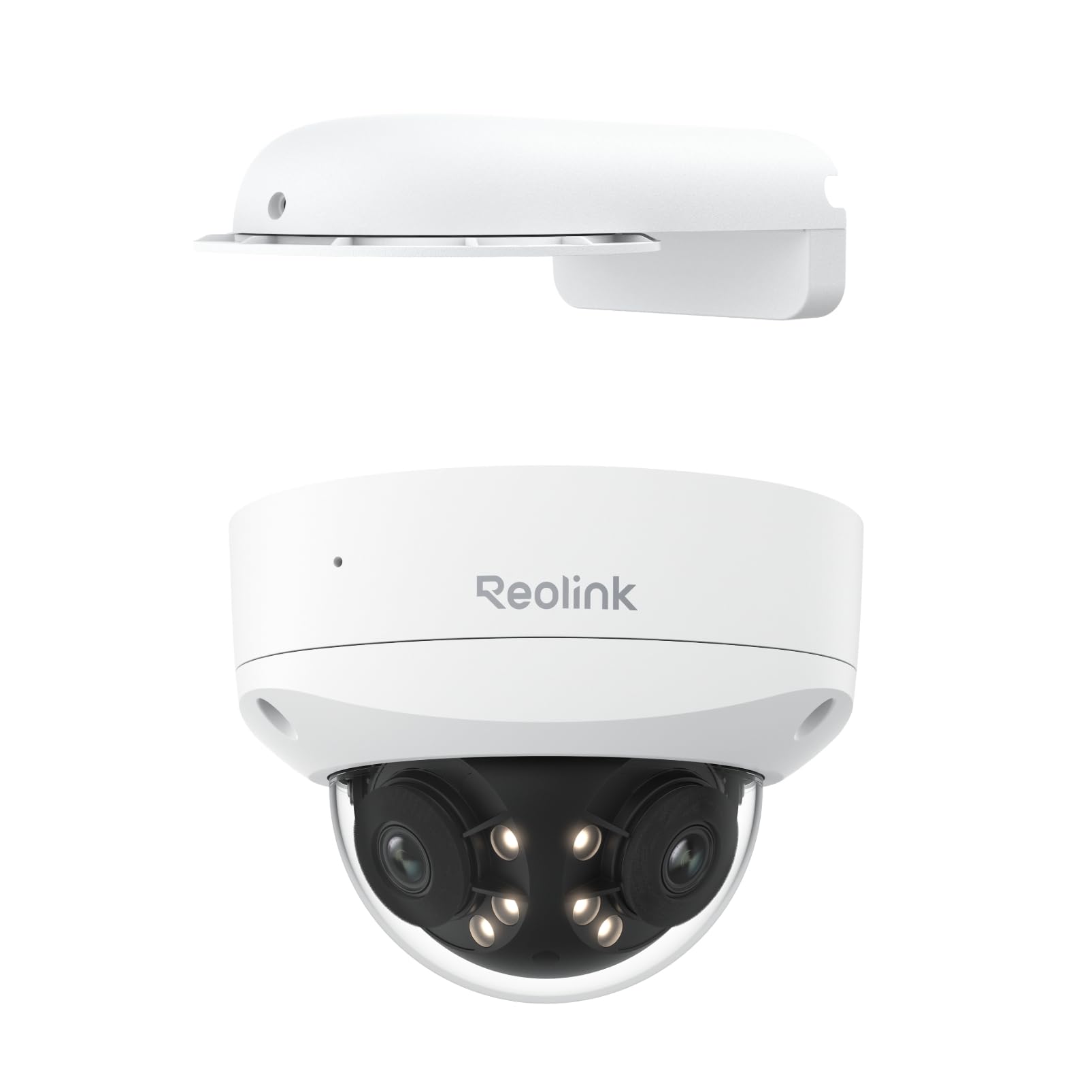
Type: Dual-lens PoE security camera
View: 180° panoramic
Resolution: 16MP UHD
Rating: IK10 vandal-proof
Night Vision: Color night vision
Detection: Smart detection
Audio: Two-way talk
Mount: Wall mount bracket RLA-BKW4 included
The Duo 3V takes the same 180° panoramic concept and pushes two things harder: image detail and physical durability. The 16MP UHD dual-lens sensor is aimed at buyers who want to crop into a wide frame and still read a face or a license plate — a common complaint with panoramic cameras that spread a smaller sensor across a huge field of view.
The IK10 vandal-proof rating is the headline differentiator for many buyers. IK10 is the top impact-protection class for enclosures, which matters for cameras mounted at reachable heights, on commercial premises, or facing a street where thrown objects are a real risk. Motion tracking, smart detection, color night vision and two-way talk all carry over, so the upgrade is about resolution and toughness rather than features. The included wall mount bracket removes a separate purchase from the install.
Trade-off: The higher resolution and armored housing push the price above the Duo 3 PoE, and the 16MP sensor produces larger files — a real consideration for buyers recording 24/7 to a microSD card or a small NVR.
Check the Reolink Duo 3V PoE on Amazon
Side-by-Side Specs
| Dimension | Reolink Duo 3 PoE | Reolink Duo 3V PoE |
|---|---|---|
| Lens setup | Dual-lens | Dual-lens |
| Field of view | 180° panoramic | 180° panoramic |
| Resolution | Not the UHD tier | 16MP UHD |
| Housing | Standard | IK10 vandal-proof |
| Night vision | Color, F1.6 aperture | Color night vision |
| Detection | Person/vehicle/animal | Smart detection |
| Motion tracking | Yes | Yes |
| Two-way talk | Yes | Yes |
| Power | PoE | PoE |
| Local storage | Up to 512GB microSD | microSD (card not listed in name) |
| Mount included | Camera mount | Wall mount bracket RLA-BKW4 |
How the Dimensions Separate Them
Resolution is the first fork. The Duo 3V’s 16MP UHD dual-lens array is the reason to pay more. Buyers who need to identify a person at the far end of a long driveway, or read a plate across a parking area, will find the extra pixels do the work. The Duo 3 PoE still delivers a full 180° frame with color night vision, but it is the choice for buyers who need to see what happened rather than who did it.
Build quality is the second fork. IK10 vandal-proofing is not a marketing nicety — it is the difference between a camera that survives a thrown stone and one that does not. Anyone mounting at head height, on a shopfront, or along a public footpath should treat this as the deciding spec. Buyers mounting high on a private wall can reasonably save the money.
Storage and file size cut the other way. The Duo 3 PoE name explicitly supports up to 512GB microSD, which is generous for a 24/7 recording schedule at its resolution. The Duo 3V records bigger frames, so the same card fills faster — buyers planning continuous recording should budget for a larger card or an NVR. Neither camera requires a subscription for local footage.
Mounting and installation are close. Both are PoE, so both need a single Ethernet run to a PoE switch or injector. The Duo 3V ships with a wall mount bracket in the box, which is a small but real saving in time and cost. Buyers without existing PoE infrastructure should factor in a switch or injector for either camera.
Price tier settles the rest. The Duo 3 PoE sits lower, the Duo 3V higher. The gap buys resolution and impact protection, nothing else — features, app control and detection logic are shared across the pair.
Which Should You Buy?
Choose the Reolink Duo 3 PoE if: coverage matters more than identification, the camera will sit high out of reach on a private property, and the budget is the binding constraint. It is also the better fit for buyers recording 24/7 to a microSD card who want longer retention from the same card.
Choose the Reolink Duo 3V PoE if: the camera faces a street, a shopfront or any reachable surface, or the footage needs to stand up to a zoom into faces and plates. The IK10 housing and 16MP sensor are the two reasons to spend more, and both are genuinely useful in exposed locations.
Buyers who are unsure should start with the question of height and access. If the camera can be reached or struck, the Duo 3V is the safer purchase. If it is mounted well out of reach on private property, the Duo 3 PoE covers the same 180° for less.
FAQ
-
What is the main difference between the Reolink Duo 3 PoE and the Duo 3V?
The Duo 3V adds a 16MP UHD dual-lens sensor and an IK10 vandal-proof housing, plus a wall mount bracket in the box. The Duo 3 PoE shares the 180° panoramic dual-lens design, color night vision, motion tracking and two-way talk at a lower price tier. -
Do both cameras need a subscription?
No. Both record locally, and the Duo 3 PoE name explicitly supports microSD cards up to 512GB. Subscription-free local recording is the norm for this camera class. -
Which one is better for a shopfront or street-facing wall?
The Duo 3V. Its IK10 vandal-proof rating is designed for enclosures that may be struck, and the higher resolution helps identify people at distance — both useful in public-facing installations. -
Can both cameras see 180 degrees?
Yes. Both are dual-lens panoramic cameras with a 180° field of view, so a single unit covers a wide yard, driveway or storefront without a panning motor. -
Is PoE hard to install?
It requires one Ethernet cable from the camera to a PoE switch or injector, which carries both power and data. Buyers without existing PoE gear need to add a switch or injector for either camera. -
Which records longer on the same microSD card?
The Duo 3 PoE, because its lower resolution produces smaller files. The Duo 3V’s 16MP frames fill a card faster during continuous recording. -
Do both have color night vision and two-way talk?
Yes. Color night vision, two-way talk, motion tracking and smart detection appear on both product names, so those features do not decide the choice.
Bottom Line
The Reolink Duo 3V PoE is the stronger camera overall — 16MP UHD detail and IK10 vandal-proofing are real upgrades that matter in exposed or public-facing installations. But the Reolink Duo 3 PoE is the smarter buy for most private-property installations, delivering the same 180° panoramic coverage, color night vision and smart detection for less money. Buyers who can mount high and out of reach should take the Duo 3 PoE; buyers who cannot should pay for the Duo 3V.