Why there are Amazon links here: Brave Review is paid a commission for qualifying Amazon purchases made through the links below. Your price does not change, and using our links is entirely optional. How this works
Best Low Voltage Power Supply for Sensors for Landscape Lighting and Ceiling Systems
A low voltage power supply for sensors is the component that steps household current down to the safe, low voltage that sensors and fixtures actually run on. This guide covers five units built for two very different jobs: outdoor landscape transformers that pair with timers and photocells, and a self-contained power pack for ceiling occupancy sensors. Buyers installing a backyard lighting run, contractors wiring a commercial restroom sensor, and homeowners replacing a failed transformer will each find a match below. The overview table puts every pick side by side, and each review explains who it suits and where it falls short.
Overview of the Picks
| Product | Key Spec | Best Use | Price Tier |
|---|---|---|---|
| ENERLITES MPP-24 Power Pack | 120–277V AC to 24V DC | Ceiling sensor power | Mid-range |
| DEWENWILS 60W Transformer | 120V AC to 12V DC, 60W | Small landscape runs | Budget |
| SUNVIE 100W Transformer | 120V to 12V DC, 100W | Mid-size landscape systems | Mid-range |
| Malibu 120W Power Pack | 120V input, 12V output, 120W | Replacement and expansion | Mid-range |
| DEWENWILS 120W Transformer | 120V AC to 12V AC, 120W | Large landscape systems | Premium |
1. ENERLITES MPP-24 Self Contained Power Supply Relay System
Type: Self-contained power supply relay system
Input: 120–277V AC
Output: 24V DC
Model: MPP-24, new model
Color: White
Intended use: Low voltage ceiling sensors
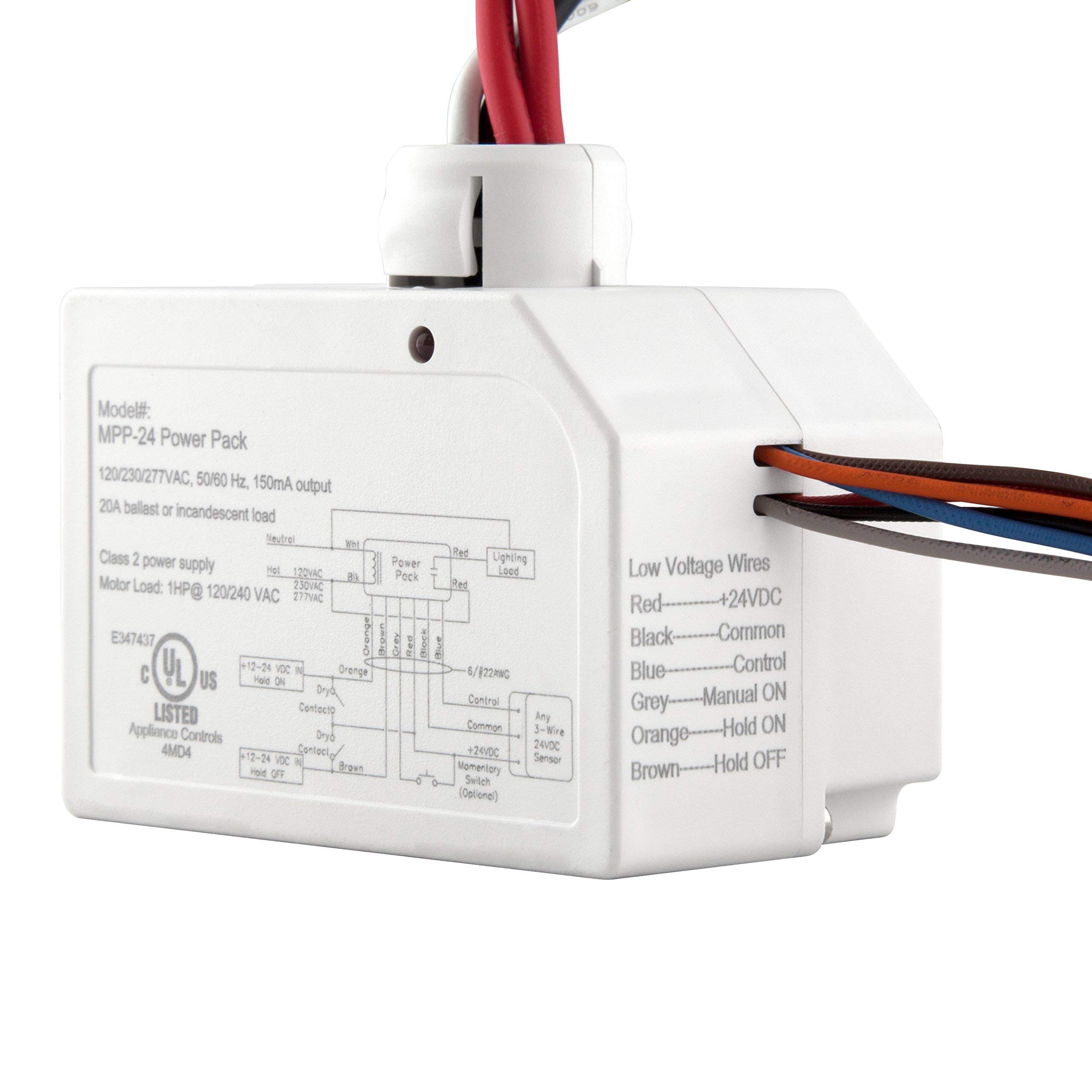
The ENERLITES MPP-24 is a different animal from the landscape transformers that dominate this category. It is a self-contained power pack and relay that takes line voltage anywhere from 120 to 277 volts AC and delivers 24 volts DC to low voltage ceiling sensors. The wide input range means it works on standard residential circuits and on commercial 277-volt lighting circuits without a separate step-down. The white housing is designed to sit above a ceiling tile or inside a fixture housing, out of sight. Because it combines the power supply and the switching relay in one unit, a sensor can control a load directly without extra hardware in the box.
This is the pick for anyone wiring an occupancy or vacancy sensor into a drop ceiling — offices, restrooms, storage rooms, and commercial corridors. The 24-volt DC output matches the low voltage sensors ENERLITES and similar brands build for ceiling mounting, and the self-contained design keeps the install compact. It is not a landscape product and has no weatherproofing, so it has no business outdoors. The caution here is compatibility: the pack is built around 24-volt DC sensors and a specific control scheme, so buyers should confirm their sensor and load match that setup before ordering rather than assuming any low voltage sensor will pair with it.
Trade-off: The unit is purpose-built for 24V DC ceiling sensor systems, so it will not substitute for a 12-volt landscape transformer or drive fixtures outside that control scheme.
2. DEWENWILS 60W Outdoor Low Voltage Transformer
Type: Outdoor low voltage transformer
Input: 120V AC
Output: 12V DC
Wattage: 60W
Features: Timer and photocell sensor
Listing: ETL Listed
Weatherproof: Yes
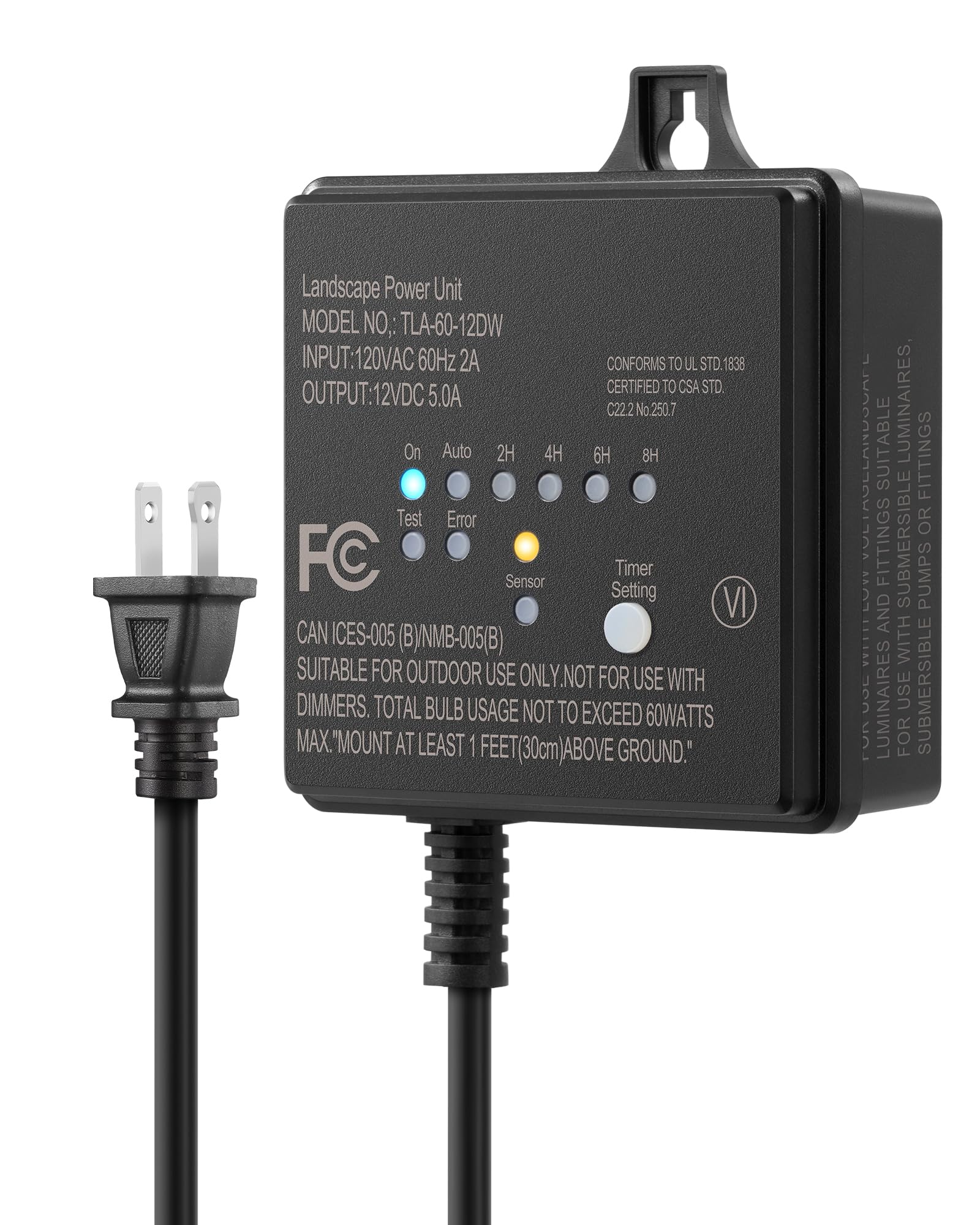
The DEWENWILS 60W is the entry point into this lineup and the right size for a modest landscape lighting run. It converts 120 volts AC to 12 volts DC and carries a built-in timer and photocell, so lights switch on at dusk and off on a schedule without a separate controller. The weatherproof housing is meant to live outdoors near the run it feeds, and the ETL listing gives buyers a recognized safety certification to point to. At 60 watts it is aimed at spotlights and pathway lights on a small yard rather than a whole-property system.
This pick suits the homeowner lighting a front path, a flower bed, or a short run of accent fixtures who wants set-and-forget automation. It is also a sensible choice for a first low voltage install, since the timer and photocell remove the need to buy and wire controls separately. Buyers planning more than a handful of fixtures should size up, though — 60 watts fills quickly once several LED spotlights are on the circuit, and there is little headroom for adding lights later.
Trade-off: The 60W ceiling leaves little room for expansion, so a larger yard or a future fixture addition will likely push buyers to a bigger transformer.
3. SUNVIE 100W Low Voltage Landscape Transformer
Type: Low voltage landscape transformer
Input: 120V
Output: 12V DC
Wattage: 100W
Features: Timer and photocell sensor
Weatherproof: Yes
Intended use: Outdoor spotlights and path lights

The SUNVIE 100W sits in the middle of the range and is the practical choice for a typical suburban landscape system. It steps 120 volts down to 12 volts DC at 100 watts, roughly two-thirds more capacity than the 60W DEWENWILS, and includes the same timer and photocell automation. The weatherproof build is designed for permanent outdoor mounting, and the unit is sized for the mixed loads that spotlights and path lights create on a single run. It is a straightforward transformer without the extra control features some premium units carry.
This is the pick for buyers lighting a full front yard or a backyard with a dozen or so fixtures who want one unit to handle the load with some margin. The extra capacity over the 60W model means adding a fixture or two later does not require replacing the transformer. The caution is that 100 watts still has a ceiling, and a large property with long cable runs will see voltage drop at the far end of the circuit — buyers with a sprawling layout should plan the run carefully or move up to the 120W class.
Trade-off: Long cable runs on a big property can cause voltage drop at distant fixtures, so the 100W unit rewards a compact layout over a sprawling one.
4. Malibu 120W Power Pack with Sensor and Weather Shield
Type: Low voltage landscape power pack
Input: 120V
Output: 12V
Wattage: 120W
Features: Sensor and weather shield
Model: 8100-9120-01
Intended use: Low voltage landscape spotlights

The Malibu 120W power pack is the familiar name in this category and a frequent replacement choice. It takes 120 volts in and puts out 12 volts at 120 watts, with a built-in sensor and a weather shield covering the connections. The power pack format is designed to mount at the start of a landscape lighting run and feed the low voltage cable directly. Malibu has been the default brand for residential landscape kits for years, which makes this unit a natural drop-in for an existing system or an expansion of one.
This pick suits the buyer replacing a failed Malibu transformer or adding capacity to a Malibu kit without changing the rest of the setup. The 120 watts handle a substantial run of spotlights, and the weather shield is a practical detail for connections that sit exposed to rain and sprinklers. The trade-off is tied to the format: a power pack built around one brand’s ecosystem can be fussier to integrate with third-party controllers and cable, so buyers starting from scratch may prefer a standalone transformer with more flexible wiring.
Trade-off: As a brand-ecosystem power pack, it is easiest to live with inside an existing Malibu setup and less flexible when paired with other manufacturers’ controls.
5. DEWENWILS 120W Low Voltage Landscape Transformer
Type: Outdoor low voltage transformer
Input: 120V AC
Output: 12V AC
Wattage: 120W
Features: Timer and photocell sensor
Listing: ETL Listed
Weatherproof: Yes
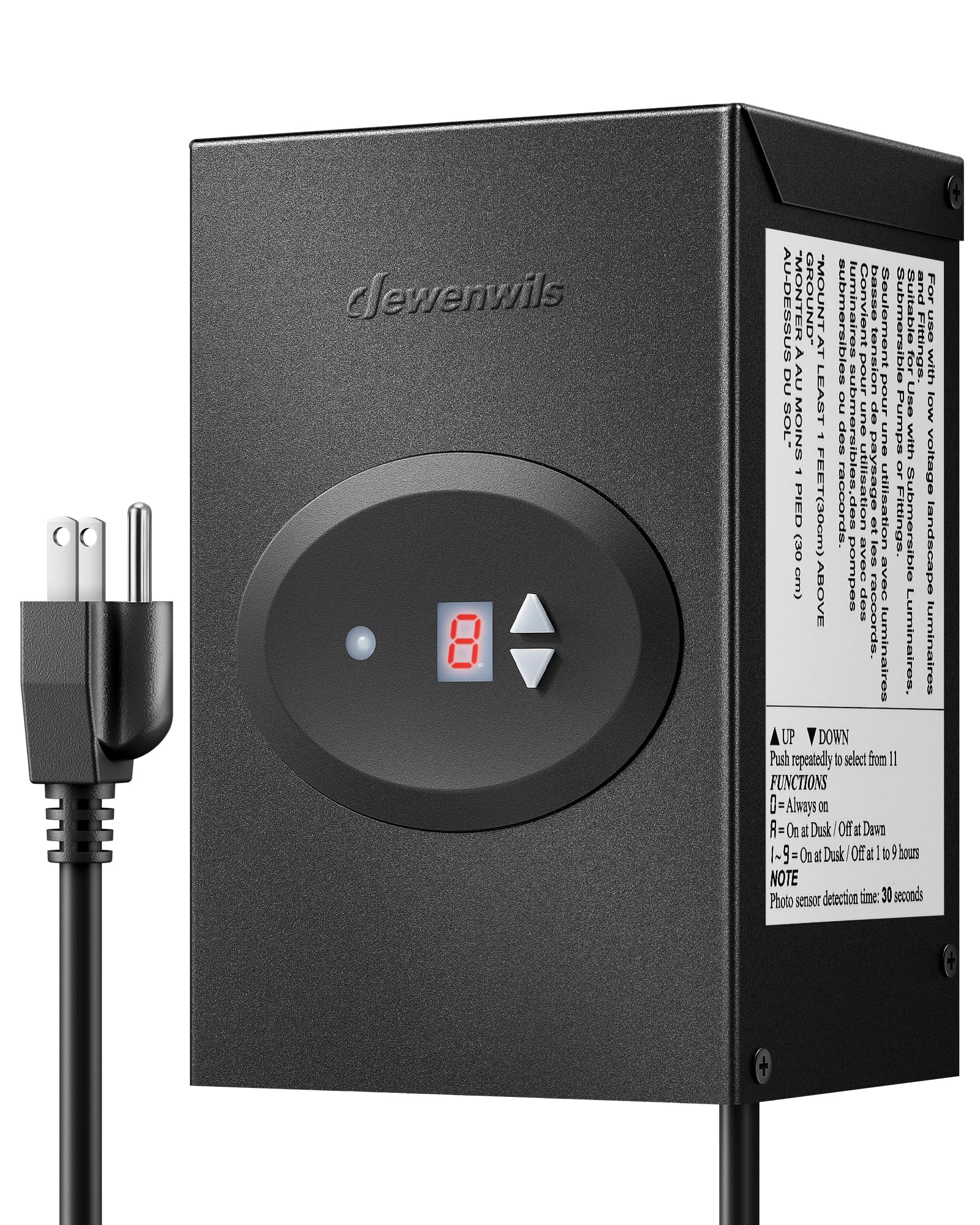
The DEWENWILS 120W is the largest transformer here and the one to pick when the lighting plan is already big or expected to grow. It converts 120 volts AC to 12 volts AC at 120 watts, includes the timer and photocell automation, carries an ETL listing, and is built weatherproof for permanent outdoor duty. The key detail is the AC output: this unit feeds 12-volt AC fixtures, which is the standard for many traditional landscape lighting systems, so buyers should confirm their fixtures are AC rather than DC before ordering.
This is the pick for a large yard, a long run, or a buyer who wants to install once and never think about capacity again. The 120-watt ceiling handles a serious fixture count, and the AC output matches the widest range of conventional landscape lights. The caution is the mirror image of the SUNVIE’s: the output is AC, and mixing it with DC fixtures or a DC-only sensor setup will not work, so the fixture spec sheet matters more here than the wattage.
Trade-off: The 12V AC output limits it to AC fixtures, so buyers running DC landscape lights or DC sensors need a different unit.
Before You Buy
- Output type: Confirm whether the fixtures and sensors need 12V AC, 12V DC, or 24V DC — the wrong output type makes a correctly sized unit useless.
- Wattage headroom: Add up fixture wattage and leave room to spare; running a transformer near its limit shortens its life and limits future additions.
- Input voltage: Most homes are 120V, but commercial ceiling sensor installs may run on 277V circuits, which only the ENERLITES pack here accepts.
- Weatherproofing: Landscape units belong outdoors and need a weatherproof housing and shielded connections; ceiling power packs belong above the ceiling and are not built for rain.
- Controls: A built-in timer and photocell saves buying separate controls, but buyers with a smart home system should check whether the unit’s automation can be bypassed.
- Certification: An ETL listing is a baseline safety marker for outdoor electrical equipment and worth confirming on any transformer that will run unattended.
Frequently Asked Questions
-
What is the difference between a power pack and a transformer?
A transformer only changes voltage, while a power pack typically bundles the transformer with a relay or sensor so it can switch a load. The ENERLITES MPP-24 is a power pack; the landscape units are transformers with built-in timers. -
Can a 12V DC transformer run 12V AC lights?
No. AC and DC fixtures are not interchangeable, and the DEWENWILS 120W unit here outputs 12V AC while the 60W and SUNVIE units output 12V DC. Match the output to the fixture label. -
How much wattage is needed for a landscape lighting run?
Add the wattage of every fixture on the circuit and leave headroom rather than sizing to the exact total. A 60W unit suits a small path, while 100W to 120W units handle a full yard. -
Does a low voltage power supply for sensors need to be weatherproof?
Only if it lives outdoors. Landscape transformers need a weatherproof housing and shielded connections; a ceiling power pack like the ENERLITES MPP-24 is designed for indoor ceiling spaces instead. -
Can the timer and photocell be turned off?
Most units in this class allow the automation to be bypassed for manual or external control, but buyers should confirm the specific model supports it before relying on a smart switch.
Bottom Line
For most landscape lighting projects, the SUNVIE 100W Low Voltage Transformer is the best low voltage power supply for sensors in this lineup — enough capacity for a full yard, built-in timer and photocell automation, and a weatherproof housing, all at a mid-range price that undercuts the 120W class. Buyers wiring a ceiling occupancy sensor should choose the ENERLITES MPP-24 instead, since it is the only unit here built for 24V DC sensor systems. Confirm fixture output type and total wattage first, then pick the unit that matches.
