Why there are Amazon links here: Brave Review is paid a commission for qualifying Amazon purchases made through the links below. Your price does not change, and using our links is entirely optional. How this works
Amazon eero 6 Mesh WiFi Router vs SONOFF ZBMINIL2 Zigbee Smart Switch: Two Different Jobs, One Decision
The amazon eero 6 mesh wifi router vs sonoff zbminil2 zigbee smart switch comparison is not a fight between rivals. One is a network backbone that blankets a home in WiFi; the other is a mini relay that hides behind a light switch and makes that switch smart. The decision comes down to what the buyer is actually trying to fix: dead WiFi zones or dumb light switches. Read the two product blocks below, skim the side-by-side table, and the right pick should be obvious within a minute.
The Picks at a Glance
| Product | Key Spec | Best Use | Price Tier |
|---|---|---|---|
| Amazon eero 6 mesh wifi router | Coverage up to 1,500 sq. ft., 75+ devices | Whole-home WiFi for a single router | Budget mesh |
| SONOFF ZBMINIL2 Zigbee Smart Switch | No neutral required, 2-way control, 4 pack | Retrofitting existing wall switches | Budget smart home |
Amazon eero 6 Mesh WiFi Router
Type: Mesh WiFi router
Coverage: Up to 1,500 sq. ft. per unit
Connected Devices: 75+
Internet Plan Support: Up to 900 Mbps
Pack Size: 1-pack
Setup: App-guided mesh

The Amazon eero 6 mesh wifi router is a compact mesh node built to replace a single aging router in a small home or apartment. The stated coverage of up to 1,500 square feet and support for internet plans up to 900 Mbps put it squarely in the everyday-broadband bracket, not the multi-gig enthusiast tier. Its 75+ device figure matters in a house full of phones, TVs, speakers and smart plugs, because the practical failure point for most home networks is device count, not raw speed.
Setup runs through the eero app, which walks a buyer through naming the network and placing the unit. The mesh design means a second node can be added later to extend coverage rather than swapping the whole system out. That said, a single unit is a single unit: walls, floors and a long floor plan will still leave corners weak, and the fix is another eero, not a bigger antenna.
Trade-off: One node covers a modest footprint, so larger or multi-floor homes will need to budget for a second unit to actually deliver the advertised experience.
Check the current price on Amazon
SONOFF ZBMINIL2 Zigbee Smart Switch
Type: Zigbee mini relay module
Neutral Wire: Not required
Control: 2-way switching support
Compatibility: Alexa & Google Home (via Zigbee hub)
Pack Size: 4-pack
Hub: Required, sold separately
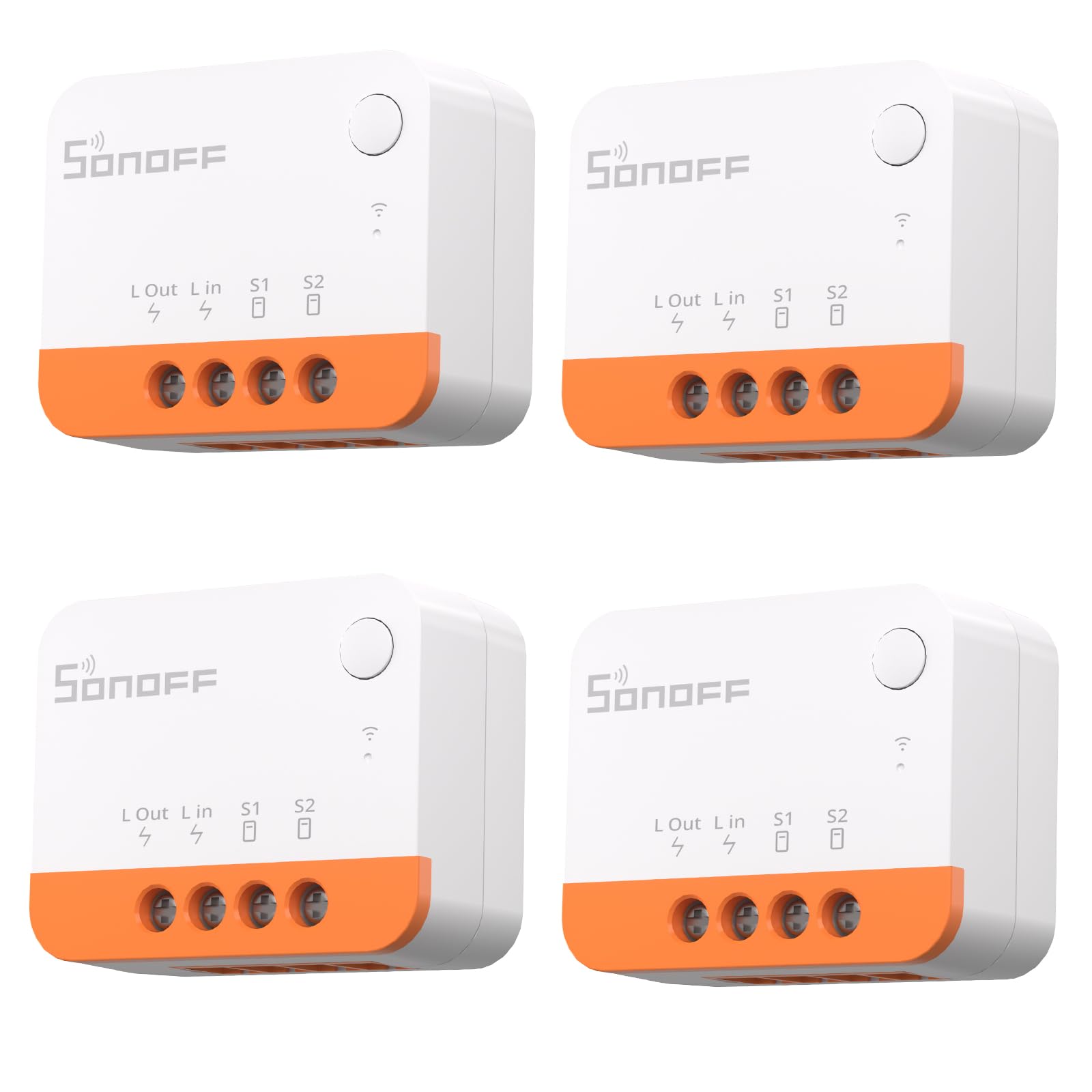
The SONOFF ZBMINIL2 Zigbee Smart Switch solves a problem that stops plenty of smart-switch projects before they start: older wiring with no neutral wire in the switch box. The module tucks in behind an existing wall switch and adds app and voice control without forcing a rewire. Support for two-way switching means it can work with a second switch position on the same circuit, which is common in hallways and stairwells.
The 4-pack pricing makes this a project purchase rather than a single-gadget impulse buy, and the small relay form factor is what allows it to fit inside a standard back box. The catch is ecosystem: this is a Zigbee device and needs a Zigbee hub to talk to Alexa or Google Home. Buyers without one are shopping for two things, not one.
Trade-off: The requirement for a separate Zigbee hub and mains wiring work behind a switch plate makes this a poor first smart-home purchase for anyone expecting plug-and-play.
Check the current price on Amazon
Side-by-Side: What Actually Separates Them
| Dimension | Amazon eero 6 | SONOFF ZBMINIL2 |
|---|---|---|
| Category | WiFi router / mesh node | Smart switch relay module |
| What it fixes | Weak or patchy WiFi | Manual-only light switches |
| Installation | App-guided, plug in | Wired behind a wall switch |
| Extra hardware needed | None for basic use | Zigbee hub |
| Voice assistants | Not the focus | Alexa & Google Home |
| Quantity in box | 1 unit | 4 modules |
| Skill level | Beginner | Confident DIY or electrician |
| Ongoing cost | Additional nodes for more coverage | Hub purchase if not owned |
The first dimension is the one that ends most of these debates: these products do not overlap in function at all. A buyer with a WiFi dead zone gets nothing from a light switch relay, and a buyer tired of walking to the hallway switch gets nothing from a mesh node. The comparison only becomes real when a household is planning both a network upgrade and a smart lighting retrofit in the same season and has one budget line to spend.
Installation difficulty is the second real divider. The eero 6 is a plug-in device with an app that does the thinking; almost anyone can set it up in an evening. The SONOFF module involves working inside a switch box with mains voltage, identifying the right conductors, and fitting a relay into a tight space. That is a job for someone comfortable with household wiring, or for an electrician.
Ecosystem dependence is the third. The eero 6 stands alone as a router and does not need any other purchase to do its core job. The ZBMINIL2 is only as useful as the Zigbee hub behind it, so the true cost of entry is higher than the module price alone suggests. Neither is a flaw; both are facts a buyer should price in before committing.
Which Should You Buy?
Choose the Amazon eero 6 if: the problem is coverage. A small home, apartment or single floor with a tired router and a house full of connected devices is exactly the profile this unit is built for, and it leaves room to add nodes later.
Choose the SONOFF ZBMINIL2 if: the problem is the switches. A buyer with existing wall switches, no neutral wire, a Zigbee hub already in place and four rooms to upgrade gets a coherent project kit at a budget price.
Choose neither yet if: the plan is a full smart-home build from scratch. The network should come first, because every smart device in the house depends on it.
FAQ
-
Are these two products competitors?
No. One is a WiFi router and the other is a smart switch relay. They serve different parts of a connected home and can be used together without conflict. -
Does the SONOFF ZBMINIL2 work without a hub?
No. It is a Zigbee device and requires a Zigbee hub to connect to Alexa or Google Home. The hub is not included. -
Does the eero 6 replace an existing router completely?
Yes. It functions as the primary router for the network, and additional eero units can extend coverage as mesh nodes. -
Can the SONOFF module be installed without an electrician?
It requires mains wiring work inside a switch box. Buyers without wiring experience should hire an electrician rather than attempt it. -
How much area does one eero 6 cover?
The manufacturer states coverage up to 1,500 square feet per unit, which suits a small home or a single floor. -
Why does the SONOFF come in a 4-pack?
The multi-pack suits whole-room or whole-floor retrofits where several switches are being upgraded at once, rather than a single-device purchase. -
Which one should be bought first?
The router. A stable network is the foundation every other smart device relies on, including the hub that runs the SONOFF modules.
Bottom Line
These two products answer different questions, and the honest verdict is that most households should start with the Amazon eero 6 mesh wifi router, because a dependable network is the precondition for everything else in a connected home. The SONOFF ZBMINIL2 is the better buy only for the specific buyer who already has a Zigbee hub and existing switches to retrofit. Fix the foundation first, then wire the walls.