Why there are Amazon links here: Brave Review is paid a commission for qualifying Amazon purchases made through the links below. Your price does not change, and using our links is entirely optional. How this works
Best Smart Radiator Valves for a House with a Combi Boiler
A combi boiler heats water on demand and has no hot water cylinder, so room-by-room control is the only way to cut heating bills without losing hot water. This roundup covers five smart radiator valves and controls that suit three types of buyer: the budget tinkerer who already owns a hub, the renter who wants a simple Wi-Fi head, and the homeowner building a full ecosystem. The overview table below puts every pick side by side, and each review explains who it fits and where it falls short.
Overview of the Picks
| Product | Key Spec | Best Use | Price Tier |
|---|---|---|---|
| Shelly Blu TRV & Blu Gateway Gen3 | Bluetooth, Alexa/Google/Home Assistant | Local control without cloud | Mid |
| Tuya Zigbee Thermostat Radiator Valve | Zigbee, hub required, app control | Budget multi-room setup | Budget |
| WiFi Thermostatic Radiator Valve Controller | Wi-Fi, timing function | Simple standalone scheduling | Budget |
| Hive Smart Heating TRV | Smartphone compatibility, white | Hive ecosystem homes | Premium |
| Sensi Smart Thermostat ST55 | Wi-Fi, Alexa, Energy Star | Whole-house boiler control | Mid |
Shelly Blu TRV & Blu Gateway Gen3 Smart Thermostatic Valve
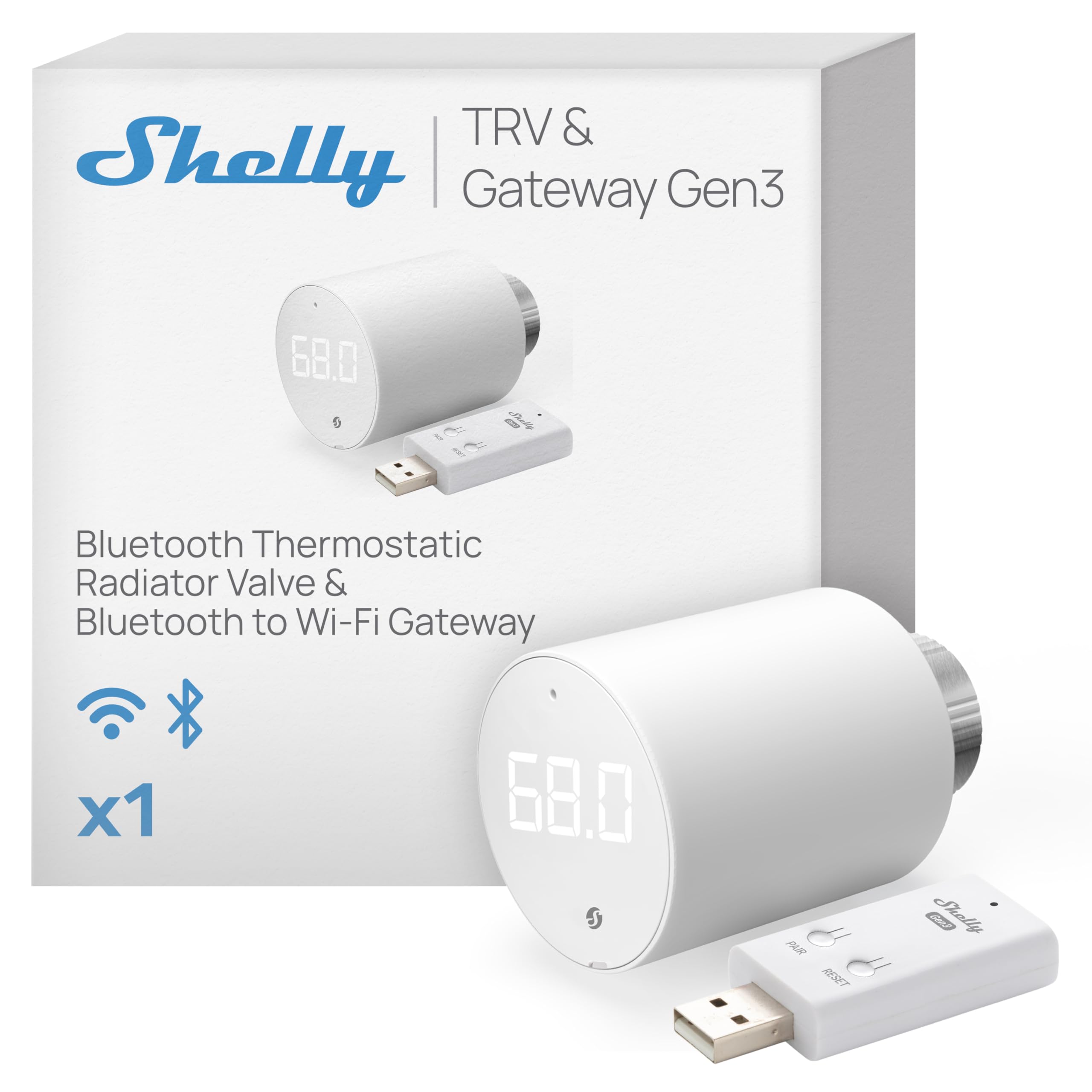
Type: Bluetooth thermostatic radiator valve with gateway
Compatibility: Alexa, Google, Home Assistant
Connectivity: Bluetooth via included gateway
Intended use: Room-by-room radiator control
Control: App and voice
Shelly Blu TRV & Blu Gateway Gen3 Smart Thermostatic Valve
The Shelly pair bundles a Bluetooth radiator head with a Gen3 gateway, which is what makes remote and voice control possible. The valve body fits standard radiator tails, and the head drives the pin to open and close the flow as room temperature drifts. Because the gateway bridges Bluetooth to the home network, the setup works with Alexa, Google and Home Assistant without relying on a vendor cloud. That local-first design appeals to buyers who want automations that keep running when the internet drops.
This is the pick for a Home Assistant household or anyone who dislikes cloud lock-in. The gateway is the reason it costs more than a bare Zigbee head, and buyers who already run a Shelly setup get the most from it. The trade-off is that the Bluetooth link depends on the gateway being powered and in range, so a large house may need careful placement to keep every valve reachable.
Trade-off: The bundle costs more than a hub-free valve, and the Bluetooth range through walls is the weak point in a big property.
Check the current price on Amazon
Tuya Zigbee Thermostat Radiator Valve
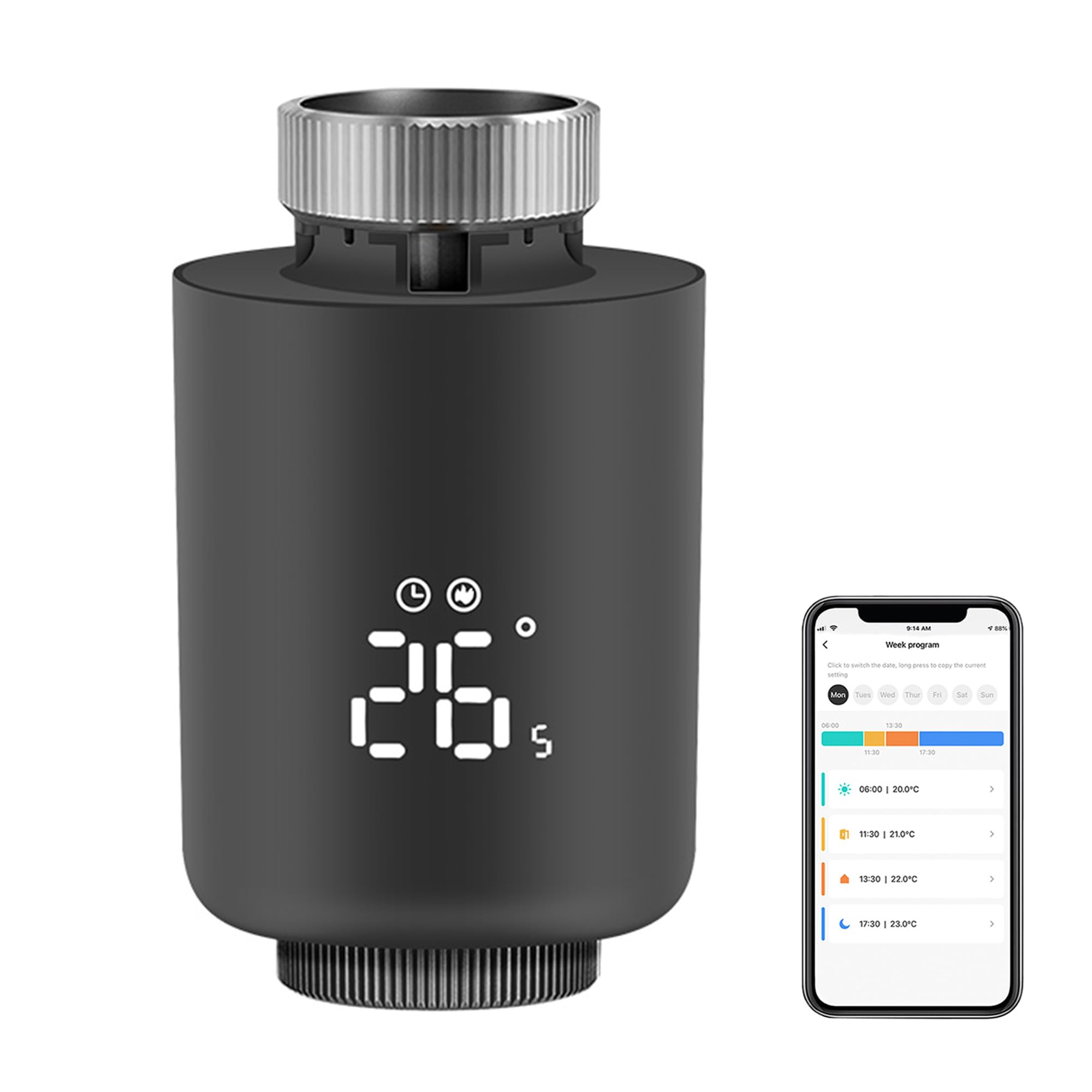
Type: Zigbee thermostatic radiator valve
Compatibility: Alexa, Google Home
Hub: Tuya Zigbee hub required
Control: App-based temperature adjustment
Color: Black
Intended use: Programmable room heating
This is the budget route into smart TRVs, and the black finish sets it apart from the white heads most radiators ship with. It is a Zigbee device, so it needs a Tuya-compatible hub to join the network and reach the app. Once paired, the head handles programmable schedules and remote temperature changes, and it answers to Alexa and Google Home for voice adjustments. The build is the lightweight plastic typical of this price bracket, which is fine on a bedroom radiator but less reassuring in a high-traffic hallway.
Buyers who already own a Tuya hub, or who plan to add several valves at once, get the best value here. It is also the obvious choice for anyone who wants a dark head that blends with a modern radiator. The caution is the hub: without one, the valve is a dumb thermostat, so the true cost includes that extra purchase. Anyone expecting out-of-the-box Wi-Fi control will be disappointed.
Trade-off: The low price assumes a Tuya Zigbee hub is already in the house; without one, the valve cannot be scheduled or controlled remotely.
Check the current price on Amazon
WiFi Thermostatic Radiator Valve Controller
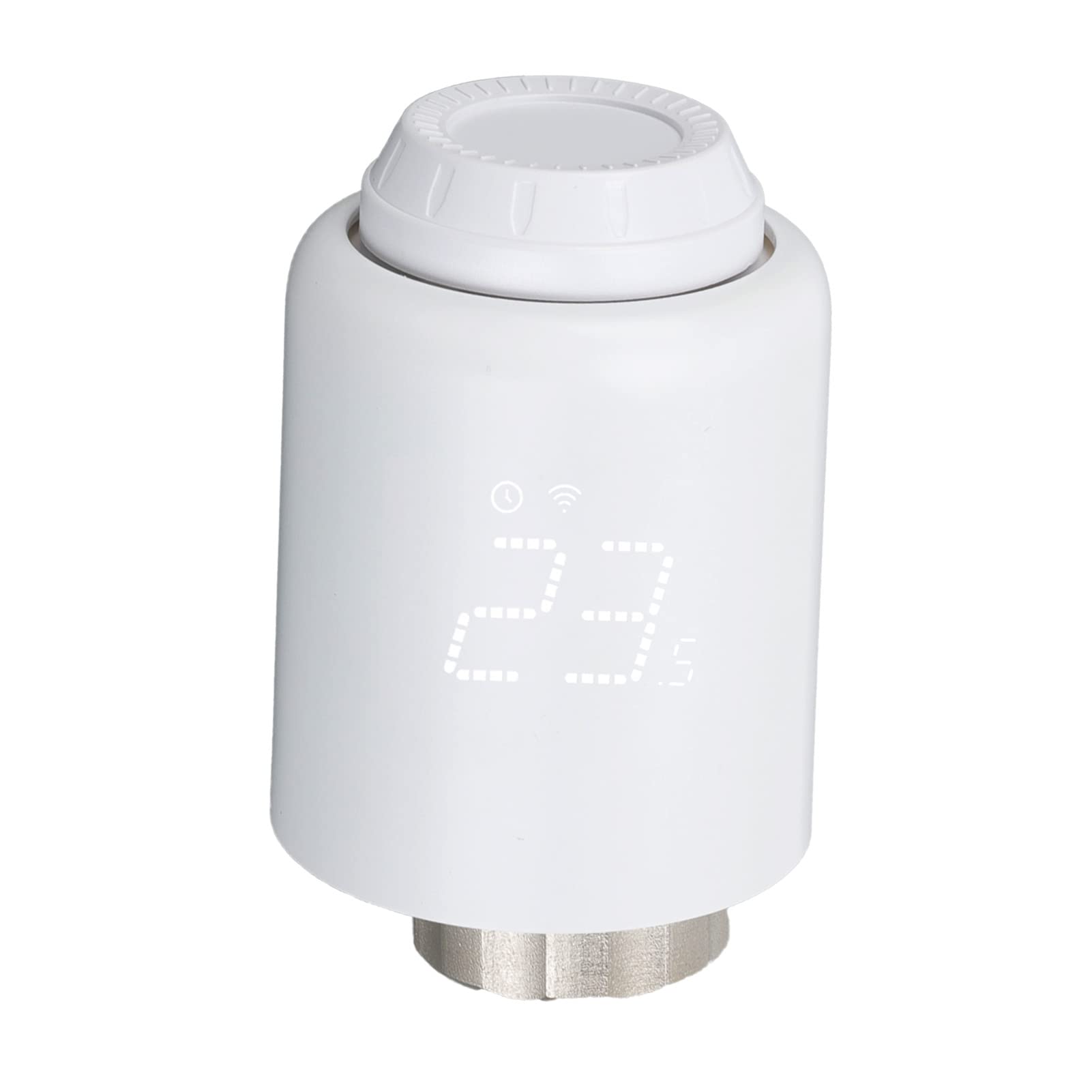
Type: Wi-Fi thermostatic radiator valve controller
Connectivity: Wi-Fi, no separate hub
Feature: Timing function
Control: Wireless thermostat for heating systems
Intended use: Standalone room temperature control
This head connects straight to the home Wi-Fi router, which removes the hub requirement that trips up Zigbee buyers. The timing function lets it run a weekly schedule, so a spare room or office can drop to a low setpoint during the day and warm up before use. It slots onto a standard radiator valve thread and replaces the manual head without plumbing work. The design is plain and functional, aimed at buyers who want scheduling rather than a design statement.
It suits renters and single-room upgrades, where one radiator needs a schedule and nobody wants to build a whole smart home. The lack of a hub keeps the total cost low, and installation is a screw-on job. The drawback is scale: each valve joins the Wi-Fi network on its own, so a whole house of these can crowd a router, and there is no mesh to fall back on if the signal is weak at the far end of the house.
Trade-off: Wi-Fi-only heads multiply on the router as more are added, so a large installation can strain coverage compared with a hub-based system.
Check the current price on Amazon
Hive Smart Heating Thermostatic Radiator Valve (TRV)

Type: Smart thermostatic radiator valve
Compatibility: Smartphone app
Color: White
Intended use: Zone control within Hive heating
Control: Phone-based scheduling and adjustment
Hive Smart Heating Thermostatic Radiator Valve (TRV) with Smartphone Compatibility, White
The Hive TRV is the premium pick, and it earns that position by integrating with the Hive heating ecosystem rather than standing alone. In a Hive home it turns a radiator into its own zone, so the app can hold different rooms at different temperatures and schedule them independently. The white body matches typical UK radiator styling, and the phone app handles scheduling and overrides. Build quality sits above the budget heads, with a firmer collar and a more polished finish.
This is for the household already running Hive, where the TRV extends existing control instead of duplicating it. Buyers who want one app for the boiler and every radiator get the cleanest experience here. The caution is the price and the ecosystem: it costs several times a budget head, and outside a Hive setup much of that value is locked away. Anyone without a Hive hub should look elsewhere first.
Trade-off: The high price only makes sense inside a Hive system; as a standalone valve it is expensive for what it does.
Check the current price on Amazon
Sensi Smart Thermostat ST55
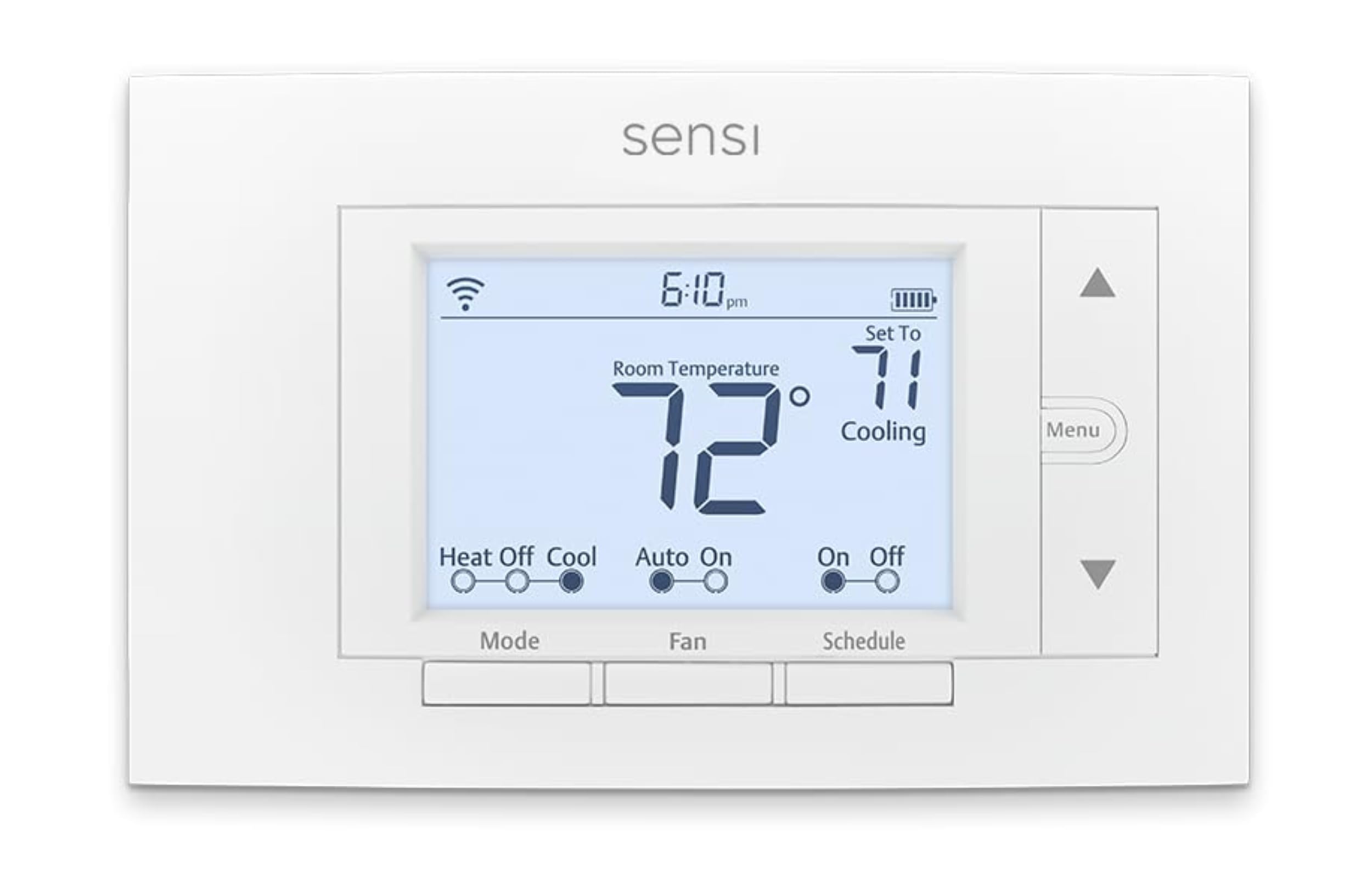
Type: Smart thermostat
Connectivity: Wi-Fi
Installation: DIY
Voice control: Alexa
Certification: Energy Star certified
Intended use: Whole-house heating control
Sensi Smart Thermostat, Wi-Fi, DIY, Alexa, Energy Star Certified, ST55
The Sensi ST55 is not a radiator valve, and that is exactly why it belongs in a combi boiler roundup. A combi has no cylinder, so the thermostat on the wall is the main lever for boiler scheduling, and this one adds Wi-Fi and Alexa control to a conventional wired setup. The DIY label means it is designed for a homeowner to swap in without a professional, and the Energy Star certification speaks to efficiency claims. It pairs with radiator valves rather than replacing them, handling the boiler while the TRVs handle individual rooms.
This suits the buyer who wants smart control at the boiler first and room zoning second. It is a sensible starting point before spending on five valves, and the app covers scheduling and remote adjustment. The limitation is that it controls the whole house as one zone, so rooms still need TRVs to be independent. Buyers expecting per-room control from this unit alone will need to add valves.
Trade-off: It controls the boiler as a single zone, so it cannot deliver room-by-room heating without separate radiator valves.
Check the current price on Amazon
Before You Buy
- Compatibility: Check whether the valve needs a hub (Zigbee, Hive) or connects directly over Wi-Fi, and confirm the hub is already owned or budgeted for.
- Valve thread: Confirm the radiator tail uses a standard thread before ordering, since adapters vary by radiator brand.
- Ecosystem: Match the valve to the app and voice assistant already in the home to avoid running two control apps.
- Boiler type: A combi boiler has no cylinder, so controls should target room scheduling and boiler demand rather than hot water timing.
- Scale: One Wi-Fi valve is fine; a whole house may need a hub-based system to avoid router strain.
- Power: Most heads run on batteries, so factor in replacement costs and choose a model with accessible battery compartments.
- Heating zone: Decide whether the goal is whole-house control (thermostat) or per-room zoning (TRVs), since the two solve different problems.
Frequently Asked Questions
-
Do smart radiator valves work with a combi boiler?
Yes. A combi boiler heats on demand, and smart TRVs control how much hot water reaches each radiator, so the boiler fires less when rooms are already warm. -
Do I need a hub for a smart radiator valve?
It depends on the model. Zigbee and Hive valves need their own hub, while Wi-Fi valves connect directly to the router. Check before buying. -
Can a smart thermostat replace radiator valves?
No. A thermostat controls the boiler as one zone; TRVs give room-by-room control. The two work best together. -
Are smart radiator valves worth it for a small house?
They pay off most where rooms are used at different times. In a small, evenly heated home the savings are smaller. -
How long do the batteries last?
It varies with schedule and valve stiffness, but most heads run for a heating season or more on a set of cells. -
Can renters install smart radiator valves?
Usually yes, since most heads screw onto the existing valve body without plumbing changes. Check the tenancy terms first.
Bottom Line
For most combi boiler homes, the Shelly Blu TRV & Blu Gateway Gen3 is the best smart radiator valve pick because it delivers local control, voice support and Home Assistant compatibility without cloud dependence. Buyers on a tight budget with a Tuya hub should take the Zigbee valve, and Hive households should stay in the Hive ecosystem with the premium TRV. Pair any of them with the Sensi ST55 at the boiler for whole-house scheduling.
