Why there are Amazon links here: Brave Review is paid a commission for qualifying Amazon purchases made through the links below. Your price does not change, and using our links is entirely optional. How this works
Best Power Station for a Flat With No Outdoor Space
A flat with no balcony, garden or shed leaves little room for backup power, so the best power station for a flat with no outdoor space has to be compact, quiet and easy to store in a cupboard or under a desk. This roundup covers five units that fit that brief, from a small travel-friendly model to a full home-backup battery. It suits renters who want blackout protection, remote workers who cannot afford downtime, and campers who need a packable unit for weekends away. The overview table below compares all five before the individual reviews.
The Picks at a Glance
| Product | Key Spec | Best Use | Price Tier |
|---|---|---|---|
| BLUETTI Elite 30 V2 | 288Wh, 600W | Desk-side blackout backup | Budget |
| EF ECOFLOW Delta 3 Classic | 1024Wh, 1800W AC | Whole-flat home backup | Premium |
| Anker SOLIX C300 DC | 288Wh, 300W | Travel and USB charging | Budget |
| Portable Power Station 1000W | 1024Wh, 1000W | Mid-size emergency backup | Mid-range |
| Portable Power Station 640Wh | 640Wh, 1200W surge | Flexible all-round backup | Mid-range |
1. BLUETTI Elite 30 V2 Portable Power Station
Capacity: 288Wh
AC Output: 600W
Battery Type: LFP
UPS Switchover: 10ms
Recharge Time: 45 min to 80%
Best For: Desk-side and small-flat backup
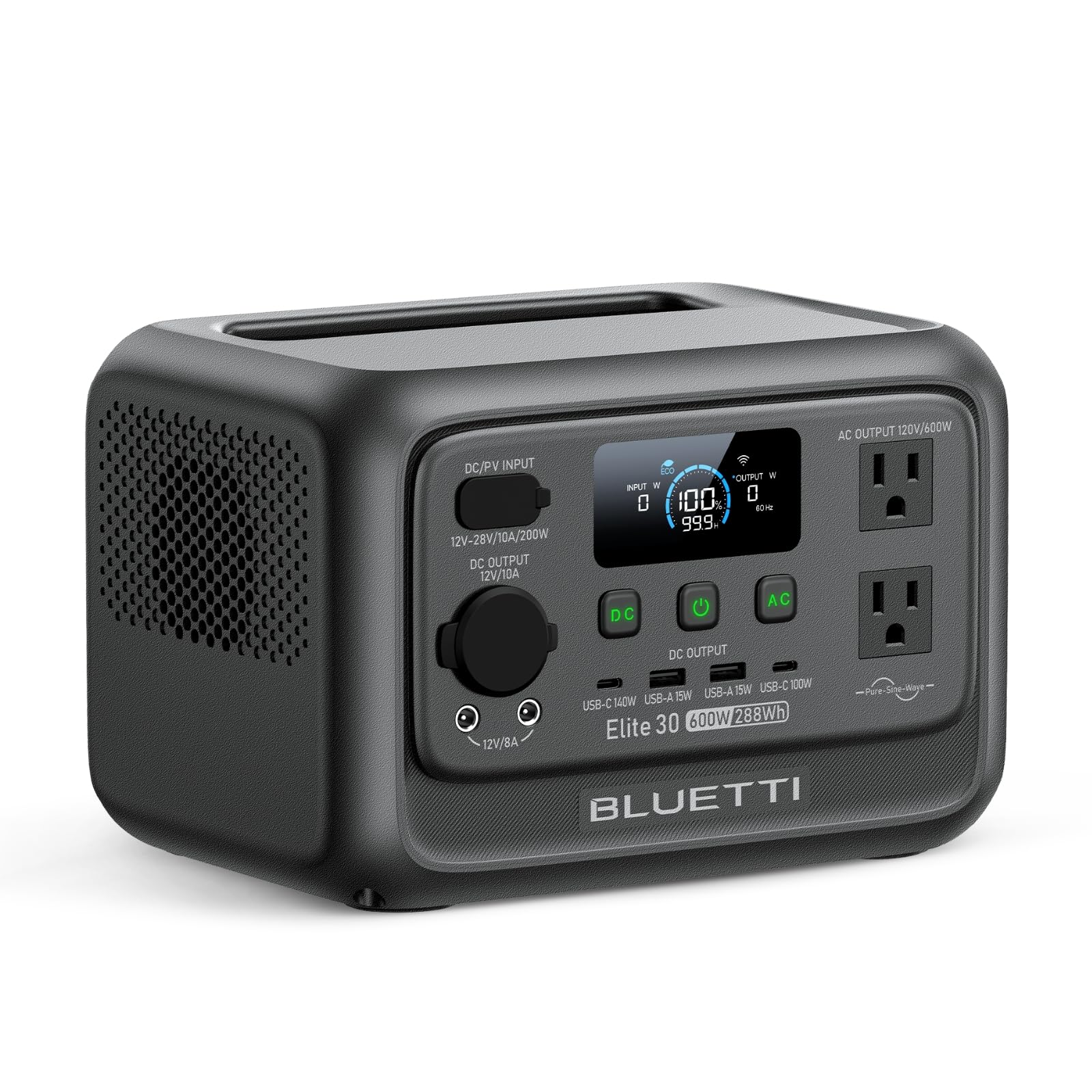
BLUETTI Elite 30 V2 Portable Power Station 288Wh 600W LFP Solar Generator
The Elite 30 V2 is built around an LFP battery, a chemistry that holds up well to frequent partial charging and long storage in a warm flat. Its 10ms UPS switchover means a plugged-in router or desktop keeps running through a short outage without a restart. The 45-minute charge to 80% is quick for this class, so a unit stored half-empty can be topped up before a forecast storm. At 288Wh and 600W, it runs small electronics, lighting and a laptop, not a kettle or a heater.
This is the pick for a renter in a small flat who wants one box that lives on a shelf and covers short blackouts. It earned its place because the fast recharge and low switchover time matter more than raw capacity in a space-limited home. The trade-off is that 600W of AC output rules out most high-draw kitchen appliances, so it works as an electronics backup rather than a whole-flat solution.
2. EF ECOFLOW Delta 3 Classic Portable Power Station
Capacity: 1024Wh
AC Output: 1800W (3600W surge)
Battery Type: LiFePO4
UPS Switchover: 10ms
Recharge Time: 1 hr
USB-C Output: 100W
Best For: Full flat backup during long outages
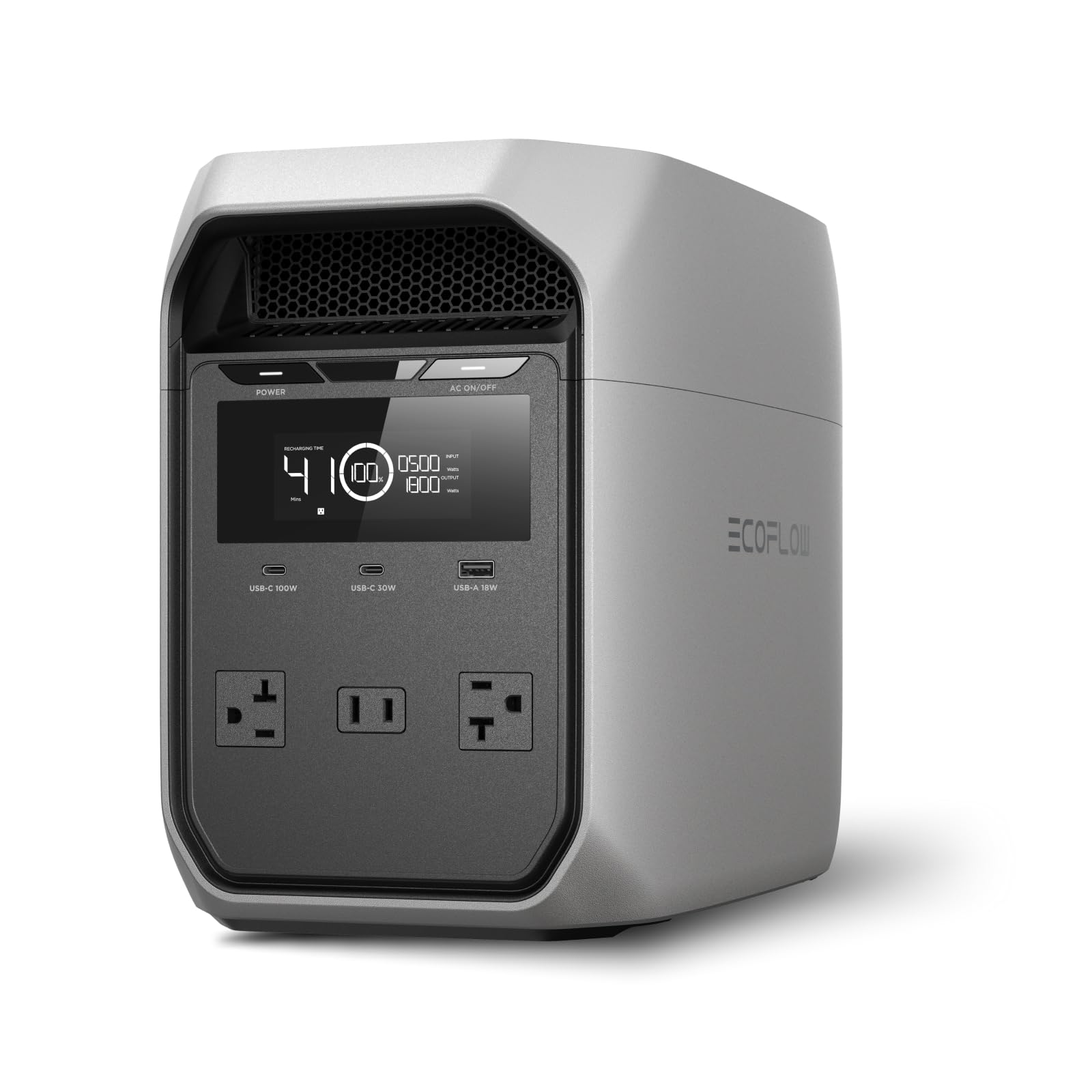
EF ECOFLOW Portable Power Station Delta 3 Classic, 1024Wh 1800W AC
The Delta 3 Classic is the largest unit here and the only one positioned as true home backup. Its 1800W AC output with a 3600W surge can start a fridge compressor or run a microwave, and the 1024Wh LiFePO4 battery carries a flat through an extended outage. A one-hour recharge and 10ms UPS mode make it practical to keep plugged in as a permanent backup. The 100W USB-C port charges a laptop directly without an adapter.
This pick suits a household that has lost power before and wants a single unit that covers the fridge, router and a few lights. It earned its place on capacity and surge headroom, which the smaller units cannot match. The trade-off is size and weight: at this capacity the unit is a two-hand lift and needs a permanent floor spot, which is a real constraint in a small flat.
3. Anker SOLIX C300 DC Portable Power Station
Capacity: 288Wh
AC Output: 300W
Battery Type: LiFePO4
Intended Use: UPS, travel and emergency
Charger: Not included
Best For: Travel and USB-heavy charging

Anker SOLIX C300 DC Portable Power Station, 288Wh, 300W, Outdoor Camping
The C300 DC is the smallest and lightest pick, built for carrying rather than sitting in a corner. Its 300W AC output is modest, but the unit is aimed at phones, tablets, cameras and laptops, where DC and USB charging do most of the work. The LiFePO4 battery is the same durable chemistry as the larger units, and the UPS function covers short interruptions for a router or desktop. It is the cheapest way into a reputable brand’s ecosystem.
This pick suits a flat dweller who travels often and wants one battery for both the home desk and weekend trips. It earned its place on portability and price, not on AC muscle. The trade-off is that no wall charger is included, so buyers need to budget for one or rely on USB-C charging, and 300W will not run anything with a heating element.
4. Portable Power Station 1000W 1024Wh
Capacity: 1024Wh
AC Output: 1000W
Ports: AC, USB-C and DC
Intended Use: Home emergency and camping
Best For: Mid-size emergency backup on a budget
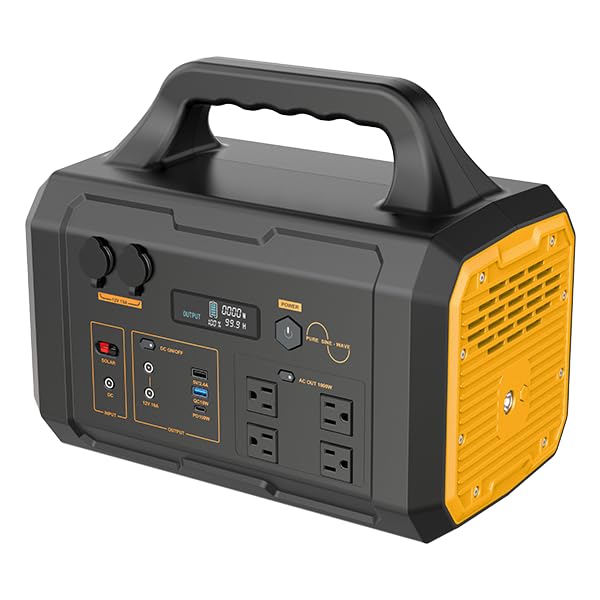
Portable Power Station 1000W 1024Wh, Portable Generator for Home
This unit pairs a 1024Wh battery with 1000W of AC output, a combination that covers a fridge, lighting and electronics for a useful stretch of an outage. The port selection spans AC, USB-C and DC, so phones, laptops and small appliances can all share the battery. Its capacity matches the premium pick at a lower price tier, which is the main reason it appears here. The form factor is a compact box that stores in a cupboard between uses.
This pick suits a flat household that wants serious capacity without paying premium-brand prices. It earned its place on the capacity-per-dollar argument. The trade-off is the lower AC output: 1000W leaves less surge headroom for motor-driven appliances, and a lesser-known brand means less certainty about long-term support and app features.
5. Portable Power Station 640Wh, 1200W Surge
Capacity: 640Wh
AC Output: 1200W surge, 4 AC ports
Battery Type: LiFePO4
UPS Switchover: 10ms
Recharge Time: 1.5 hr
Ports: 8
Build: Metal design
Best For: Flexible everyday backup
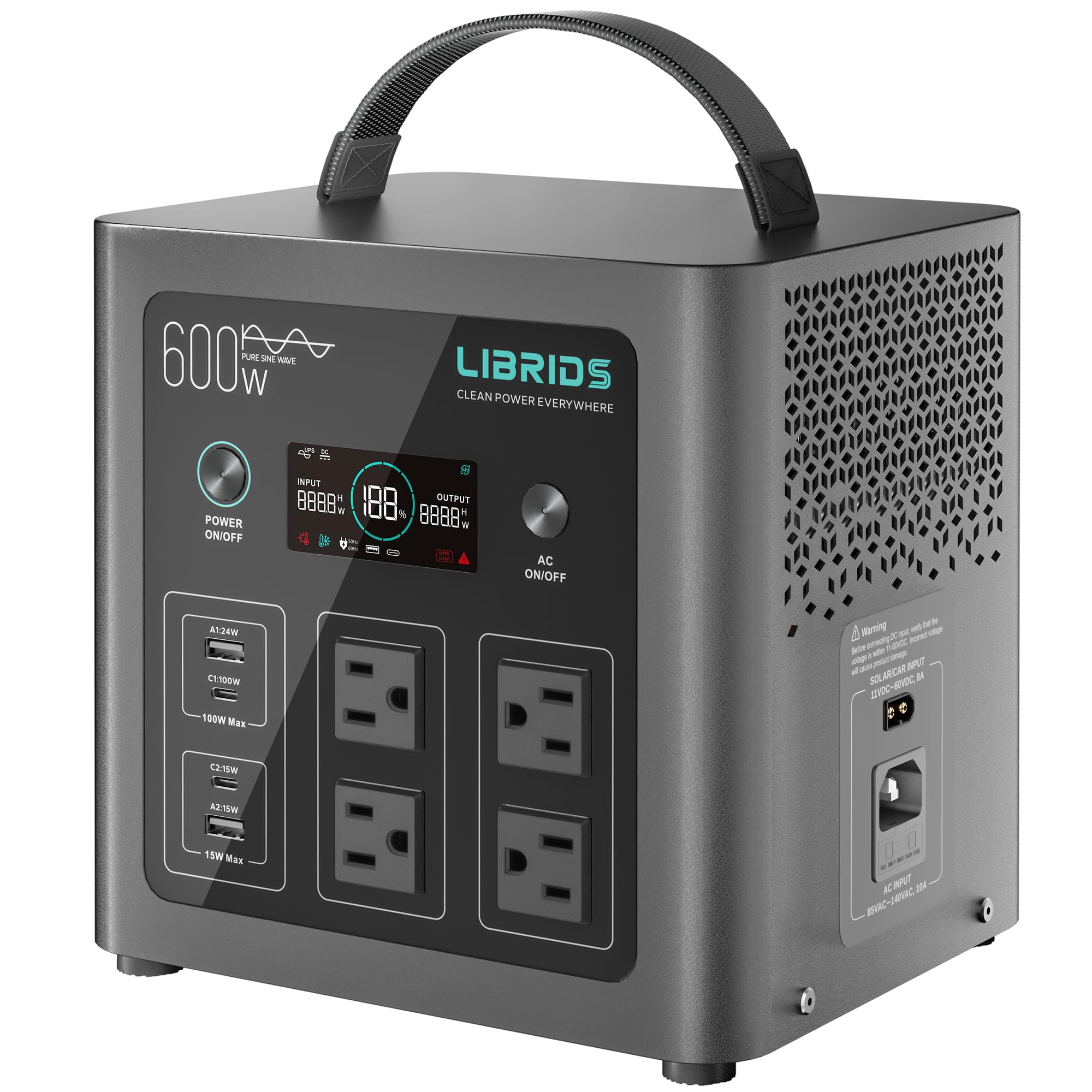
Portable Power Station 640Wh, 1200W Surge, Solar Generator 4 AC
This unit sits between the small and large picks, with a 640Wh LiFePO4 battery and 1200W of surge output. Eight ports, including four AC outlets, mean several devices can stay connected at once without a power strip. The metal housing is a step up from plastic shells and suits a unit that lives in a hallway cupboard. A 1.5-hour recharge and 10ms UPS mode make it a practical always-plugged-in backup.
This pick suits a flat where two people work from home and need laptops, a router and a monitor covered at the same time. It earned its place on port count and build quality at a mid-range price. The trade-off is that 640Wh is a middle ground: it will not carry a fridge through a long outage the way the 1024Wh units can, and the metal body adds weight.
Before You Buy
- Capacity: Match watt-hours to the devices that must keep running. Router and laptop need little; a fridge needs a four-figure capacity.
- Output and surge: Check continuous watts and surge watts, since motors and compressors draw far more at startup than they do running.
- Size and storage: Measure the cupboard, shelf or floor spot first. Large-capacity units are two-hand lifts and need ventilation space.
- Battery chemistry: LiFePO4 is the safer long-term choice for a unit that stays plugged in and is charged often.
- Recharge speed: A fast recharge matters in a flat, where a unit may sit half-empty between outages.
- Included accessories: Some units ship without a wall charger, so factor that into the total cost.
- Noise and heat: Fans run during charging and heavy loads, which matters in a small, closed room.
Frequently Asked Questions
-
How much capacity does a flat need for a blackout?
A 288Wh unit covers a router, laptop and lights for hours. A 1024Wh unit is the safer choice if a fridge must stay cold. -
Can a power station run a fridge in a flat?
Only units with enough continuous output and surge headroom can start a compressor. The 1800W model here is the most suitable of the five. -
Is it safe to keep a power station plugged in indoors?
LiFePO4 units with a UPS mode are designed to stay connected. They still need airflow and should not be boxed in or placed near heat. -
Do these units work without solar panels?
Yes. All five charge from a wall outlet, and solar is an optional extra rather than a requirement. -
What is the difference between 10ms UPS and a normal outlet?
A 10ms switchover keeps sensitive electronics running through a brief cut. A normal outlet drops power instantly. -
Which unit is easiest to store in a small flat?
The 288Wh models are the most compact. The 1024Wh units need a dedicated floor or cupboard space.
Bottom Line
For most flats with no outdoor space, the BLUETTI Elite 30 V2 is the best power station for a flat with no outdoor space: it is compact enough to store anywhere, recharges fast and covers the electronics that matter in a short outage. Households that have lost power for hours should step up to the EF ECOFLOW Delta 3 Classic for its fridge-capable output.
