Why there are Amazon links here: Brave Review is paid a commission for qualifying Amazon purchases made through the links below. Your price does not change, and using our links is entirely optional. How this works
Best Radiator Valves for a Single Pipe System: 5 Picks That Fit
Single pipe steam and hot water systems are unforgiving about valves: the wrong thread, the wrong vent, or a valve that cannot handle the heat will leak, whistle, or leave a radiator cold. This short roundup covers five valves that suit three kinds of buyer — the homeowner replacing a failed steam valve, the renovator converting a hot water radiator, and the budget fixer who just needs a working air vent. The overview table below puts the key differences side by side so a decision can be made in under a minute.
Overview of the Picks
| Product | Key Spec | Best Use | Price Tier |
|---|---|---|---|
| Midline Valve 6I342 Steam Radiator Valve | 1 in. FIP x Male Union, brass | Main steam radiator replacement | Budget |
| Midline Valve IXW-U012 Heavy Duty Valve | 1/2 in. FIP x Male Union, brass | Smaller steam or hot water radiators | Budget |
| Hot Water Angle Radiator Valve | 1 in. FIP x Male Union, brass, angle body | Tight corners and angled pipe runs | Mid |
| G1/2" & G3/4" Thermostatic Radiator Valve | 3/4 in. DN20, liquid sensor, frost protection | Room-by-room temperature control | Budget |
| E.H.C. Coin Key Air Vent Bleeder Valve (3-Pack) | 1/8 in. MIPS, chrome, key included | Bleeding radiators and baseboards | Budget |
1. Midline Valve 6I342 Steam Radiator Valve

Type: Steam radiator valve with air vent
Connection: 1 in. FIP x Male Union
Material: Brass
Function: Air vent and temperature control
Price Tier: Budget
This is a straight-pattern steam valve built around a one-inch female iron pipe inlet and a male union outlet, so it threads onto the supply riser and mates to the radiator with a union nut rather than a second threaded joint. The brass body is the right call for steam service, where condensate and heat cycling punish cheaper pot metal. The integrated air vent lets the radiator fill with steam and then closes, which is the behavior a single pipe system depends on. It suits the homeowner replacing a failed valve on a full-size cast iron radiator.
It earned its place as the default pick for one-inch steam risers because the union connection makes future swaps far easier. Buyers working on a half-inch riser or a hot water loop should look elsewhere, since the one-inch inlet will not adapt down without extra fittings. The trade-off is that a valve this inexpensive rarely ships with a spare vent or detailed instructions, so the installer needs to know how to set the vent rate.
Trade-off: The budget price means the vent assembly is the part most likely to need attention first, and no spares are included.
2. Midline Valve IXW-U012 Heavy Duty Radiator Valve

Type: Heavy duty steam and hot water radiator valve
Connection: 1/2 in. FIP x Male Union
Material: Brass
Function: Air vent and temperature control
Price Tier: Budget
The half-inch version of the Midline design covers the smaller end of the market: bedroom radiators, bathroom columns, and older systems plumbed in half-inch pipe. It is rated for both hot water and steam, which makes it unusually flexible for the money and useful when a house has a mix of radiator types. The brass body and male union outlet follow the same pattern as the one-inch model, so installation is familiar to anyone who has done one of these before.
This is the pick for a compact radiator or a half-inch riser where the larger valve simply will not fit. It is not the right choice for a main riser feeding several large radiators, because the smaller bore restricts flow and can leave the far end of a loop cool. The trade-off is that dual rating and a low price usually mean a simpler internal seat, so it is a replacement part rather than a lifetime fixture.
Trade-off: The half-inch bore limits flow on long loops, so it suits branch radiators rather than main risers.
3. Hot Water Angle Radiator Valve, 1 in.
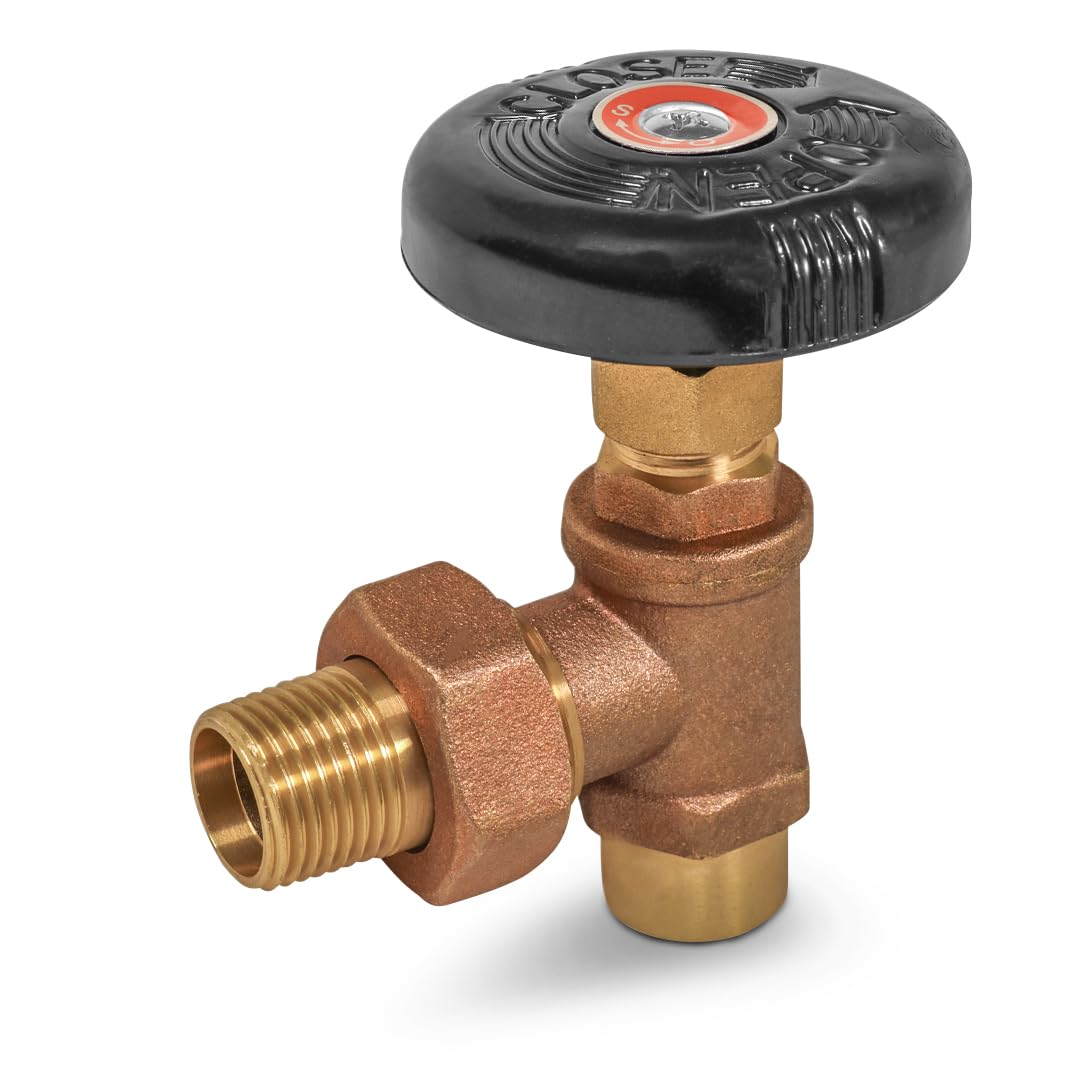
Type: Angle radiator valve
Connection: 1 in. FIP x Male Union
Material: Heavy duty brass
Handle: Molded thermal plastic
Price Tier: Mid
An angle body turns the pipe ninety degrees at the valve, which is exactly what a radiator sitting close to a wall or in a corner needs. The one-inch female iron pipe inlet and male union outlet match the standard steam sizing, and the heavy duty brass body is built for hot water loops that run constantly rather than cycling with steam. The molded thermal plastic handle stays cooler to the touch than bare metal, a small but real comfort on a hot water system.
This one suits the renovator who has to route pipe around an obstruction or tuck a radiator into a tight alcove. It is not a steam valve and should not be pressed into steam service, where the venting behavior differs. The trade-off is the plastic handle: it is comfortable and cheap to replace, but it is the part most exposed to knocks in a basement or utility room.
Trade-off: The plastic handle is the weak point on a valve otherwise built from heavy brass, so it needs protection from impact.
4. G1/2" & G3/4" Thermostatic Radiator Valve
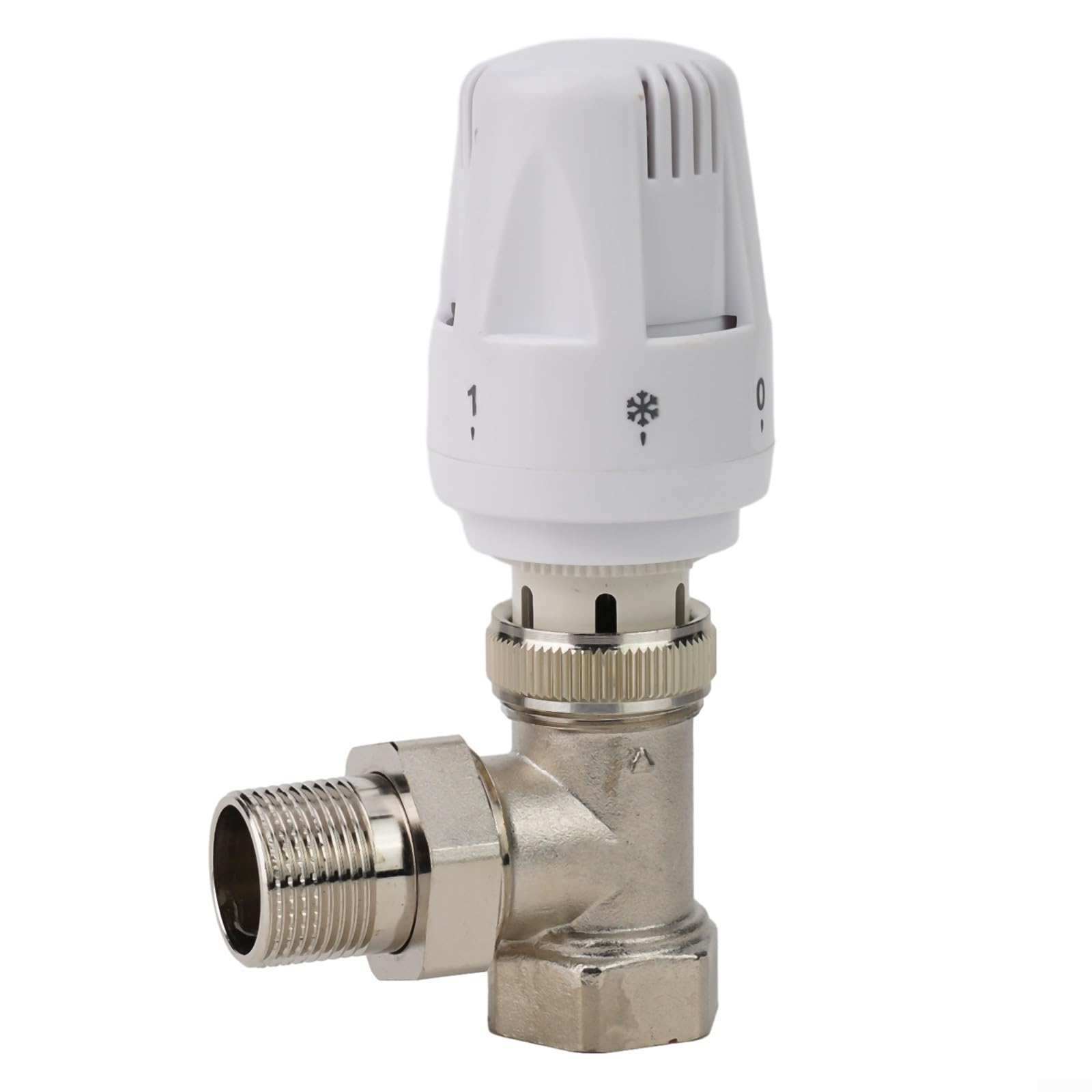
Type: Automatic thermostatic radiator valve
Connection: G1/2 in. and G3/4 in. (DN20)
Body: Copper angle
Sensor: Liquid
Features: Manual control, frost protection
Price Tier: Budget
This is the odd one out in the best possible way: a thermostatic head rather than a manual handwheel. The liquid sensor reacts to room temperature and modulates flow on its own, and the manual control setting lets the head be locked open or shut when needed. Frost protection keeps a rarely used room from freezing, and the copper angle body with dual G1/2 and G3/4 connections covers the common European and floor heating thread sizes.
It suits the buyer who wants room-by-room control without replacing the boiler or the pipe layout. It is not a fit for a one-pipe steam system, where thermostatic heads interfere with the pressure balance the system relies on. The trade-off is thread compatibility: the G-thread sizing is not the same as US iron pipe thread, so buyers on American NPT risers need adapters.
Trade-off: The G-thread connections do not match standard US iron pipe threads, so adapters are usually required.
5. E.H.C. Coin Key Air Vent Bleeder Valve, 3-Pack
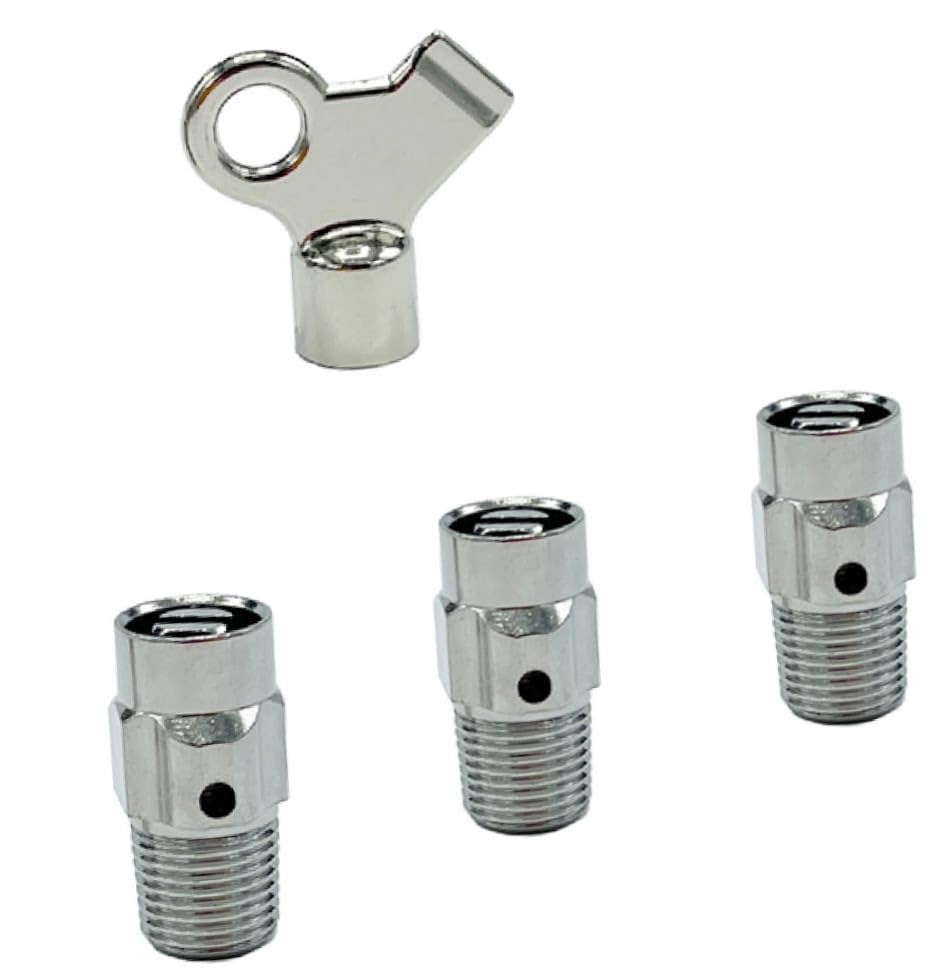
Type: Air vent bleeder valve
Connection: 1/8 in. MIPS
Material: Chrome-plated
Included: Three vents and one valve key
Price Tier: Budget
1/8" MIPS Chrome Coin Key Radiator/Baseboard Air Vent Bleeder Valve (3) with (1) Valve Key by E.H.C.
These are the small bleeders found at the top of a radiator or the end of a baseboard run, operated with a coin or the included key. The one-eighth male iron pipe thread is the common size for bleeder tappings, and the chrome finish resists the corrosion that ruins cheap steel vents in a wet system. The three-pack matters: vents are the most frequently replaced part on a single pipe system, and having spares on the shelf saves a second order.
This is the pick for the homeowner chasing cold radiators and gurgling pipes, where the fix is trapped air rather than a failed main valve. It is not a substitute for a radiator valve and will not control temperature. The trade-off is that these are small consumable parts, and a chrome body does not change the fact that the internal seat wears out over seasons of use.
Trade-off: Bleeders are consumables, so the three-pack is a stock of replacements rather than a one-time fix.
Before You Buy
- Size: Match the valve to the pipe, not the radiator — one-inch and half-inch FIP are not interchangeable without reducing fittings.
- System type: Steam valves need an air vent; hot water valves do not, and a thermostatic head belongs on hot water only.
- Thread standard: G-thread and NPT are different standards, so confirm which one the existing pipe uses before ordering.
- Material: Brass and copper hold up to heat cycling far better than plated steel or pot metal.
- Handle and head clearance: An angle body or a thermostatic head needs room to turn, so measure the gap to the wall first.
- Spares: Vents and bleeder seats wear out, so a multi-pack or a spare vent is worth the small extra cost.
- Included accessories: A union nut or valve key in the box saves a trip to the hardware store mid-install.
Frequently Asked Questions
-
What is the best radiator valve for a single pipe steam system?
A valve with an integrated air vent and a brass body, sized to the riser. The Midline Valve 6I342 is the straightforward pick for one-inch steam pipe. -
Can a thermostatic valve be used on a one-pipe system?
Not on one-pipe steam. Thermostatic heads are for hot water loops, where they control flow without disrupting the system’s pressure balance. -
How do I know if my radiator needs a valve or just a bleed?
If the radiator is cold at the top and warm at the bottom, it needs bleeding. If it stays cold throughout or will not shut off, the valve is the problem. -
Are 1/2 inch and 3/4 inch radiator valves interchangeable?
No. The valve must match the pipe size, and adapting between sizes adds joints that can leak in a hot system. -
How often should radiator air vents be replaced?
When they stop closing or start weeping. Keeping a spare set on hand shortens the repair to minutes. -
Does the valve handle material matter?
It matters for comfort and durability. Plastic stays cooler to the touch; metal survives knocks better in a basement.
Bottom Line
For most single pipe steam systems, the Midline Valve 6I342 Steam Radiator Valve is the safest starting point: correct one-inch union sizing, a brass body, and an integrated vent at a budget price. Buyers on half-inch pipe should drop to the IXW-U012, while anyone chasing cold radiators rather than a failed valve should start with the E.H.C. bleeder three-pack.
