Why there are Amazon links here: Brave Review is paid a commission for qualifying Amazon purchases made through the links below. Your price does not change, and using our links is entirely optional. How this works
Cinnado B6 Solar Security Camera: Untethered Coverage for the Far Corners
The Cinnado B6 is a two-pack of solar-powered wireless outdoor cameras aimed at buyers who need eyes on places without an outlet — barns, detached garages, back acreage, side yards. This review covers what the hardware is built to do, where it fits in a home or farm security setup, and the compromises the price tier makes inevitable. Buyers who want a fast answer will find the short version below the specifications.
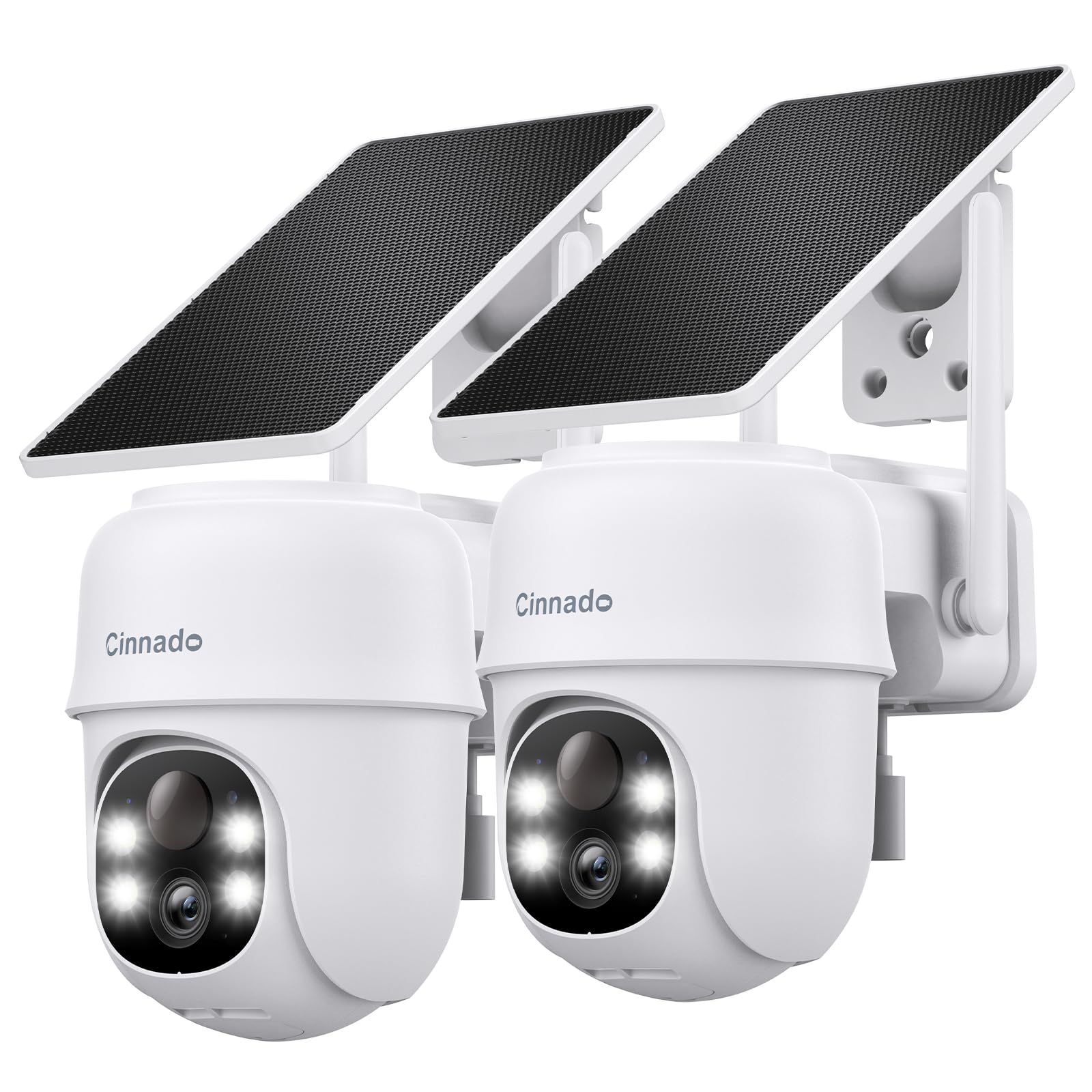
Features and Specifications
Product: Cinnado 2.4GHz Wi-Fi Security Camera with Auto Tracking, B6 2-Pack
Connectivity: 2.4GHz Wi-Fi only
Power Source: Solar charging with built-in battery
Video Quality: 2K resolution
Night Vision: Spotlight color night vision
Detection: AI detection with instant alerts
Tracking: Auto tracking
Placement: Wireless outdoor use — farms, garages, homes
Color: White
The headline here is independence. A solar panel and an onboard battery mean the camera does not need to sit within reach of an outlet, which opens up fence lines, outbuildings and the back of a lot where running power would cost more than the hardware. The 2.4GHz-only radio is the practical catch: this is the band that travels furthest through walls and across open ground, but it is also the crowded one, so placement relative to the router matters more than the spec sheet suggests.
The 2K sensor plus spotlight color night vision is a meaningful step up from the dim, grainy black-and-white footage that older budget cameras produce. Color at night makes it easier to describe a vehicle, a person’s clothing or an animal, which is exactly the detail that matters when footage is handed to a neighbor or the authorities. Auto tracking and AI detection round out the package by turning the camera from a passive recorder into something that follows movement and filters out some of the noise.
Build and Hardware
The housing is white plastic, sealed for outdoor duty, and shaped to sit on a wall, eave or post with the solar panel angled toward the sun. That panel is the whole power strategy: in a spot with several hours of direct light, the battery should stay topped up through normal use, but a north-facing wall or heavy tree cover will leave the camera leaning on stored charge alone. Buyers in that situation should plan on a mounting position that gets sun before anything else.
The 2.4GHz radio keeps the unit simple and cheap to build, and it is the right call for range. It also means the camera will not see a 5GHz-only network, so a router broadcasting a single merged SSID may need its 2.4GHz band split out during setup. That is a five-minute job in most router apps, but it is the single most common snag with cameras of this class.
Trade-off: Solar and battery freedom come with a hard dependency on sunlight and a strong 2.4GHz signal — a shaded mount or a weak Wi-Fi corner will undercut the camera’s best features.
Video, Detection and Night Vision
2K is the right resolution for this price bracket. It is sharp enough to read a license plate at close range and to identify a face at a doorway or gate, without the storage and bandwidth burden that 4K brings to a battery-powered unit. The spotlight color mode is the more useful feature in practice: motion triggers a light that lets the sensor capture color instead of switching to infrared, and the light itself is a deterrent in a way that a silent camera is not.
AI detection is what separates a usable alert stream from an unbearable one. A camera that pings for every moth, branch and passing cat gets muted within a week; one that distinguishes people and vehicles keeps the phone quiet until something actually warrants attention. Auto tracking adds a second layer — once the camera locks onto a moving subject, the lens follows it across the field of view, so a person walking the length of a driveway stays in frame instead of exiting at the edge.
Instant alerts arrive through the companion app, and that app is where recording and storage get decided. Buyers should go in expecting that continuous cloud recording sits behind a subscription, while a microSD card in the camera handles local clips. Neither is confirmed by the product name, so the plan should be checked on the listing before purchase — but a subscription tier is standard for this category and this price.
Who It Suits and Who It Does Not
This two-pack fits buyers with a specific geography problem: outbuildings, acreage, rental property or a garage separated from the house by more distance than a wired camera can cover. Two cameras at this tier also let a buyer cover a front approach and a rear gate without doubling the budget, and the white housing blends into siding and trim better than darker finishes.
It is not the right pick for someone who wants a doorbell camera, a wired floodlight unit, or a camera that records 24/7 without a subscription. Buyers with a 5GHz-only network, a permanently shaded mounting spot, or an expectation of local-only storage with no app dependency should look elsewhere. The B6 is a remote-area camera, and it is honest about that.
Trade-off: The two-pack format is a poor fit for a single-camera job — buyers who only need one viewpoint pay for hardware they will not mount.
Check the current price on Amazon
Power and Maintenance
The solar panel changes the maintenance rhythm rather than eliminating it. Instead of swapping batteries every few months, the owner cleans the panel a few times a year, checks the lens for spider webs and pollen, and confirms the battery is holding charge through the darkest weeks of winter. Panels that face the weather accumulate dust and bird droppings, and a dirty panel is a camera that quietly goes offline.
Battery-powered cameras also manage power by recording in motion-triggered clips rather than continuously, and that behavior is what makes a solar setup viable at all. Buyers who expect a constant live feed from a battery camera will be disappointed by every model in this class, not just this one. The trade is real: no wiring, no electrician, no trench — in exchange for event-based recording and a weather-dependent power budget.
FAQ
-
Is the Cinnado B6 camera wireless?
Yes. It runs on a rechargeable battery topped up by a solar panel and connects over Wi-Fi, so no power cable needs to reach the mounting spot. A Wi-Fi signal is still required. -
Does the Cinnado B6 work with 5GHz Wi-Fi?
No. The camera is built for 2.4GHz networks only, which is standard for long-range outdoor cameras. Routers that broadcast a single combined network may need the 2.4GHz band separated during setup. -
Does the Cinnado B6 need a subscription?
Local recording on a microSD card is the usual path for cameras at this price, while cloud storage and richer alert features typically sit behind an optional subscription. The exact plan terms should be confirmed on the product listing before buying. -
What does 2K resolution mean for security footage?
2K is sharper than 1080p, which helps with identifying faces and reading plates at close to medium range. It is a sensible middle ground for a battery camera, since higher resolutions drain power faster. -
How does spotlight color night vision work?
When motion is detected after dark, a built-in spotlight illuminates the scene so the sensor can record in color instead of switching to infrared. The result is footage that preserves clothing and vehicle colors. -
What is auto tracking on a security camera?
The camera pans to follow a moving subject across its field of view, keeping a person or vehicle in frame longer. It is useful on driveways, long yards and open approaches. -
Can the Cinnado B6 be used on a farm or barn?
Yes — farms and garages are named use cases. The solar power and wireless design suit outbuildings where running electricity is impractical, provided the panel gets direct sun. -
Where should the solar panel be mounted?
In a spot with several hours of direct sunlight per day, ideally facing the direction that gets the most sun at the site. Shaded mounts will leave the camera dependent on stored battery charge. -
Does the Cinnado B6 record continuously?
Battery and solar cameras of this type record motion-triggered clips to conserve power rather than streaming 24/7. Buyers who need continuous recording should look at wired cameras. -
Is the two-pack a good deal for a single camera need?
Only if a second viewpoint is useful. Buyers with one mounting spot pay for hardware that stays in the box, and a single-camera model would stretch the budget further.
Bottom Line
The Cinnado B6 is the right answer for a narrow, common problem: covering an outbuilding, a gate or a stretch of property where no outlet exists and trenching cable is not worth it. The 2K sensor, spotlight color night vision and auto tracking are the features that matter day to day, and the solar panel keeps the whole thing running without an electrician. Buyers should confirm sunlight at the mount, a solid 2.4GHz signal and the storage plan before ordering — then this two-pack does the job it was built for.
