Why there are Amazon links here: Brave Review is paid a commission for qualifying Amazon purchases made through the links below. Your price does not change, and using our links is entirely optional. How this works
Best Portable Power Station for a Household with a Stairlift
A stairlift is a safety device, not a convenience, so a power station that runs it has to deliver steady AC power the moment the grid drops. This guide covers five home-backup units, from a large-capacity expandable flagship down to a compact model that still offers fast UPS switching. Three kinds of buyers are served here: households that want whole-home backup with a stairlift as the priority load, buyers who only need the lift and a few lights, and families who want room to grow capacity later.
The Picks at a Glance
| Product | Key Spec | Best Use | Price Tier |
|---|---|---|---|
| Jackery HomePower 3600 Plus | 3584Wh, 3600W AC output | Whole-home backup with expansion | Premium |
| EF ECOFLOW DELTA Pro | 3600Wh, 3600W AC output, 2.7H fast charge | Long outages with expandable capacity | Premium |
| BLUETTI Apex 300 | 2764.8Wh, 3840W AC output, 120V/240V | Homes needing 240V loads | Upper mid-range |
| BLUETTI Elite 400 | 3840Wh LiFePO4, 2600W, wheels | Big reserve for a single critical circuit | Upper mid-range |
| BLUETTI Elite 100 V2 | 1024Wh, 1800W, 10ms UPS | Stairlift plus essentials only | Budget |
1. Jackery HomePower 3600 Plus Power Station
Type: LiFePO4 home backup station
Capacity: 3584Wh, expandable to 21kWh
AC Output: 3600W
Intended Use: Home backup, emergencies, RV
Solar: Panel optional, not included
Battery Chemistry: LFP

The HomePower 3600 Plus is built around an LFP battery, the chemistry that has become standard for home backup because it holds up over many charge cycles. Its 3600W AC output is enough to carry a stairlift alongside a refrigerator, lights and a router, and the expansion path up to 21kWh means the same unit can grow into serious whole-home coverage. The chassis is a permanent-installation type of unit rather than something a household carries to a campsite, and the optional solar panel keeps it useful through a long outage. This is the pick for a household that wants one system to cover the lift and the rest of the house.
Trade-off: The unit is large and heavy for its class, so it belongs on a floor near the main panel rather than in a closet, and the solar panel is an extra purchase.
2. EF ECOFLOW DELTA Pro Portable Power Station
Type: Expandable LFP home backup station
Capacity: 3600Wh, expandable to 25kWh
AC Output: 120V, 3600W
Charge Time: 2.7 hours fast charge
Intended Use: Home backup, outages, camping, RV, emergencies
Battery Chemistry: LFP
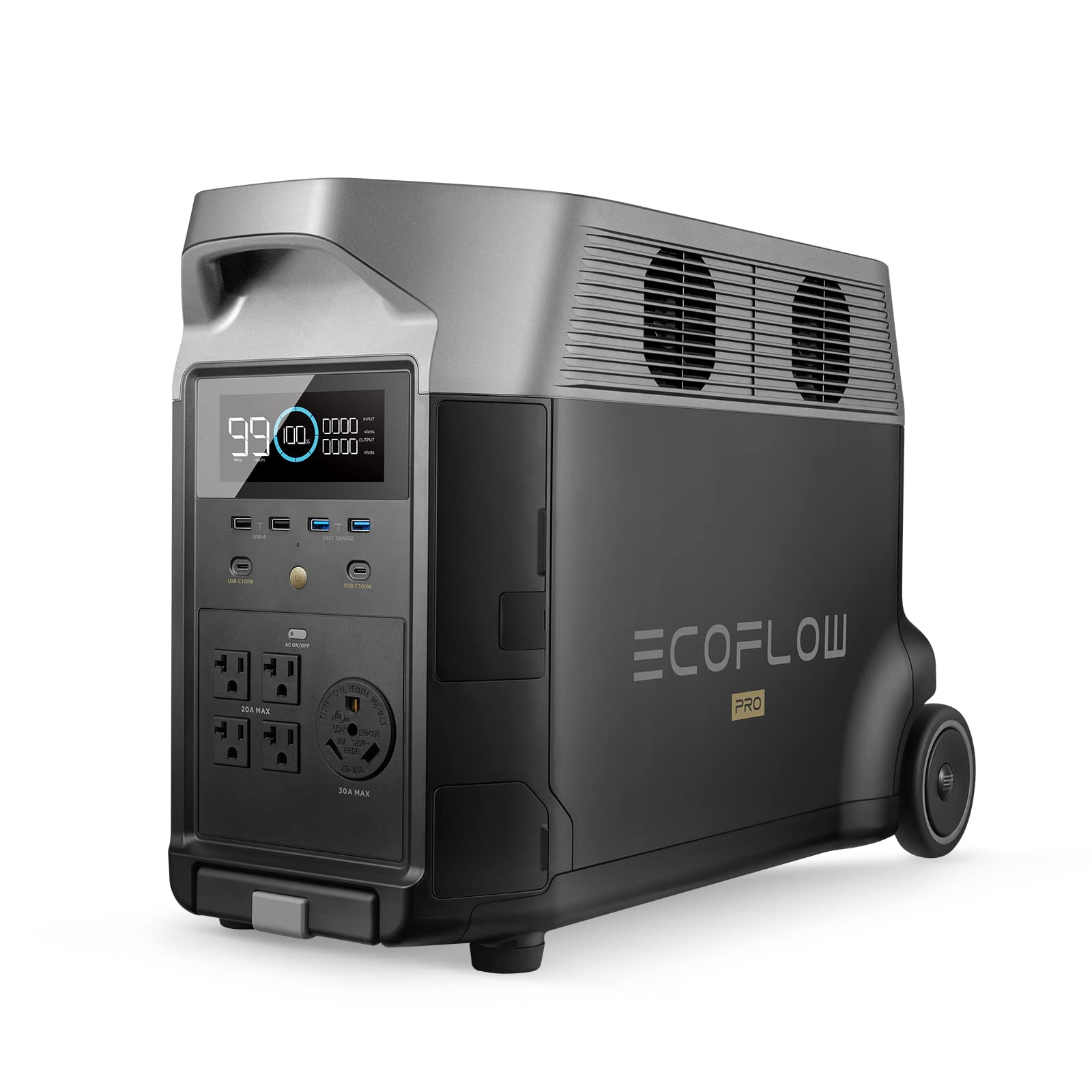
The DELTA Pro pairs a 3600Wh LFP battery with 3600W of 120V AC output and a fast-charge design that refills the battery in a couple of hours from a wall outlet. That speed matters for a stairlift household: a short outage can be absorbed, and a long one can be recovered quickly once power returns. Expansion up to 25kWh gives it the largest growth ceiling in this group, and the 120V output covers the lift, medical devices and kitchen appliances. It suits a household planning for multi-day outages and willing to add batteries over time.
Trade-off: The 120V-only AC output means a home with a 240V well pump or similar load cannot run that circuit from this unit, and the fast-charge feature puts more demand on the home circuit it plugs into.
3. BLUETTI Apex 300 Portable Power Station
Type: LFP solar generator with dual-voltage output
Capacity: 2764.8Wh
AC Output: 3840W, 7680W surge, six AC ports
Voltage: Simultaneous 120V/240V output
Features: Black start capability
Intended Use: Home, RV, emergencies
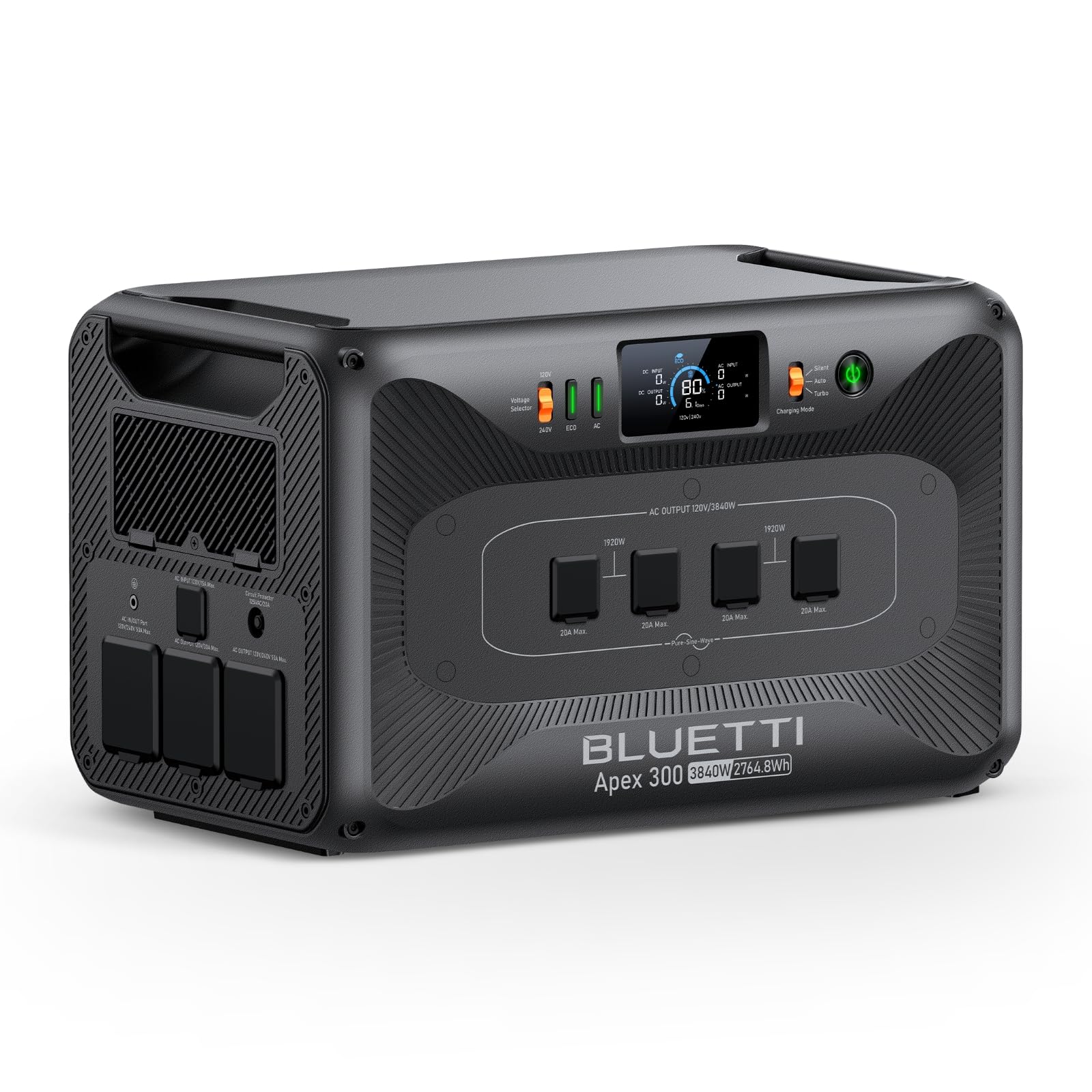
The Apex 300 stands out for its simultaneous 120V and 240V output, which lets it feed a stairlift on a standard circuit and a 240V appliance at the same time. Six AC ports and a 7680W surge rating give it headroom for motor-driven loads, and black start capability means it can bring a system up without grid power. The LFP battery is the durable chemistry buyers expect at this level. It fits a home where the backup plan includes more than the lift, especially one with a 240V circuit that needs to stay live.
Trade-off: Its capacity is the smallest of the three large units here, so a multi-day outage with heavy loads will draw it down faster than the 3600Wh-class models.
4. BLUETTI Elite 400 Portable Power Station
Type: Wheeled LFP home backup station
Capacity: 3840Wh LiFePO4
AC Output: 2600W
Feature: Power lifting with wheels
Intended Use: Home backup, outages, RV life, emergencies
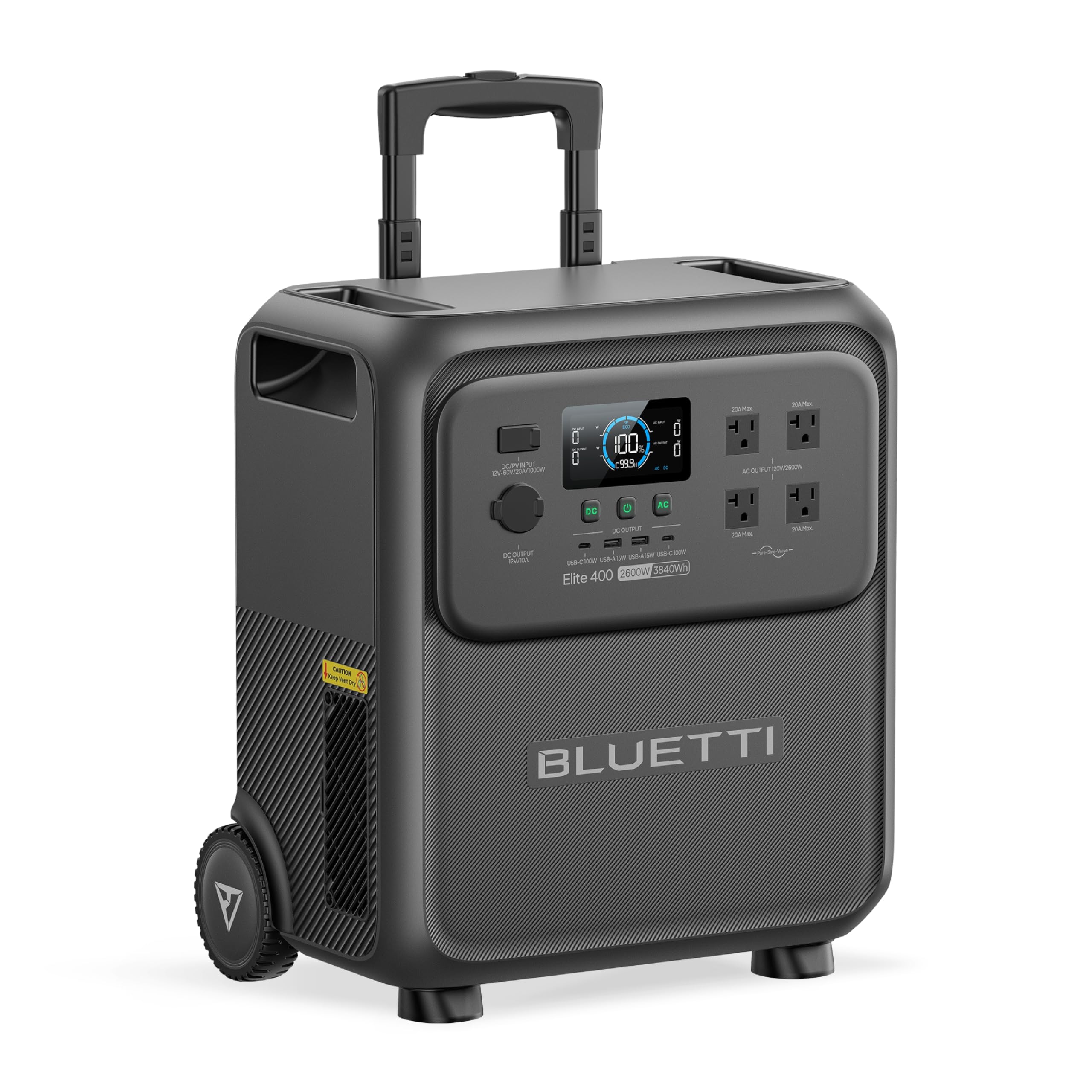
The Elite 400 carries the largest battery in this roundup at 3840Wh of LiFePO4 capacity, and it is built to be moved on its own wheels. A 2600W AC output is lower than the other large units, but it is comfortably above what a stairlift draws, leaving room for lights and communications gear. The wheeled chassis and power lifting design suit a household that needs to roll the unit between rooms or take it along in an RV. It is the pick for buyers who value reserve capacity and mobility over maximum output.
Trade-off: The lower 2600W output limits which appliances can run at the same time, so a household planning to back up a large fridge, a microwave and the lift together should check the combined draw.
5. BLUETTI Elite 100 V2 Portable Power Station
Type: Compact LFP solar generator with UPS
Capacity: 1024Wh
AC Output: 1800W, 3600W surge
UPS Switchover: 10ms
Charge Time: 0-80% in 45 minutes
Intended Use: Home backup, emergency, outdoor
Size: 35% smaller than prior design
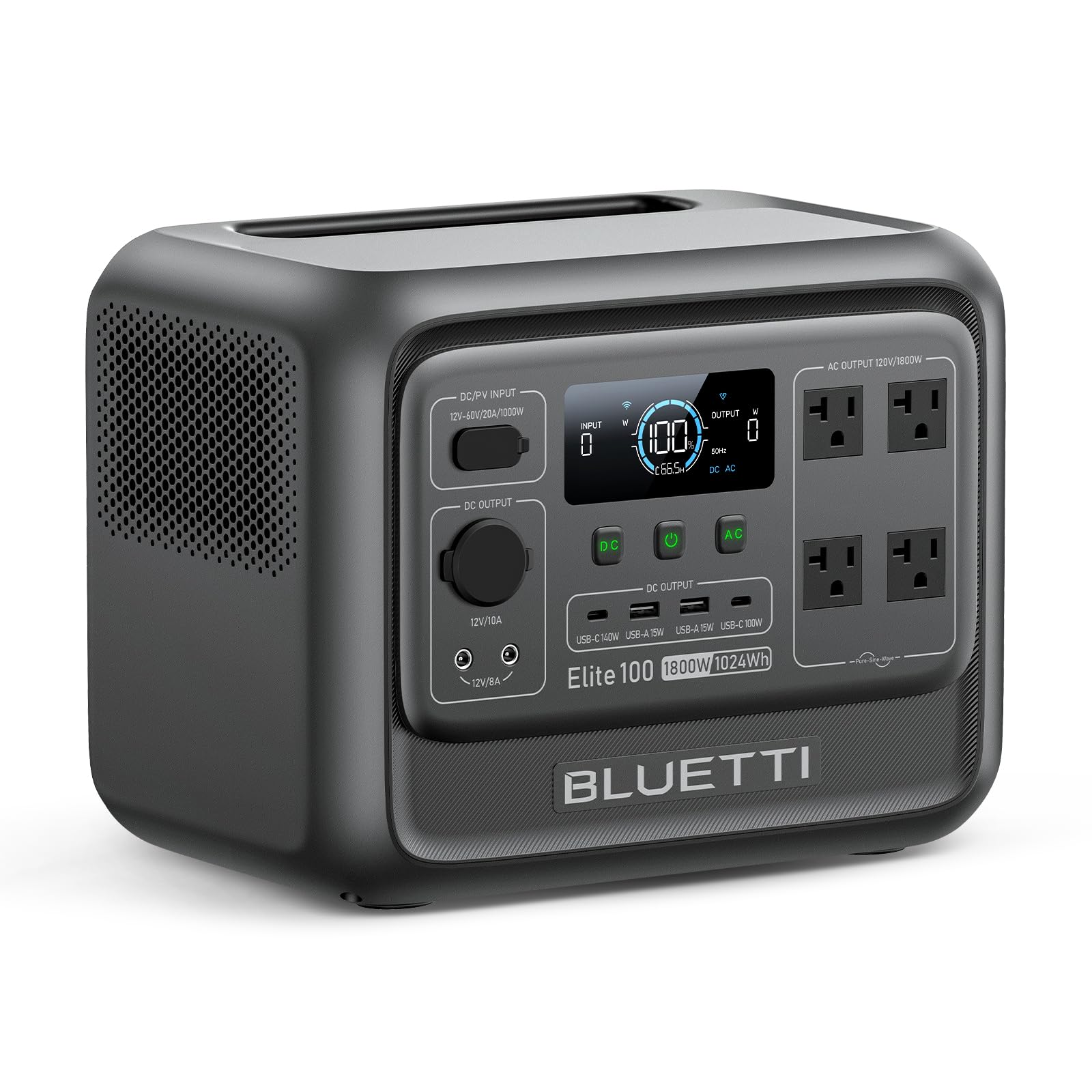
The Elite 100 V2 is the compact pick, and its 10ms UPS switchover is the feature that matters most for a stairlift: the lift sees an almost instant transfer when the grid fails. A 1800W output with 3600W surge covers the lift motor’s startup draw, and the LFP battery with a 45-minute charge to 80% keeps it ready between outages. Its smaller footprint makes it easy to place near the lift’s power connection. This is the unit for a household that wants the lift protected without paying for whole-home capacity.
Trade-off: The 1024Wh capacity is modest, so it protects the lift and a few small loads for a limited window rather than carrying a refrigerator or heating equipment through a long outage.
Before You Buy
- Output: Match the station’s continuous AC output to the stairlift’s rated draw, and check the surge figure against the motor’s startup current.
- Capacity: Estimate how many lift trips and hours of standby the household needs; a single critical circuit needs far less than whole-home backup.
- UPS speed: For a stairlift, a fast automatic switchover matters more than raw capacity, because the lift should not stall mid-travel.
- Voltage: Confirm whether the home has 240V loads that must stay live; only a dual-voltage unit covers those.
- Placement: Large units are heavy and belong on a floor near the lift or the panel; wheeled models are easier to reposition.
- Solar and charging: Panels are often sold separately, and fast-charge models need a circuit that can handle the draw.
- Expansion: Buyers planning to add capacity later should pick a model with an expansion path rather than a sealed unit.
Frequently Asked Questions
-
How big a power station does a stairlift need?
A stairlift motor draws far less than a whole-home load, so a compact 1800W-class unit with adequate surge can carry it. The larger units here add capacity for lights, refrigeration and communications. -
Does a power station switch over fast enough to keep a stairlift running?
A unit with a 10ms UPS switchover transfers almost instantly, which is the safest option for a lift in motion. Slower transfers may cause the lift to stop and require a reset. -
Can a power station run a stairlift and a refrigerator at the same time?
Yes, if the combined draw stays under the unit’s continuous output. The 3600W and 3840W models have the most headroom for combined loads. -
Is LiFePO4 the right battery for home backup?
LFP chemistry is the standard choice for backup because it tolerates frequent charging and long standby periods better than older lithium formulations. -
Do these units include solar panels?
Panels are generally optional and sold separately, so buyers planning to recharge from the sun should budget for them. -
Where should the power station be placed in a stairlift household?
Near the lift’s power connection or the main panel, on a stable floor, with clearance for ventilation and room to reach the outlets.
Bottom Line
For most stairlift households, the Jackery HomePower 3600 Plus is the strongest single answer: 3600W of output covers the lift plus the rest of the house, LFP chemistry is built for years of standby, and the expansion path to 21kWh means the system can grow with the household’s needs. Buyers who only need the lift protected can save with the compact BLUETTI Elite 100 V2 and its 10ms UPS switchover.
